| If you do
NOT see the Table of Contents frame to the left of this page, then
Click here to open 'USArmyGermany' frameset |
||||||||||||||||||||||||||||||||||||||||||||||||||||||||||||||||||||||||||||
|
447th
Signal Battalion |
||||||||||||||||||||||||||||||||||||||||||||||||||||||||||||||||||||||||||||
|
|
||||||||||||||||||||||||||||||||||||||||||||||||||||||||||||||||||||||||||||
|
||||||||||||||||||||||||||||||||||||||||||||||||||||||||||||||||||||||||||||
|
|
||||||||||||||||||||||||||||||||||||||||||||||||||||||||||||||||||||||||||||
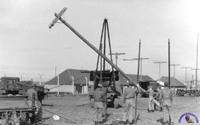
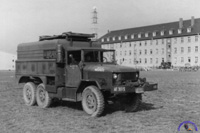
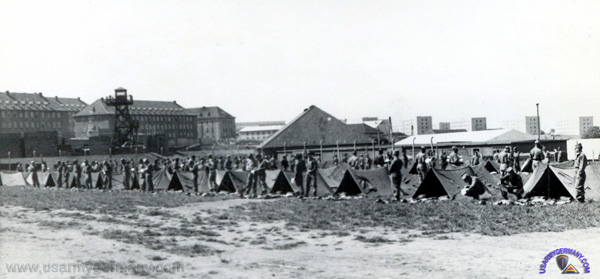
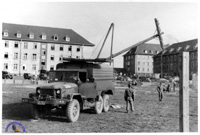
| 317th Signal Construction Battalion History | ||||||||||||||||||||||||||||||||||||||||||||||||||||||||||||||||||||||||||||
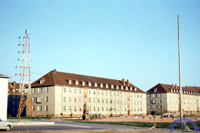
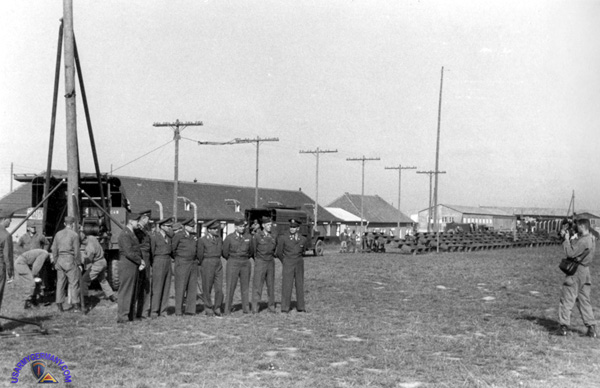
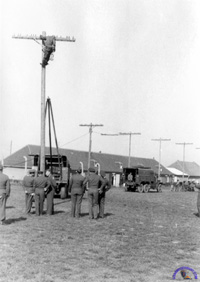
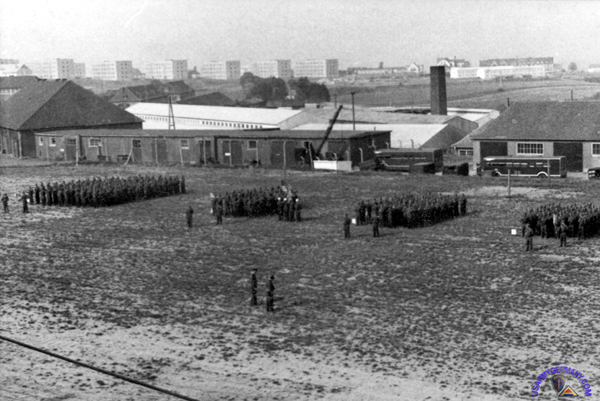 317th Signal Bn in formation during a ceremony at Pirmasens |
||||||||||||||||||||||||||||||||||||||||||||||||||||||||||||||||||||||||||||
| 1952 - 1954 | ||||||||||||||||||||||||||||||||||||||||||||||||||||||||||||||||||||||||||||
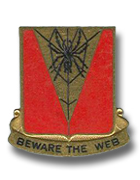 317th Signal Construction Battalion
DI
317th Signal Construction Battalion
DI
|
||||||||||||||||||||||||||||||||||||||||||||||||||||||||||||||||||||||||||||
| (Source: Email from Jim Smith, HQ 317th Sig Const Bn, 1952-53) | ||||||||||||||||||||||||||||||||||||||||||||||||||||||||||||||||||||||||||||
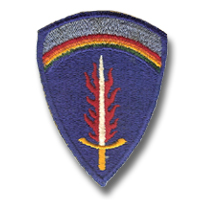
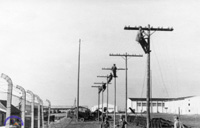
| I was Adjutant of the 317th Sig Const Bn during the move from Cp San Luis Obispo, CA to Pirmasens Germany in July 1952. The shoulder medalions we wore with the motto "Beware the Web" were authorized while I was in the unit. This emblem previously was authorized for an earlier Army Search Light Bn (maybe pre-WWII ??) . I would like to know what happened after I left in July 1953 in Pirmasens. Sorry, I do not have the exact prior history or origin of the 317th Signal Construction Battalion. It was a unit of 1st Signal Service Group in Camp San Luis Obispo CA when I was assigned to it. The 1st Signal Service Group moved to Cp San Luis Obispo from Cp Cooke CA (now Vandenberg AFB) in early 1952. The 317th Bn CO before and for a short time after arrival in Pirmasens was a Major John Clark from TX. He had a heart attack and was sent home. Afterward, the CO was a Colonel Mylod. We had 4 companies (A,B,C & D) of open wire (pole) and cable construction personnel. I was transferred to a company as a platoon leader for a short period of time and had the opportunity to take the platoon to Breda, Holland for three weeks in the great North Sea flood of February 1953. That was the coldest I have ever been in my life. Yes, the unit crest in your website looks the way I remember. It was orange and showed a spider's web. Hence, "beware the web" (Open wire and cable). Interestingly, I still have some of my personnel orders from commissioning as a 2nd Lt at Clemson in June 1951 up to discharge in July 1953. |
||||||||||||||||||||||||||||||||||||||||||||||||||||||||||||||||||||||||||||
If you have more
information on the history or organization of the 317th Signal Battalion,
please contact me . . |
||||||||||||||||||||||||||||||||||||||||||||||||||||||||||||||||||||||||||||
| (Source: Email from Billy Gensmer) | ||||||||||||||||||||||||||||||||||||||||||||||||||||||||||||||||||||||||||||
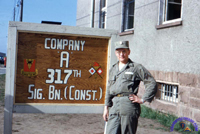
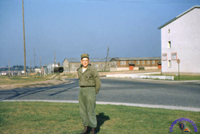
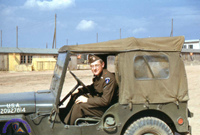
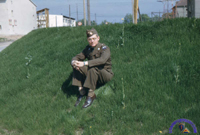
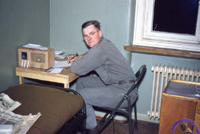
| My dad was CPL Victor Gensmer, and was a supply clerk for I believe either Company A or Battalion HQ, 317th Sig Const Bn in Pirmasens. I have color slides of Pirmasens, namely 317th Signal Construction Battalion from the 1953-1955 range. Click here to see Victor Gensmer's photos of the 59th FA Bn (280mm) in Pirmasens. |
||||||||||||||||||||||||||||||||||||||||||||||||||||||||||||||||||||||||||||
|
||||||||||||||||||||||||||||||||||||||||||||||||||||||||||||||||||||||||||||
|
||||||||||||||||||||||||||||||||||||||||||||||||||||||||||||||||||||||||||||
|
||||||||||||||||||||||||||||||||||||||||||||||||||||||||||||||||||||||||||||
|
||||||||||||||||||||||||||||||||||||||||||||||||||||||||||||||||||||||||||||
|
||||||||||||||||||||||||||||||||||||||||||||||||||||||||||||||||||||||||||||
|
||||||||||||||||||||||||||||||||||||||||||||||||||||||||||||||||||||||||||||
|
||||||||||||||||||||||||||||||||||||||||||||||||||||||||||||||||||||||||||||
 |
||||||||||||||||||||||||||||||||||||||||||||||||||||||||||||||||||||||||||||
|
|
||||||||||||||||||||||||||||||||||||||||||||||||||||||||||||||||||||||||||||
| 447th Signal Battalion History | ||||||||||||||||||||||||||||||||||||||||||||||||||||||||||||||||||||||||||||
| (Source: US Army Center of Military History) | ||||||||||||||||||||||||||||||||||||||||||||||||||||||||||||||||||||||||||||
| Lineage: 447th Signal Battalion Activated 28 January 1955 in Germany Inactivated 19 August 1963 in Germany Activated 14 February 1964 in Germany Inactivated 13 November 1967 in Germany |
||||||||||||||||||||||||||||||||||||||||||||||||||||||||||||||||||||||||||||
| 1954 - 1973 | ||||||||||||||||||||||||||||||||||||||||||||||||||||||||||||||||||||||||||||
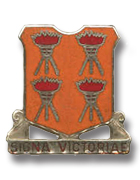 447th Signal
Battalion DUI
447th Signal
Battalion DUIDec 3, 1954 - 317th Sig Bn re-designated as the 447th Signal Bn and allotted to the Regular Army. (Note: Found some information indicating that C Co, 360th Sig Bn in Bremerhaven was redesignated as a company of the 447th Sig Bn. Can anyone confirm?) Jan 28, 1955 - Activated in Germany. Originally attached to the 516th Signal Group. Feb 13, 1956 - The 447th Sig Bn (Cons) was reorg under T/O&E 11-25. Aug 19, 1963 - Inactivated in Germany. Feb 14, 1964 - Reactivated in Germany. In July 1967, the 447th Signal Battalion moved to Baumholder. |
||||||||||||||||||||||||||||||||||||||||||||||||||||||||||||||||||||||||||||
| ORGANIZATION (June 1967): | ||||||||||||||||||||||||||||||||||||||||||||||||||||||||||||||||||||||||||||
|
||||||||||||||||||||||||||||||||||||||||||||||||||||||||||||||||||||||||||||
| ORGANIZATION (Sept 1972): | ||||||||||||||||||||||||||||||||||||||||||||||||||||||||||||||||||||||||||||
|
||||||||||||||||||||||||||||||||||||||||||||||||||||||||||||||||||||||||||||
On Mar 28, 1973, the HHD, 447th Sig Bn was reorganized and redesignated as Headquarters and Headquarters Detachment, 39th Signal Battalion.  Co A - Co B - Co C - Co D, 447th Sig Bn reorganized and redesignated as the 532nd Sig Co Co A - Co B - Co C - Co D, 447th Sig Bn reorganized and redesignated as the 532nd Sig Co |
||||||||||||||||||||||||||||||||||||||||||||||||||||||||||||||||||||||||||||
| (Inactivation and reactivation dates in the 1960s were confirmed by Royal W. Kramer, Co A., 447th Signal Battalion, Pirmasens, 3 June 1957 - 10 December 1958. This information was originally posted on the 447th Sig Bn web site in the late 1990s) | ||||||||||||||||||||||||||||||||||||||||||||||||||||||||||||||||||||||||||||
| If you have more
information on the history or organization of the 447th Signal Battalion,
please contact me. |
||||||||||||||||||||||||||||||||||||||||||||||||||||||||||||||||||||||||||||
| 1964 | ||||||||||||||||||||||||||||||||||||||||||||||||||||||||||||||||||||||||||||
| (Source: Email from Jon Ritchey, 447th Sig Bn, 1964-67) | ||||||||||||||||||||||||||||||||||||||||||||||||||||||||||||||||||||||||||||
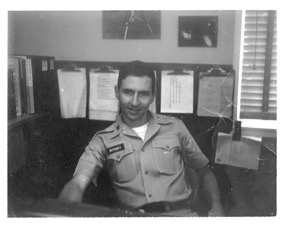 Cpt. Jon Ritchey, as CO, HHD, 447th Signal Battalion, Pruem, Germany Cpt. Jon Ritchey, as CO, HHD, 447th Signal Battalion, Pruem, Germany |
||||||||||||||||||||||||||||||||||||||||||||||||||||||||||||||||||||||||||||
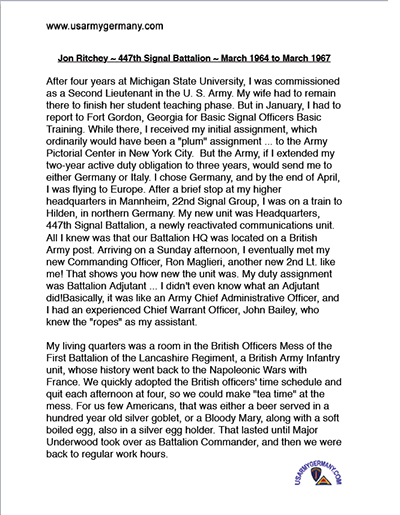 Recollections of Jon Ritchey (PDF File) (Click on the image to read the full report) |
||||||||||||||||||||||||||||||||||||||||||||||||||||||||||||||||||||||||||||
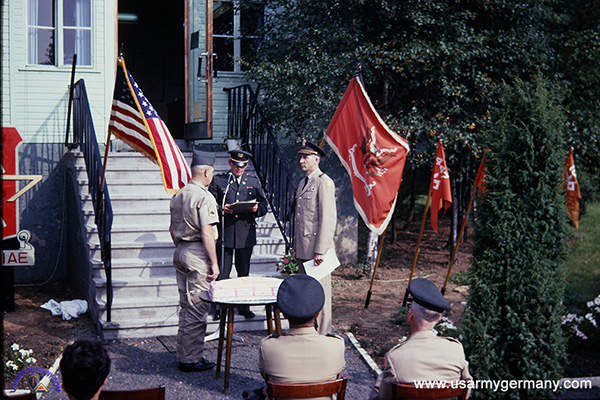 Ceremony celebrating the 25th Anniversary of the 447th Sig Bn (Scott Enderle) (My father, LTC Wallace Enderle, is the on the right side of the cake) |
||||||||||||||||||||||||||||||||||||||||||||||||||||||||||||||||||||||||||||
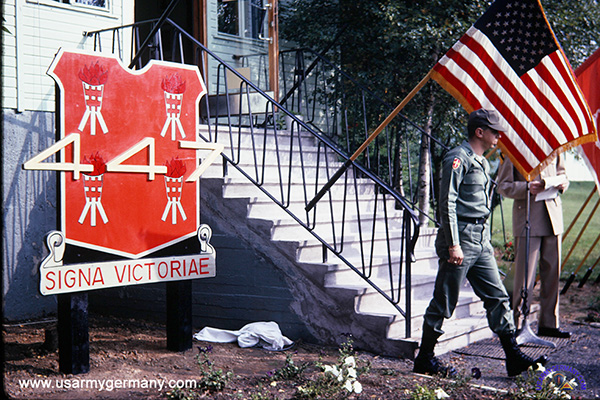 Ceremony was held in front of Bn Headquarters at Pruem (Scott Enderle) |
||||||||||||||||||||||||||||||||||||||||||||||||||||||||||||||||||||||||||||
| 1966 | ||||||||||||||||||||||||||||||||||||||||||||||||||||||||||||||||||||||||||||
| (Source: Email from Wallace O. Enderle, former Commanding Officer, 447th Sig Bn, 1966-68) | ||||||||||||||||||||||||||||||||||||||||||||||||||||||||||||||||||||||||||||
| I can confirm that C Company of the 360th, located in Bremerhaven, was attached as part of the 447th during at least part of the period between the summer of 1966 and late spring of 1968 while I was CO of the 447th Sig Bn as well as Post Commander, Pruem Post. I still have some official correspondance dated during that period, from which some of the following is derived. In the fall of 1966, Maj V.O.Lang and I exchanged jobs - he became the Chief, European Field Office, ET-A Project Management Office, in Frankfurt and I became CO of the 447th Sig Bn located at Pruem Post, a few miles north of Pruem, Germany. Besides Bn Hq, A Company was also headquartered there. B Company Hq was located at Linderhoff and C Company of the 360th Sig Bn (attached to us) was headquartered in Bremerhaven. Two companies of the 102nd Sig Bn were also attached to the 447th - A Company located in Frankfurt, and C Company at Kaiserslautern. |
||||||||||||||||||||||||||||||||||||||||||||||||||||||||||||||||||||||||||||
| ORGANIZATION (Fall 1966): | ||||||||||||||||||||||||||||||||||||||||||||||||||||||||||||||||||||||||||||
|
||||||||||||||||||||||||||||||||||||||||||||||||||||||||||||||||||||||||||||
| There were a number of later attachments and detachments, rather confusing in looking back at them. One of these was E Company, 102nd Sig Bn, that was moved at zero strength from some location in France to North Point, Ger in the spring of 1967. At that time it was attached to the 68th Sig Bn whose Hq was in Stuttgart, then reattached that summer to the 447th, and then in Nov 1967 its name was changed to C Company, 360th Sig Bn. As I said before, confusing. There was a small detachment of Air Force communication types also stationed at our little hilltoip post, but we had little to do with them other than provide chow in our mess hall, and other support a post usually provides. Those married folks, Army and Air Force, were quartered in 5 story apartment buildings at the north edge of Pruem. ADDITIONAL INFORMATION The data on the web site that said the 447th moved to Baumholder in 1967 is wrong. It was still in Pruem when I left in the early summer of 1968, and nothing had been said about any move. In fact we just built a new post mess hall not many months before I left. Prior to taking over the CO responsibility at thr 447th Sig Bn, I served as chief, European Field Office, ET-A Project Management Office. When I first got there in 1964, LTC Houghton Lohn was Chief of the office and Maj Kurt Fischman was the contracting officer. Kurt reported directly to Col Hugh Foster (and later to Col Earling Foss) at Ft. Monmouth. The EFO served as the local eyes and ears of the Ft. Monmouth Contracting Office for the ETA project, under Army Materiel Command. I had civilian engineers working under me, reviewing what the contractor was doing, and so did Kurt. I think the organization was not particularly optimum from the start. Stratcom-Europe also had its own office keeping track of the contractor. It was headed by Col Ed Ratigan. They were on the third or fourth floor of the same ugly office building we were in (on second floor). I was told that it had once housed the Gestopo, and I could well believe it. That building was located on the north side of the main road coming in from the north-south autobahn west of town, and the Messe or fairgrounds. This is where they held the Frankfurt Auto Show. It was on the south side of the same road, not far away from our building. Perhaps a year, more or less, after I arrived at the Frankfurt office, Lohn was reassigned, I think back to the main office at Ft. Monmouth, and I became the Chief. Kurt and I are still good friends and he lives in a military retirement community near DC. 447th Sig Bn - Our primary activity was running the Cemtery net, supporting special artillery sites scattered all over northwestern Germany. Small teams from each of our companies lived with and got most of their support from the units for which they were providing the critical communications (using Collins KWM-2 equipment as I recall). BG Kelsey was the head of Stratcom Europe at the time, and visited us once at Pruem. We taught him how to play "Fussball" on the machine in our little basement club, and both he and I bought used machines from the local German repairman. I still had mine until a year ago. My wife Marge found a note in her diary that the change of command when I departed the 447th was on 20 March 1968, next assignment Combat Developments Command at Ft. Belvoir, VA. Neither of us can recall the name of the LTC who replaced me. |
||||||||||||||||||||||||||||||||||||||||||||||||||||||||||||||||||||||||||||
MISCELLANEOUS INFORMATION - I hope this helps in a small way. |
||||||||||||||||||||||||||||||||||||||||||||||||||||||||||||||||||||||||||||
|
||||||||||||||||||||||||||||||||||||||||||||||||||||||||||||||||||||||||||||
| "A" Company | ||||||||||||||||||||||||||||||||||||||||||||||||||||||||||||||||||||||||||||
| 1957 | ||||||||||||||||||||||||||||||||||||||||||||||||||||||||||||||||||||||||||||
| (Source: Email from Royal Kramer, "A" Co, 447th Sig Bn, 1957-58) | ||||||||||||||||||||||||||||||||||||||||||||||||||||||||||||||||||||||||||||
| I served in "A"
Company of the 447th Signal Battalion from June of 1957 until December
of 1958. I was drafted into the Army in January of 1957 and was released
in December of 1958. In this website, the photographs that are shown
were taken by me and I had sent copies of them to the Battalion which
is now based at Ft. Gordon, GA. I am in contact via e-mail with three of the men who served with me during that time period. One was my Company Commander and the other one was an officer in the Headquarters Detachment. The third one was one of the NCO's. As to the activity of A Company, I was the Construction Draftsman for the company. My MOS was 811.10. Our company was strictly a telephone construction company where we had laborers, groundmen, pole climbers and cable splicers. Although we were a Signal Corps Battalion, we did not possess a single radio of any kind. As a draftsman, on occasions I had to make drawings showing isometric views of a telephone pole with crossarms and showing the installation of Spiral-4 and Open Wire line cables. I believe I still have a whiteprint of those drawings. Most of the time I was painting signs, doing typing in the Operations Section relative to training or getting coffee at the Mess Hall for the officers and NCO's. I was also the Ass't. Mail Clerk. Occasionally, the Company would go on maneuvers to Wildflecken where they would erect poles, run telephone cables and other related jobs. They were usually out there from 4-6 weeks. Being as I was the Ass't. Mail Clerk, I never went with them but I did have to drive out there with the mail after it arrived at the Post Office. I also did typing for the clerk in the Orderly Room at times to help relieve him of some of his responsibilities. When the Company was not on maneuvers, most of them were out at the end of the post at the "antenna field" as it was called. Here they would erect rhombic antennas which consisted of four 50-60 foot steel tripod towers laid out in a diamond formation. There was 4 such towers used for this type of antenna. The 447th erected the towers but the 7773rd Signal Depot which was also based at D'Isley Kaserne, operated the radios connected to these rhombic antennas. These antennas were pointed to all parts of the world; Moscow, Berlin, London, Washington, Paris, etc. I still have the chapel bulletin from the memorial service held in November of 1957 when two of the men from C Company, came crashing down off of one of these towers when the steel cable supporting part of this antenna let loose and both men were killed instantly. I can give you their names and serial numbers if you are interested. We also lost a man in A Company on Easter Sunday, 6 April 1958 when he collapsed while talking with a group of guys. He died of a heart attack and was DOA when he reached the Muenchweiler Hospital about 8 miles down the road from the Kaserne. In July of 1958, when the Lebanon crisis broke out, all of the battalions on post were alerted for a possible moveout except the 447th. We saw with fear and trembling the 79th Engineer Battalion move all of their heavy equipment (trucks, front end loaders, bulldozers, etc.) plus all the men down to Lebanon for a 3 month stay. Thank the Lord, no violence broke out and they all returned safely. Since all this happened 45+ years ago, some of the details become rather vague but that is about all I can tell you as far as I was concerned. However, I am still in contact with three of the men from A Company via e-mail. Leon "Bud" Zimmer was a West Point graduate and was in the Headquarters Detachment. I believe he was either in S-3 or S-4. He retired as a LT. COL. back in 1974 I believe it was. He lives in Clearwater, FL. George F. Nosek was my Company Commander and he retired as a full COLONEL in 1983 or 84. He lives in Rileyville, VA Jimmy Sigmon was one of our NCO's and he retired as a Command Sergeant Major and lives in Lincolnton, NC. Jimmy has been keeping rather close contact with the guys in the battalion and he definitely would remember many of the guys who served in it and also many of the functions that the battalion performed. One of the NCO's who was in our company, Braxton Wallace, is now 89 years of age I believe and can still wear his WW II uniform as he wore it at our 17th Signal Battalion Assn. reunion two years ago in Williamsburg, VA. In 1939, he was part of the "Old Guard" where he had the honor of being one of the guards at the Tomb of the Unknown Soldier at the Arlington National Cemetery. |
||||||||||||||||||||||||||||||||||||||||||||||||||||||||||||||||||||||||||||
I noticed that under the 447th Signal Battalion history, it is listed that our command was the 22nd Signal Group. I was wondering where this info came from. When I was in the battalion in 1957-58, we were under the command of the 516th Signal Group based in Karlsruhe, Germany.
|
||||||||||||||||||||||||||||||||||||||||||||||||||||||||||||||||||||||||||||
|
|
||||||||||||||||||||||||||||||||||||||||||||||||||||||||||||||||||||||||||||
| 1964 | ||||||||||||||||||||||||||||||||||||||||||||||||||||||||||||||||||||||||||||
| (Source: STARS & STRIPES, Feb 21, 1964) | ||||||||||||||||||||||||||||||||||||||||||||||||||||||||||||||||||||||||||||
| The advance party of Company A, 447th Sig Bn arrived in mid-Feb 1964 at Pruem Air Station. The newly activated signal company is to be stationed at Pruem and share the installation which serves as a radar site for Det 0600, 86th Air Div. The Army company will be brought to full strength over the next few months. The company's mission is to service communications facilities in the Eifel Mountains area . |
||||||||||||||||||||||||||||||||||||||||||||||||||||||||||||||||||||||||||||
| 1967 | ||||||||||||||||||||||||||||||||||||||||||||||||||||||||||||||||||||||||||||
| (Source: Email from Bruce Werner, Co A, 447th Sig Bn, 1967-69) | ||||||||||||||||||||||||||||||||||||||||||||||||||||||||||||||||||||||||||||
| After basic at Ft. Jackson, Columbia, SC, I attended 26L school at Ft. Monmouth, NJ, which was at the time The Army Signal Center And School. There were enough of us that we made up class E-10 (evenings, to 1am). Several of us moved on to advanced training at Keesler AFB, for equipment specific to Viet Nam (I was assigned to 39th Signal Battalion, Vung Tau). Some of our Monmouth class went on to Ft. Huachuca, others went places unknown. One day the First Shirt called me in and told me I was very lucky. They had apparently been shorting sites in Europe, and I was being diverted. I didn’t argue. (One friend from Huachuca was also lucky) I did find out all my classmates from Monmouth/Keesler made it back. None ended up on The Wall. I had no idea where I was going until I got to Ft. Dix, and then none of us could figure exactly where "Pruem, Germany" was. I arrived in Frankfurt, June, 1967, and waited several hours at the 21st Repl for a ride to Mannheim, 22d Signal Group. At 22d, several of us were bundled together for a train ride to the middle of nowhere, called Prüm (or Pruem as English documents spelled) up in the Eiffel Mountains, just across the road from Belgium. We arrived at Prüm late evening and negotiated with a barkeep near the station to use the phone to call for a pickup ride, which was a deluxe deuce-and-a-half (The post was several miles outside of Prüm, but time dims my memory of where). At Co. A, 447th Sig Bn, I met up with two others who were destined for a remote detachment with the Air Force in Belgium. (Note that three of us reported on the same day to an 8-man site, giving credence to the shortage) During my tour, the Battalion designation was changed from 447th Sig Bn to SIG BN 447. The Battalion (HHC) and Co. A were moved from Prüm to Baumholder sometime in late 1968, if I recall, but the two events were not concurrent. Baumholder was even more difficult to get to than Prüm from where I was located. I was with 447 from June 1967 through July 1969, all with Co. A, which was always associated with 447. I had never heard much about other companies. We were on a Belgian Air Force Base at Kleine Brogel, providing comm. for a US Air Force detachment -- Det 1, 36th TFW (external link!), and otherwise trying to come to terms with an extremely rural life in the northeast corner of Belgium. We coped. We had both long haul low band and microwave troposcatter comms. On the low bands we were on the Cemetery net as Cemetery 51. Our control was Cemetery 5, with Cemetery 3 as major net control. If I recall, there were several nets with names, and ours was Ringside (funny what sticks in your head after 40 years). Besides the numbered stations, there were named units that occasionally popped in for one reason or another. Depending on radio conditions, we had a variety of frequencies to choose, and those had letter designations (alpha, bravo, charlie, etc.). We answered to regulary-scheduled net radio checks every half hour or so, and an occasional unscheduled net check. Cemetery 59 was alternate net control to Cemetery 5. It never occurred to me to find out where any of the other sites were located. At the time, it was always impressed on us that we weren’t to say anything over air to indicate location, names, etc. The times were played very close to the vest and secrets were meant to be kept. We weren’t even supposed to give any sort of weather information over the air, which was hard to do when a good lightning strike had taken us down and we were coming back on the air. We also figured the opposing forces knew more about us than we did. The closest I came to a personal outage were when our primary radio drifted off frequency and we got a call on our secondary radio (saved by the alternate frequency!) and another time when my then-assistant (I was trick chief) was not paying attention while I was out checking a generator and I came in just in time (Whew!!! He got a piece of my mind, and the site commander's in the morning). I remember getting a certificate for a year of outage-free operation from the battalion CO, who stopped by on his rounds of the remote sites. As a site, I believe we only had two outages in those two years, and we all took it personally. The USAF unit was Det. 2 of something when I arrived, but switched to Det. 1, 36TFW within a couple months of my arrival. To get to their HQ in Bitburg, they had to drive through Prüm, so we often shared rides, or simply hitched, as Bitburg had more and larger facilities, including clubs. We also had fair sized shopping, including an American-style grocery store, at the NATO facility in Brunssum, Holland. For major shopping, it was worth a couple hour drive to Mannheim for the USAF shopping center. We received a lot of our support from SHAPE HQ outside of Brussels, including mail. The AF also had a fairly well stocked NCO Open Mess that was used by the officers and Belgian AF. A bit of gambling, lots of parties and social events and plenty of liquid libation to ease the tension. Oh, and we had a pretty good combined forces volleyball team. Co. A had another site at Hoek Van Holland in Netherlands, and they often by stopped on their way to Prüm. As I recall, they only had microwave comms, so were not on the Cemetery net. I don’t know if they remained with 447/Co. A after the move to Baumholder. Bruce, 447, 1967-1969 |
||||||||||||||||||||||||||||||||||||||||||||||||||||||||||||||||||||||||||||
| Webmaster Note: On 1 Nov 1967, the 36th TFW assumed control of two detachments for dispersed operations and (special) weapons storage at Kleine Brogel, Belgium (Det 1 -- in support of the 10th Tactical Wing BAF) and Volkel, the Netherlands (Det 2 -- in support of the 1st Fighter Bomber Wing RNLAF). Eventually, Det 1 at Kleine Brogel would be redesignated as the 7361st MUNSS (Munitions Support Squadron) and Det 2 would become the 7362nd MUNSS. | ||||||||||||||||||||||||||||||||||||||||||||||||||||||||||||||||||||||||||||
|
||||||||||||||||||||||||||||||||||||||||||||||||||||||||||||||||||||||||||||
| (Source: Email from Steve Korth, A Company, 1967-1969) | ||||||||||||||||||||||||||||||||||||||||||||||||||||||||||||||||||||||||||||
| I spent 2 1/2 years as a member of Co. A. at Pruem Station. I arrived in March of 1967 and left in August 1969. I completed AIT at Fort Knox KY and at 5:30 in the morning the day after graduation, three privates were called out of formation. We were the only RA's in the company of 220 men. The First Sergeant said, "You three soldiers are going to Germany, the rest of you are going to Viet Nam!" This is important only because myself and John R. Neil were both headed for the 447th Sib BN in Pruem. We weren't friends before, but became close friends during our service. We were met at Frankfurt airport by two Spec 4's and a 3/4 truck. Guess who got to ride in the back? It was a cold ride to Pruem a couple of hours away. When we arrived at the base, our temporary quarters were in the fire station just inside the gate. Wallace Enderle, who also contributed to this site, was the company comander at that time. John and I were both 63C40 mechanics. When we were presented to the orderly room the next morning we were told that one of us was for Headquarters Co. and the other was for A Co. We flipped a coin and although I lost the toss, I really won because I got to stay with a A Co. later on and John was shipped to Baumholder with Headquarters. When I arrived at Pruem, the Air Force still had a large contingent there for the Microwave communication towers on site. Because of this, we had a movie theater, a gym and even a nice four-lane bowling alley. We had an infirmary and an adequate PX, although we had to go to Bitburg for any serious shopping. The Air Force even had regular bus transportation to Bitburg. The EM club was very nice and we even had live entertainment several nights a week. There was a "Transportation Motor Pool" run by civilians for the Air Force that took care of the civilian type vehicles and buses. The A Co. group was small by comparison and the duty was very good as being in the Army could be. Our barracks were right next to the Chapel and we had coal-fired hot water heat. As a private, we had fire watch a couple of times a week during the winter. At some point, the Air Force began to move out, and so did our luxuries. I believe it was in the winter of 1968 the mess hall caught on fire and burned to the ground. When the 447th moved out of France, it brought the fire truck with it. Nobody thought to check to see if the fittings worked in Germany. They didn't. While the old mess hall was not pretty, it was much better than the tent that had to serve as a mess hall for several months afterword until a new one was built. We had KP duty in the old mess hall, but we contributed to a pool that provided civilians for the job in the new hall. We were just getting used to being on equal terms with the Air Force, when the 293rd Engineering Batallion moved onto base with hundreds of troops. They literally took over everything. All of Company A who could, moved off base into private homes and apartments and the rest pretty much had to stay in the barracks to stay out of trouble. It wasn't pretty! While Co. A guys had a job to do everyday, these guys from the 293rd had to play the Army game everyday complete with morning formations and such. I guess you can't blame them for raising a little hell when off duty. I don't know the exact dates, the headquarters move to Baumholder did not happen before spring or early summer of 1968. I became Motor Sergeant for Co. A Motor Pool at Pruem in the summer of 1968 and continued until I left in August 1969. A Co. was still at Pruem at that time and I knew of no plans to move at that time. We were responsible for all of the vehicles and generators at all of the sites in Belgium, Holland and Germany. I saw much of Europe from the front seat of a deuce and a half. A couple of the guys who wrote on this website sound familar, but I didn't get to know most of the guys out at the sites. We serviced Hoek Van Holland, Kleine Brogel, Volkel in Belgium, Bruggen, Duren Drove and a few more sites in Germany whose names escape me now. Our maintenance support was in Kaiserslautern. If a generator had to be changed out in Hoek Van, we had to go to K-town, pick up the new one, drive all the way to hoek Van, swap it out, drive all the way back to K-town drop off the old one and return to Pruem. This was usually done without stopping. We got so we could change drivers without stopping going down the Autobahn. I won't go into how we did this. I enjoyed my time at Pruem and was sad to learn several years later that it was no longer an Army Post. For the most part, the Post (as it was called then by us and the Germans) was good to me and I thing good for Pruem. It was geting ugly, however by the time I left. One of my last duties as staff NCO was to be an armed escort to take a GI prisoner to Mannheim Stockade for knife incident dowtown. If anyone reads this and was there during the same time, please feel free to contact me. |
||||||||||||||||||||||||||||||||||||||||||||||||||||||||||||||||||||||||||||
| (Source: STARS & STRIPES, June 8, 1967) | ||||||||||||||||||||||||||||||||||||||||||||||||||||||||||||||||||||||||||||
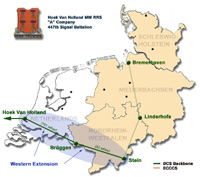
| Brüggen MW Relay Site The relay station at Brueggen (near Duesseldorf, Germany) is one of four stations that make up the Western Extension - a new tropo link of the European Broadband system that is being opened to replace another link that was deactivated as a consequence of FRELOC The other stations are Stein in Germany, Hoek van Holland in the Netherlands and Martlesham Heath in England. Construction of the Brueggen site began in March of this year and is scheduled to be completed by June 30. The antenna tower is a 147-foot steel tower with an unusually broad base to withstand the strong winds found in this area. The tower supports four 30-foot dishes. The station is capable of carrying 120 voice channels each way. (Some of the commo equipment installed at the site was previoulsy used at relay stations in France.) The station is manned by 20 men from the 447th Sig Bn (Webmaster note: not sure if it is Company "A") . |
||||||||||||||||||||||||||||||||||||||||||||||||||||||||||||||||||||||||||||
| (Source: STARS & STRIPES, September 23, 1967) | ||||||||||||||||||||||||||||||||||||||||||||||||||||||||||||||||||||||||||||
| Hoek Van Holland MW Relay Site A new microwave relay site was opened by Company "A" at Hoek van Holland, the Netherlands on Sept 21, 1967. This site links England with StratCom Europe's broadband network on the European Continent. The construction of the site is part of the westward extension of the European broadband system of telephone, teletype and data circuits serving US and NATO forces in Europe. The extension was necessitated by the recent closure of a corresponding link that went through France. |
||||||||||||||||||||||||||||||||||||||||||||||||||||||||||||||||||||||||||||
|
||||||||||||||||||||||||||||||||||||||||||||||||||||||||||||||||||||||||||||
| (Source: Email from Bob Wooten, 1968-70) | ||||||||||||||||||||||||||||||||||||||||||||||||||||||||||||||||||||||||||||
| I was flying to San Diego today and there was another passenger in 18D who was looking at old maps of WWII. Then I thought, perhaps the 447th Signal Battalion is on the Internet. I searched and......well....here I am. I volunteered for the Army in May of 1968. I ended up at Ft Monmouth NJ in (MOS) 26L20. Well, when the orders came in it was for Germany. Didn't really care if it was for Nam or not. I left for Germany in July of 1968. From Ft Dix to Frankfurt and then to the top of the mountain in Baumholder (?). Can't recall if Baumholder is correct or not. In any case, I was assigned to a radio site in Vörden, Germany (Trick chief - Dan Hughes). Vörden is between Osnabrück and Bremen. We had no microwave just 3 Collins transceivers with 1000AMP amplifiers (especially good when the TTY was real bad. We were assigned to an Artillery Group (Webmaster: Dutch 1 GGW, a NIKE-HERC air defense missile battalion-size unit, which had its battalion operations center and 118 Squadron located there. Not sure which US Army SW custodial detachment was located there in support of 1 GGW - 508th?) Not sure which one, but the Artillery Group was there to prevent the Dutch from firing off some nukes. The signal group was there to decode msgs for the artillery group. The Vörden site was part of Company A, 447th Sig Bn. I believe our site (supported the 509th Artillery Detachment) was just north of the firing range along the (yellow line) road that says "IFC" in Rolf Görigk's satellite photo of the Dutch NIKE site). For those of you (who were located) at radio sites, you should be able to recall the authentications from Cemetery 6. We were radio site Cemetery 45. Also, occasionally we would get an authentication from Bold Justice. 'Bold Justice' was an airborne site. We were all part of the Cemetery network. Cemetery 6 was the leader and controlled the Net. Some of the other sites in the net: Cemetery 13 Cemetery 17 Cemetery 23 Cemetery 24 Cemetery 45 - my site, Vörden Cemetery 47That's all the site names that I can recall. As far as I remember, all of the sites mentioned above - with the exception of Cemetery 6 - were part of Company A. In the Cemetery Net, we would receive communications like this from Cemetery 6: "Cemetery, Cemetery, this is Cemetery 6. Stand by for authentication" Cemetery 6 would then poll all of the sites, starting with the first. Cemetery 6 would give 4 letter code. Example: "Cemetery 45, this is Cemetery 6 ..........BFCX" We at the site would then "authenticate" the 4 letters with a code book and a 6" (comb size) template. We would match up the "BFCX" and respond with the proper code. If we were correct, Cemetery 6 would go to the next site. If we were wrong, Cemetery 6 would give another code to decipher. If we were "wrong" again, they would put us in an "Unauthorized" mode and possible infiltration by the 'enemy' (whoever that was). They would no longer poll the site until a land line communication was established or we contacted Cemetery 6 with proper deciphering. This caused a site outage. Our site went 556 days without an outage. The longest in the Network at that time. One of our midnight to 8AM operators fell asleep and missed an authentication. When Cemetery 6 said to standby for a 'message', we immediately contacted the duty officer and crypto guy. When the message was decoded, we gave it to the 'crypto' team and they went into their 'locked' room, opened the safe and read the orders. During my tour there was never anything but a test for the 'incoming messages'. I can also recall that the 447th was part of the STRATCOM/SASCOM agreement, whereas the Signal Corps had different privileges. We did not fall under the command of the Artillery Detachment commander, didn't have to pull guard duty or any KP. We were able to come and go as we pleased as long as we provided the 24-hour communications. Great duty. Vörden was an old German site for the V2's We often went out to the field outside the unit and found old covered up silos. I became trick chief a year later and left Germany in May of 1970. As I recall we were in a room about 10' x 10' and the crypto room was across the hall. The names that I can remember are: John Hanson - Massachusetts Daniel P. Hughes Paul Anderson - Washington D.C. Tom Brewer - Florida Joseph Ferraro - N. J. Terry Smith - Cadiz, Ohio Me - Bob Wooten - Washington D.C. David Louzon - Michigan - An artillery guy. Outside the radio room we had some generators for emergency use. They gave me a jeep (big mistake - what fun) The also gave us a state of the art (International Harvester) mobile radio truck with 4, 4' fiberglass extensions (2 sets each) for antenna. The radios were all digital. Pretty advanced for the time. One day we were heading up to the mountain (Baumholder) and about 30 clicks from the site a huge knocking sound came for the engine. Well we kept going and when we got to the TOP, headed over to the motor pool. Needless to say we broke the crankshaft in half. It broke at an angle which is why we were able to drive it at all. Motor pool was real upset, saying that we were dogging the jeep. 'We were'. Got another one and we headed back to Vörden after our business. I have great memories of Vörden and the Cemetery 6 site. I think of it often. Got discharged from the Army in May of 1970 and am in the Large Mainframe computer business with Hitachi Data Systems. Been with them for almost 34 years. I still live in the Washington D.C. area. Actually in Great Falls, Virginia. Bob Wooten |
||||||||||||||||||||||||||||||||||||||||||||||||||||||||||||||||||||||||||||
| (Source: Email from Marion "Butch" Bonucchi) | ||||||||||||||||||||||||||||||||||||||||||||||||||||||||||||||||||||||||||||
I was just nosing around today and boy does this bring back memories. My name is Butch Bonucchi and I was stationed at Det. 3 50th Tactical Fighter Wing, Hopsten, GE . This site was located near Docter W. Evans – Site chief (dead now) There were a few others that came after me and one before me that I cannot remember their names any more. |
||||||||||||||||||||||||||||||||||||||||||||||||||||||||||||||||||||||||||||
| 1969 | ||||||||||||||||||||||||||||||||||||||||||||||||||||||||||||||||||||||||||||
| (Source: Email from Rick Quirk, Co A, 447th Sig Bn, 1967-69) | ||||||||||||||||||||||||||||||||||||||||||||||||||||||||||||||||||||||||||||
| I was a member of Company A, 447 Sig Bat, 22nd Sig Group, STRATCOM-EUR. I was stationed on a Tropo Site in Hoek van Holland, Holland. I was part of the 447th Sig. Bat, Company A with headquarters in Prum, Germany. Our company had Tropo Sites in Brugen, Germany and Hoek Van Holland, Netherlands. We were kicked out of France by DeGaulle and had to build these sites in a flash to connect communications between the DCA in Washington and Germany. I was stationed at Hoek Van Holland from 1967 - 1969. We sat around in Prum, living in the firehouse until they finished building the site. There were about 18 of us in the beginning. We had a site commander, Maintenance NCO, and Operations NCO to run the site. Our steel building over looked the North Sea and the beach. We spent a lot of time monitoring the girls on the beach with binoculars. The site was an ITT, 1kw TROPO repeater site that connected with Bruggen, Germany on one side and Martlesham Heath, England (a US Air Force site) on the other. We had five 30kw Jetta Generators running the site. We had no commercial power. The site was manned 24 hours a day by two Specialists. We had a truck that was painted NATO Green with no writing on it because the Dutch government did not want any military in the town. But you better believe the Dutch guys knew the Americans were there when we took all their girl friends away from them. We were civilian status and lived in Hotels down town. We always wore civvies, no military clothing. We ate at the "Coach House" (some of us lived there). We drank at the "First" down town. There was a bar named Hotel America and we drank there on weekends. A big dance place. I met my first Russian Military soldier at Hotel America. Twice a day a ship came in from England with passengers. He was a Russian Embassy guard that went home to Russia every weekend. At first we disliked each other but after awhile became friends and I learned all about Communism from him. My best friend was the town's Postman. I used the give him stamps from America. He was so happy. I drove a Puch 50cc moped until the Army said we were not allowed to have them any more. I could go on and on with stories but I just wanted to give you an idea of what it was like and how we lived there. The Hoek was a great place. Unfortunately we had to leave. Not to many Army assignments that folks didn't want to leave in my days. This was one of them. |
||||||||||||||||||||||||||||||||||||||||||||||||||||||||||||||||||||||||||||
| 1970 | ||||||||||||||||||||||||||||||||||||||||||||||||||||||||||||||||||||||||||||
| (Source: Email from Joe Tropea, "A" Co, 447th Sig Bn, 1970-75) | ||||||||||||||||||||||||||||||||||||||||||||||||||||||||||||||||||||||||||||
|
See Joe's other email on the 578th Signal Co during a later tour in Germany.
Part I -- The Early Years (Before Kleine Brogel) Drafted into US Army 21 Sep 1965. Ft. Polk, La for BCT, with AIT at Ft. Bliss as 16C10 Radar Operator for Nike-Hercules missile.
My first assignment after AIT was Travis Air Force Base, Calif, 1st Bn, 61st Air Defense (Nike-Hercules). (Feb-Aug 1966).
Picked-up for assignment to Germany, 2nd Bn 28th Field Artillery (175mm Self-propelled), Ansbach, GE. (see 210th Arty Group); re-enlisted May 1967 (Why?) with Tactical Microwave School 26L as re-enlistment option (what the hell did I know?).
What was good about my assignment with 2-28th, was that I met my wife (forty-one years together this August), made Sergeant E-5, and learned to shoot a 132 lb round 14 miles using a 175mm SP gun and hit the target dead on. Tour in Germany -- September 3, 1966 to 31 May 1968.
Fort Monmouth 31 May 1968 to 31 August 1969, 26L Course and Hold-over for four months. Next assignment Vietnam.
Vietnam (3 September 1969 to 4 September 1970, 337th Signal Company; 1SGT Marvin Young, living in Martinez, GA now and later 1SGT Meadows) with duty at Danang, at company maintenance shop, than assistant NCOIC at Phu Bai radio communications site. On top of small sandy hill about one thousand feet off end of main Air Force runway.) Made Staff Sergeant, Jan 1970.
Part II -- Assignment: Kleine Brogel, Belgium
Returned to States on 4 Sep, 1970 waiting for orders. Finally in late October received orders, reported 2 Nov to "A" Company, 447th Sig Bn, Pruem, GE, to First Sergeant Cromer (he was a good 1SGT, seen him years later in Augusta, GA, but I can't remember name of CO, I want to say Roberts but I'm not sure.), and was informed that my duty station would be at Kleine Brogel, Belgium.
After processing in at Battalion (at Baumholder at that time, 1970), meeting key personnel at company who except for 1SGT I can't remember any other names. Was picked up by a Sp4 Jerry Hooper the following day for trip to Kleine Brogel.
SP4 Hooper drove for three hours through small Belgium towns, some autobahn, than back to local roads to cover the 112 miles to the site, Kleine Brogel. We arrived at night and checked into the Peer Hotel, in the center of the town of PEER, about three miles away from the site. Kleine Brogel site is outside of the town of the same name, but not on any major road, was only in that town once in all my time there.
Later that evening, Sergeant Oliver (Olie) Whetstone, acting NCOIC of Radio Station Kleine Brogel came to the hotel to meet me and we spent a few minutes going over information about the site, personnel, etc. That was nice of him, as it showed some military courtesy even though he was wearing a black turtle-neck sweater under his duty uniform. (You see, it is those little things that I still remember).
SGT Whetstone pick-me up next day on his Harley and off we went at 100 MPH to the site. Now I knew why he wore turtle-neck sweater. It was November, it was Belgium, I was on a motorcycle going 100 miles per hour, and it was COLD!
Kleine Brogel Radio Station
The BEST KEPT SECRET IN THE US ARMY. So Good, I stayed there the next 65 months. That's FIVE years, FIVE months. Could have stayed longer, but things were changing. Good because we got: Overseas pay, COLA, Special housing allowance, and it didn't cost that much to live there. When I did leave due to PCS, I took a $3000.00 per year cut in pay. That hurt.
The early days.
I read what Bruce Werner wrote about Kleine Brogel and he is correct in all things as written during his stay at site. I believe he ends at July 1969, I'll pick up from Nov 1970. Bruce may know some of those listed below. Problem is I have forgotten lots of names and dates.
Who's on site during this time frame:1970-1976:
Det 1, 28th TFW
Lt Col G. B. Massey, Commander
MSGT Castro, 1SGT
MSGT Horton, Medic (He asked me how my blister was, I asked him what was he talking about. He stated that he treated me for a blister in Vietnam First Aid station in 1969. Small world.)
Relationship to Army unit: Provide Mess, billeting, other assistance as required such as transportation, health, welfare and morale support.
Army Personnel on site Marked with asterisk(*) others came in at various dates: (Double asterisk -- on site when I DEROS)
|
||||||||||||||||||||||||||||||||||||||||||||||||||||||||||||||||||||||||||||
|
||||||||||||||||||||||||||||||||||||||||||||||||||||||||||||||||||||||||||||
There are two more: One a former marine SP4 Jerry Hardy,** came in with two children, wife and two show dogs. Second one I can picture him but I can't recall anything about him.
As you can see, I remember most, but time took is toil, and except for SGT Plavec I never saw the others again.
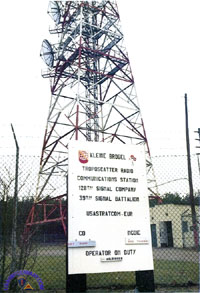
Bold Justice - The MISSION: To provide critical Emergency Action Message (EAM) communications in support of the National Defense Command and Control decisions regarding the operational agencies of the United States armed forces. The Radio Station. (Bruce's picture was accurate on the outside but changes were about to come.)
To do mission, we had two major radio systems:
Primary: AN/FRC-93 or commonly called Collins KWM2A (SSB)
Cemetery 4 Net, (I don't know when it changed from Five): callsign Cemetery 51 under Eagle Farm CRS.
Secondary: AN/FRC-113 Link # TO634 Distant End -- Schoenfield
Radios which supported the Defense Communications System (DCS) portion of the European Command Control Console System (ECCCS) mission, which was headquartered at HQ,USECOM, Patch Barracks, Stuttgart, GE, under the operation of the 587th Sig Co, 52nd Sig Bn located at Patch barracks.
US ARMY Radio Station Kleine Brogel was (Army portion was de-activated sometime in the late seventies and all communication functions going to USAF) physically located on the 10th JB Wing of the Belgium Air Force, Kleine Brogel, Belgium. Go to Kleine-Brogel Air Force Base, for grid coordinates and satellite view. Other web sites will show photos of area, planes, and local surroundings. See next web address for detailed info on the US Air Force at Kleine Brogel: http://www.globalsecurity.org/wmd/agency/usafe-munss.htm.
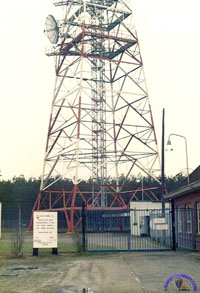
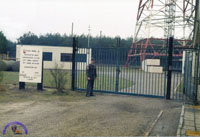
SITE DESCRIPTION: The site itself was an area of approximately one acre surrounded by an eight-foot high wire fence having two large vehicle doors and one electronic lock (most times) personnel gate.
There were two buildings: As you came up to the personnel and vehicle gate walking on gravel, you were actually walking alongside the barracks building on your right. Pressing the entry button on the door frame would ring a bell inside the main radio gray stuccoed walled building approximately seventy-five feet away from the gate. The soldier on duty (or as we would say -- operator on duty) would open his door, see who was at gate and press his electronic gate release button to let visitor in. In case of non-recognition, solider would walk to gate render proper military courtesy and ask for proof of ID, check against approved visitor log, walk back to building and than press enter button. Greet visitor at door of building, render proper military courtesy and have the visitor sign in guest log.
The second building was approximately fifty feet away and housed three 30 KW back-up generators used in case of civilian commercial power failures.
(Which in our case commercial power failures were fairly often, where-as a good operator on duty could get a generator up, and switched over to run site in less than 30 seconds. This thirty second mark was important as microwave equipment took three minutes to come back on line after interruption of power due to automatic time-delays in transmitter and amplifier equipment to prevent breakdowns, keeping down-time to less than five minutes. This also allowed time for the AN/FRC-93's to come back up on the air and allow the operator a chance to catch their breath after running to and from the generator building, turning on generator, doing manual switching of circuit breakers, running back to radio building, hitting reset switch on the AN/FRC-113 radios and getting on now warmed up AN/FRC-93 and notified CRCS that you were now on generator power.)
The best part of this, was that during a major inspection as the question was being asked by the inspecting Colonel what was the procedure for a power failure, at that moment we had a real commercial power failure and was able to demonstrate everything as prescribed above in record time. Passed with flying colors.
When I arrived at Kleine Brogel, this site was under a acting site chief who had the site for about six months where as the regular site chief had DEROS'ed. I don't know what happen before me, but a lot of effort was required to bring up site appearance, procedures, and functionally.
There was only two lights working in the main radio building: one over the AN/FRC 93 consol work area and another, a work light extension cord plugged into the radio equipment and hung over a piece of microwave wave guild. None in the office area or bathroom.
This had to be fixed! Let's just say there was work to do. I was told that Belgium's maintainer would fix lighting, urinals, paint 7000 LTR Diesel Tanks, Paint buildings.
I went to see the Belgium facility coordinator, and he told me that he had $10,000.00 dollars a year to take care of:
Main Belgium AIR BASE building and grounds.Large Belgium Army training baseBelgium Air Force Headquarters.He did find a used urinal that I was able to use and sit personnel replaced the cracked one we had.
How did WE accomplished the rest of work showed above:
Team work. Ordered thru company supply Five five gallon cans of OD green paint, paint brushes and rollers and WE painted diesel tanks.
Found on site not used or read USAREUR agreements on Facility Engineering assistance programs that provided $500.00 per quarter to take care of site needs. Got Frankfurt Engineers to provide two quarters of money plus up-coming quarter to fix lighting (went to local in town commercial lighting shop, picked out good looking light fixtures, nine in all, got four dual spot lights (wired to critical tech bus so when on generator power site main equipment room had lights that stayed on), additional work in contract to fix wiring problems in building, all for under $1,500.00. There was no red tape. I sent bill to Frankfurt, they paid. After that: Had building painted, doors on generator building re-hinged. New out-door security lighting installed at gate, New Sign at front entrance. Every quarter I would look for things that either needed to be fixed or something that just needed changing.
We used to clean generator building floors with mops and soap and water. Water and diesel does not mix very well. Found out easier and faster way by wiping down floor with dry mop and than repaint floor with battleship gray paint using broom sticks and paint rollers. Painted every six months, floors looked great.
Put really thick OD paint on diesel tanks, so thick that they never needed painting again in all the time I was there.
Developed new procedure for Generator SOP that was quoted by DCA Inspection Team during site's 15 May 1973 DCA Inspection visit where site KLEINE BROGEL was awarded rating of "OUTSTANDING". Only site that year awarded "Outstanding" rating.
I would like to share with you all the following as copied from the original Defense Communications Agency letter dated 23 July 1973 addressed
To: NCOIC, DCS Station Kleine Brogel, Belgium
Thru: Commander, USASTRATCOM-EUR, Attn:SCCCE-OEO, APO 09056
Commander, Signal Group 22, APO 09086
Commander, Signal Battalion 39, APO 09034
Commander,Signal Company 128, APO 09692
Subject: Outstanding DCS Performance Award for DCS Station Kleine Brogel, Belgium
Extracted in part:
"The Site NOCIC and personnel at Kleine Brogel are highly motivated towards providing a quality user service and display a high degree of professionalism. The technical competence, positive "can do " attitude and high morale were evident throughout the station. The excellent condition of the electronic and power generating equipments was only excelled by the appearance of the station grounds and buildings. The thoroughness of the generator SOP is singled out as one of the most simple and complete instructions ever witnessed by members of this evaluation team."
Signed by Alan D. Campen, Colonel, USAF, Commanding
The men of Kleine Brogel worked very hard to achieve this award, and to this day, thirty-five years later I am still proud to know them and of what they accomplished.
Some of the company commanders:
Roberts, CPT -- left soon after I arrived. I think I seem him twice.
Richard (Doc) E. Watson, CPT. later Major, Retired 1977? Died - late December 1979, Heart attack. 46 years old RIP "DOC" Cpt Watson became a real friend before and after he retired. He was THE BEST COMMANDER "A COMPANY " had. Bar NONE! He let the NCO's do their job. And he knew how to fire them up!
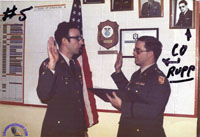
William N. Rupp CPT later Major, seen one other time Ft Gordon years later. Rupp moved company to Shinnen, NL, after him Bradley took over. I was at Change of command. 1SGT Pena.
Peter Bradley, CPT, later Major, seen again in Ft Gordon couple years later.
Lets get back to some things that happen at KB.
Had to go to Bruggen Radio Station for weapons firing. Didn't have right paper work to transport weapons across two borders, so put weapons under rear seat of my POV had solider's sit on them and went across borders. Borders guards never knew.
Had all TEST equipment at Bruggen (every year TMDE went to Bruggen for calibration by Mobil test team), and two SFC's from 22 Gp HQ S-4 Maintance team were on site when I arrived in morning. They had noticed frequency drift alarm on one of AN/FRC 113 receiver phase modules (I don't remember exact name) and they turned some adjustment screws, than looked for frequency counter which was in Breuggen for calabration. By this time they had both receivers down and we were not receiving anything. They didn't know what to do now. They wanted me to go to Bruggen and get Frequency counter. I disconnected some cables, put on headphones and plugged into some output source jacks so I could listen to frequency beat between phase modulators, tuned modules and got zero frequency beat which was close enough to get back into green status. 22 Group maintance left and never ever came back to Kleine Brogel.
Did a fifty hour repair on auto-transformer for AN/FRC-113 Transmitter power supply. Had to go to Burggen, pick-up bad one they had, break it down, use parts to fix bad one KB had, replace in equipment, do all necessary rewiring and testing, Next day, met Company Commander Cpt Watson, fell asleep while talking to him at his hotel breakfast table. Went home and got some sleep. It should be noted: FSR Len Mazzitelli stayed with me all the way until we got off HAZCOMD.
AFN installed FM transmitter on microwave tower so we could have AFN radio in area. So every time site operator made his required hourly radio check on the SSB radio it would cross-feed onto AFN's frequency and you would hear it on AFN's station. That's how I could be informed about my site operators by listening to AFN radio station at night. You could hear everything, call signs, code words etc......
Took a trip to Hook Van Holland site. Right on beach. Those guys had it made. Hollanders went topless! Site was less than fifty feet from sands of beach.
Went to Volkel site in Holland, were the Dutch did everything for them. They cleaned grounds, cut grass, did latrine duty, everything. They had a good looking site too.
Mrs Warner, mother of SP4 Bruce Warner stayed in local area and became big supporter of Kleine Brogel open mess and club. Because of her contributions, the Air Force was able to purchase a building that really served as an beautiful bar/club. SP4 Wolf did the brick work, others did various jobs, but construction work was great and all had some very good times there. Once per month, club was able to afford free grilled meal and beer for all during Sunday brunch. There was some really good times in that club.
My wife and I have good memories of Kleine Brogel. We lived out in the local economy, in fact my address was 72 Heikant Str, Saint Huibechts-Lile, not far from site. I just looked at it on web, area hasn't changed that much, as I could still find Base, Site and even house I rented. Fact: house I rented in 1970 to 1976 landlord was the contractor who built US Army Site Kleine Brogel and house I lived in. Great neighbors who knew how to party. We went out just about every weekend either to club on base or local area. Used to go to Eindhoven, NL for shopping,dinning out and just walking about.
Site was located about 112 miles away from company. Seen CO twice per month, once he traveled to sites, once site chiefs meeting at company hqs. Reenlist NCO (Spy) visited once per month. Even when company moved to Shinnin only went up there when I had too. Bn Cdr once per quarter, Bde Cdr about once per year, had three IG inspections, one DCA inspection (see above), various supply inspections but nothing really that bad. Air force detachment made us stand one dress Class A formation in all the time I was there.
Prior to leaving in Mar 1976, changes were coming. Some Air Force captain was pushing and got approval for a MRC-117 for site. Why I still don't know, since EAO officers didn't have a secondary location, and where was MRC supposed to go.
Additionally, being there over five years it had gotten boring and I didn't get along with Company Commander. I believe I had the best running site, personnel and equipment. He may have felt otherwise. But I'll put that statement up against anybody who knew me back then and was at site. I visited most sites company had. Some were good, even great.
But Kleine Brogel Radio Station was the BEST. Thanks to ALL THOSE SOLIDERS and Civilians WHO MADE IT THAT WAY!!!!!!
Part III -- (FINAL)
I spent the next thirteen years in various places: DOT, Fort Gordon, 1976-1979, D Company 304 Signal Battalion, Camp Carroll, Korea, DOT, Fort Gordon, HHD, 52nd Signal Battalion, S-3 Operations NCOIC, 1SGT, 578 Signal Company, 52nd Sig Bn, SGM, USAISC Detachment, Ft Irwin, Calif. retirement 1993. |
||||||||||||||||||||||||||||||||||||||||||||||||||||||||||||||||||||||||||||
|
||||||||||||||||||||||||||||||||||||||||||||||||||||||||||||||||||||||||||||
|
||||||||||||||||||||||||||||||||||||||||||||||||||||||||||||||||||||||||||||
| "B" Company | ||||||||||||||||||||||||||||||||||||||||||||||||||||||||||||||||||||||||||||
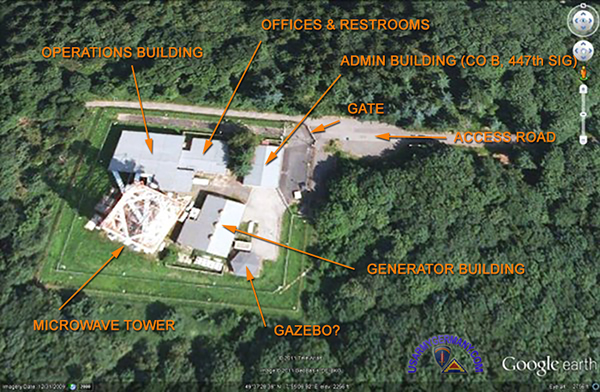 Annotated GOOGLE Earth view of Donnersberg Radio Station (GOOGLE Earth) (Information from Rick Stumbaugh, B Company, 1971 - 1974) |
||||||||||||||||||||||||||||||||||||||||||||||||||||||||||||||||||||||||||||
 Donnersberg Radio Station, B Co, 447th Sig Bn |
||||||||||||||||||||||||||||||||||||||||||||||||||||||||||||||||||||||||||||
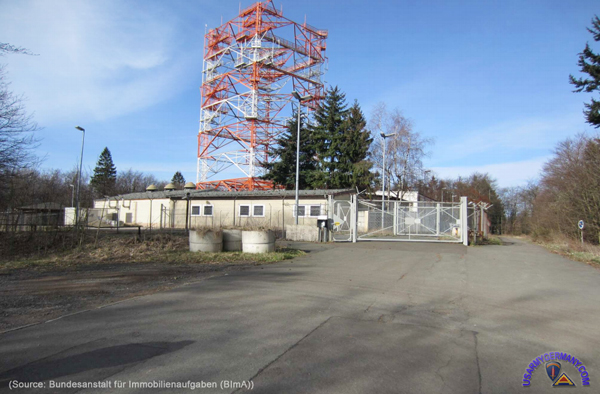 Donnersberg Radio Station after return to German government (BimA) |
||||||||||||||||||||||||||||||||||||||||||||||||||||||||||||||||||||||||||||
| (Source: Email from John Wallenburg, Company B, 447th Signal Bn) | ||||||||||||||||||||||||||||||||||||||||||||||||||||||||||||||||||||||||||||
| I was stationed at North Point in Germany from September of 1971 to December of 1972. I served as a AUTOVON repair tech on the Donnersberg site which is where all the Microwave and communication equipment was located. Our barracks were located at the Kriegsfeld Depot, about 15 km from the Donnersberg site. It was a very small base with limited personnel. The Signal Corps only had one group of barracks while the others were mostly motor pool and MP’s. Was wondering who else was serving there during that time. Recently goggle earthed the area and found the Microwave site and the barracks at North Point but it all looks deserted now. We worked 3 different shifts at the radio site on Donnersberg. The AUTOVON site was in the basement and the Microwave equipment was on the main floor. When we arrived in 1971 we took over the maintenance of the equipment which was being serviced by civilians before that. All the Signal Corps personnel were billeted at North Point. It’s been a long time but I used to drive the 2-1/2 ton up the mountain every day since I had a military license. We also had a German Sheppard dog that stayed at the site and was called DOG which was the call letters of the site. We used to have contest to see who could climb to the top of the tower first. During the 1972 Munich Olympics we were all on high alert and one of the civilian Germans shot a hole through the roof of the generator rooms. The road leading up to the site was a well traveled road by the Germans on their Volks walk on the weekends so we always had lots of activity around the site. Neat to see those old pictures of the site. I did find the site with a very good overhead view on Goggle Earth which also showed the North Point site very clearly. |
||||||||||||||||||||||||||||||||||||||||||||||||||||||||||||||||||||||||||||
| (Source: Email from Rick Stumbaugh, Company B, 447th Signal Bn) | ||||||||||||||||||||||||||||||||||||||||||||||||||||||||||||||||||||||||||||
| I noticed where you had some coverage for this unit at the Donnersberg Facility from 1971-1972.
I was also assigned to this location from May 1971 - May 1974. All personnel at Donnersberg fell under B Company until it was deactivated. We then fell under the 298th Signal Co in K-town until the time I departed. Elements of tactical signal units came and went throughtout my stay, BUT none were inside our fixed facilities. They were units unto themselves, and they would vary from exercise to exercise. During my stay it was a 24/7 operation. I was a SSG, 32D40 at the time. I was a Fixed Station Tech Controller that worked in the upper portion of the facility on the Tech Control equipment. I also worked to the back of the main racks, performing out-of-service quality control (QC) testing. You can't speak about that facility or era without making mention of Mr Joe Ott, who was a civilian engineer that maintained the equipment we used as Tech Controllers. We also had M/W repairmen and many other personnel. Unfortunately, I can't remember all of them, but I do remember SFC Bill Beaudoin, SSG Brice Sterling, SSG Vopelinski and SFC Alphonso McClain. Also remember SSG Mackenzie who a microwave repairman (26V40). It was a busy time. We served during the period when the Baader-Meinhof gang was performing terrorist acts in country. Soldiers without families were billeted at North Point (Kriegsfeld). I am fairly sure B Co was also there. Those of us with families lived in the Weierhof Housing area and would go to Sembach AFB or K-town to access facilities. Every six months our military records would be brought to us for review/update, as necessary. Donnersberg was my first tour to Germany. After Donnersberg I served at Site R at Fort Ritchie, then back to Germany, then Pine Bluff Arsenal, 24th Infantry Division, and lastly, Fort Sam Houston. I retired as a CWO-2. My second tour in Germany was at the 5th Sig Cmd HQ in Worms from 1976-79. I spent the whole tour working at CCC for the HQ. BG Racke was the CG at the time. I played a role with commo support when the Russian Gen visited with CINCUSAREUR during that time. All of that is for a different story. Some comments on the annotated aerial photo (above): "ADMIN BLDG" was the adminstrative building where those in charge worked. "OPERATIONS & OFFICES BLDGS" were joined. "OFFICES" had limited office space and restrooms. "OPERATIONS" was the main area of operations. Tech control was straight ahead as you walked in. Control panels and racks were on both sides of the aisle. In back of the racks/panels on the right was an additional rack with test equipment used to perform out-of-service quality control circuit testing. Multiplex/radio equip was to the "left" of the tech control panels/racks. Below everything on the first floor was the AUTOVON switch and all that supported it. "GENERATOR BLDG" contained the "no-break" generator equipment. In the event of a loss of commercial power, the generators would automatically come on, without interference to the operation of our service. |
||||||||||||||||||||||||||||||||||||||||||||||||||||||||||||||||||||||||||||
|
||||||||||||||||||||||||||||||||||||||||||||||||||||||||||||||||||||||||||||
| "C" Company | ||||||||||||||||||||||||||||||||||||||||||||||||||||||||||||||||||||||||||||
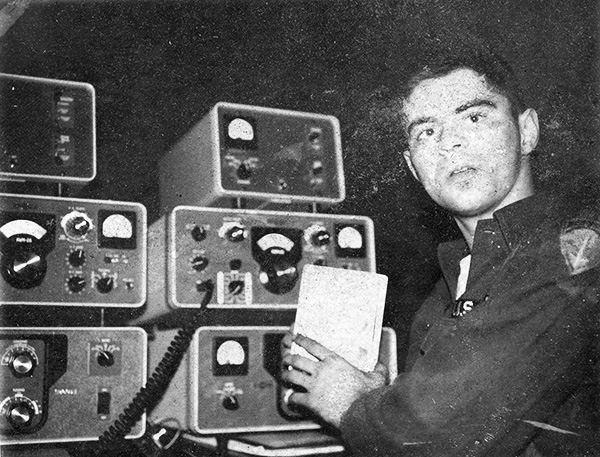 FALLEX 64: We were running the PE generators and of course the Collins KWM's. |
||||||||||||||||||||||||||||||||||||||||||||||||||||||||||||||||||||||||||||
| 1964 | ||||||||||||||||||||||||||||||||||||||||||||||||||||||||||||||||||||||||||||
| (Source: Email from Jim Johnson) | ||||||||||||||||||||||||||||||||||||||||||||||||||||||||||||||||||||||||||||
| I was in Co. C 447th Sig. Bn. I was stationed at the 162 Ord. Co. at Soegel. There was also an artillery group on the site. The site ("Cemetery 59," Soegel Det, 447th Sig) was the alternate to "Cemetery 3." Out company commander was stationed in Bremerhaven. Some of the other personnel assigned to the site were Russell Lewis, Carl Altizer, Gilbert Roberts, and our NCO was Emanuel Allen. I was married in Bremerhaven. My wife came over to Germany from New Jersey. I met her when I was at Ft Monmouth. I still keep in contact with Lewis and Carl, but I could never find Gil Roberts. |
||||||||||||||||||||||||||||||||||||||||||||||||||||||||||||||||||||||||||||
| 1966 | ||||||||||||||||||||||||||||||||||||||||||||||||||||||||||||||||||||||||||||
| (Source: Email from John D.) | ||||||||||||||||||||||||||||||||||||||||||||||||||||||||||||||||||||||||||||
| I can give you the info you need. I went to My duty assignment was Jever Airbase (Flugplatz) with the 35th Artillery Detachment (HQ) which had a Nike Hercules site about 10 klicks from the base. The original unit was C Company of the 447 Signal Battalion but in late 1968 or early 1969 the unit designation was changed - now it was called "C Company Signal Battalion 360." The unit number now followed the unit designation — I always thought it sounded like some old style from way back when that the Army wanted to adopt and make it sound macho, who knows. What ever became of the 447th beats me. Right now looking at a copy of my DD214 so I can confirm the details. I was at Jever from July 1967 to August 1969. I ETS’ed after that at I don’t recall/remember anybody from the Company HQ’s like the CO/XO or First Shirt as I rarely went to The reason we were told about having our orders changed was that the Army wanted to assign the correct MOS to a slot and the radio sites in northern After I left I never had any contact with anybody that was or had been there. I assume all those sites were closed decades ago. |
||||||||||||||||||||||||||||||||||||||||||||||||||||||||||||||||||||||||||||
| 1968 | ||||||||||||||||||||||||||||||||||||||||||||||||||||||||||||||||||||||||||||
| (Source: Email from Steven Pein) | ||||||||||||||||||||||||||||||||||||||||||||||||||||||||||||||||||||||||||||
| I was NCOIC of Cemetery 28 in Walsrode, Germany in 1968 until I was discharged in August 1968. Just prior to that I was a radio operator at Cemetery 33 in Nienberg. Even though I was only SP5, I became the only SP5 to be in the NCOIC slot which was usually reserved for E6 and above. The E6 and above shortage was a result of Vietnam. To help reconstruct the record, as of 10 June 1968:
I've been trying to locate my companions from Nienburg and I wish there was a website where we could all register and find one another. As I recall, everyone on our Cemetery Network was 447th.
The antenna setups were similar at Nienburg and Walsrode. They were strung next to the detachment buildings, and differed by building/surrounding physical constraints.
Equipment at both locations was identical; 3 sets of Collins
We operated both sites with a site chief and at least 4 operators, sometimes 5. Typical schedule rotation was 2 days, 2 evenings, 2 nights, 2 off. We gave more time off when working with 5 operators. The site chief filled in as often as necessary.
Emergency Generators at both sites were in a shed adjacent to the Detachment building, but a pain in the butt to get to in the dark when power failed (as it did quite often). We had 5 minutes to get power back up and then radio in a report that we had experienced a power outage. That covered one's behind in case a radio check had occurred during the outage time, because if you missed a radio check, you had an outage assigned against your personal record.
We operated each site with a hand-cranked field phone that connected to the OD. When traffic (a secure message) was coming, we called the OD and patched him in. (Problem was that the OD could rarely understand the messages given all the background noise and the lousy phones, and always depended on the radio operator to type it out for them so they could go off and decipher it.)
Typical set of events surrounding traffic was:
-- First we'd get a warning from Cemetery 3 that traffic was coming.-- We'd quickly notify the OD via phone patch.-- Next we'd get a broadcast from the actual messaging party that would start something like, "Gangbusters, Gangbusters, this is Active Mountain with a White Delta message for Gangbusters." Most messages were from Active Mountain, but on rare occasions we'd get traffic from Seabell. We were never told officially who these messagers were, but Seabell was allegedly an airborne control platform.In 1968 I received a brand new International Harvester double cab pickup with an onboard radio in the back seat. Before the radio trucks, we were theoretically expected to mobilize the KWM-2A's and follow the Artillery guys into the field if we were going to fire off the Honest Johns for real. None of us were actually trained to do that, so it would have been impossible to provide mobile communications before the pickups were provided.
The radio rooms each had a safe with authentication material, various documentation, and thermite grenades so we could destroy the radios if we were overrun. We had one assigned M-14 and one magazine with 20 rounds, and I don't remember anyone ever maintaining the rifles. We had direct commercial landlines at both locations so we could call HQ Bremerhaven and also make some local personal calls. The only test equipment I remember was a tube tester (with spare tubes) and a Bird Wattmeter.
Each site had a 3/4 ton truck to get us to and from Bremerhaven as required, or to run into town for emergency supplies if necessary. But the International Harvester was only allowed to be driven by the site chief. We had a supply of Petrol coupons to purchase fuel for the vehicles on the German marketplace.
|
||||||||||||||||||||||||||||||||||||||||||||||||||||||||||||||||||||||||||||
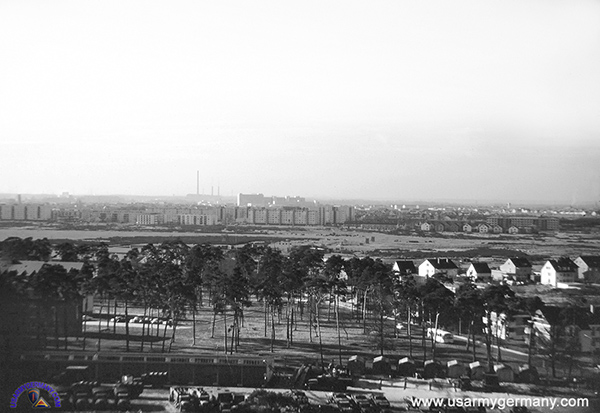 Looking westward from the Microwave tower at Smiley Barracks, 1970 (Tom Horn) |
||||||||||||||||||||||||||||||||||||||||||||||||||||||||||||||||||||||||||||
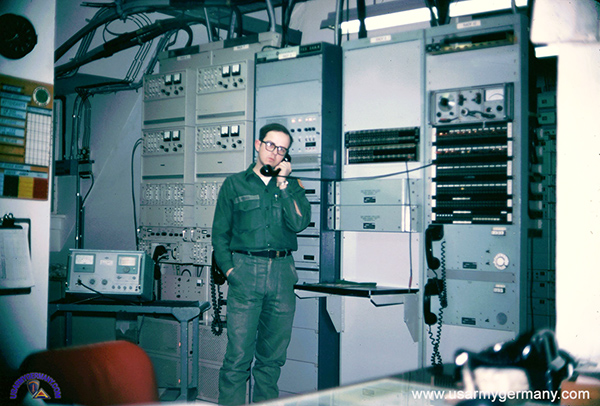 Tom Horn inside the equipment room, Karlsruhe M/W Station (Tom Horn) (AN/FRC-80 microwave equipment behind him) |
||||||||||||||||||||||||||||||||||||||||||||||||||||||||||||||||||||||||||||
|
||||||||||||||||||||||||||||||||||||||||||||||||||||||||||||||||||||||||||||
| 1970 | ||||||||||||||||||||||||||||||||||||||||||||||||||||||||||||||||||||||||||||
| (AN/FRC-80 microwave equipment behind him) | ||||||||||||||||||||||||||||||||||||||||||||||||||||||||||||||||||||||||||||
I was stationed in Germany, Company C Signal Battalion 447 from early 1970 thru May 1971. C Company was headquartered at Neureut Kaserne, Karlsruhe. |
||||||||||||||||||||||||||||||||||||||||||||||||||||||||||||||||||||||||||||
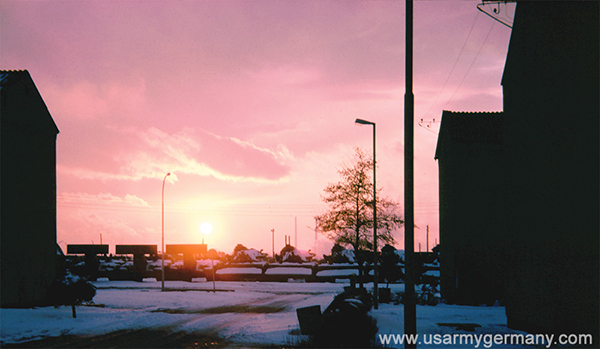 The sun sets over Neureut Kaserne, Karlsruhe, 1970 (Tom Horn) |
||||||||||||||||||||||||||||||||||||||||||||||||||||||||||||||||||||||||||||
|
||||||||||||||||||||||||||||||||||||||||||||||||||||||||||||||||||||||||||||
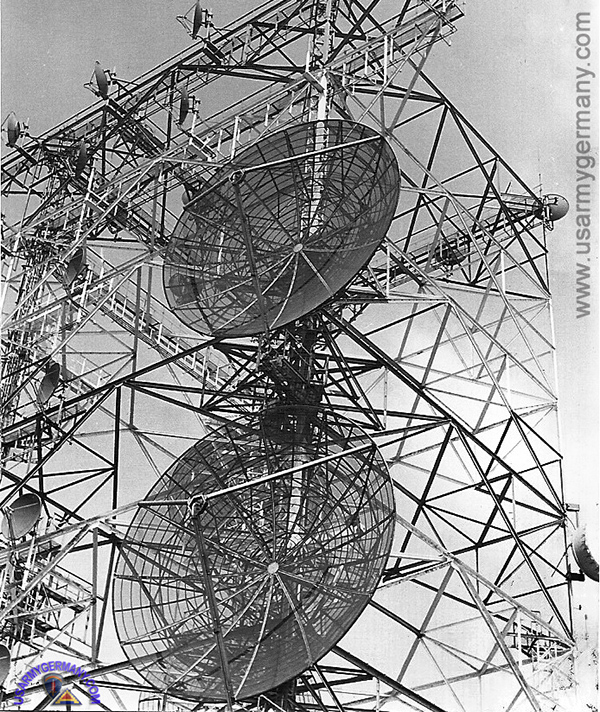 NODAL tower at Linderhofe Radio Station, 1973 (Dan Deitch) |
||||||||||||||||||||||||||||||||||||||||||||||||||||||||||||||||||||||||||||
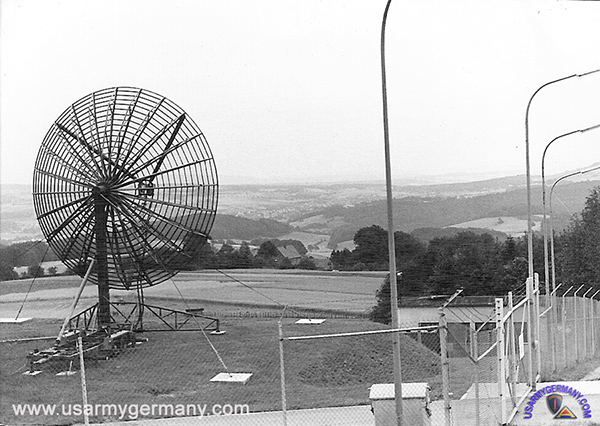 MRC-85 antenna pointed towards West Berlin, Linderhofe Radio Station, 1973 (Dan Deitch) |
||||||||||||||||||||||||||||||||||||||||||||||||||||||||||||||||||||||||||||
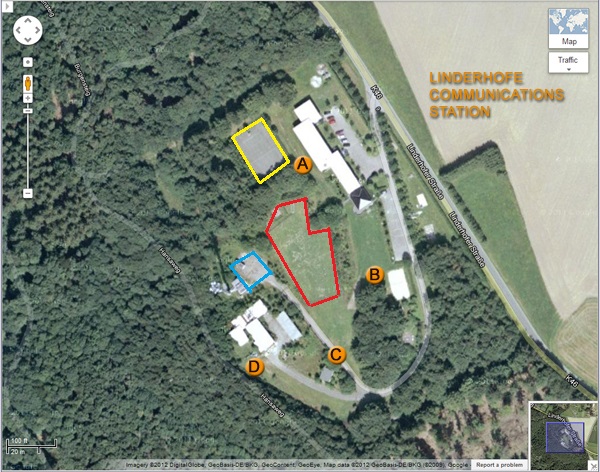 GOOGLE Maps view of former Linderhofe Radio Station site (Click here to see annotations in Dan Deitch's post) |
||||||||||||||||||||||||||||||||||||||||||||||||||||||||||||||||||||||||||||
| 1972 | ||||||||||||||||||||||||||||||||||||||||||||||||||||||||||||||||||||||||||||
| (Source: Email from Dan Deitch) | ||||||||||||||||||||||||||||||||||||||||||||||||||||||||||||||||||||||||||||
| I just found this site and thought I’d add to it. I was stationed in Linderhofe from Nov 1972 until Mar 1975. I started with the 447 Signal Battalion and that was later change to the 39th Signal Battalion. Not sure of about the company for the 447th but it was the 518th Signal Company of the 39th Signal Battalion from 1973 on. I worked on the MRC-85 site for Spec 6 James Cook. My Son was born at the British Military hospital at Rinteln. Our medical support was the British Military Hospital at Rinteln. Most personnel action was at Bremerhaven. We had a small PX in the main building; the closest large Commissary and PX were at Kassel. Just before I ETS’d they got a bus to take anyone who want to the PX and Commissary in Kassel. It was about a 2 hour drive. I did see on Google earth that the MRC-85 site and the NODAL tower are now gone. I am hoping to visit the site next year when we do a tour of Europe. I have attached some pictures from that time period. We shot to West Berlin. If you look in the pictures the 30’ parabolic dishes are pointed almost due East. We really didn’t do Tropo, the signal was aimed at the top of a mountain between the 2 sites and bent down to the receiving site. I have many fond memories of the people I was stationed with and of the living on the German economy. |
||||||||||||||||||||||||||||||||||||||||||||||||||||||||||||||||||||||||||||
| ANNOTATIONS (GOOGLE Maps view of former Linderhofe Radio Station) | ||||||||||||||||||||||||||||||||||||||||||||||||||||||||||||||||||||||||||||
| A is the main company building, it included the offices, mess hall, armory and sleeping quarters. B is the VMF Vehicle Maintenance Facility C is the road that went to the Tower and the MRC 85 site D is the Nodal building and Diesel generators for the Nodal equipment I also put a red outline around where the MRC-85 compound was; I put a blue outline around the NODAL Tower area; the area outlined in yellow wasn’t there when I was there. |
||||||||||||||||||||||||||||||||||||||||||||||||||||||||||||||||||||||||||||
|
||||||||||||||||||||||||||||||||||||||||||||||||||||||||||||||||||||||||||||
|
||||||||||||||||||||||||||||||||||||||||||||||||||||||||||||||||||||||||||||
| "D" Company | ||||||||||||||||||||||||||||||||||||||||||||||||||||||||||||||||||||||||||||
| Bocksberg Radio Station | ||||||||||||||||||||||||||||||||||||||||||||||||||||||||||||||||||||||||||||
| Click here to see the Bocksberg Radio Station Page | ||||||||||||||||||||||||||||||||||||||||||||||||||||||||||||||||||||||||||||
|
||||||||||||||||||||||||||||||||||||||||||||||||||||||||||||||||||||||||||||
|
|
||||||||||||||||||||||||||||||||||||||||||||||||||||||||||||||||||||||||||||
| Related Links: |
||||||||||||||||||||||||||||||||||||||||||||||||||||||||||||||||||||||||||||