| If you do
NOT see the Table of Contents frame to the left of this page, then
Click here to open 'USArmyGermany' frameset |
||||||||||||||||||||||||||||||||||||||||||||||||
|
69th Air Defense Artillery Brigade |
||||||||||||||||||||||||||||||||||||||||||||||||
|
|
||||||||||||||||||||||||||||||||||||||||||||||||
|
||||||||||||||||||||||||||||||||||||||||||||||||
|
|
||||||||||||||||||||||||||||||||||||||||||||||||
| History | ||||||||||||||||||||||||||||||||||||||||||||||||
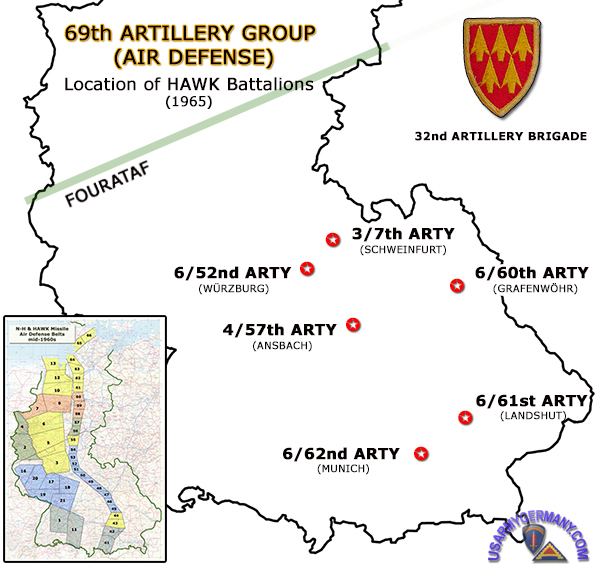 AFCENT Integrated Air Defense System - 69th US Army Artillery Group Click on unit designation to view the location of that unit's HHB, firing batteries and supporting Ordnance (GM DS) detachment (Walter Elkins) |
||||||||||||||||||||||||||||||||||||||||||||||||
 69th ADA Brigade
DI
69th ADA Brigade
DI |
||||||||||||||||||||||||||||||||||||||||||||||||
|
HHB, 69th AAA
Group was activated on 1 July 1955 at Karlsruhe. |
||||||||||||||||||||||||||||||||||||||||||||||||
| (Source: Email from Jim Reinecke, 40th AAA Bn and 69th AAA Gp, 1954-1956) | ||||||||||||||||||||||||||||||||||||||||||||||||
| A BRIEF LOOK AT THE FIRST TWO YEARS OF THE 69TH AAA GROUP IN KARLSRUHE-KNIELINGEN GERMANY | ||||||||||||||||||||||||||||||||||||||||||||||||
|
||||||||||||||||||||||||||||||||||||||||||||||||
| THE 40th AAA BN IN WIESBADEN/BIEBRICH GERMANY 1954 I arrived at the Rhine Kaserne during December, 1953 and served for a year, first as a radar operator in the Range Section and later as Battery Clerk. As a 17 year Private the 40th AAA Battalion was a rude awakening. The kaserne was about 50 yards from the Rhine River in an industrial area near Wiesbaden. Wiesbaden itself was a wonderful city with historical, cultural and entertainment significance. However, we didn’t have much of an opportunity to enjoy what the city offered. The compound was about 300 yards wide and about 700 yards deep surrounded by a wall on both sides and the back and significant in that the three feet of barbed wire on top leaned inward instead of outward. Meant to keep us in. The barracks itself was impressive, a five story building resembling the engineer castle on military insignia. The front of the compound was protected by an 8 or 9 foot fence made up of steel spikes. Other than the main gate the only area open to the outside happened to be in our room in A Battery. To say that the 40th AAA was highly disciplined would be an understatement. Entering the Battalion Headquarters building your first sight was a buildboard sized sign instructing you on how to report for your courts-martial: Summary, Special or General. In day-to-day activites it was common to receive an Article 15 for a button unbuttoned, late for a formation or many other activities. This usually resulted in 7 to 14 days restriction at hard labor. I cannot remember any occasion that I performed guard duty (about once a month) that we didn’t have at least one former NCO under guard being boarded out of the Army with a 368 or 369 discharge. Our work-week began on Sunday evening when we where restricted to the barracks to leave for field training on Monday morning. Early on Monday we would depart the barracks and be carried to the Motor Pool and depart for a radar site across the river in the Mainz area. We would set up the radar and watch the skies until Thursday afternoon when we would take down our equipment and spend the night bivouacked. On Friday we would return to the barracks where we would clean equipment and the barracks for Saturday morning inspections. After a full-field inspection on Saturday morning we would have a parade and if you were extremely lucky be given a pass either until 1 AM or maybe an overnight pass that let you stay out until noon on Sunday. Only 50% of the section could be on pass, with 1/3d of them allowed overnight and 2/3d returning to the barracks by 1 AM. |
||||||||||||||||||||||||||||||||||||||||||||||||
|
||||||||||||||||||||||||||||||||||||||||||||||||
 |
||||||||||||||||||||||||||||||||||||||||||||||||
| (Source: Seventh Army Troop and Station List, 1 Aug 1964) | ||||||||||||||||||||||||||||||||||||||||||||||||
| 69th ARTY GP ORGANIZATION AND STATIONS (Aug 1964) : | ||||||||||||||||||||||||||||||||||||||||||||||||
|
||||||||||||||||||||||||||||||||||||||||||||||||
|
||||||||||||||||||||||||||||||||||||||||||||||||
|
||||||||||||||||||||||||||||||||||||||||||||||||
|
||||||||||||||||||||||||||||||||||||||||||||||||
|
||||||||||||||||||||||||||||||||||||||||||||||||
|
||||||||||||||||||||||||||||||||||||||||||||||||
|
||||||||||||||||||||||||||||||||||||||||||||||||
|
|
||||||||||||||||||||||||||||||||||||||||||||||||
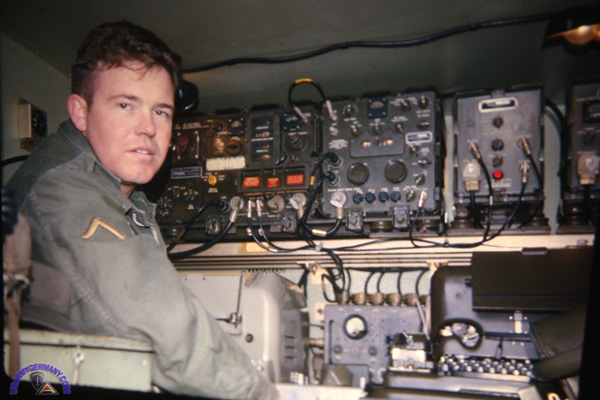 Norm Reynolds mans an ANGRY 46 |
||||||||||||||||||||||||||||||||||||||||||||||||
| 1963 | ||||||||||||||||||||||||||||||||||||||||||||||||
| (Source: Email from Jerry O'Farrell, HQ 69th Arty Gp, 1963) | ||||||||||||||||||||||||||||||||||||||||||||||||
| I arrived at Hq. Battery 69th ADA Gp. after having the pleasure of crossing on the USS Buckner and the added fun of pot washing. The winter Atlantic was no friend of land
loving G.I’s and everyone was seasick. The train ride from Bremerhaven to Wurzburg was an overnight trip and I was spellbound as we passed through picture book, snow covered villages. When we got to the train station at Wurzburg Sgt. Clarence Adams was there in a ¾-ton truck to take us to Emery. We all were radio operators; Bob Campanelli, Norm Reynolds, Floyd Aul and myself. We all had learned 16 word per minute morse code but it wasn’t used at all because everything was radio teletype. We lived in squad rooms on the fourth floor. Radio operators in one room, switchboard operators in the other. For the next 18 months we had more fun than I could ever imagine. The radio section was just like others have written. There was one AN/GRC-26 which was mounted on a deuce and a half and an AN/GRC-46 on a ¾-ton truck. Harley “Doc” Kuest took care of the 26 and Norm Reynolds and I operated the Angry 46. We used that unit all the time. We would take it up the hill to the Airport area where we had a “two niner two" antenna permanently mounted. There we talked to our 6 Hawk missle battalions. On other days we trained with our higher headquarters, the 32nd Bridgade and the 94th Bridgade. On those days we used a doublet antenna strung between buildings of the 3rd S and T (Battalion) of the 3rd Infantry Division which was inside the Emery Complex. Those guys were in the field at least six months out of the year. The Radio Section leader at that time was S/Sgt. Herrara. He soon rotated out and Sgt. Dave Anderson took over. Andy was great with the guys and we had plenty of good times. Campanelli and Aul ended up doing the clerical work in the Commo office so the guys operating the radios were myself, Reynolds, Doc Kuest, Lauren Bonde, Bill Massey, Steve Hurling, Dave Hoffman and Gary Ekegren. Gary was a jock and ended up playing sports at 32nd Bridgade. The switchboard operators at that time were Willie Norwood, Johnny Jones, Tom King, Bob Para Gaza and Jim Gill. The two guys who maintained the helicopters were Dennis Swenson and Jim Dewitt. The mailman was Jack Bebb from California. One of the Warrant Officer pilots who gave us all rides in the L-19 Piper Cub was Mr. Lassiter. I often wonder what happened to him. I’m sure he ended up in Vietnam when things heated up in 1965. We all would go into Wurzburg by cab or walk over the bridge to the village of Zell and have plenty of Wurzburger Hofbrau’s. There was an old German who worked in one of the Guest Houses who would get drunk and show us a picture of himself in a SS uniform with a Luger on the desk! What great times!! Well it all ended when Campy, Reynolds, Aul and I headed home. I got stuck on the Buckner again and got the same pot scrubbing detail! I had a great time in Germany but it was still great to get home. We were processed out at Ft. Hamilton, NY. Campy and I flew back home to Boston and we’re still friends to this day. When we get together our wives just roll their eyes as we talk about the good old days. ADDITIONAL INFORMATION Our use of the 2 radio vans was strictly for training. As I said, the 26 was hardly ever used but the 46 was used just about every week day. When we set up to contact our 6 Hawk battalions we were the Net Control. When we did training with 32nd Brigade they were Net Control. We also had 94th Brigade and I think the other one was the 10th on those sessions. But the crazy thing was we didn't pass any traffic or messages, even fake training ones. All they had us do was make commo checks every half hour or so. That made it pretty boring. I always wanted to make some "conversation" on the teletype but I didn't want to get in trouble. I always wondered who those guys were on the other end! We were lucky in one sense. The real passing of traffic was done in the commcenter which was in one of the 3rd S&T buildings. Those operators had top secret clearances and were never really allowed to "let their hair down" by going out and drinking. They were told they were being watched by the CID. Remember the "guys in raincoats?" In the 18 months I was there we only had one "field problem". And get this!! I never left Emery Kaserne! My van was set up on the little back street behind the 3rd S&T building so I was about a football field away from the 69th building, my warm bunk and the messhall for the week's duration. I worked in the van for the 12 hour overnight shift. To stay awake I would tune the receiver down to the standard AM band and receive a lot of the east coast rock and roll stations including some Boston stations. It was great duty!! So we were on the air during garrison and alert situations. |
||||||||||||||||||||||||||||||||||||||||||||||||
|
||||||||||||||||||||||||||||||||||||||||||||||||
| 1964 | ||||||||||||||||||||||||||||||||||||||||||||||||
| (Source: Letter from M. L. Ray, HQ 69th Arty Gp, 1964-66) | ||||||||||||||||||||||||||||||||||||||||||||||||
| Emery Barracks, Wurzburg, Germany,
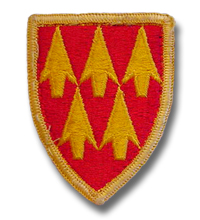
June 1964 - October 1966 After graduating from Radio-Teletype School at Fort Gordon GA. in June 1964, Phillip D. Baker and I were flown to New York where we were put on a troop ship the "William O Darby" for the trip to Germany. After 9 days at sea, we arrived at the port in Bremerhaven Germany. From there we were taken to the Headquarters of the 69th Artillery Group at the Emery Barracks, Wurzburg, Germany. Upon arriving at the 69th, they were wearing the 7th Army patch on the left shoulder. This patch was later changed to the 32 Army Air Defense Command patch sometime in mid to late 1966. During this period, our Commanding Officer was Col. Woodward, with a code name of "Cocktail 6", the First Sgt. was Sgt. Girsenslauger or Sgt "G" for short. There was an S/Sgt. E-6 Suarez and S/Sgt Stallsmith that worked with us in the field. We provided Radio Teletype Communications from the Headquarters to the units in the field. We often went on field maneuvers in the area near Schweinfurt, Germany. One Radio Operator in the field unit had a last name of Elkin. I was responsible for my own Duce and a Half Truck with a 5 or10 KW Generator on a trailer. The radio what I used was an AN/GRC-26 Delta, or "Army Navy Ground Radio Communication", Model 26-D. We also had a small Radio on a ¾ -ton type truck but I can't remember anything about it. The Trucks and Jeeps had the bumpers identified at first as 7A 69ADA-GP  ( Star in the middle ) then there was the letters HQ followed by the vehicle number to the right. Later this was changed to 32 ADA 69 GP. At one point, we hand painted all the trucks then discovered the paint was the incorrect color so we hand painted them again with NATO Green paint. We would go out to the field for maneuvers which lasted approximately 5 days then come back and spend time cleaning the equipment. ( Star in the middle ) then there was the letters HQ followed by the vehicle number to the right. Later this was changed to 32 ADA 69 GP. At one point, we hand painted all the trucks then discovered the paint was the incorrect color so we hand painted them again with NATO Green paint. We would go out to the field for maneuvers which lasted approximately 5 days then come back and spend time cleaning the equipment.I can remember going to the local airport and looking around and watching the small military plane flying overhead. We would take the trucks and go to the Leighton Barracks to their PX, but I don't know what else we were doing there. When we would have a CMMI (Command Military Maintenance Inspection) we would clean the barracks and the other areas and if we had too much (Junk) that they didn't want the Inspectors to see we would load them in the trucks and were told to go off site for the day and return when the inspection was complete. At the time we were being sent to Germany by troop ship, there were five ships making the Trans-Atlantic run. They made up the ships from the Naval Transportation Service. The ships were the Darby named after Gen. William O. Darby, the Rose named after Gen. Maurice Rose, the Buckner, Upshur which was named after a US Marine General and the Patch. I do remember being sick and being on the deck and was surprised at how cold the temp. was in the middle of the Atlantic in June. While in route to Bremerhaven we saw another Military Troop Ship returning to the US. When I left Germany these troop ships were being used to send troops to Viet Nam, therefore I flew home on the MAC ( Military Air Command ) Transport to Fort Dix, New Jersey. I was then transferred Fort Wadsworth, NY and discharged. After being processed out, we were taken by Bus to downtown New York City and dropped off and were expected to find your own way home. About the time I was ready to leave to go home to be discharged, a request came through to send Radio-Teletype Operators to Viet Nam and possible be extended for at least 6 Months. Phillip D. Baker and I left Germany at the same time for discharging. I do remember that we had all our gear turned in ready to go home and an Alert was called. Since we were ready to leave we went to the PX on Post and maintained a low profile till everyone was gone. We didn't get to see any of the guys again. Here are the names of some of the guys that I was with during my time at the Emery Barracks:  Phillip D. Baker from Madison, Wisconsin Gary L. Phillips from Flint, Michigan Kyoji Miyazaki from California Michael DeClementi from New Jersey Buford Allen from Arkansas Donald Conrad Craig T. Coleman Gerald Weigand Harry Hammick Louis Mis Sheridan Greenwalt Sanders Taylor Frick Frazer Phillip D. Baker from Madison, Wisconsin Gary L. Phillips from Flint, Michigan Kyoji Miyazaki from California Michael DeClementi from New Jersey Buford Allen from Arkansas Donald Conrad Craig T. Coleman Gerald Weigand Harry Hammick Louis Mis Sheridan Greenwalt Sanders Taylor Frick FrazerOver the years I have contacted Baker who is still in Madison, Wisconsin and Kyoji Miyazaki who still lives in California. I have not been able to locate anyone else from the unit. |
||||||||||||||||||||||||||||||||||||||||||||||||
| (Source: Email from Richard Sheridan, HQ 69th Arty Gp, mid-1960s) | ||||||||||||||||||||||||||||||||||||||||||||||||
|
||||||||||||||||||||||||||||||||||||||||||||||||
| One day while
I waited by the radio a call came in from an Army pilot requesting
wind direction. The reason he needed this information was in order
to choose from which direction he was going to land. I gave him the
direction and thought nothing more about it. I had no air controller
power or responsibility. I was there as an information source only.
I went around the office doing something else. Then I heard a popping
noise out on the runway so I ran out to see. By the time I got out
there it was over. A few minutes later an Army pilot came down with
an explanation. The Army pilot had landed from north to south as indicated
by the wind direction. At the same time a German civilian pilot decided
to land for some mistaken reason, from the other direction, on the
same runway, at the same time. He was supposed to get the wind direction
from a wind sock out on the field. They didn't see each other until
they were almost on top of each other. In that last second before
they crashed the Army pilot fired a canopy rocket to indicate he was
going to dive while the civilian pulled up on the stick to climb.
That split second action on both of their parts saved two lives that
day. The covention between pilots was first to hit the canopy rocket
dives. That rocket made the noise that I heard. The pilot said he
would count that as an extra birthday for the rest of his life. Once I went to Giebelstadt I no longer did the radio duty at this strip. |
||||||||||||||||||||||||||||||||||||||||||||||||
| ADDITIONAL INFORMATION | ||||||||||||||||||||||||||||||||||||||||||||||||
|
||||||||||||||||||||||||||||||||||||||||||||||||
 |
||||||||||||||||||||||||||||||||||||||||||||||||
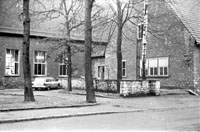
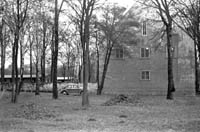
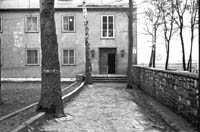
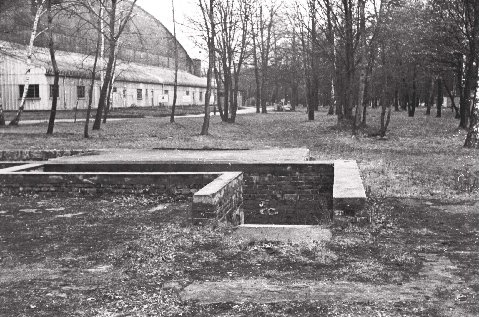
The picture above may have been made into a motor pool at some time but that was not the object of the picture. The ramp into the ground was part of the WW2 German hidden airfield. The story I heard was they had houses that opened up to permit fighters to taxi out onto what looked like a sheep pasture to take off. It was not discovered from the air. Patton's tanks over ran the place on the ground.
|
||||||||||||||||||||||||||||||||||||||||||||||||
|
|
||||||||||||||||||||||||||||||||||||||||||||||||
| (Source: Email from Michael Ireland, HHB, 69th Arty Gp, 1966-69) | ||||||||||||||||||||||||||||||||||||||||||||||||
I was stationed in Wuerzburg, Germany in the Signal Corps, attached to HHB 69th Arty Gp. as an Assistant NCOIC of the Communication Center at Emery Kaserne. I enjoyed Wuerzburg very much and can still see in my mind's eye many of the people with whom I served, including some in the 6/52 and 3/7.
I was given orders for Schweinfurt. A guy named Bobby Williams from North Carolina was also stationed there temporarily. After a week or two we were both transferred to the 69th in Wuerzburg. I was stationed in Wuerzburg from May of 1967 to September of 1969, first of all as a 72B20 Communications Center specialist, then as the Clerk of the Signal Office in Emery Kaserne for over a year, then as SGT E5, Assistant NCOIC of the ComCenter, 72B40 with ProPay. I would like to hear from anyone who served either as a radio operator, in Hawk Missile Repair/Maintenance or as a ComCenter specialist at that time. I have fond memories of times and the people there. I can't tell you how fortunate I was to have served and really matured there. I still have dreams of the place. Colonel Baber was our 69th GP CO at the time. Our SigOs at the time were Lt. (through Cpt.) Campbell, and in '69 a Lt. Mickelson, who at the time was finishing reading Churchill's history of WWII and would talk about it from time to time. The Warsaw Pact invasion of Czechoslavakia was interesting! I also remember Master Sgt. Alfred E. Gerstenslager, who I worked for as a Signal Clerk. Also SSG Steve Ratton, who then left to teach at Ft. Gordon, GA. I remember the following people: Carl Evans, Tim Shimono, Ron Loveday from Bakersfield, CA, Jerry Edrington, Mike Callahan from Massachusetts, John Callahan from Ohio(?) Bill Brickley from Ancorage, Alaska, Jack Holden from California and a slew of others.
Good times, hard work.
You asked about the ComCenter. In my time it was situated across the parking lot on the first floor of another building, a Transportation Company, I believe. I love this site and enjoy reading people's narratives of their experiences! |
||||||||||||||||||||||||||||||||||||||||||||||||
|
||||||||||||||||||||||||||||||||||||||||||||||||
| 1968 | ||||||||||||||||||||||||||||||||||||||||||||||||
| (Source: Email from John Lundgren, HHB 69th Arty Gp, 1968-1969) | ||||||||||||||||||||||||||||||||||||||||||||||||
|
||||||||||||||||||||||||||||||||||||||||||||||||
| 1970 | ||||||||||||||||||||||||||||||||||||||||||||||||
| (Source: Email from Stephen L. Cobb, 6th Bn, 52nd ADA and HHB 69th ADA Gp, 1970-71) | ||||||||||||||||||||||||||||||||||||||||||||||||
| I cannot record my time in the US Army without thinking of the famous opening lines from The Tale of Two Cities...“It was the best of times and the worst of times”. I had been drafted in July 1969 and was living in Indiana. I had then relocate to upstate NY which delayed my final induction into the Army by 3 months. I did my Basic in Fort Dix, NJ in the middle of the 1969 winter (almost froze to death, my feet still hurt). Then it was to A.I.T. at Ft. Sill, OK for field artillery crewman training. For some strange reason half our company got their orders for Germany, 15 went to Viet Nam, and the balance of our company stayed in the States. I finally arrived at Emery Kaserne, Würzburg, Germany in May of 1970. I was originally assigned to the Headquarters Battery, 6th Bn, 52nd ADA after spending about three weeks in that hideous attic induction/rotation area (I’m sure you all remember that experience with great fondness). My first orders were “If it moves salute it, if it doesn’t, paint it!" This was very true when it came to life at Emery. I still remember a friend using the phrase describing our situation, this place is like a “riot-in-slow-motion”. I eventually found that to be quite true, and still use that expression when anyone asks me what was it like in Germany. I must add that the first German words I learned at Emery was the phrase “Mox-Nix” and of course the term “Boo-Koo” was spoken every 15 seconds it seemed...but I digress. I eventually was transferred to the 69th Arty Gp across the street from the main entrance. During my 1st week at Emery I had been assigned to a sign painting detail and had done some Army Reg./informational signs for a Command Sergeant Major Hatcher at the 69th Group Hq. building. He found out that I was to be shipped out to a TAC line battery somewhere (can’t remember the exact name of the town) in what they called the boondocks. (I had refused to illustrate a mural for the Lt. Col. at 6/52 Hq. — I guess he just decided to get even with me with the boondocks transfer). Anyway, I had done such a good job on the Command Sergeant Major’s signs for the 69th Gp. that he wanted me there under his command to do all his sign painting jobs. Everyone know that the U.S. Army loves their signs! I also painted the unit crests on Helicopter doors for the fly boys on the hill, they would take the doors off for me and bring them to the 3d floor for painting. Well, that’s how I finally got to the 69th Group headquarters. I was assigned to S-3 which was on the very top floor of 69th headquarters building. This was a better maintained building as compared to the 6/52 building which had latrines that were broken and closed up for weeks, we had to shower and using the facilities across the base at the 3d Infantry building (which was a real “Hell Hole” at that time). I still remember that I had gotten on a detail that had to clean up the defecation from the building and grounds every morning because the troops did not want to walk across the base to use the bathroom in the cold, wet, foggy German weather. The city of Wurzburg had also complained of strange happenings coming from the Emery Kaserne (i.e. urination from barracks windows, and other various complaints I won’t mention here). If you were there, I sure you know what I mean. No one back in the world would have ever believed any of this of course. This is probably the first time in almost 40 years that I’ve remember this mess, or even wanted to. I only mention it here just to get it off my mind. I was officially assigned as a clerk typist (but basically painted signs, cleaned, and buffed floors) in the S-3 operations area. Also, located on the same floor to the left as you ascended the stairs was the S-2 Security office. Plenty of “sham-time” all around ... buffing the tile floors (I was a buffer expert), cleaned countless latrines … did countless hours (guard duty at the ammo dump) in that little guard shack on the hill in back of Emery’s 3d infantry Division building — reading comic books, and other things ... made hundreds of gallons of coffee ... going to “Chaplain Autry” when you had a problem or just needing someone to talk with that still had their complete mind in working order (this Chaplain just happened to be the highest decorated Chaplain from the Viet Nam war. Years later I found out that he had also written a book titled: The Gun Toting Chaplain—A true Memoir by Jerry Autry, Col. U.S. Army Ret.). Hey ... Remember the “Burn-Barrel?” This was a 2-man detail to burn/destroy classified documents — a rotating barrel located in back of the 6/52 headquarters building, I still remember the day I forgot to close the lid, and while rotating the barrel many of the classified documents blew over the outside retaining wall and into the highway, I almost received an Article 15 for that one .... running to the “Emery’s Snack Bar” for those great German fried baloney sandwiches, remember the phrase “I’ll-fly-you-buy” ... dodged countless flying beer bottles at the EM club and loved those “pizza-burgers." Remember the phase “Everyday's-a-Holiday-in-the-US Army” ... we played the nickel/quarter slots until we were broke and had to borrow next months pay to get by (never did win any money, probably were rigged anyway) ... went to the movies, that did nothing for your, except remind us of the world we were all missing) ... I’ll never forget the day we had to literally change the air in all the jeeps tires, that was the most stupid “Mickey Mouse” detail I was ever on, funny thing about those jeeps — they never ran, but the tires sure looked good when the Army Inspector General (A.G.I) showed up, of course we always knew in advance when he was coming. Well, I’ll stop there. All you who lived in the barracks certainly know the rest of the activities that went on at Emery. My wife eventually came over to Germany to live. We moved into a little two room apartment in the town called Unterleinach (about 7 miles east of Zell). We were the only Americans in that town, it was like going back in time a hundred years, but at least the beer and schnitzel was good. My landlord had been in the Hitler Youth during the war, and at times I think he wish Hitler had won the war—but, he sure loved those American cigarettes and whisky. Every month he got some goodies left over from my ration allotments (of course those commodities were better than money to the Germans). We eventually became great friends, and exchanged letters for many years after that. I hated to hear that the old place (Emery Kaserne) was closed down in the 1990’s. Hard to believe that at one time Hitler’s troops once lived and trained there — well nothing lasts forever, except our memories, good and bad. Hope you enjoyed my reminiscing (it’s all “Mox-Nix” anyway :-) Oh yes...I did survive my Army experience. I eventually became a “short-timer” (two-digit-midget) and made the rank of Spec. 5, rotated back into the world, via McGuire Air Force base, Fort Dix, NJ, December 1971. What a 2 year trip it was, never had another one like it, hope I never will. |
||||||||||||||||||||||||||||||||||||||||||||||||
|
||||||||||||||||||||||||||||||||||||||||||||||||
| (Source: Email from Robert Brien E-4, HQ 69th ADA Gp 1975-1977) | ||||||||||||||||||||||||||||||||||||||||||||||||
| Back in June
1975 I was given orders to report to HQ 6th Bn,
52nd ADA at Emery Kaserne in Wurzburg; my MOS was 72E20,
telecommunications center specialist. At the time the 6/52nd did not
have a slot for a 72E, so for 6 months I was assigned as switchboard
operator for the Hawk Missles on "the Hill" next to the airport. I
remember many a nights watching movies and trying to keep warm in
the Hut. Once I was even sent to Kitzingen on guard duty, one night
about 6 german tanks appeared out of nowhere, surprised me! After many requests I was transfered to HQ 69th ADA, just down the road in Emery Kaserne as a 72E. I was in charge of many a shift at the Communication Center and had many talks with GI's from 3rd 7th, 2nd 57th, 3rd 60th etc... spent many a boring night from 1975 to August 1977 on the teletype with some really great guys, bored just like me. I trained an E-7 on the operations of a Communication Center and he eventually became my supervisor, LOL. I remember there was a Sgt Cox (E-5), and a Sgt Frison (E-5). Cox was a great guy but Frison got physical and at one time when I was in the back of a 5-ton Portable Comm Ctr with bells going off and phone ringing he stated I was not listening and pushed me off the back of the 5 ton and hurt my back. I reported it to SSGT McKenna who talked to him and he was mellower after that. I ended up living off post in Unterdurbach just behing the hill, renting from Frau Shauller. She had a 3 story house next to hers and we lived on the bottom apartment. From my apartment I could walk the dirt road up to the top of the Hill then down to Emery Kaserne. I remember my time in Germany and really would love to go back someday, even though the HQ 69th was moved back to Giebelstadt. |
||||||||||||||||||||||||||||||||||||||||||||||||
| 2008 | ||||||||||||||||||||||||||||||||||||||||||||||||
| Brigade Cases Its Colors After a stay of over 50 years in Bavaria, the 69th ADA Brigade cased its colors at Leighton Barracks, Würzburg, in May 2008 -- see STARS & STRIPES article. |
||||||||||||||||||||||||||||||||||||||||||||||||
|
||||||||||||||||||||||||||||||||||||||||||||||||
|
|
||||||||||||||||||||||||||||||||||||||||||||||||
| 69th Group AADCP | ||||||||||||||||||||||||||||||||||||||||||||||||
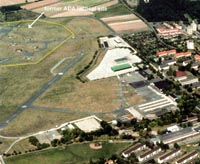
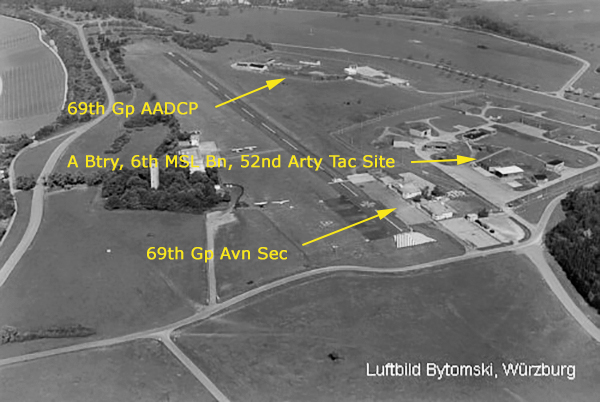 Annotated aerial photo from 2000 of the Schenkenturm airstrip and ADA site (Bytomski) |
||||||||||||||||||||||||||||||||||||||||||||||||
| (Source: Email from Wayne Scarpaci, HQ 69th Arty Gp, 1967-70) | ||||||||||||||||||||||||||||||||||||||||||||||||
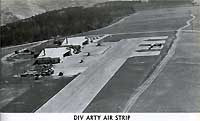
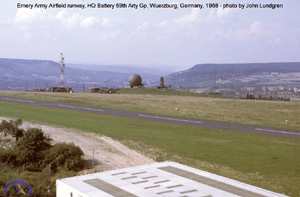
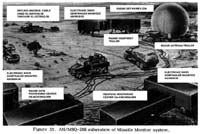
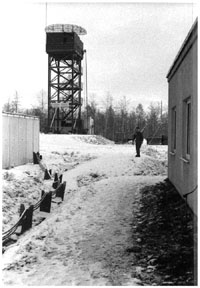
| I was station at the 69th ADA GP's MSQ-56A Missile Monitor AADCP which was located just up 'the hill' from Emery Barracks next to the airfield from 1967-1970. My MOS was 25H20/25G20 Radar Data Processing/Weapons Monitoring Center Maintenance. If anyone has any pictures of the MSQ-28/56 site when it was located at Giebelstadt or Würzburg, I would sure like to get a copy. If anyone wishes any information about the site or life in the 69th ADA during the above mentioned timeframe I would be glad to supply what I can. The unit crest shown above was issued to us about the middle of 1968 and, as I was the 'battery artist,' I got to paint it at several locations around the site and barracks. (It beat painting trucks) The Würzburg airfield picture (above) is the only one that I have seen of the 69th ADA GP's AADCP area on line. The site in the background is indeed the former AN/MSQ-56A Missile Monitor AADCP. The AADCP site also housed CO B, 11th AD Signal Battalion which provided VHF/UHF tac comm. (With a tower located to the extereme left of the black bldgs). I did not have much to do with the 11th Signal as they were supposedly so short on personnel that they were exempt for all guard duty, KP, etc, which made them very unpopular with us. Also on site was the 69th GP's radio communications section. The site was specifically built for the AADCP and the equipment moved from Giebelstadt AB during the summer of 1966. The AADCP area and the radio section were original covered with the old burlap camouflage nets, top and sides, the nets were removed in early 1968. I understand that the equipment was replaced with an AN/TSQ-73 about 1975, and moved back to Giebelstadt AB where it is today(?). The site in the foreground is the former tac site for A Btry 6/52d ADA IHAWK Towed. The two hangers in the foreground belonged to HQS 69th ADA GP aviation section. The aviation section had 2 OH 13's, 1 CH 34, 1 DeHavilland Otter and 1 DeHavilland Beaver. They were used to ferry around the GP Comdr. and staff for ORE's and the like. The woods on the right were known as the Durrbacherwald. The tower in the middle left of the picture was something of a mystery as it was supposed to have been a lookout post for the Festung Marienburg (the local castle overlooking downtown Würzburg about 10 miles away). I always thought that was kind of poetic as we were the modern day equivalent. The owner of the local gausthaus at the very left edge of the picture (to the left of the tower) had the keys and some of us went up inside the tower one afternoon. Very old from the 12th century. The AADCP proper was located in the center of the site just to right of the black buildings (11th SIG) on the gravel pad between the 2 gray bldgs. (barely discernable) which housed the generators and frequency converters (we ran on German power (50HZ) which was converted over to 60hz and 400hz for most of the time, and only went over to generators for alerts or power failures after about 1969). The radar sat up on the radar berm located towards the runway from the AADCP area. I do not know how well versed you are about the 'Q 56', so a brief description follows. The AADCP was composed of: |
||||||||||||||||||||||||||||||||||||||||||||||||
|
||||||||||||||||||||||||||||||||||||||||||||||||
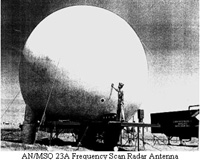
| The radar was
covered by a radome (in fact an inflatable balloon). The photo above
(AN/MSQ-23A) shows the radar with a white radome -- ours and the ones
at 10th ADA at Wiesbaden and 94th ADA at K-town were all green. We had two complete sets of cables to interconnect the vans and commo equipment, one that was located on the ground in use and a complete second set that was located on reels on the back of 2½ ton trucks (in case we needed to leave in a hurry) which were parked in the motor park area (large tan area on the right rear of the site, the tan bldg. was the motor park shed, and POL storage. One comment, we had a LOT of trucks and vehicles, and spent a lot of time working on them. Across from the motor park was the operations building (basically a fancy Quonset hut), it is the long green building, which housed the site admin section, the 'breakroom', the latrine, and the sleeping quarters, for those with on site guard duty. The radio section was located on the small gravel pad located about half way from the operations building to the AADCP area. Their equipment was located on the back of about four to six 5-ton trucks and were (as far as I know) standard radio/crypto equipment. The perimeter of the site was enclosed with barbed wire chainlink fence about 12' tall with 'prison lights' to flood the perimeter at night and signs to the effect the use of deadly force was authorized spaced every 10 feet or so (and we did have live ammo on guard duty and orders to use it if necessary). There were also about a dozen covered and concealed bunkers/foxholes around the inside of the perimeter to provide positions for site defense. I also visited the AADCP's of the 10th and 94th ADA while I was in and their sites were nowhere near as nice as ours was. At 94th ADA they had taken the wheels off the vans and made it a 'fixed' site, I guess that was an admission as to the general lack of mobility of the Nike system. When I visited the other AADCP sites I got the impression that they were not as 'squared away' as 69th was, which at the time really surprised me. I also went TDY to the GPA bunker at Lauda for a short time in early 1969 as 'scope dope' while our equipment was undergoing refurbishment. I assume the you are aware that 3/7th and (I believe) the 6/60th were self-propelled (SP) HAWK, while the 4/57th was a fixed site HAWK unit, with their radar located on the top of towers similar to those of the Nike sites. The 6/52d was standard towed IHAWK. There was another tier of control at the battalion level, the AN/MSQ-18A/38 Battalion Operation Central (BOC) which was located on the back of a 5-ton truck and had an AN/GSS-5 Electronic Search Central for a radar (basically a upgraded AN/TPS-1G) also located on the back of a 5-ton truck. The radar on the BOC was only good for about 100 miles. The only BOC I ever visited was HHB 6/52d at Ansbach, I was not very impressed -- it was the dead of winter and they had very minimal creature comforts. All the batteries had the Coder/Decoder Groups CDG, which was unmanned and located on the back of a 5-ton truck that enabled us via the BOC's to communicate digitally with the Fire Unit Battery Control Center BCC. We were organized into a squad for each maintenance section, WMC, RDPC, RADAR, and Generators, and that comprised the Q-56 Maintenance Platoon. The site NCOIC was also our platoon Sargent. Q-56 Platoon along with the aviation section occupied the top fourth floor bays of our barracks, while the operators ('scope dopes') got the two man rooms on the second and third floors, which did not do a lot to endear them to us. I am not sure of why but the Q-56 section was always considered the 'black sheep' of the unit. Maybe because of our schools (10-12 months of classroom at Ft Bliss), our easy rank (the upper half of our class was promoted from E-3 to E-5 upon graduation, the rest to E-4). But whatever the reason Q-56 always caught the all 'nasty details'. But we did have a really great view of highway 27 and the railroad yards in Zell across the highway (I used to love to sit and watch the trains). Life in the 69th ADA was not overly pleasant as it seems we were always getting ready for one damn inspection or another, cleaning trucks, having a GI party, or just suffering some sort of general harassment that seem to serve no apparent purpose. (I went on in the national guard for many years and I always tried to avoid the sort of pointless harassment that seemed so prevalent in the Army of the 1960's). In spite of the way it sounds, I did enjoy my time in Germany and the 69th ADA. I am attempting to locate all photos that I can of any AADCP facilities that I can find, with the vague idea of putting together a website that would document what the AADCP's were, where we were, what we did, and what we looked like. I feel the AADCP's deserve more than a footnote or a paragraph on Nike and Hawk pages. After all, we at the AADCP's, too, were soldiers once…and young. Disclaimer: The above information is from 40+ year old memories and I believe them to be accurate, but I would appreciate hearing of any corrections or comments of others. SP5 Wayne Scarpaci HHB 69th ADA GP 1967-1972 |
||||||||||||||||||||||||||||||||||||||||||||||||
|
|
||||||||||||||||||||||||||||||||||||||||||||||||
| (Source: Email from Robert Brien, HHB, 69th ADA Group) | ||||||||||||||||||||||||||||||||||||||||||||||||
| In 1975-1977
I was assigned to the 69th ADA Group at Emery Kaserne in Wurzburg,
FRG. I was in charge of the communication center in the basement of
the HHB 69th ADA. My shoulder patch was the 5 Missiles (Christmas
Trees) and my assignment orders say 69th ADA Group. I was originally assigned to the HHB 6/52nd in Mar 1975 with an MOS of 72E20. They had no slots for me, they ran a HAWK missile battery on the Hill behind the Emery Kaserne MSQ-56A Missile Monitor AADCP . I was to become a switch board operator and then a VHF/UHF tac comm operator on the "Hill" on the back of three 5-ton trucks. After 4 months I was transferred to HHB 69th ADA Group and was assigned to the CommCen beneath Emery Kaserne until August 1977. After 2 months I was given charge of the Graveyard Shift at the CommCen. We were the forward for quite a few units; we forwarded all messages via Teletype to the following units: 3rd BN 7th ADA 6th BN 52nd ADA2nd BN 57th ADA3rd BN 60th ADA
|
||||||||||||||||||||||||||||||||||||||||||||||||
|
||||||||||||||||||||||||||||||||||||||||||||||||
|
||||||||||||||||||||||||||||||||||||||||||||||||
|
|
||||||||||||||||||||||||||||||||||||||||||||||||
| (Source: Email from Dana F. Davis. Jr.) | ||||||||||||||||||||||||||||||||||||||||||||||||
| The first AN/TSQ 73 system arrived in Wurzburg, Germany approximately
25 years ago in March of 1979. Originally there were four operator/repairman
assigned to this system, which was to serve
on as a Group Command and Control Center for the Hawk Missile.
As the Group Headquarters there, four battalions were assigned to us in Southern Germany: 3rd Bn, 7th ADA,
Schweinfurt6th Bn, 52nd ADA,
Würzburg2nd Bn, 57th ADA,
Ansbach3rd Bn, 60th ADA,
GrafenwöhrThese also received the Q73 system during the ensuing months, and as operator/repairmen we performed the initial Army acceptance procedures, together with the aid of a Litton Tech Rep. We also acquired necessary equipment - generators, a duece and a half, a PLL van, an 880, a jeep, etc.; and we spent literally months assigned to "site beautification" details. We repainted the buildings, camo painted the vehicles, and installed all such necessary equipment as desks, furniture, radio and 312 equip, etc. There were also 16Hs assigned to our section, two generator mechanics, and a PLL clerk. We were assigned to HHB of the 69th ADA Group, and lived in the headquarters building pictured here on your web site. As I remember it, the first floor was primarily administrative, the second floor was females, and I believe we were on the third floor. The fourth floor was Group Headquarters, and the 5th floor at that time was quite frequently utilized for such things as classroom instruction, or TA50 inspections. I would like to take this opportunity to record the names of these first four 25Ls assigned at Emery. They were myself, Dana F. Davis, Jr. of Long Island, William Campbell of Florida, Edward Dudock of Pennsylvania, and Calvin T. Harper of West Virginia. We operated in three rotating crews with several crew chiefs including Sgt Cafro, Sgt Barr, Sgt Garner, Sgt Knutsen, Sgt Bey, a Spec 5 - Doug Blanchette. I woud be sincerely interested in hearing from any of these people, or anyone either connected with this section before or since, or anyone who may have served at Emery during this time period. |
||||||||||||||||||||||||||||||||||||||||||||||||
|
||||||||||||||||||||||||||||||||||||||||||||||||
|
||||||||||||||||||||||||||||||||||||||||||||||||
|
|
||||||||||||||||||||||||||||||||||||||||||||||||
| 3rd MSL Bn, 7th Arty / 3rd Bn, 7th ADA | ||||||||||||||||||||||||||||||||||||||||||||||||
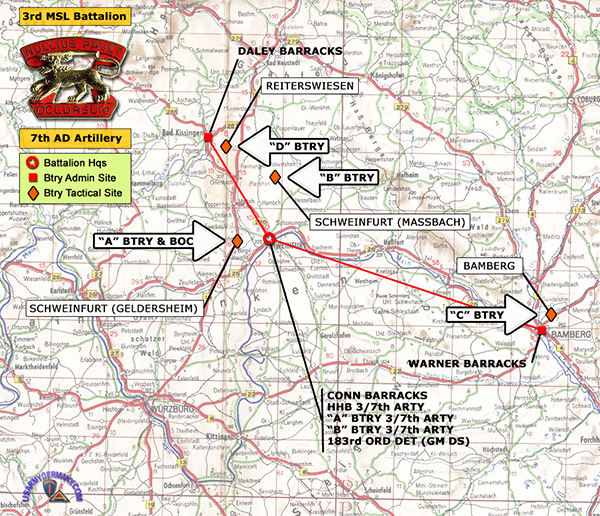 3rd Missile Battalion, 7th Artillery in 1965 -- administrative & tactical locations (Walter Elkins) (click on image for enhanced view) |
||||||||||||||||||||||||||||||||||||||||||||||||
|
||||||||||||||||||||||||||||||||||||||||||||||||
| 1979 | ||||||||||||||||||||||||||||||||||||||||||||||||
| (Source: Email from Roger Farnsworth) | ||||||||||||||||||||||||||||||||||||||||||||||||
| I was in 3/7 ADA from 9/79 to 3/83. I went there as a 63B (Wheeled Vehicle and Generator Mechanic) E-5, left as an E-6 (ETS'd, went to National Guard). I remember Chuck Harkins some. I first worked in HHB's Motor Pool, then as Unit Clerk/Training NCO for HHB, the Motor Sergeant at B Btry, then Asst Bn Motor Officer, finally Shop Foreman, HHB Motor Pool. I lived in Brebersdorf, about five miles west of Conn out Hwy 303. Had a lot of good times, both at work and in Brebersdorf. I played soccer on the town team. I remember at least 2 overflights by Soviet aircraft, including a MIG that suppossedly flew between 2 towers at B Btry. I wasn't on site to see any of these, so it's all 3d hand info. I did, however, see a HIND-D in W. German airspace during a Border Tour. That was when I was HHB Training NCO and responsible for the Ground Defense of the BOC Site. Yeah, those were the days. Now, I'm assigned to a FA Bn, and work full-time as an Inspector in a DS/GS Maint Shop. |
||||||||||||||||||||||||||||||||||||||||||||||||
| A Battery, 3rd Bn, 7th ADA - Schweinfurt | ||||||||||||||||||||||||||||||||||||||||||||||||
| 1980 | ||||||||||||||||||||||||||||||||||||||||||||||||
| (Source: Email from Chuck Harkins, A Btry, 3rd Bn, 7th ADA, 1980-82) | ||||||||||||||||||||||||||||||||||||||||||||||||
| I was in A Battery 3/7 ADA from 5/80 - 11/82. I was the generator section chief. I went from private to Sergeant in that unit and still remember many names. I spent many long hours on our Tac Site and went through many interesting Tac-Evals and field exercises and was given the opportunity to go to Crete, Greece in 4/81 to observe our Battalions live fire exercise. The Tac-Site was on Conn Barracks in Schweinfurt out behind the Flughafen (Airfield). I also attended the Basic Leadership Course at the 69th Group Headquarters in Würzburg. |
||||||||||||||||||||||||||||||||||||||||||||||||
| 1985 | ||||||||||||||||||||||||||||||||||||||||||||||||
| (Source: Barbara L. Sorden Mills, A Btry, 3rd Bn, 7th ADA, 1985-88) | ||||||||||||||||||||||||||||||||||||||||||||||||
| I was a 24C Hawk Firing Section missile mechanic in A Btry, 3rd Bn 7th ADA from late Oct 1985 to Nov 1988. During that time the unit was re-designated as B Btry 6/52 ADA. Our barracks were on Conn Barracks and our TAC site was on the barracks beside the Dust Off Helicopters field. We could actually walk to tac site if we needed too. We had a lot of female soldiers in our unit. We even had a female commander for a little while. That was when air defense was not considered front line/combat units. Although once all our 9 missiles were fired, we became ground troops until we were resupplied, which could take hours or days. A couple of times, one of the operators in the BCC would turn on the HIPIR on one of the landing helicopters. We would then have a very mad Warrant office show up at the front gate of Tac site. The radar would mess up their electronics on the helicopter. We had a couple of time that we went on alert for fly overs across the east/west german border but no one ever picked up any thing on our radars. During that time the PAR radar was also phased out. We worked 24 hr shifts 365/6 days. And then if your duty day fell on a Monday, you were stuck on site for Tactical Tuesday. We would man all the bunkers with 50 cal machine guns and have classes on NBC and all the other tactical stuff. We would also deploy our 3rd platoon to a in field training site. Some times just outside the gate and some times to one of the out lying training sites. If we were in a field exercise training mode, 1st and 2nd platoon never moved until 3rd was up and operational. The other two sections would then off load the missiles and pack every thing up and move. The 3rd firing section was always packed up and ready to move on a moments notice. We pulled rotating shift on Tac site. Everyone pulled duty at least 1 or twice a week. And during your 24 hour shift you had to either be SOG or pull roving guard around the perimeter fence. The only one who didn't was the officer on duty, usually a 2LT. I will never forget the night we had a battalion inspector show up. One of our PAR mechanics, a Spc4, was a country boy from the south. He had put out wire snares to catch rabbits. The inspector actually walked the fence with the guard and they found a snare with a rabbit in it. No one told him how it got there but he did put in his report so the commander heard about it. The Spc 4 was told not to do it again or at least hide it a little better. They phased out the PAR shortly after wards so he got a desk job until he ETSed. In about 1987, they also assigned several 50 cal to be mounted on our deuces and 5 tons. I was married to another soldier, stationed in Kitizingen. So we got off post private housing in a small town between the 2 kasernes. We both drove about 45 minutes to get to our units. |
||||||||||||||||||||||||||||||||||||||||||||||||
| B Battery, 3rd Bn, 7th ADA - Schweinfurt | ||||||||||||||||||||||||||||||||||||||||||||||||
| 1961 | ||||||||||||||||||||||||||||||||||||||||||||||||
| (Source: Email from Nick Tuttle, B Btry, 3rd MSL Bn, 7th Arty, 1961-63) | ||||||||||||||||||||||||||||||||||||||||||||||||
| By August 1961,
I had been in the Army twenty-seven months and had previously had
an Ordnance MOS but been trained as an FDC computer at a 155mm howitzer
outft stationed at Ft. Lewis, WA. I had attended the Sixth Army NCO
Academy at Ft. Ord, CA in 1960 and then attended the ADA School at
Ft. Bliss, TX to obtain the MOB 228.1, HAWK PAR and BCC Maintenance.
After leaving Ft. Bliss, I had orders to arrive at Ft. Dix, NJ on
9 August 1961, for transit to Germany by ship, the Gen. Buckner.
We sailed from Brooklyn Army Terminal on the 12th and arrived Bremerhaven
on the 20th. Arriving at my new duty station, Schweinfurt, Germany, the morning of 21 August 1961, around 0800 after an all night train ride from Bremerhaven, I expected to be picked up by someone from the battery. However, no one was there. All US Forces in Western Europe were on alert and had been for several days due to the fact that the border between East and West Berlin had been sealed with the first crude bits of the Berlin Wall. |
||||||||||||||||||||||||||||||||||||||||||||||||
|
||||||||||||||||||||||||||||||||||||||||||||||||
| By 1815, we were
on our way to the "site," me with my duffel bag, a partial issue of
TA-21 gear and M-1 in tow. Travel was slow, all along the way the
road and roadside were full of troops and equipment, M-48 tanks with
large searchlights mounted above the tube, M-113 APC, SP 8" Artillery,
and more "deuce-and-a-halfs" than I had seen anywhere. As we drove
on, we made small talk, he was from Wisconsin, a short timer draftee,
with about four months left, then back across the "pond" for him --
if things quieted down. I told him a little about me but mainly that
I had left my eight month pregnant wife with her parents before I
shipped out, the baby was due in early September. It was about a 1900
when we arrived at the site. The first thing that I noticed was everyone had on their field gear, carrying their weapons. Next I saw that the Pulse Acquisition Radar (PAR) and the Continuous Wave Acquisition Radar (CWAR) were both rotating and that none of the launchers had missiles. Stump told me that the supply schedule was two weeks out. At that time 36 missiles were to be picked up at an Ordnance Depot in France to be transported back to the site. That's great, we're a firing battery with nothing to fire but small arms; we weren't ADA we were Infantry with some very expensive electronic equipment to look after. I held my M-1 a little tighter as we bumped up the road that cut through the site. Stump took me to the CO and we exchanged salutes along with the normal military protocol. He asked if I had any experience with a MG .50 caliber or a 3.5 rocket launcher. I told him no, only the M-1, the M-2 Carbine, and the M-3 "grease gun." He said, OK, you'll be a loader on one of the 3.5 rocket launchers. After dumping my gear the radio operator took me to one of the emplacement by the motor pool to relieve the cook who was there acting as the loader. The cook headed back to the mess hall (an old re-built Quonset hut). Sandbag emplacements had been set up around the site's parameter to guard against any Soviet troops or vehicles that might have infiltrated the border that was a few km to the east. All night I was there with a SP5 from California, his name was Nakigami. He was to cross-train on the PAR because he had experience with electronics having been an electronic technician on the old 90mm "Skysweep" that had been phased out with the advent of the HAWK. The problem was, they phased out the old before the new had arrived. The next morning I met the sergeant who was in my direct chain of command. MSgt Charles Fentress, one of the finest people I have ever known and worked with, and I still say that today, some 42 years later. He quizzed me about my background, experience and a few questions about the equipment I was to maintain. He asked if I knew about the current situation. I told him that there had been a daily bulletin on the troop ship, the latest news had been passed on to us. I also told him what I had heard from the MP's and Stump. He said that all we could do was to keep the battery "lit-up" so the other guys know we are here. The CO planned on "illuminating" any "targets" that got too close to our section of the border maybe they would have second thoughts. He explained that the battery TO&E called for three men with my MOS, 228.1, and there were only two, so we would have to share 50% of the responsibility for the readiness of the equipment. Nakigami would be trained but he was a "short timer," he could only fill in and would not be left alone at the site as the PAR/BCC maintenance man for some weeks to come. At that time the equipment that the 228.1 was responsible for were the Pulse Acquisition Radar (PAR), the Battery Control Central (BCC) and the Assault Fire Command Console (AFCC). A year later a new piece of equipment was added, the Range Only Radar (ROR). He took me to where the PAR was located, on top of an earthen berm about fifteen feet above the rest of the terrain. We looked at the radar and ran a few checks to insure its operation. Then we went down to the BCC which was located in the back of a long-bed truck, a 5-ton I believe. Inside the consoles were manned. The CO and XO, 1 S, Lt. Merritt, were at the command console, watching the aircraft on the other side of the border. The CO would designate various "targets" to either of the CWIRs, which would then lock onto the target, illuminating them just as the good sergeant had told me. After about a week of long days, long nights and little sleep things calmed down a bit. We were allowed to send a small group back to the barracks in Schweinfurt for a hot (usually only warm at best) shower and a night's sleep between the sheets. I was assigned to stay in a squad room with five others on the third floor of one of the buildings in Ledward Barracks. Delorme, the radio operator, two guys from the launcher area, McCray and Farmer, Roberts, a cook, and Capellas, a CW radar maintenance man. Delorme was from the NY area, McCray was from Florida, Farmer from Georgia, Capellas from Hawaii, don't remember where Roberts called home, upper Midwest I think and I was from Oklahoma, quite a mix. As the days slowly went by, things calmed even more and we were back to a "normal" work schedule by my birthday, the first week in September. I was working 24 on and 24 off at the site. On the morning of September 9th, having finished working at the site and on arriving back at the barracks, Stump came out of the building with a telegram in his hand yelling congratulations to "Papa-Nick." My little girl had been born on the 7th of September. The name Papa-Nick stuck with me through out my tour with B/3/7. Even today, Papa-Nick is what our twenty-year old and eighteen-year old grandkids call me. Thank you, former Pfc. Stump, wherever you may be for giving me that moniker. I saw my daughter for the first time in December of 1961, when she and my wife came to Schweinfurt to be with me, she was 3 months old. By December 1961, the situation had calmed enough that it seemed relatively safe to have them join me. Europe remained at the center of the Cold War, some times it got a little warm but not like in August of 1961 during the Berlin Wall Crisis. Two more major situations would occur before I left B/3/7 in September 1963. The next one was the Cuban Missile Crisis in October 1962, when things got pretty dicey and again both sides reacted in similar ways except in 1962 we were a fring battery -- with missiles. Nick Tuttle |
||||||||||||||||||||||||||||||||||||||||||||||||
|
||||||||||||||||||||||||||||||||||||||||||||||||
|
|
||||||||||||||||||||||||||||||||||||||||||||||||
| 1966 | ||||||||||||||||||||||||||||||||||||||||||||||||
| (Source: Email from Harry M. Castello) | ||||||||||||||||||||||||||||||||||||||||||||||||
|
||||||||||||||||||||||||||||||||||||||||||||||||
|
||||||||||||||||||||||||||||||||||||||||||||||||
| 1973 | ||||||||||||||||||||||||||||||||||||||||||||||||
| (Source: Email from Robert Shoffner, B Btry, 3rd Bn, 7th ADA, 1973-75) I was in B Btry 3rd BN 7th ADA in Schweinfurt, Germany from June 1973 to Dec 1975. Our TAC site was located in Area "M" (Webmaster note: Area "M" is a local training area near Schweinfurt  ). I was a Sgt E-5 16E20 TCA in a basic (conventional we called it) HAWK battery. I participated in 3 REFORGERs and 2 ASP TDY 's to NAMFI on Crete, Greece. ). I was a Sgt E-5 16E20 TCA in a basic (conventional we called it) HAWK battery. I participated in 3 REFORGERs and 2 ASP TDY 's to NAMFI on Crete, Greece.I experienced the high alerts when President Nixon resigned in 1974 and during the Arab oil embargo in 1975. The motor pool on the TAC site was built in 1973 while I was there. I would like to see personell rosters for B 3/7 ADA during 1973 thru 1975 if such rosters exist. |
||||||||||||||||||||||||||||||||||||||||||||||||
| C Battery, 3rd Bn, 7th ADA - Wildflecken, later Bamberg | ||||||||||||||||||||||||||||||||||||||||||||||||
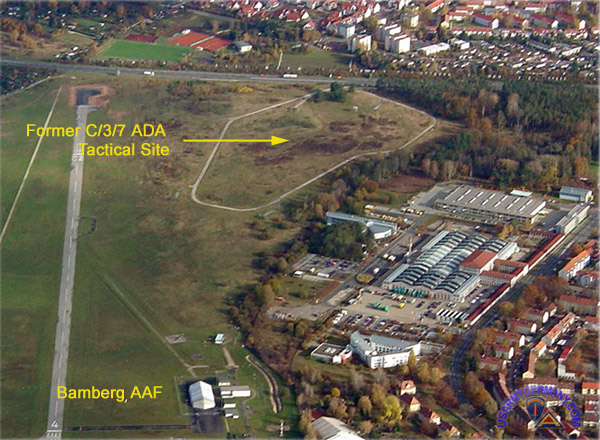 I believe this was the former tactical site near the Army Airfield (Mike Smith) (Can anyone confirm my theory?) |
||||||||||||||||||||||||||||||||||||||||||||||||
| 1961 | ||||||||||||||||||||||||||||||||||||||||||||||||
| (Source: Email from Stephen Wilson) | ||||||||||||||||||||||||||||||||||||||||||||||||
| You asked for more information about units in Germany. Here is what I remember from my time there. I was stationed with a HAWK missile battery at Camp Wildflecken from 2/1961 to 2/1964. The first unit designation this battery carried was C Battery, 3rd Bn, 7th ADA. It had just been formed from a HAWK trained cadre transferred from Ft. Bliss, TX and a number of personnel from C Battery, 3rd Bn., 7th AAA, a 90mm Skysweeper unit. The CO of C 3/7 AAA 1st Lt. Krebs if I recall correctly) became the XO of C 3/7 ADA; the CO was Capt. R(obert?) A. Crisp. The battalion HQ was in Schweinfurt and group HQ was in Würzburg. Sometime later (about a year after I arrived) our battery was reflagged as B Battery, 6th Bn, 59th ADA. The battalion HQ was in Hanau. (Webmaster note: the reflagging must have occured between Jan and June 1962 - per Station Lists.) Sometime later (about two years after I arrived) we were again reflagged as B Battery, 6th Bn, 562nd ADA. The battalion HQ was in Butzbach. Along with either the 59th or 562nd change, our group designation also changed but I am not sure about the timing. |
||||||||||||||||||||||||||||||||||||||||||||||||
| 1968 | ||||||||||||||||||||||||||||||||||||||||||||||||
| (Source: Email from Jack Mutchler, C/3/7 1968-69) | ||||||||||||||||||||||||||||||||||||||||||||||||
| Just finished visiting your site, saw the items about C/3/7 ADA. When I stationed there, we still had the towed launchers. I was with the Commo Section, we all had to pull guard duty, both gate and perimeter. We shared the mess hall with one of the units from the (not sure) 7th FA Arty (175 mm). Guys on the site, meals had to be trucked in and served from the meal canisters. Cannot remember many detaills, but the site was near a small airport and a factory. Remember seeing gliders taking off and landing, also the workers getting off from the factory. We also shared the barracks with MPs and the Unit Police ( they were the gate guards). I remember the Czech incident of 1969, we just got back from being in the field for about four days, the only thing we were allowed to do unload was personal stuff. We cleaned and repacked, loaded back on trucks. We were on High Alert for a couple of days (can not remember how many). We referred to ourselves as "Charlie Hawk." It was Hell being the small unit with the larger units, but we held our own. I served the "Charlie Hawk" from Jan.1968 to June1969, then got orders for the Nam. |
||||||||||||||||||||||||||||||||||||||||||||||||
| 1973 | ||||||||||||||||||||||||||||||||||||||||||||||||
| (Source: Email from Guy Wiltfang, C Btry, 3rd Bn, 7th ADA) | ||||||||||||||||||||||||||||||||||||||||||||||||
| I was assigned
to C 3/7 ADA on the last day of June
1973. I spent my aprox. 2.5 years there and was looking forward to
going home when I met my wife. Enough said. I extended my ETS (Nov
24 1975) one year. Then another. Then reenlisted for three more, current
duty station. Every year fighting to stay one more year. Then, end
1979 or start of 1980, I came down on orders for Fort Lewis, and nothing
I could do would get me out of it. I spent 1.5 years in Washington, then went back to Germany, to C 2/57 ADA. I managed to get out of C 2/57 after about 14 days. 3/7 ADA bombed an AFCE TACEVAL, and was getting ready to go through another. They were in need of a Head Diesel Duck, (generator section chief) and that's my bag! Sooooooooooooooooooooo, I asked the Brigade commander, if he would send me home, and I would fix his problem. It seems that one of the most glaring deficiencies that C 3/7 had, was power generation. I fixed the problem in 7 weeks of non stop work, got an AFCE honourable mention (one of only two in the Battery) and stayed till 1985. About the middle of 1985, I came down on orders to go to a leadership school, be stationed in Fort Belvoir, came out on the E-7 list, was selected to go to Warrant School and my wife was pregnant with our first child after 8 years of trying to have a baby. Big week that was! I took the Warrant school and thought I would never see a Duck Hunter (Air Defender) again. After all, I am an Engineer. My first assignment after Warrant school was Fort Bliss, Texas. HHB, School Brigade. I spent a few months working in Training, getting PATRIOT power generation training going and then went to a DS unit for PATRIOT. The unit was training before deployment to Germany and was a part of a PATRIOT Bn. sized deployment. We deployed in 1986 and I spent aprox. 1.5 years with the 549th Maint Co. in support of the 6/3 ADA PATRIOT Bn. Then I went to the 611th Ord. Co., PATRIOT and HAWK Support unit from 1988-93 when I made the biggest mistake in my life by getting out of the Army. So now you have a very short version of how I spent 10.5 years in C 3/7 Bamberg, and 17.5 years in Germany. I still live about 15 miles from the "new Tac. Site It was sold to the catholic church after the unit closed down. Now it is a place monks and priests go to relax. Or something like that. I am looking for some of the old crew. Guy Wiltfang |
||||||||||||||||||||||||||||||||||||||||||||||||
| 1981 | ||||||||||||||||||||||||||||||||||||||||||||||||
| (Source: Big Time, Bamberg MILCOM newspaper, Aug 28, 1981) | ||||||||||||||||||||||||||||||||||||||||||||||||
| 3/7 ADA protects the sky . . . if it flies it dies By Ed Taylor Almost any soldier who's been in Bamberg for any length of time can name off the location of every unit on Warner Barracks. 6/10th? Right there. 82d? That's next door. 1/54 Inf? Just down the road a ways. How about Charlie 3/7? We all know there is an orderly room just across the road from the American Express Bank, but how about their place of duty. Well, it's located only about 20 miles down the road north by northeast. (Webmaster: just northeast of the town of Dörrnwasserlos.) What do they do out there? Probably one of the most important functions of any unit in Bamberg. Of course all the units here have their own special function like the Infantry, Field Artillery Maintenance, or the Tankers. But C 3/7 has the distinct honor of being the guardians of the skies. Their unit's motto "If It Flies It Dies" clearly defines the particular responsibilities of this elite unit. Along with this awesome responsibility comes some of the most extremely difficult working conditions of any unit in Bamberg, but all most people know about them is they have a champion softball team. The scenery on the long ride up the hill to the TAC Site is absolutely breathtaking on a warm, clear, sunny day. But the members of this elite unit will remind you that it's incredibly cold in the winter months. The winter months, as we all know, can seem like the longest season in Germany. As one member of the Launcher Crew told me "Bamberg can have sunshine all day at the same time we're having blizzards and working in snow up to our back pockets." Because of their unit's mission it is essential they be based at such a high elevation. By being in such a location it gives them the ability to scan the skies and identify any enemy aircraft. There can be nothing in the way to obstruct the view of the computerized radar instruments, so, whatever problems the elevation might cause, it has first priority. The TAC Site is operational 24 hours a day, 365 days a year ready to engage enemy aircraft at a moment's notice should the need arise. To maintain their lonely vigil, the battery has been split up into three crews, each one completely self-contained and an entirely separate entity from the other two. Each group consists of radar mechanics, launcher crewmen, power generation personnel, MPs, cooks, motor pool, communication personnel and a Tactical Control Officer. The three crews are put on a 3-day rotating schedule. At any given time one group is the "manning crew" which means they stay on duty for a full 24-hours straight; a second crew is on "standby" meaning they put in a minimum of an 8-hour day; and a third crew has returned to Bamberg to rest. Each day the schedule rotates, but not necessarily in order, depending on personnel standing or shortages. At times they find themselves pulling two twenty-four-hour tours of duty back-to-back. While they have their billet space in the top floor of the 123d Maintenance billets, the soldiers of C 3/7 get to sleep there only two nights out of every three, if they're lucky. The schedule goes on uninterrupted right through weekends and holidays. The only thing that interrupts the normal schedule is a readiness test -- in which case everybody goes back to the TAC Site -- even if they havejust finished their 24 hours. For the most part the soldiers of Charlie 3/7 learn to take the working hours in stride. But it's the weather that gets to them, especially in winters. In higher elevations the winds and cold can be extremely harsh. However, nobody is exempt from the duty at C 3/7 TAC Site. Even the MPs whose job it is to maintain the physical security and tend the gate to assure that no unauthorized persons enter the compound are assaulted by the cold and wet weather. There are, however, certain benefits associated with pulling duty with Charlie 3/7. One of note is coming up real soon when one of the three crews is being sent to the Greek island of Crete for a week. There they will undergo actual live fire exercises. Usually, the soldiers train using simulators that project targets on their radar screens, which they lock their missiles on and "shoot down." In Crete they will be actually firing missiles at real targets. It is a rare soldier who actually complains about his job with the ADA. The vast majority are intensely proud and happy to be working in such a specialized field. Still it's a lonely feeling when everybody thinks all you have is a good softball team. |
||||||||||||||||||||||||||||||||||||||||||||||||
| D Battery, 3rd Bn, 7th ADA - Bad Kissingen | ||||||||||||||||||||||||||||||||||||||||||||||||
| 183rd Ordnance Detachment - Direct Support Pltn | ||||||||||||||||||||||||||||||||||||||||||||||||
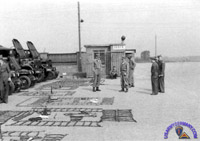
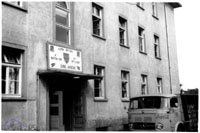
 183rd Ord Det work area (Bldg #55?), Conn Bks, Schweinfurt, mid-1960s (Paul Nawotka) |
||||||||||||||||||||||||||||||||||||||||||||||||
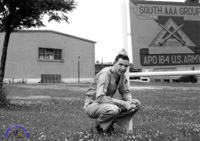
 Unit sign on maintenance building (Paul Nawotka) |
||||||||||||||||||||||||||||||||||||||||||||||||
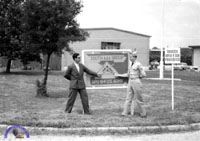
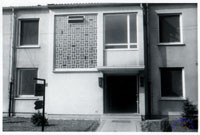
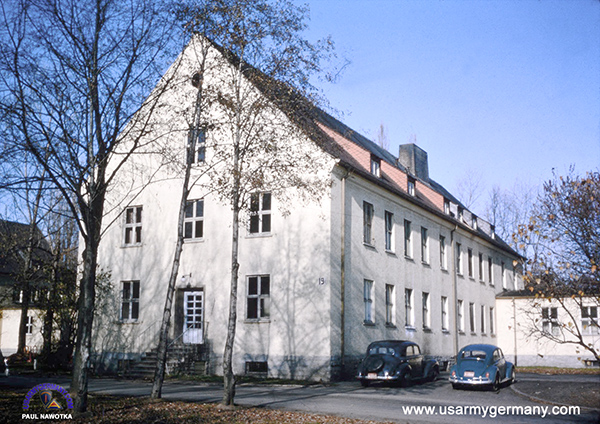 183rd Ord Det barracks, Bldg #19, Conn Bks, mid-1960s (Paul Nawotka) |
||||||||||||||||||||||||||||||||||||||||||||||||
| 1960 | ||||||||||||||||||||||||||||||||||||||||||||||||
| (Source: Email from Ted Nowicki, 183rd Ord Det, 1960) | ||||||||||||||||||||||||||||||||||||||||||||||||
| Enjoyed your details of the Units who made the Hawk one of the best. The Army must have had the same story for every new unit, in 1960. They were the first to be activated. Add this to your list. The 183rd Ordnance Det. was formed at Redstone Arsenal in Huntsville, Alabama. The year 1959. After training for many months, Orders were issued on Aug 24, 1960 to proceed to Schweinfurt Conn Baracks, West Germany. With 34 trained troops we took a bus to Atlanta, train to Brooklyn Army Terminal, where the unit boarded the (USNS) Randall to Bremerhaven. Another train to Schweinfurt. Another couple of days and all the Test Vans Trucks Jeeps etc. arrived at Conn Barracks, by train. The CO, Sergeants and Warrant Officers were already there as an advanced party -- so things went like clockwork for the rest of us. We were assigned to Direct Support of Batteries A, B, C, and D of the 3rd Missile Batallion 7th ADA. The 4 batteries were A - Conn Barracks, B - Wildflecken, C - Bamberg, and D - Bad Kissingen. None of the sites were finished upon our arrival but within 6 months all the equipment was powered up and running. Bamberg was the last to be constructed.. The previous owner of the land presented C battery with a gift of a goat who kept the site as clean as a whistle. The missile guidance packages and actuators were sent to our shops at Conn Baracks. The Launchers were repaired on the spot. All the Electronics still had solder in vacume tubes so repairs took a bit longer. The first changes to the missiles was the change from Battery Power to EPU. This Unit expelled a plume of black smoke from the side port a couple of seconds before launch. By now you might expect, my job was a missile/launcher repair. One memorable event happened since we were in the service. It was a 30 year reunion in Zanesville Ohio. 23 of the original 34, and their wives got together. This was in 1990 and we marched along with Our Co and Warrant Oficers in a parade in nearby McConnesville Ohio,where a National Guard Unit was dedicating a Hawk Site for training other National Guard Units. |
||||||||||||||||||||||||||||||||||||||||||||||||
|
||||||||||||||||||||||||||||||||||||||||||||||||
|
|
||||||||||||||||||||||||||||||||||||||||||||||||
| 8th Bn, 43rd ADA (Patriot) | ||||||||||||||||||||||||||||||||||||||||||||||||
 8th Bn, 43rd ADA DI 8th Bn, 43rd ADA DI |
||||||||||||||||||||||||||||||||||||||||||||||||
| (Source: Email from Brendan Gage, HHB 8-43 ADA (Patriot), Giebelstadt, Germany 1987-1990) | ||||||||||||||||||||||||||||||||||||||||||||||||
| I was taking a look at your website devoted to 32nd AADCOM units in Germany. I was a member of HHB 8-43 ADA (Patriot) in Giebelstadt, Germany from July 1987 to August 1990, and wanted to clarify a few things and hopefully fill in a few blanks for you. I'll give you a brief background on myself and my time in USAREUR. I did AIT at Ft Sill and graduated as an 82C (Field Artillery Surveyor) in May, 1987. I was assigned to HHB 8-43 ADA at Ft Bliss Texas. As soon as I arrived, I found out the battalion was being deployed to Germany. After a month at Bliss, we shipped out, and I arrived in Germany in July of 1987. We were part of 32nd AADCOM, 69th ADA Brigade. To clarify something on your website, my unit was wearing the 32 AADCOM patch up until the time I ETS'd in August 1990 - beyond the year of 1982 as indicated on your website. I believe it was worn when the unit, then renamed Task Force 8-43, deployed to the first Gulf War. Again, we were located in Giebelstadt Army Airfield, about 20 km's south of Wurzburg. Our battalion was comprised of 4 batteries - HHB, A, B, and C batteries. We also had the 57th Maintenance Company attached to us. At Giebelstadt, we also shared barracks space with members of C Btry, 6-52 ADA (HAWK). HHB 8-43 ADA spent its time in Giebelstadt, where the Fire Direction Center and battalion motor pool was. The other three line batteries spent their time rotating every few months between a Patriot site at Kitzingen and another whose location escapes me at the moment. The third battery would stay behind in garrison. HHB also had an infantry company attached to it for security purposes, and I believe the infantry company pulled guard duty out at our missile sites. Our unit crest was the "Sustinemus" crest now associated with 3/43 ADA. I hope this was of some use to you, and perhaps you can add it to your history of ADA units in Germany. I gave 3 years of my life to HHB 8-43 ADA, and I think it deserves a mention. I can give you a list of names I recall from my time there if that would help. |
||||||||||||||||||||||||||||||||||||||||||||||||
 |
||||||||||||||||||||||||||||||||||||||||||||||||
| 6th MSL Bn, 52nd Arty / 6th Bn, 52nd ADA | ||||||||||||||||||||||||||||||||||||||||||||||||
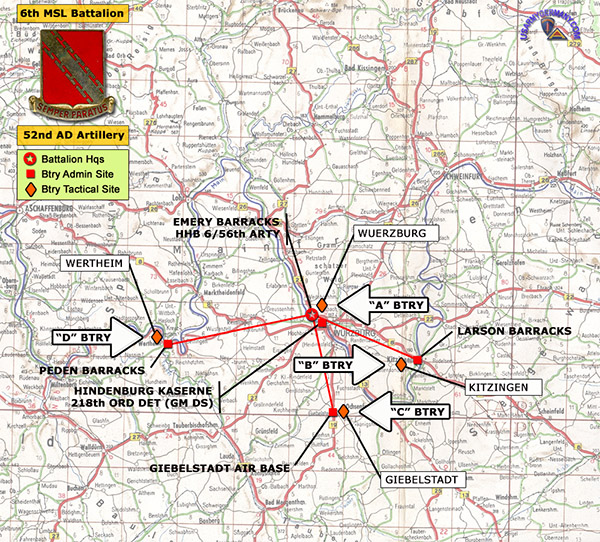 6th Missile Battalion, 52nd Artillery in 1965 -- administrative & tactical locations (Walter Elkins) (click on image for enhanced view) |
||||||||||||||||||||||||||||||||||||||||||||||||
|
||||||||||||||||||||||||||||||||||||||||||||||||
|
||||||||||||||||||||||||||||||||||||||||||||||||
| 1961 | ||||||||||||||||||||||||||||||||||||||||||||||||
| (Source: Email from Bob Butler) | ||||||||||||||||||||||||||||||||||||||||||||||||
| "D" Battery, 6th Msl Bn, 52nd Atry, 32nd Brig was located in Wertheim, Germany near the airfield just outside Peden Barracks. Doc Hamilton, now deceased, has a webpage with some history of the 52nd in Germany. If you are interested I can add some little known info about how the "D" Battery was once "B" Btry 6th Msl Bn 59 Arty 32 Brig and changed unit names. I have the dates on a copy of my 201 files. Our headquarters was located in Wurzburg as well as "A" Btry. How B Btry, 6th MSL Bn, 59th Arty became D Btry, 6th MSL Bn, 52nd Arty On January 6th 1961. B/6/59 started training at Fort Bliss in Area 4. A small contingent was sent to Wertheim, Germany ahead of the outfit to prepare for the unit's arrival on August 13, 1961. I have only found one mention of the 59th being in Germany in this time frame but am positive they were there as I kept in touch with some friends in the other batteries. Anyway we operated as B/6/59 even though the rumors were we would be transferring to the 52nd. One day some of the NCOs came and collected our unit crests and met in a Gasthaus and exchanged crests. Shortly after we stenciled our vehicles with the new D/6/52 designation. The official date was March 1, 1962. Our CO was Captain Shultz soon to be replaced by Captain Warner. The reason for the change was rumored to be Hawk units were placed in Germany in a bit of a rush due to the Berlin Wall Crisis and units were re-designated because it made more sense due to the physical locations of the outfits. Once there was an article in, I presume, the Stars and Strips about B/6/59 having trouble operating in the unusual amount of snow in Wildflecken or Fulda. I do not know if they were the old D/6/52 or not. I am still in touch with some of the German Security Officers that worked at Wertheim after I left but they are a good source of information for the mid to late seventies if you have further questions. |
||||||||||||||||||||||||||||||||||||||||||||||||
| 1969 | ||||||||||||||||||||||||||||||||||||||||||||||||
| (Source: Email from James O'Hearne) | ||||||||||||||||||||||||||||||||||||||||||||||||
| In 1969, the BOC was located at the alert position of HHB, 6/52 ADA in Biebelried right of the main Wueuzburg-Kitzingen highway near the Autobahn. It also was a permanent commo site for the battalion and an old WW2 German facility. No buildings, only bunkers and trucks and tents. It was completely through and on the far side of Wuerzburg and had been used at that time for some years. ADDITIONAL INFORMATION To help jog memories, the BOC / Alert position had a large flag pole on a large raised base in the center of the position from Wehrmacht days and and at the base of the pole was a sealed manhole type entrance to a ladder which descended into German underground tunnels. The site was on the left side of the highway as you drove toward Kitzingen, about 1/3 of a mile from the highway on a gently up-sloping grade. Spent too many damn hours in the early morning hours at that cold hell hole. Lol I have looked on available modern maps and cannot find any mention of the remains of the position and on lists of American installations in Wuerzburg and Kitzingen it did not appear probably because it was only a very primitive semi permanent field location, not a Kaserne or bases. INFORMATION FROM D.R. HAMILTON'S PAGE 1) 6-52 was redesignated 1 November 1960 as Headquarters and Headquarters Battery, 6th Missile Battalion, 52d Artillery (organic elements concurrently constituted). The battalion was activated 17 November 1960 at Fort Bliss, Texas. Officers, NCOs, and soldiers were brought in throughout the Army to makeup the Battalion. 6-52 underwent basic unit and advanced unit training at Ft. Bliss. As I recall, there were 3 battalions activated at the same time. One going to Germany (6-52), one going to Korea, and one going to Okinawa. The battalion left the United States from New Jersey in June 1961 aboard the USNS Buckner and we arrived somewhere around mid-month June. The battalion commander at the time was LTC John Tichner; the battalion Sergeant Major (the designation CSM was not used then) was SGM Victor Hayward: two fine men and outstanding leaders. Most of the NCOs then were WWII and Korean War vets. Upon arrival in Germany HHB & Btry A went to Emery Barracks (also referred to as "Emery Kaserne" in Würzburg), Btry B went to Bamberg, Btry C to Giebelstadt, and Btry D to Wertheim. The Battalion TOC was out East of Würzburg about 10km (I believe there is an autobahn running through that location now). At the time we were under the 69th Arty Gp, its HQs use to be on the 2d floor above the Battalion HQs. First fully operational HAWK Battalion in the US Army. 6-52 was the first operational HAWK Battalion in the Army. The other two at the time were still in training phase. There were no HAWK Battalions in the United States. Due to the Cold War and the Soviet threat, the first priorities were Europe and other overseas locations. 1) D.R. Hamilton's remembrances can be found on the D 6/52 ADA Hardheim Germany website (accessed 01/01/2020) (http://thumbwave.com/d652ada/index.htm) |
||||||||||||||||||||||||||||||||||||||||||||||||
| 1970 | ||||||||||||||||||||||||||||||||||||||||||||||||
| (Source: Email from Dennis Williams) | ||||||||||||||||||||||||||||||||||||||||||||||||
| I found your website while surfing for old AADCOM information. I served in B Btry, 6th of the 52nd ADA HAWK from June 1970 to November 1971. I was initially the maintenance officer until missile qualified. My assignment then was firing platoon leader and I served as the tactical officer for the rest of my assignment. We were a tactical site and ran on 45-kw generators the whole time. Five generators were on line and two in reserve. LTC Bobbie M. Watts was the battalion commander. Major Landry was the executive officer for the battalion. I do not recall the names of the other staff officers. When I arrived the BC for the battery was CPT Dickie Dykes. Dykes went on to Nam shortly after I arrived. I recall Dykes picking me up at Frankfurt and riding back to Kitzingen at full speed in an extremely small car. LT Ken Fowlkes was the XO followed by LT Skip Durgin. Durgin also left us to go to Nam. CPT Dave Jones was the next BC. He was ex-Air Force CW operator who made officer in the Army. He served with an Army HAWK unit in Viet Nam. They were pulled out after a short period. The next BC was CPT Jerry Jones, an aviator getting his command time in. He flew Cobras in Nam. Other LT’s were Burgess and Firestone. First shirt was Rinneck. He was great, a three war guy, and all the LT’s as well as the BC’s had a lot of respect for him. Other names SFC Rinker , Ruiz, SPC Woloskie , Knowles , Pollock, Conley in PLL, Hochesgang in generator section, Oxendine , and so many others whose faces I remember without names. The years have removed a lot of memories. We were TO&E five officers, but only had two at a time in the unit for a number of months. Enlisted TO&E was 110, but we only had 55 for a long time. Everyone was in Viet Nam. We actually had an air incursion one night when we had so few to man the systems. We received a “blue dot” that night, the only one we had while I was there. We really thought we were going to have to hook up the umbilicals to the missiles that night. I had a lot of air surveillance missions which required us to deal with the AADCP on our UHF shot. Wish I knew who the guy was on duty up there many times I was on. I went by Delta Whiskey when in direct conversation with him on UHF. I never will forget the solid lock we got one night at max altitude and speed on our indicators. After a few minutes to check it on his screen, he said it was a “cloud”. I later found out it was probably SR 71’s. We lived on the economy in a three apartment German home. We are still in touch with them every year or two. I have lots of good memories and a few rough ones. I hope every one of the guys in the unit have done well through the years. |
||||||||||||||||||||||||||||||||||||||||||||||||
| 1985 | ||||||||||||||||||||||||||||||||||||||||||||||||
| (Source: Email from Dave Moeller) | ||||||||||||||||||||||||||||||||||||||||||||||||
| I was Commander, B Btry, 6th Bn, 52nd ADA (HAWK), at Larson Kaserne, Kitzingen, for 15 months until the unit was inactivated. I was moved to HQs, 6/52 ADA at Emery Kaserne, as S4 until August, 1985. LTC Kempf and LTC Stewart were our Battalion Commanders. |
||||||||||||||||||||||||||||||||||||||||||||||||
| 218th Ordnance Detachment (DSP Support Platoon) - Würzburg | ||||||||||||||||||||||||||||||||||||||||||||||||
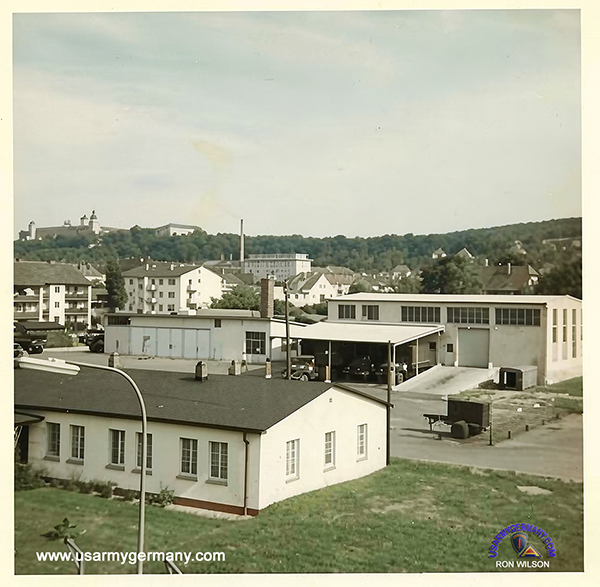 218th Ord Detachment - looking at the Annex from a barracks building on Hindenburg Kaserne, across the street from the 218th work area (Ron Wilson) |
||||||||||||||||||||||||||||||||||||||||||||||||
| 1967 | ||||||||||||||||||||||||||||||||||||||||||||||||
| (Source: Ron Wilson Facebook post (32nd AADCOM FB) | ||||||||||||||||||||||||||||||||||||||||||||||||
| I arrived at 218th Ord Detachment, DSP, 6/52nd in Wurzburg in March 1967. I'm told that this location was eventually redesignated as the 569th Ordnance Company. Photo was taken from our 3rd floor barracks across the street overlooking the 123 Signal BN headquarters. |
||||||||||||||||||||||||||||||||||||||||||||||||
| 569th Ordnance Company / Direct Support Battery - Würzburg | ||||||||||||||||||||||||||||||||||||||||||||||||
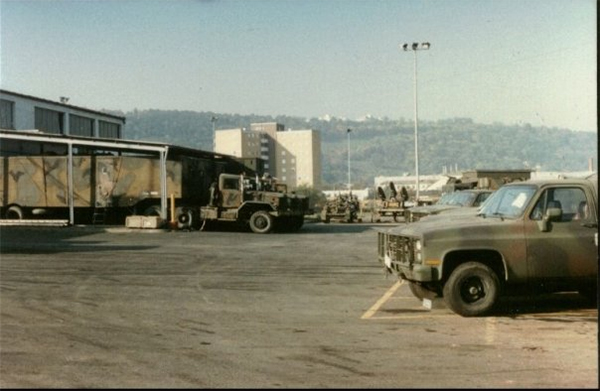 569th Ord work site - looking from the front gate of the Annex (Michael Florindi) |
||||||||||||||||||||||||||||||||||||||||||||||||
| (Source: Email from Michael Florindi, 569th Ord Co, 1986-89) | ||||||||||||||||||||||||||||||||||||||||||||||||
| I was stationed in Wurzburg from 1986-1989. I was assigned to 569th Ordnance Company (DSB) for HHB, A, B, C & D 6/52. B Btry was at Schweinfurt during this time period. All the other info is correct. When I arrived in 1986 we shared Hindenburg Barracks with the 123rd Signal Battalion. The 569th Ord. Co. (DSB) worksite was in the annex across the street from Hindenburg Barracks. In 1987 the 569th moved to Emery Barracks and was bused to the annex everyday. HAWK stayed at the Annex. Motor Pool was also moved to Emery. Shop 8 was moved up on the hill next to the A Btry Tac Site at the air strip. |
||||||||||||||||||||||||||||||||||||||||||||||||
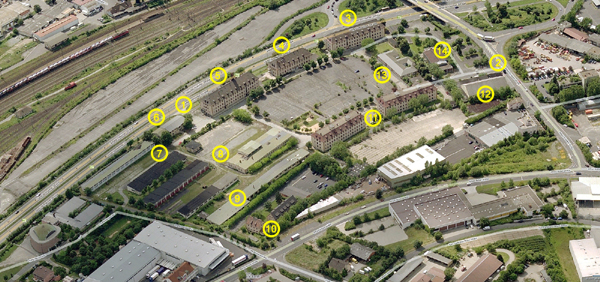 Bird's Eye View of Emery Barracks (BING) |
||||||||||||||||||||||||||||||||||||||||||||||||
| ADDITIONAL INFORMATION (Building Use data see Craig Dupree's email) The 569th is the perpendicular building above #10. But, again, the unit wasn't moved from Hindenburg Barracks until 1987. #10 they referred to as the Annex in 1987. It was used for classes by the University of Phoenix. In 1988 A Btry took it over when they ran out of room at Bldg #3. |
||||||||||||||||||||||||||||||||||||||||||||||||
|
||||||||||||||||||||||||||||||||||||||||||||||||
| 4th MSL Bn, 57th Arty / 2nd Bn, 57th ADA | ||||||||||||||||||||||||||||||||||||||||||||||||
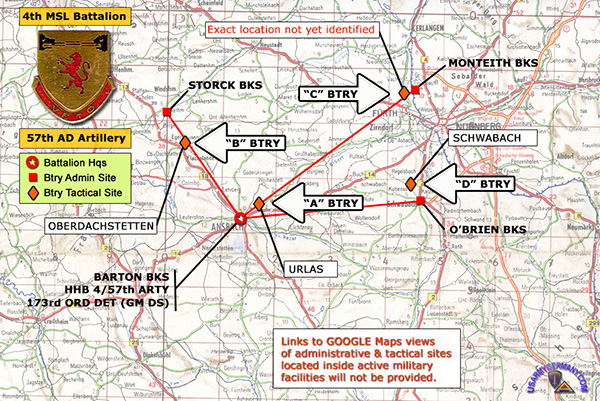 4th Missile Battalion, 57th Artillery in 1965 -- administrative & tactical locations (Walter Elkins) (click on image for enhanced view) |
||||||||||||||||||||||||||||||||||||||||||||||||
|
||||||||||||||||||||||||||||||||||||||||||||||||
| 1960 | ||||||||||||||||||||||||||||||||||||||||||||||||
| (Source: Email from Randolph Walker - 4th Bn, 57th Arty (1960-64); 6th Bn, 517th Arty & 10th ADA Gp HQ (1969-71); 3rd Bn, 60th Arty (1972 -75)) | ||||||||||||||||||||||||||||||||||||||||||||||||
| I started my ADA career in NIKE Ajax (1957-1960) and Hercules with the Pittsburg, PA defense and then went to HAWK Missile & Launcher Maint school. My first tour in Germany was from 1960-1964 with the 4th Bn, 57th Arty in Ansbach, Germany. The 57th was the first operational HAWK Battalion in Europe. Another unit had arrived there earlier but we became operational first. I was a missile & launcher mechanic. At this time the basic HAWK unit was very small only 95 men + 6 officers. It would later become larger. I went back for the second time about 6 months after returning from Vietnam.This was in the fall of 1969. I was assigned to a firing battery of the 6th Bn, 517th Arty in Kassel, Germany. I was the Chief Missile & Launcher Mechanic. A week or so after arrival I discovered that most of our missiles were faulty. When this report went to the commander of 10th ADA Group in Darmstadt he went ballistic and I found myself standing in front of him explaining how I discovered these problems. They ended up sending over a team of civilians from Redstone to check every HAWK Missile in USAREUR and they found that most were bad. This was due to some bad calibration procedures of the test equipment that had been in place for several years. After a year there I was moved to 10th ADA Group HQ to take over as NCOIC of the Group Operational Readiness Inspection Team. In this job I visited every HAWK battery in the 10th ADA Group at one time or the other, either on operational readiness tests or CMI Inspections. There were a lot of problems in USAREUR at this time due to Vietnam and a lot of people had gotten into the Army with criminal records that were really bad actors. In some units the highest ranking officer was a 1st Lt. Things were not good to say the least. This tour was cut short in 1971 due to the death of my father and I was given a compassionate reassignment to Fort Monroe, VA for a year. Here I worked in the SAM-D program until it was scrapped by President Jimmy Carter. We were developing the Tables of Organization and Equipment for the SAM-D units that were expected to deploy. This was a very interesting job. In 1972 I was back in Germany again. This time with the 3rd Bn, 60th ADA in Hohenfels, Germany. I was a Platoon Sergeant. I had managed to get out of the missile repair business because you topped out at E-7. After a little over a year in Hohenfels I was transferred to their firing battery in Regensburg as First Sergeant. I was in Regensburg until July 1975 when I came back to the States to attend the Sergeants Major Academy. This was a crazy assignment involving black marketing, other criminal activity by soldiers and even a prostitution ring. The troops even took out a hit on me. At one point about 95% of the unit was "flagged" for some type of investigation. Lots of people made the trip to Nurenburg to the jail house. This was a very stressfull assignment and I was very glad to leave. My next and last overseas tour prior to retirement was to the 1st Bn, 44th ADA in Korea. As you can see I did not spend much of my 20+ years in the States. Most of it was overseas somewhere. I also managed to do a few years of duty in the Field Artillery as well. In 1964 I went to Field Artillery OCS at Ft. Sill, OK. I was there 3 months, 3 days, and 13 hours. They booted me out because I had a little altercation with an upperclassman. I was lucky they did not give me an Article 15. They just let me go. So when I went to Vietnam in 1966 it was in an field artillery assignment to the 2d Bn, 77th Arty, 25th Infantry Division. I was an enlisted forward observer for 8 months and then they assigned me back to a HAWK Unit, the 56th ADA. I also did some TDY duty at the NATO firing range on the island of Crete. In spite of living most of my Army life over seas I enjoyed most every minute of it and looking back I would do it all over again. You have a great site. We are a lost breed of soldier now. The ADA branch is now just a small part of the Field Artillery branch at Ft. Sill, OK. All of the places I served at in Europe and Korea, and Vietnam of course, are now closed down and the units do not exist. |
||||||||||||||||||||||||||||||||||||||||||||||||
| C Battery, 4th Bn, 57th ADA - Fürth, later Hohenfels | ||||||||||||||||||||||||||||||||||||||||||||||||
| 1961 | ||||||||||||||||||||||||||||||||||||||||||||||||
| (Source: Email from Michael Berich) | ||||||||||||||||||||||||||||||||||||||||||||||||
| Today, a friend of mine told me about finding his old military unit on the web. This evening I decided to see it I can find my OLD unit. Well, after about 45 minutes of searching the 7th Army site, I found what I was looking for: Btry C, 4th MSL Bn, 57th ADA, 69th Arty Group, Monteith Bks, Furth, Germany. However, I did not find anything more than the unit listing. I was the first School Trained HAWK Missile "Fire Control Operator" that the Battery received since they converted (at least this is what I was told upon arrival). I arrived 2 May 1961 and departed 8 Nov 62. After reading about what some of the other ADA unit members had to put up with during the reduction in force (prior to my time) I just now realized why we did some of the things we did. When I got there, I remember that the unit had some problems passing a Combat Capability Test (CTT), but the site was picture perfect. Always ready to put on a demonstration for any "big-wig" visit. By the end of Summer 1961, we were putting on a demonstration about every 3 weeks. I also remember being in a higher state of Alert during the Berlin crisis and watching all the "Air" action on the radar scopes. By the way, the above is not meant to criticize. It actually helped guide my life. I never left the military. Starting out as a Draftee on 2 Dec 60, with Active Duty (above) Reserve Duty (in the middle) and Active Duty (last 12 years), I ended my career on 27 Oct 90, as Lieutenant Colonel. The newspaper clippings, various pictures and individual comments, located way below the unit listings contained a small article (Source: Email from Chris Smith) indicates the location where I was stationed. I can shed just a little more light to what Chris Smith wrote. The Battery Commander was CPT Robert Beckwith, a West Pointer. I believe that the Captain's middle initial was W., and that he took over the Command of the Battery sometime in the Spring of 1962. The previous commander was CPT McNickoll (Spelling?). SSG Fasnow was there, I also do not remember his first name. I think SSG Rivera arrived shortly prior to my departure. Chris Smith mentions walking across some farmland to get to the Missile Site. If I remember correctly, there was some farmland AND a portion of the Post Golf Course, which was also shared with a small Air Field. The air field belonged to the Post. Prior to my departure, there was some talk about the Site going underground in 1963-4 time frame. Apparently, it did not, Chris doesn't mention anything about it. Since most of the Montieth Barracks (Post) was occupied by Armored units, Chris' statement of being awakened by the rumble of M60 Tanks is very true, and it happened about once each month. Hope somebody out there was a member of the same unit, about the same time. Looking forward to some e-mail chatting. |
||||||||||||||||||||||||||||||||||||||||||||||||
| 1963 | ||||||||||||||||||||||||||||||||||||||||||||||||
| (Source: Email from Chris Smith) | ||||||||||||||||||||||||||||||||||||||||||||||||
| Thanks to your fine web site I've been able to remember (at age 67) exactly where I was stationed: 4th MSL Bn, 57th Arty, Battery C, Montieth Barracks. I was a SPEC5 under Captain Beckwith, 1963-64. My MOS was 228, HAWK Acquisition Radar and Battery Control Central technician. I used to walk to the tactical site across the local farmland. There were only two of us with that MOS, the other was SSGT Fosnow (don't remember his first name). Toward the end of my tour a fellow by the name of Potts arrived, giving the sergeant and myself some relief from 24 on, 24 off. At the request of a SSGT named Rivera, I painted the rec room wall with images of musical instruments. I painted the wall above the bunk in my own room with a Japanese-inspired view of Mount Suribachi. I don't know whether any of that stuff survived! I understand that Montieth Barracks is no longer. Is that true? I remember being awakened by the rumble of the M-60s early in the AM as they were underway on another "field trip." Woke most of us up. I enjoyed sight-seeing in Furth and Nuremberg. My brother was in WWII, and was a tank commander with the 3rd AD. At the close of the war he was inducted into the MPs and served in the details that were assigned to the Palace of Justice. Now deceased, he mustered out in August of '46. It was great for me to be walking the streets and towns my brother did. |
||||||||||||||||||||||||||||||||||||||||||||||||
| 1968 | ||||||||||||||||||||||||||||||||||||||||||||||||
| (Source: Email from Chuck Catania) | ||||||||||||||||||||||||||||||||||||||||||||||||
| I was assigned to C Battery from July 1967 to Feb 1969. I joined the unit as a newly commissioned Artillery officer from the Ft. Sill OCS program, and served my whole active duty at C Battery. I became the Battery Commander in August 1968 as a First Lieutenant. C Battery admin and barracks were located at Monteith Barracks just outside the town of Fuerth, a suburb of the city of Nuremberg. Monteith Barracks was a 4th Armor Div. support post. During WWII, it served as a flight training field. The air strip could be flooded during air raids to make the area look like a lake from the air. We were the only non-Armor unit on the post, which was commanded by a 1-star General. There was also an intel-ops aviation unit on post and every so often an ECM equipped Caribou would visit for avionics updates. The missile site was located at the edge of the Monteith Barracks property, outside of Atzenhof. The burg of Atzenhof consisted of a Gasthaus, Esso station, a grocery store, and about 10 houses. The site was "temporary" and ran totally on generator TAC-Power. Late in 1968, the German government wanted to put a large water way (the Main-Danube Canal) through the outskirts of Fuerth/Nuremberg. The planned project was going to go right through Monteith Barracks property and the missile site. I went to a meeting in late 1968, in downtown Nuremberg regarding the project. In attendance were top German government officials, a cadre of commanding generals, the Corp of Engineers CO, and me, a 1st Lieutenant. At that meeting, the U.S. officials informed the Germans that there would be no opposition to the project. That sealed the fate of the Army facilities. I returned to the States in February 1969, and joined the CA National Guard. The site was deactivated sometime after that. If you Google Atzenhof you can see the canal and the Monteith Barracks area turned into a golf course. The missile site would have been in the area west of town. I remember the two lane road, Atzenhofer Strasse, being the main road to the dirt road to the site. There was farm land on three sides of the site. If I needed to go to headquarters in Ansbach, I'd take the backroads through Ammerndorf to Heilsbronn to catch the main road 14. I have great memories about my time in the Army and being stationed in Germany. I was 21 and had the world by the tail... |
||||||||||||||||||||||||||||||||||||||||||||||||
| 1970 | ||||||||||||||||||||||||||||||||||||||||||||||||
| (Source: Email from Howard Brown) | ||||||||||||||||||||||||||||||||||||||||||||||||
| Just wanted to add a correction to your listing. "C" Battery, 4th Bn, 57th Arty was located in Hohenfels at least in the early to mid-70s. I was stationed there in 1970-71 and lived in Germany after my 1971 discharge until 1973. Barracks were across a quad/parking area from 6/60 and located on the quad was a shared mess hall. Our (tactical) site was across one of the tank trails in the direction of Parsberg. (Webmaster note: my theory - C Battery, 4th Bn, 57th Arty replaced a battery of 6th Bn, 60th Arty (by reflagging) when the latter converted to self-propelled HAWK. With the transition to SP, 6/60 would have been reorganized to three firing batteries. Can anyone confirm this?) ADDITIONAL INFORMATION C-4-57 had been in Furth in the mid-late 60s. Both 6-60 and 4-57 were stationed at Hohenfels at the same time, however 6-60 was SP while 4-57 was not. We went to the field once the time I was there and it was a major undertaking to pull that off. The C-4-57 site showed it's age so it wasn't new construction. |
||||||||||||||||||||||||||||||||||||||||||||||||
 William Veitch's personal memoir of his tour of duty with 2nd Bn, 57th ADA in Germany |
||||||||||||||||||||||||||||||||||||||||||||||||
| 1975 | ||||||||||||||||||||||||||||||||||||||||||||||||
| (Source: Email from William Veitch) | ||||||||||||||||||||||||||||||||||||||||||||||||
| I have just about finished with the part of my memoir dealing with my days in the 69th ADA Group, 1975 - 1978. I was a firing platoon leader/TCO at Charlie Battery, 2/57th ADA at the HAWK site near Velburg, Germany for two years and got bumped up to the battalion operations center at Ansbach for the last year of my tour. |
||||||||||||||||||||||||||||||||||||||||||||||||
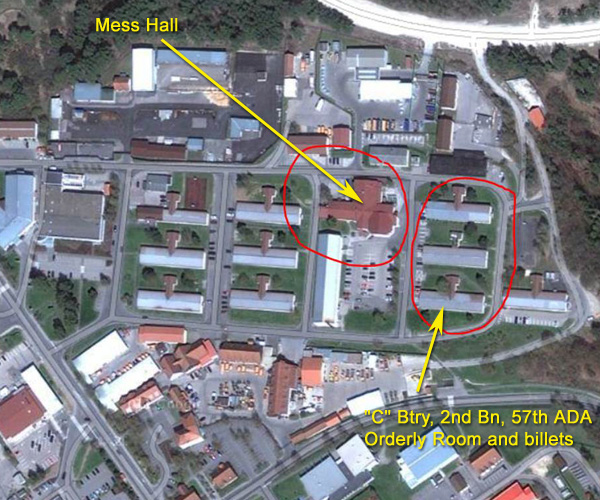 Hohenfels (GOOGLE Maps) |
||||||||||||||||||||||||||||||||||||||||||||||||
| 1976 | ||||||||||||||||||||||||||||||||||||||||||||||||
| (Source: Email from Clarence Leist) | ||||||||||||||||||||||||||||||||||||||||||||||||
I see you’re looking for some 69th ADA info. I was with C-2/57ADA in Hohenfels. I don’t believe I have any pictures, unfortunately. Most of my pictures are off post adventures. I lived off post in Deusmauer.
I was there from 1976-1979. My MOS was 05C/31M. I worked up at the missile site (on the hill) with Jackie D, Sagley and Bill Robinson and others who I don’t remember. I went through three captains during my tour. Cpt. Robert H. Myers being the best. He was a West Point graduate. J.D. Farmer (The Genie) was the First Sergeant. Other than a REFORGER exercise and a few short FTX’s it was pretty much an 8-5, M-F life. On occasion I would be the senior NCO on site when the unit was down for maintenance. The large building with the red roof was the mess hall and the three to the right were the orderly room (center) and barracks. |
||||||||||||||||||||||||||||||||||||||||||||||||
| 1982 | ||||||||||||||||||||||||||||||||||||||||||||||||
| (Source: Email from Bruce Sluss) | ||||||||||||||||||||||||||||||||||||||||||||||||
| I was assigned to C 2/57 in Hohenfels from 1982 to 1985. The battery was deactivated and combined with C 3/60 just as I PCS'd to Ft Eustis, Va. | ||||||||||||||||||||||||||||||||||||||||||||||||
|
||||||||||||||||||||||||||||||||||||||||||||||||
| 173rd Ordnance Detachment - Direct Support Pltn | ||||||||||||||||||||||||||||||||||||||||||||||||
| 1961 | ||||||||||||||||||||||||||||||||||||||||||||||||
| (Source: Email from Ken McClenahan) | ||||||||||||||||||||||||||||||||||||||||||||||||
| In the early 1960s I was in the US Army Ordnance Corps assigned to the 173rd Ordinance Detachment, which was field maintenance support for the HAWK Missile System. We arrived in Germany in early January 1961 and were located at Ansbach where we supported the four HAWK batteries of 4th Battalion, 57th Air Defense Artillery. The Artillery equipment arrived in March (foggy memory). The HAWK batteries were located as follows: Battery A at Ansbach, Battery B (I forget - I would have to look at a good map of the area), Battery C at Furth near Nuremburg, and Battery D at Kitzingen I was a Pulse Radar and Battery Control Center repairman and I left the Army in April 1962. |
||||||||||||||||||||||||||||||||||||||||||||||||
|
||||||||||||||||||||||||||||||||||||||||||||||||
| 6th MSL Bn, 60th Arty / 3rd Bn, 60th ADA | ||||||||||||||||||||||||||||||||||||||||||||||||
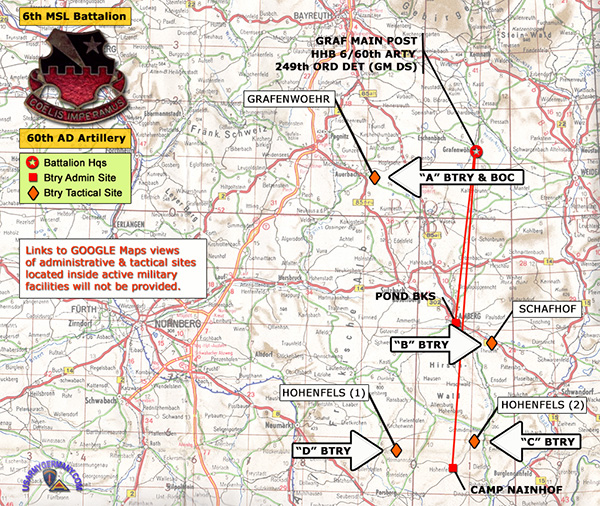 6th Missile Battalion, 60th Artillery, 1965 -- administrative & tactical locations (Walter Elkins) (click on image for enhanced view) |
||||||||||||||||||||||||||||||||||||||||||||||||
|
||||||||||||||||||||||||||||||||||||||||||||||||
| 10th Artillery Group (AD) | ||||||||||||||||||||||||||||||||||||||||||||||||
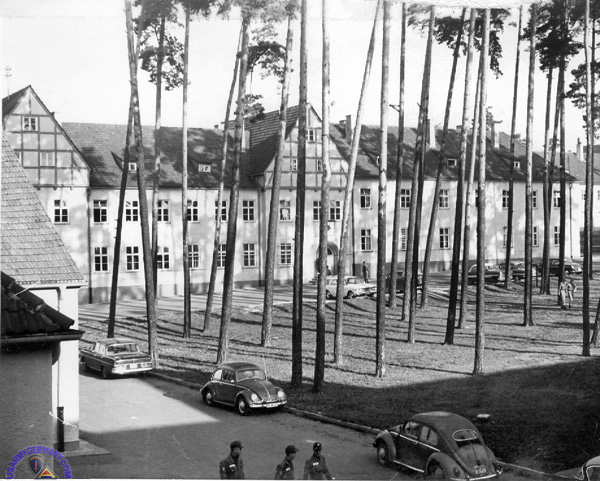 HQ 6th Missile Bn, 60th Artillery, Grafenwoehr Post (Source: John Fahey) |
||||||||||||||||||||||||||||||||||||||||||||||||
| 1960 | ||||||||||||||||||||||||||||||||||||||||||||||||
| (Source: Email from Clark (last name withheld), D Btry, 6th MSL Bn, 60th Arty) | ||||||||||||||||||||||||||||||||||||||||||||||||
| In December 1960 I arrived in Germany and we set up our Battery (D Battery) in Hohenfels along with "C" Battery. I served there until Jan 1964. My responsibility was providing electrical power to the missile site, or the Generator Section. I was inducted into the Army in Jan 1961 in Milwaukee. I traveled by bus to Ft Leonard Wood, Mo. for basic training. In April I went to Ft Belvoir, Va. for schooling for Guided Missile Installation Electrical Equipment Repairman (MOS 357) for Nike Missile sites. With my luck I was assigned to "D" Battery, 6th Missile Bn,, 60th Artillery, a Hawk Missile unit in Aug 1961 at Ft Bliss, Texas with a changed MOS to 352, essentially a generator operator. The unit was already a few months into training when I arrived. In Nov 1961 our unit traveled to Brooklyn Army Terminal and boarded a troop ship, the USS Buckner, for Bremerhaven, Germany. From Bremerhaven we boarded a train to Grafenwohr, Germany. "A" Btry and HQ stayed in Graf. "B" Btry went to Amberg. "C" and "D" Btry were assigned to Hohenfels. Our units in Hohenfels were first quartered in some old dilapidated wooden barracks with concrete floors. They were heated with a few small coal stoves. They were in worse condition than the barracks we had for basic training in Ft Leonard Wood! These barracks were used by units that came to Hohenfels for training. It was a dumpy area of the post. After a few months we were moved to the main post area of Hohenfels in slightly improved wooden barracks that had oil stoves for heat. These barracks were closer to the PX and in a nicer area of the post. Our mess hall was across the street from the barracks. The "D" battery missile site was not completed when we arrived. The ready building had no toilet facilities for example. Outside the ready building was a large outhouse. When the inside toilet facilities were completed, we, the generator section, moved the outhouse to the center of the missile site for our offices. The "holes" were removed and shelves and working desk was installed. We buried an electrical line to our "office" for lights and an electrical heater. Our meals were trucked from the main mess hall on post to the ready room. We were on duty at the missile site for 24 hours and then had 48 hours off. I think that was the system we had set up. I can't recall everything with clarity from 50+ some years ago. My area of responsibility were generators, air conditioners for the control centers, and site perimeter lighting. The generators ranged from small 1.5 KW up to 45 and 60 KW generators. The 45 KW generators were rated at 416 volts, 400 cycles. These were used to power the launchers, control centers, radars, etc. Most of the other generators were 120 volts, 60 cycle. Hohenfels was a training area for the 7th Army and other NATO forces. The missile site was on a hill several miles from the main post. Near the entrance to the site was a tank trail. Tank units trained there a lot. From the missile site we could observe the training at night. The sight of tracer bullets could be seen far off in the distance. On a few occasions during my 2 year, 1 month and 22 day stay in Germany we had to trailer the whole missile unit for training exercises and move them to distant isolated areas and set up the missile unit. After all we were a mobile missile unit. I recall one exercise that was in the dead of winter and it was cold. I set up my pup tent near a generator. The heat from the generator radiators were forced out of the front of the generators and I hooked the canvas heat ducts to the grill-like feature and ran it into my tent. I was nice and warm that night. In Dec of 1963 I began my return to the states on another troop ship. I can't recall the name of the ship. I was discharged from the Army at Ft Hamilton, N.Y. in Jan 1964. |
||||||||||||||||||||||||||||||||||||||||||||||||
| 1961 | ||||||||||||||||||||||||||||||||||||||||||||||||
| (Source: Email from Larry Trainor, 6th Bn, 60th Arty (1961-64); 6th Bn, 562nd ADA (1970-73); 2nd Bn, 67th ADA (1977-80)) | ||||||||||||||||||||||||||||||||||||||||||||||||
| I came on your site quite by accident but I found it interesting. If you don't mind I'll throw in my two cents. I spent 22 1/2 years on active duty in the Army, all of it in ADA. I had three tours in Germany the first was from November 1961 to January 1964. The unit was a package unit of Battalion strength designated HOS-9 and was activated as the 6th Battalion, 60th Artillery. We trained at Bliss from (I think) May 1961 to October 1961 and then prepped and shipped our equipment to Germany. The Battalion left for Germany from the Brooklyn Army Terminal in November and arrived in Bremerhaven on the (USNS) Patch. We were just in time to assist with the unloading of equipment for the "Berlin Build-up". When our equipment arrived we convoyed to our new homes. Battery A, HQ's and the DSP's went to Grafenwohr and since I was in Alpha I can't begin to tell you where the others went. Our site was on the fringe of the training area and we often woke up to cannon fire. The Battalion ops center was on a hill across the tank trail. I was back in Germany from February 1970 to March 1973. This time I was with the 6th Battalion, 562nd ADA. Our HQ was in Butzbach and I was with the battery (A Battery) in Bad Kissingen at Daley Barracks. This Battalion was a self-propelled HAWK Battalion and the launchers are shown on your page, our radar equipment was mounted on the towers that someone else has provided photos of. The center of the tower was an elevator and was the most awful thing to raise and lower. We were supposed to be mobile but it was tough. We had as I recall 6 SP launchers and 3 towed launchers. And the area the other fellow used to tear around in jeeps and trucks was the area we used to tear around in the tracks for training. I guess it is appropriate that the area is for off-roading now. My last trip to Germany was from August 1977 (the month Elvis died) to July 1980 when I retired. This time it was with the 2nd Battalion, 62nd ADA. Hq's at Spangdahlem and Bitburg airbases with the Battalion radar at our admin area outside of Pruem/Prum. This unit had been recently redesignated because it had undergone a transition from a regular HAWK Battalion to an Improved HAWK Battalion. The admin area had also been a former NIKE Hercules IFC area and while I was there housed the Battalion OP's center. Our TAC site was the former launch area for the Hercules missiles with large storage bunkers and high revetments. Ironically the unit I started with in 1958 was the 465th AAA Missile Battalion which was located in Hamburg, New York as part of the Niagara Frontier Air Defense Network. That unit was later redesignated the 2d Battalion, 62 Artillery, the same unit I retired from in 1980 in Spangdahlem/Bitburg, Germany. They even had our softball trophies and pictures of the teams. ADDITIONAL INFORMATION (As mentioned above, my) first Germany tour was from 1961 to 1964. At that time I was on a HAWK missile site on the (western) edge of the Grafenwoehr training area. The town closest to the site was called Auerbach. There was a gasthaus on the edge of town that we would stop at on the way back from the site to our barracks on post. The owner of the gasthaus sat with us once in awhile and would spin some stories for us. He said we (he and I) had something in common since his name was Lorenz and mine is Lawrence. |
||||||||||||||||||||||||||||||||||||||||||||||||
|
||||||||||||||||||||||||||||||||||||||||||||||||
| The tac site was indeed in the Graf training area. In fact we were often awakened by guns firing below "the hill". They would sneak in during the night and then open fire at first light. Not only scared us, the first time it happened, but broke some windows in the "ready building". We heard rumors that a "short round" had killed several people below "the hill" before we arrived. I think it was just BS. We were witnesses to the live firing of the first 175-mm gun to arrive in Germany. We also watched 280-mm cannons fire. | ||||||||||||||||||||||||||||||||||||||||||||||||
|
||||||||||||||||||||||||||||||||||||||||||||||||
| When we first arrived in Graf we were billeted in some pre-historic barracks that were using the ubiquitous compressed coal dust for heating and for hot water. These barracks were behind the EM club and apparently used most of the time for the transient training troops. We stayed there for at least 6 months and then moved to newly renovated barracks that were beautiful. Hardwood floors, steam heat, and very nice showers and bathrooms. These barracks were formed around a quad with the mess hall forming the bottom of a U and the barracks and administration offices forming the left and right verticals. Battalion HQ's and HQ's battery were across the quad from us, the DSP and motor pools were across a road behind the mess hall. I don't remember any buildings or other facilities behind our barracks building. However, across the road from the opening of the U was a permanent party of, I think, gunners of some sort. Anyway we did in fact live on main post Graf. | ||||||||||||||||||||||||||||||||||||||||||||||||
|
||||||||||||||||||||||||||||||||||||||||||||||||
| (Source: Email from Bob Beck) | ||||||||||||||||||||||||||||||||||||||||||||||||
| The 6th Missile Battalion 60th Air Defense Artillery arrived in Bremerhaven, Germany in the first week of December, 1961. We arrived In Grafenwohr a week later. We were part of the 10th Arty Group, not the 69th. I was in Alpha Battery stationed in Graf with our missile site in Auerbach. The other batteries were: Bravo in Vilseck; Charlie in Regensburg; and Delta in Bamberg. (Webmaster note: Thanks for the correction, Bob. This would indicate that the 6-60th Arty was probably relieved from the 10th Group and attached to the 69th Group in early 1964, when the 10th moved north to Darmstadt.) ADDITIONAL INFORMATION Back in the early 60s, HAWK battalions were organized and trained in Fort Bliss (El Paso). Each new battalion was designated as a HUS (HAWK U.S.) or a HOS (HAWK Overseas) “package.” 6/60 was HOS9, the ninth overseas package. We were slated to be deployed to Guam upon completion of our training in January 1962. When the Soviets began isolating Berlin our training was stopped and we were shipped to Germany in November, 1961, on board the USMSTS Simon Bolivar Buckner, arriving in early December in Bremerhaven, where we unloaded our equipment and convoyed to our respective bases. Alpha Battery and Headquarters Battery were stationed in Graf to defend 7th Army Training Center and its monthly U.S. and Allied trainee combat divisions from aircraft attacks from across the Czech border. We were assigned (code named “Crayon”) to the 10 Group (“Cowboy”) and the 32nd Artillery Brigade ("King”). In the 2 years and eleven months I was there, we only locked-on to one intruder. We were ordered to hold our fire by SHAPE Air Force command in Frankfurt. We later learned the intruder was a Czech defector bringing a Russian MIG. I do not remember any other HAWK unit assignments. |
||||||||||||||||||||||||||||||||||||||||||||||||
| 69th Artillery Group (AD) | ||||||||||||||||||||||||||||||||||||||||||||||||
| 1966 | ||||||||||||||||||||||||||||||||||||||||||||||||
| (Source: Email from James Gropper) | ||||||||||||||||||||||||||||||||||||||||||||||||
| I went from Ft Bliss to Bad Aibling, Germany. We had the best defended golf course in Germany in the early 1960's. We were on an ASA post. I know it was a btry but cannot remember the unit. (Webmaster Note: I believe it was a battery of the 6th Msl Bn, 61st Arty. Can anybody confirm this?) I am now trying to make a crest history of units i have been in. | ||||||||||||||||||||||||||||||||||||||||||||||||
|
||||||||||||||||||||||||||||||||||||||||||||||||
| ADDITIONAL INFORMATION sent in by James: When I was at B/A the btn head shed was at Dachau if that helps anyone. I understand that when they closed that site down it became a school for dog handlers. Had some good times in B/A. 6th Msl Bn, 60th Arty was the first unit (in 32nd AADCOM) to receive SP Hawk launchers. 3rd Msl Bn, 7th Arty was the second one. Just to help you out with your map: 6/61st HHB was at Dachau; A Btry was in Bad Aibling I used to be in the 59th AAA in Ft Bliss. We put on VIP shoots and taught West Pointers and ROTC etc in AAA in the summers. Just found out today what happend to it; the battalion went to Germany as the 6/59th (bit of history) thought you might want to know about where it came from. CORRECTION (Source: Lanny Wilson) The missile battery at Bad Aibling germany was assigned to the 6/61st but was actually C Btry, 6th Msl Bn, 62nd Arty. I was company clerk there in 1966. Transferred from S-3 at batallion headquarters of the 6/61st at Landshut and was there until 1967 when I transferred back to batallion at Landshut in the DSP platoon. Our batallion commander was LTC Carl Long. 1st Sgt Verlanger and CO was CPT Duerson of C 6/62d. |
||||||||||||||||||||||||||||||||||||||||||||||||
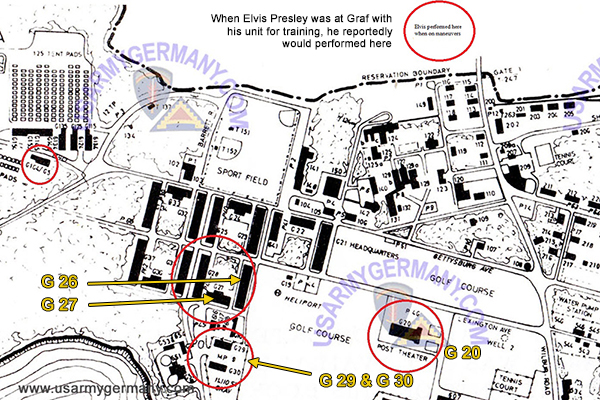 Location of HHB, 6th Missile Bn, 60th Artillery, Grafenwoehr Post, 1968 (Dale Whitaker) |
||||||||||||||||||||||||||||||||||||||||||||||||
| 1968 | ||||||||||||||||||||||||||||||||||||||||||||||||
| (Source: Email from Dale Whitaker) | ||||||||||||||||||||||||||||||||||||||||||||||||
| Using the photo from John Fahey (see above) as a reference and noting the large building seen in the distance, the 6/60 BOC was located in the building on the opposite side of the Quad (grassy area with trees) in 1968. I do not believe the BOC was moved between 1965 and 1968 when I arrived there. As a side-note, the corner of the building seen in the foreground is where the mess hall was located. At that time, communication required line-of-sight equipment. . . so the batteries were positioned on high windswept locations that were quite cold during the winter. Depending on the time of year and weather, the trip from the BOC to Battery “A” could take 15-30 minutes. Regarding the Graf Main Post map section you sent, this is what I recall:  G 26 BOC first floor, LTC's office was through the front door and to the left. Billets on the 2nd floor. G 27 Mess Hall G 20 Movie Theater G 29 & G30 Motor Pool G 26 BOC first floor, LTC's office was through the front door and to the left. Billets on the 2nd floor. G 27 Mess Hall G 20 Movie Theater G 29 & G30 Motor PoolThere was also a disappointingly small library slightly north of the theater and a University of Maryland Extension facility located northeast of the 6/60 BOC. Additionally, I definitely don't recall a golf course. I remember a large parade ground and a "helipad" located on the NW corner of the parade ground with several lights to aid very rare night landings. As a footnote, while I was there (1968-69) the only moderately exciting event was the Soviet Operation Danube, which to me, seemed to demonstrate how quickly costly lessons are forgotten. Viewing a recent Google aerial map, I was absolutely astonished to discover how much everything has changed since I was there. |
||||||||||||||||||||||||||||||||||||||||||||||||
| 1969 | ||||||||||||||||||||||||||||||||||||||||||||||||
| (Source: Email from Barry Buckner, HHB, 6th MSL Bn, 60th Arty, 1969-71) | ||||||||||||||||||||||||||||||||||||||||||||||||
| First I want to thank you for your time and trouble to get this together. I was with HHB, 6th MSL Bn, 60th Arty from Oct 1969 to Jul 1971. My job was in personnel. I traveled to all of our sites and spent some time at each. I think it was the worst assignment I ever had, and later one of the best. I was only 18 years old when I got there, and I guess I grew up there. There can't be many members of the unit that still care. Most of them were draftees. I served until 1985 and retired. Since I was not a missile guy, I will try to give you as much info on the organization of the HQ and HHB. Also, I visited each of the Batteries, but only the HHB Site, on a regular basis. I'll just give you the bare bones of the organization, and flesh it out from my arrival until my departure. Here goes: ARRIVAL: Oct 1969 DEPARTURE: Jul 1971 BATTALION COMMANDER: LTC Russel McGraw - replaced by I think LTC Speegle S2 NCOIC: MSG Hawkins REENLISTMENT NCO: SFC Robert Fulcher SECURE COMMUNICATIONS OFFICER (I think they were attached from the 160th Sig Bde): 2LT Stanley Lysczarz (spelling is approx) NBC/CBS NCO: Specialist Gloeckner PERSONNEL OFFICER: CW3 Cherry, then WO1 Kenneth A. Krossen PERSONNEL SERGEANT: SFC Lawance Haley , then SFC Lonniew Thornton (Ex-MI Intel from Vietnam retread to personnel) S1 OFFICER: just remenber the last, 2LT Mason HEADQUARTERS AND HEADQUARTERS BATTERY (co/located Grafenwoeher)(across the street) COMMANDER: Frank M. Perry, then Alfred Rembrandt FIRST SERGEANT: 1SG Robert Lowmiller HQ had a Direct Support Unit (DSU) with it. It was a unt in transition when I arrived. They were just phasing into Selp-Propelled. A Battery - located a block from HHB in Grafenwoehr.B Battery - Located in the lovely town of Regensburg (far to our South)C Battery - Located in the Hell Hole of Hohenfels, also to our southAs I have already admitted my spelling of some of this is suspect, but I don't think you should have any problems finding the correct way. We were under the 69th ADA, and as it happened I was sent TDY to other Battalions in preparation for their Command Personnel Management Inspections. We were the first unit in the 69th ADA to pass one, so I was sent to other Battalions to "help them pass all areas" of the inspections they awaited.. So I did travel a bit, but as I said, I was no rocket guy. By the way I do have some pictures, but I am just learning how to use a computer after a 25 year lapse. If I can be of further use to you please let me know. Like many, I have a story to tell. My problem is finding the WEB Site. It keeps escaping me when I look for it. |
||||||||||||||||||||||||||||||||||||||||||||||||
| (Source: Email from Samuel Burke, B Btry, 6th MSL Bn, 60th Arty, 1969-71) | ||||||||||||||||||||||||||||||||||||||||||||||||
| I was drafted in Nov 1968. I had no illusions about my future career in the military so after taking tests for several days during Basic Training (Ft Bragg, NC), being offered advanced training for almost another year, and being assured of a “valuable” career skill, I volunteered for another year. Seemed like a good trade off to me (a classic US to RA case). They sent me to Fort Bliss Texas. Fort Bliss was real hot (hard to imagine sticky asphalt in the summer, and dead grass painted green, but we survived it) and I made a lot of friends during my nine months of AIT. I even managed to play in a band for the time I was stationed there. Mexico provided many diversions and we managed to survive that as well. One of my fondest memories is one of our radars going unnoticed for a while, locking onto a power pole transformer a block away, and putting enough energy into it to shower sparks and spread insulating oil all over the place (making the world a safer place for microwaves :-) I came out of Fort Bliss as a radar mechanic MOS 228 (?); Continuous Wave Radar Repair. It is very possible that the MOS is wrong but I do recall fixing those little rotating “half beer can” radars. It is amazing what you can forget in ~ 40 years. Just after the first Moon landing in July 1969, I was shipped to Germany and was assigned to a HAWK battery (B Btry, 6th Msl Bn, 60th Arty) in Regensburg, Germany. Most of my Fort Bliss classmates were also sent to Germany but to different battery’s in different places. I had basically no contact with any of them until I met several when we had been shipped back to Fort Dix to get out of the military (all around the same time of course). Regensburg was the best. We had a small outfit (barracks, HQ, mess hall, EM club, parade field, etc.) and essentially were billeted “on the economy”; most civilians did not even know there was a contingent of American soldiers in their city. Our cooks were German nationals. I see on the web site that our kaserne was named Pioneer Kaserne. There was a small German contingent of soldiers in a kaserne across the street. We had a very small group of Air Force people that billeted in one end of our barracks (they had a separate entrance and everything) but I never asked what their mission was and they didn’t volunteer too much information. I did spend a lot of time with some of them (one named Ken actually owned a VW bug and we drove around all over the place) I was always thankful to be stationed in Regensburg. I had made many trips to Graf and always thought there were way too many soldiers there :-) Duty was not so bad. We spent 24 on the hill, 48 in the rear, as I recall (there were 5-7 of us in the CW repair group so call was pretty spaced out). When the deuce-and-a-halfs would load us up for our 24 hour “mountain time” we would almost always stop on the way out of town to buy supplies for our stay (bread, candy, snacks, and drinks). I always suspected that that was not SOP but it was part of our “remote site” approach and we all appreciated it. The mountain was pretty cold in the winter and we spent as much time as we could in the ready room playing foosball and pool. I do remember working on a radar in the dead of winter and filing Allen wrenches down to get them to fit the waveguide screws (we were not actually supposed to be working “ON the waveguides” so we weren’t actually authorized to have that particular Allen wrench). It was cold! We fixed it, despite “depot-level” repair rules and hindrances. There were site readiness inspections and inspectors would show up unannounced to evaluate us. We once had a small incident with the simulator hookup on one of the launchers and as I remember, the APU was “lit” on one of the birds, hydraulic fluid went everywhere, fins flapped, and the bird was ruined. Also during my tenure, a bird was dropped while transferring it to the launcher (it got bent severely) and as I recall, we lost the battery commander and a couple of non-coms over that. There was communist vehicle identification training (markings and bumper banners) but I never got the excitement of actually seeing and reporting any of them. There was standing in morning formation and brushing our teeth all together for five minutes with this new fangled “Fluoride” stuff. There were “all-nighters” preparing for IG inspections (we experienced only two of these during my stay) and we rolled our underwear on beer cans to make them all even in the footlocker. We even polished the soles of our boots. I have many memories of people and events during my duty in Germany, both good and bad, but on the whole am thankful that I had the opportunity to experience those days. When I came back to the United States, the times had changed. I left it all behind for many years. It took a long time to sort it all out. Now, as my grandkids say, “It’s all good, Poppi!” Thanks Ken, and Sam, and Dave from Cali, and Gene, and Clint, and Mike, and all the other guys I served with. It was an honor and I am proud to have served.” I just managed to find my DD 214 indicating that HQ for 6-60 was in Graf (also my recollection) and Regensburg was my duty station. Google Earth managed to locate the kaserne (Pioneer) and actually pointed me to another of your pages that I had not seen before -- http://www.usarmygermany.com/USAREUR_City_Regensburg.htm. For the time I was there it was definitely the 6-60th. In 1969 there was not a gym. Several men in our unit created a “work-out” area in the EM barracks up in the attic/storage area (spent many hours there). Imagine my surprise to also find on your page Pioneer Kaserne Comments from Mason Frichette (or Frich as I remember). His comments are correct. It was B Btry 6-60 that was stationed in Regensburg. I remember a "Frich" that was a PAR mechanic and he rotated out after I had been there for around eight months so that is probably him. I envied him because he actually had an apartment "on the economy" and somewhere to go other than the Diamond Club. I have to thank you for rekindling my interest of my service time. I met a lot of really great people and am now trying to find all of those forgotten details. I have requested the Unit Rosters (from the NARA) from my time in B Btry to see if I recognize last names that go with the nicknames I remember and my wife and I started to go through my old photos and found several of Pioneer Kaserne, lightning over what appears to be the EM barracks, and a few postcards from a Weinstube outside the kaserne that was well used by many of us. Thank you for your site. It has brought me great memories and a renewed sense of pride. |
||||||||||||||||||||||||||||||||||||||||||||||||
|
||||||||||||||||||||||||||||||||||||||||||||||||
[1] Based on what I was able to glean from the STATION LISTS, it appears that B Btry, 6-60th took over the Regensburg tactical site sometime in the first half of 1968, moving its home station from Pond Barracks in Amberg to Pioneer Kaserne in Regensburg. |
||||||||||||||||||||||||||||||||||||||||||||||||
| CORRECTION (Source: Email from David S. Himmelsbach) I was an officer in the unit in 1968 when the Hawk Battery in Regensburg became B Btry 6th Bn/60th Arty. The Amberg Battery was not moved to Regensburg. The former D Btry 6th Bn/61st Arty was redesignated B Btry 6th Bn/60th Arty. |
||||||||||||||||||||||||||||||||||||||||||||||||
| 1975 | ||||||||||||||||||||||||||||||||||||||||||||||||
| (Source: Email from John Gagliano, "A" Btry, 3-60th ADA, 1975-76) | ||||||||||||||||||||||||||||||||||||||||||||||||
| Thank you for the informative web site you mantain. At 17 years old in 1974 I joined the army and was stationed in Grafenwöhr from March 1975 thru September 1976. My unit was A Battery 3rd Batallion 60th ADA or A/3/60 for short. Our unit was the only operational self propelled Hawk unit. I was a track/generator mechanic and operator on the S-P units. In the summer of 1976 I helped ship the last of the S-P units off site and the tactical site shut down for conversion to improved HAWK. I just wanted to let you know that there was indeed a S-P unit operating since all the info I have seen on the HAWK sites make no mention of these units operating at such a late date. For a 17 YO kid to get to drive and operate these remarkable but troublesome units was an great opptunity. John Gagliano 52B20/63C30 |
||||||||||||||||||||||||||||||||||||||||||||||||
| (Source: Email from Norman Hendrickson, "B" Btry, 3-60th ADA, 1976) | ||||||||||||||||||||||||||||||||||||||||||||||||
| I was enlisted on 17 Nov 1975. Guaranteed 24C20 MOS: Improved Hawk Firing Section Mechanic. Had BCT in Ft Dix, NJ, AIT of course was Schooly Park, Ft Bliss, TX. Had way too much fun climbing Ranger Peak, drinking on Dyer Street, and heading down to Juarez, Mexico. I was assigned to B Btry, 3rd Bn, 60th ADA, Pioneer Kaserne, Regensburg, FRG APO NY 09173. I arrived at the Frankfurt Turner Barracks (?) on September 5th, then got to Grafenwoehr on September 8th 1976, and reached Regensburg at the 10th of September 1976. We had a different schedule it seemed every time we changed section chiefs as they tried their damndest to increase the hot time for the Hi-Power radars (our tracker that we had, the one with the Mickey Mouse ears for antenna). Usually we wound up going back to 24 hours on, 24 hours off, and an 8 hour day. So every 3rd day was a day off, and if there was a night where nothing broke, and you got some sleep on the tac site, you could just relax, go into town, and do as you wished (so long as no one called an alert). The radars were very tempermental, but when under an ORE (Operational Readiness Evaluation) we were the BEST in NATO and could get the whole this up, hot, and reliable, quickly! Coleous Imperamus! B 3/60 had a CWO named James J. Goforth, who was a very good man to have in charge of all the maintenance for the tach site. The section chief I remember primarily, was a guy from Ohio (Dayton, I think). He got nicknamed by a Hawaiian E-4/Spec 4 named Tony Maake, as "Oofa". The section chief was called "Oofa" by everyone from the Old Man on down to the clerks and cooks. When he found out what it meant (which all the enlisted lower EM's and some Upper NCO's knew), he was not amused. It has to do with a certain body orifice. Tony had already DEROS'd out by the time the chief found out the meaning, and was back in the land of tropical breezes. We had a SFC Donovan as the 24C platoon SGT, who was sent down from Frankfurt, where he had been at the AFN station performing critical maintenance on the TV equipment (Keeping Germany safe for I Love Lucy). He was so pissed at being sent there. Then we had SFC Alva Krebs, who came to us from many many tours in Korea ADA. Totally different culture in the Korean peninsula. He never really fit in. His first morning formation, he showed up with a black turtle neck undershirt, a common piece of gear in Korea, but unheard of in Germany. Krebs got reamed out in front of the whole company, as the Captain decided to take that particular morning to make an appearance. That was under Capt Werner Zep, a naturalized American of German heritage. When I first arrived though, we had a captain named Morgan. Black fellow, who knew how to lead, was smart, strack, and well liked. He moved up to Group up in Wurzburg, got Major and was gone. The Top was initially a hispanic fellow, can't remember a name, but he was there a year after my arrival and rotated out. Top Slot was taken by SFC Wilmer Jackson (Out of West By God Virginny, as he put it) for a while, then an E-8 MSGT who rotated out quickly. Then came SFC Ellis (who I believe was the best we ever had) and knew we were to simulate war, so he put 110% into being ready and telling it like it was with no sugar coating. The Captain did not appreciate that much, but a senior NCO like Ellis knew how the systems worked, and if they were competent (which he was), could make or break a Captain. SFC Ellis tried his best to get me to re-up, but generally, Doss and Donovan, and Krebs, and the Captain all made professional life so miserable, we had a very low re-enlistment rate. Jimmy Carter didn't help either. We spent 9 months of the year either in the field, or preparing to go into the field. Regensburg as a city was great. Small, manageable, with a great bus system. If one did not want to spend the DM to ride into town to party, one could walk and have more for beer. Fantastic restaurants around town, and the best beer garden ever, now called Alte Linda (I have been back in 2001), but it was Kneitinger Gardens then, and was just over the Alte Steine Brucke from the Dom, on the left. Student Clubs were big, with some featuring music playing over stereo, such as Clapton, Hendrix, Joplin, Jefferson Airplane...Queen was big with "We are the Champions" and "We will Rock You!" being military favorites. Others, the Discoteques, had live bands that played Bee Gees, or Abba type music. There were open air markets on weekends in the market square behind the stores on Maximillian Strausse. I remember a small church elevated in the middle of that market square. At Chistmas, there was a Kris Kringle Markt there, which is famous, wonderful, and so much fun. Married GI's would take the kids down to shop for gifts. I know so many beautiful memories for families were made. There is also the Princess Von Thurn und Taxis (aka Diane von T-N-T, a friend of Prince Charles, of Wales), whose Schloss is there not to far from the Hauptbahnhof. We took a tour there when I first arrived, as an SFC Cammy (platoon Sgt for an operating section) had a wife who was German, and she made it a point to orient incoming GI's in how to deport ones self so as not to offend our host country. The place is very grand. Overall, I loved Regensburg. I returned once to show my wife where I had been, in the Summer of 2001. |
||||||||||||||||||||||||||||||||||||||||||||||||
| 1980 | ||||||||||||||||||||||||||||||||||||||||||||||||
| (Source: Email from Sean Furr) | ||||||||||||||||||||||||||||||||||||||||||||||||
| Just on a whim, I did an internet search for my old Army unit and came upon your site. I was in C Btry, 3rd Bn, 60th ADA stationed at Hohenfels for 3 years. I arrived in Germany in September 1980 and departed in May of 1983. At that time, 69th Brigade was up in Wurzburg. Battalion 3rd/60th was in Grafenwohr. Headquarters and Alpha Companies shared 1 large barracks right across the parking lot from Bn. HQ. The barracks still had the German Eagle emblem in the keystones above the doorways, from when the building housed Nazi soldiers training there during WWII. Bravo 3/60 was located in Regensburg. The post was 1 city block surrounded by a concrete wall. Directly behind the post was a rather large hotel that served as a rather popular brothel. Having been married, I was never a customer, but on the few occasions that I had to drive past it, the women were quite beautiful. C3/60 (my company) was located in Hohenfels. Directly accross the parking lot was another ADA unit from 69th Brigade -- C 2/57. I did not know the unit had been deactivated, but I did know the Tac Site was no longer operational. One day, I was using Google Earth and zoomed in on my old apartment in Schmidmuehlen, and then panned over to the base to look for my old missile site. I could see the paved areas that had once served as paths to the launchers, but no birds, no buildings, nothing. After arriving at C 3/60, I worked on a missile crew for about 3 months. Then, my platoon leader, Lt. Akers, made me the unit armorer -- 1) because I was very good with weapons, 2) I was very mechanically inclined, & 3) it would keep me from pulling all nighters on the tac site so I could be with my wife more. Lt. Akers was a good man and a good officer (he was OCS). After a few months in the arms room, and through attrition due to some mistakes, I ended up in charge of the security section for the missile site. I was in charge of 12 MPs, most of which did not like the fact that a missile jock was their boss. I wrote my own SOP and went on to pass 2 consecutive Annual General Inspections (AGI) with 0 (that's Zero with a capital Z) deficiencies. This earned me letters of commendation all the way up the line. I even have one from Caspar Weinberger! This also earned me a spot on the Brigade S2 inspection team for the last year in Germany. I had just earned E4. I really pissed off a bunch of battery commanders and 1st Sgts. when I would sneak onto their missile sites and wake up the duty officers to let them know they had just failed a Brigade security inspection. I had a blast over there, and plan to someday return for a visit. Your site is great, and I plan to visit often to see new stories. Thank you. |
||||||||||||||||||||||||||||||||||||||||||||||||
| 1982 | ||||||||||||||||||||||||||||||||||||||||||||||||
| (Source: Email from Craig Dupree) | ||||||||||||||||||||||||||||||||||||||||||||||||
| You have question marks for the arrows version of the 32nd AADCOM badge indicating that is was worn until 1982. I served in Btry A, 3rd Bn, 60th ADA in Graf from Dec 1988 to sometime around the middle of 1989 when they started to deactivate. Then I moved to HHB 6th Bn, 52nd ADA in Wuerzburg before coming home in Dec 1990. The entire time we wore the arrows version of the badge. 3rd Bn, 60th ADA I know for sure the 3/60 barracks were on the main post. You have a picture circa 1950 elsewhere on the site that shows the barracks. It was in line with the movie theater. You also have a map which as memory recalls would put us where the NCO Academy is, or maybe in the empty square next to that. But the academy building looks right. Our barracks were on one side, and HHB was on the other side. It wasn't a quad in between us though. I remember parking spaces, and maybe some sort of grassy hill or something between us, with Battalion HQ on one end of what would have been the quad. Other parts of the map also match up. I remember the PX and bookstore with the bank next door (and one payday a very long line of muddy tankers or infantry who had come in out of the field to hit up the ATM). I remember often eating at the cafeteria, since it was much closer than the mess hall. The gym was down Lexington as a few mornings we went there for morning PT. Ditto for the little shopette. I even remember walking to the clothing store which was in Camp Achen - exactly as the map shows. The map is from 2003, so there are some additions, but it's amazing how much seems not to have changed since 1988-89. Even the library is more or less in the same place. I don't have a good feel for the tac site location though. If we drove off post to get there we came in and out of Gate 1 (on the map), and as I recall it was about 30-45 minutes away. On that route we drove through a small town, and then back onto the the training area. Auerbach sounds right, but I cannot be sure. That would put it on the west side according to Google maps. If they could give better images, I could nail it down. I can still remember the layout of the site. The guard shack at the gate was down at the bottom of a hill. A small little parking lot was outside. Just inside the gate at the base of hill was a missile launcher. A road lead up the hill past a small fuel dump to the motor pool, and then a bit further to a building with our fire control vans next to it. That building was our mess hall, armory, day room, and bunk room. There was also an office for the Sergeant of the Guards, and office space for whatever LT had duty that day. Across from that were our commo shacks and a bit further along hill top were RADARs, and the maintenance building for the launchers, and RADARs. If you followed that road, you went over the crest of hill, and down the other side. That passed the ammo dump (and maybe a landing pad for a helicopter iirc), past another launcher, and then down to an area we used for parking more trucks. If you turned right on that road you went back towards the gate. If you went left you went towards a building that the fire platoons used to store equipment. There was also a little wooded area that ringed a clearing with 3 more missile launchers. It's really too bad that Google cannot show more details. I can see the site in my mind, and it would be very distinctive because of the the height changes, and because of pads for the launchers to sit on. Sometimes we would have to walk the fence at night after our guard duty shift was over. Walking up the hill was a pain because it was rocky and slippery where they ran the fence line. That is the best I can do. This was were I went right after AIT, and the Army is what I did right after High School, so this was my real first work experience, and much more physical than anything I was doing prior to that. I hadn't gotten qualified to drive any vehicles yet, so quite often I got in the back of a "duece and a half" or on a good days the bus they sent for us, and went to sleep. At some point we were even pulling guard and fire platoon duty 24 on and 24 off due to being shorthanded. Even when I adjusted, I still didn't pay a lot of attention to the drive as it was forest and farmland. Not much to key off of. And sadly I didn't see this as something that I needed to record in terms of pictures, mementos, or even journal entries. This is pure memory. I have thought about going back for a visit. I can remember some names. CPT Mahoney was our commander. Our Top was named Colin, but I cannot remember the last name. Corporal Dooley was in Supply. Mike Miller ran the battery headquarters. Chief Denche was the EMMO (Electric Missile Maintenance Officer). Whatever else that entailed, the EMMO team ran around testing whatever platoon was hot and running them through a fire scenario. Then they would go inspecting equipment maintenance and setup. I can remember boosting someone up in a tree to break a twig off of a branch because the wind gusts would push it up in the path of the missile. If we had reason to actually ever launch a missile, it would scream past such a little impediment, but that was just the type of thing that would get you gigged. Failing an EMMO inspection meant not being relieved of hot duty until the EMMO deigned to come back and re-test you. Oh, and I remember the artillery fire. All day. Every day. 6th Bn, 52nd ADA I can remember a bit more about 6/52 partly because it was more of a day job to me. I worked in S-3, so I did a lot of typing, paperwork filing, and occasional guard duty on our tac site. I got stuck in HHB because I transferred right before their Tac Eval. Very big deal; they had failed it several times prior if I remember right. Okay, maybe I got stuck there because they had slots open, but in any case I had normal job there, and got more time in the evenings and weekends to do things. I also had my own car. We were housed in Emery. The Google Maps view here is astounding. Not much has changed there either. Emery was small. There was a single road running around it, and you had to drive it counter clock wise. So, going around from the main entrace (1) which is on the North side, you pass parking lots for privately owned vehicles. Then you have a row of multiple story buildings. The first is the barracks for HHB (basement, and 1st two floors) and A Battery (remainder). The next building held the mess hall, and enlisted club. The last multiple story building was barracks and offices for the 69th ADA Brigade. Then was a little squat two story building which housed the 6/52 HQs, and a row of two long buildings that was used for storage and motor pool. There was also a garage we used for working on our cars. On top of a hill there next to Alfred Nobel Strasse is another set of barracks and a parking lot. That was an ordnance company that supported us (569th). The long building below them housed the library, PX, and a cafeteria. There was also a barber shop somewhere there, too. Continuing on the road back towards the main gate you pass two barracks which had nothing to do with us. Next to them and the gate was the gym. The center area was used for parking trucks. The buildings in the central area next to the gate housed a theater, and also admin offices for Emery. The map from the 70s is accurate. The only thing that changed by the time I got there was the main gate moved to be next to Albert Einstein Strasse. It's very interesting though because we had some bomb threats, or practices for them, and members of the guard would be sent down to where this map says the main gate used to be. I remember wondering why, but wrote it off as been next to two critical HQ buildings. If you went out the gate, and around to Pffaffenbergstrasse, then you'd go up to A Btry's tac site. There is what appears to be an airfield there next to it, which I don't remember. Otherwise, the satellite image of the tac site is exactly what I remember from the times I was there. Next to it was the 69th tac site, and bordering this was a post holding some sort of German units. The big forested area outside of A Btry's tac site was our primary place to deploy during field exercises. Our tac site, I cannot locate. I can follow the road we took into Wuerzburg, but then I get lost trying to remember were we turned after that. The tac site was not near any towns. In fact, it had farm land on four sides. It was a small place. A guard shack, mess, armory, commo trucks, and a motor pool was it. The parking lot outside was so small that during alerts we'd have to drive our cars down to another parking lot and get ferried back. This was wine country. During grape season the hills were beautiful. For most of this time I was there LTC Paige (or maybe Page) was 6/52's commander. He was a real class act. I can remember an inspection in which a truck was found to not start. The driver attempted to offset that by polishing it down in great detail. Paige merely pointed out that looking good wasn't important if the truck didn't start and continued on. No yelling, or stern lecturing. Just a "you've missed the point" observation. When he moved on to his next assignment he held a dinner for the enlisted men as a thank-you for his appreciation of our efforts. He was then replaced by LTC Rybka. I left shortly after that, so this would be have been mid or late 1990. Our battery Top was equally great, though I cannot remember his name. He just had the right way of carrying himself, and getting things done without a lot of ego and intimidation. I consider both him and LTC Paige as my primary role models for leadership. Other people that I remember well. Dean Whitesel was LTC Paige's driver, but transferred by to the 569th when LTC Rybka took over. Before that we hung out a lot. Also, Mike Miller from 3/60 ended up in the 69th. We had similair likes with regards to getting out and experiencing German culture, so again we had some great times hanging out. My collection of beer steins from the various gasthauses we visited is due to him. Your site is wonderful. When I look at our post WW 2 history, my viewpoint is that the US government did not always act in the best interests of our own citizens, much less for the benefit of whatever people we were supposedly trying to protect. I also was not the ideal model of a soldier. Still, I think that we did the right thing in Europe, and I'm proud to have been a part of it. |
||||||||||||||||||||||||||||||||||||||||||||||||
|
||||||||||||||||||||||||||||||||||||||||||||||||
|
||||||||||||||||||||||||||||||||||||||||||||||||
| I went to the theater a few times, and I also had a payday guard duty there, but in all of the times I was there I never pulled any sort of guard or other duty for the post other than that. (11) I cannot remember (who occupied these barracks). I'd say they were 3rd ID, but that's a safe bet for that part of Germany. (7) is the motor pool and storage. This was specifically our area where trucks were parked for repair. I think it would be both the buildings with the light covered roof, and the three rows buildings of dark covered roofs. The last building before the PX building has a section with a light roof. That was where we worked on our cars. When I say light or dark, I realize this is an artist's drawing, so I'm not saying what colors where. I'm just pointing out relative locations. (8) I think I recall had maybe a barbershop in it. The parking area next to building (13) and in fact ringed by the road leading around the installation was sectioned off by fences and used for truck parking. Some of it was probably car parking for the 69th. Now it looks like it has various athletic markings painted on to it; almost, like you'd see at a school. Any idea what they actually use this for now? The small building you mention is new. Several times we would end up there after a run doing stretches, or otherwise have some sort of activity there. I think. Our medics had office space off in a little building away from the barracks. Perhaps that is it. The chapel I think might have been up by the 569th. There are a lot more trees and shrubs in the drawing; again, that is probably some artist dressing things up. Still there were enough trees to ensure that I spent time raking the small yard area in front of our HQ, and sweeping the tree (a pain, as I recall it was cobblestone). Well anyways, the 6/52 barracks, mess, 69th barracks, battalion hq, motor pool, px, 569th barracks and gym I'm sure about, as well as the little piece of the center where HHB and A btry parked trucks. They are largely where I spent the bulk of my time. |
||||||||||||||||||||||||||||||||||||||||||||||||
| 1985 | ||||||||||||||||||||||||||||||||||||||||||||||||
| (Source: Email from John Findley) | ||||||||||||||||||||||||||||||||||||||||||||||||
| I was looking through the 69th ADA history on your website and noticed you were looking for information. Charlie Battery was located at Tac Site 29 near Emhof. That is the eastern site on your map (above). The administrative areas were on the main base and were separate, not colocated during the 3/60th days anyway. I was stationed there from 1985-88. Bravo Battery moved to Hohenfels around 1986. I can look through my old records and see if I have more information concerning the battery. |
||||||||||||||||||||||||||||||||||||||||||||||||
| 1989 | ||||||||||||||||||||||||||||||||||||||||||||||||
| (Source: TRAINING TIMES, November 1989) | ||||||||||||||||||||||||||||||||||||||||||||||||
| Air defense soldiers, families leave 7ATC by Karen Gill As 3rd/60th Air Defense Artillery inactivates, the soldiers and family members of its batteries in Hohenfels and Grafenwoehr have begun leaving. While inactivating, the soldiers prepare facilities and equipment and their moves have to be managed. Seventh Army Training Command is losing about 1200 community members as the 3rd/60th Air Defense Artillery inactivates. Along with the soldiers of the battalion, 7ATC is losing 400-500 family members. This is the first time 7ATC has lost so many established community members. The battalion inactivation affects B and C batteries in Hohenfels, A and Headquarters batteries in Grafenwoehr and its support company, 574th Ordnance in Grafenwoehr. Battalion commander, Lt. Col. Henry A. Zimon said, "It's going to leave a real gap in Hohenfels and Grafenwoehr that won't be filled right away. We have a lot of folks deeply involved in all community activities." The soldiers and family members began leaving in July and will continue to gradually leave until March 1990. About 80 percent will be gone by the first of next year, said Zimon. "A lot of people told me they won't have waiting lists anymore," he said. The 3rd/60th ADA is the last battalion of the 60th Air Defense Artillery Regiment to inactivate. Zimon explained that the inactivations are a result of the Air Defense Modernization Program. In this program, older guided missile units are inactivated to move in newer weapon systems. The 3rd/60th ADA provides air defense and surveillance along the NATO-Warsaw Pact border. Pact border. This includes 24-hour manning of remote missile sites. "We provide the same vigilance along the border in the air space that the cav does by manning border camps and patrolling the ground," Zimon said. Their job is even tougher now since soldiers have to continue their mission while starting the inactivation process. "It's placed a real burden on the soldiers . ... The work load really increased and will continue to do so into next year," Zimon said. To prepare for inactivation, the battalion's equipment and facilities had to be ready for inspection. "It required an intensive maintenance program and required almost everybody in each of the batteries to pitch-in on working on the equipment," Zimon said. He said he considered taking care of soldiers and families the most difficult part of the inactivation. "It's the toughest job I've had in 20 years. You can't imagine the situations that arise that need special consideration," Zimon said. Most of the 3rd/60th ADA soldiers will move to other units in USAREUR, with air defense soldiers remaining in air defense units. Soldiers at the end of their tours have the option of moving elsewhere in Germany or returning to the States. Town hall meetings are held in each unit to keep soldiers informed about their move and orders. An attempt has been made to move families with school-age children during Christmas break or between the school years, Zimon said. The 3rd/60th ADA is the largest battalion in Grafenwoehr. It was deployed in 1961, also making it the oldest continuously deployed unit in Grafenwoehr. During the last major tactical evaluation, it was rated as the best Hawk guided missile battalion ever evaluated, Zimon said. |
||||||||||||||||||||||||||||||||||||||||||||||||
| 249th Ordnance Detachment (Guided Missile Direct Support) | ||||||||||||||||||||||||||||||||||||||||||||||||
| 1964 | ||||||||||||||||||||||||||||||||||||||||||||||||
| (Source: Email from John (Jack) Fahey) | ||||||||||||||||||||||||||||||||||||||||||||||||
I arrived in Graf Aug 1964 as a newbie Hawk Mech Repair person, assigned to the 249th Ord Det, attached to 6th Msl Bn/60th Arty. CO at the time was 1st Lt Glenn Farquarson who was soon replaced by 1st Lt Stephen J. Banks. 1st Sgt was George D. Meyer. 7th Army Training Center was commanded by Col. William W. West III.
Within an hour of my reporting for duty my MOS changed dramatically. 1SGT Meyer learned that I could both type and spell, so I instantly became "company jerk". Believe me, the benefits were amazing! I could say and do almost anything witout fear of retribution, and favors to the troops were sooooo easy. Ask anyone who was there about the infamous "gumball machine" incident in downtown Graf involving Mike "Sandy" Baird, and how he managed to have an overnight pass signed by WO Norman L. Shaffer.
Anyway, once I figure out how my PC really works I will forward a bunch of stuff for posting. Among the material is a full copy of the orders transferring the 249th Ord Det to the status of Ordnance Platoon of the 6th/60th, complete with the names, etc., of all personnel involved. Many photos of the 7ATC post, downtown Graf, and the surrounding area.
O.K., where were we... Our barracks were originally used by the Wehrmacht during WW2, and rumor had it Rommel's troops stayed there during training for the Africa campaign. Over the main entrance to our barracks is a keystone, containing a "Fritz" helmet superimposed over a swastika, beneath which is the date "1939". Why the US Army left it intact is beyond me, but it was impressive. Our barracks were adjacent to the post theater, next to the helipad.
Graf was a strange place. "Ground pounders", tankers, and artillery trained there 24 X 7. A noisy place to say the least. Fifteen miles (or less) from the Czech border, complete with the tensions of the Cold War. We had it made because the rest of 7th Army felt sorry for us, stationed in Graf full-time.
We had our share of good people and a few idiots to round things out. Such was the luck of the draw with the draft. Not much in the way of drugs in 1964-66, but alcohol certainly was one of the major food groups.
Stories? There are many, and as my fellow draftees hit our 60's it's time to get the info recorded for posterity. I promise to try to get my act together and pass on as many of the memories as possible.
My time in Graf, 1964-66, was memorable, something I wouldn't trade for anything. There were good times, some really bad times, but all in all it made me a better person. For that I have many people to thank, something that will have to wait for another day. |
||||||||||||||||||||||||||||||||||||||||||||||||
|
||||||||||||||||||||||||||||||||||||||||||||||||
| (Source: Training Times, May 1983) | ||||||||||||||||||||||||||||||||||||||||||||||||
Direct Support Maintenance Btry sustains 3/60 ADA |
||||||||||||||||||||||||||||||||||||||||||||||||
| (Source: TRAINING TIMES, November 1989) | ||||||||||||||||||||||||||||||||||||||||||||||||
| Air defense soldiers, families leave 7ATC by Karen Gill As 3rd/60th Air Defense Artillery inactivates, the soldiers and family members of its batteries in Hohenfels and Grafenwoehr have begun leaving. While inactivating, the soldiers prepare facilities and equipment and their moves have to be managed. Seventh Army Training Command is losing about 1200 community members as the 3rd/60th Air Defense Artillery inactivates. Along with the soldiers of the battalion, 7ATC is losing 400-500 family members. This is the first time 7ATC has lost so many established community members. The battalion inactivation affects B and C batteries in Hohenfels, A and Headquarters batteries in Grafenwoehr and its support company, 574th Ordnance in Grafenwoehr. Battalion commander, Lt. Col. Henry A. Zimon said, "It's going to leave a real gap in Hohenfels and Grafenwoehr that won't be filled right away. We have a lot of folks deeply involved in all community activities." The soldiers and family members began leaving in July and will continue to gradually leave until March 1990. About 80 percent will be gone by the first of next year, said Zimon. "A lot of people told me they won't have waiting lists anymore," he said. The 3rd/60th ADA is the last battalion of the 60th Air Defense Artillery Regiment to inactivate. Zimon explained that the inactivations are a result of the Air Defense Modernization Program. In this program, older guided missile units are inactivated to move in newer weapon systems. The 3rd/60th ADA provides air defense and surveillance along the NATO-Warsaw Pact border. Pact border. This includes 24-hour manning of remote missile sites. "We provide the same vigilance along the border in the air space that the cav does by manning border camps and patrolling the ground," Zimon said. Their job is even tougher now since soldiers have to continue their mission while starting the inactivation process. "It's placed a real burden on the soldiers . ... The work load really increased and will continue to do so into next year," Zimon said. To prepare for inactivation, the battalion's equipment and facilities had to be ready for inspection. "It required an intensive maintenance program and required almost everybody in each of the batteries to pitch-in on working on the equipment," Zimon said. He said he considered taking care of soldiers and families the most difficult part of the inactivation. "It's the toughest job I've had in 20 years. You can't imagine the situations that arise that need special consideration," Zimon said. Most of the 3rd/60th ADA soldiers will move to other units in USAREUR, with air defense soldiers remaining in air defense units. Soldiers at the end of their tours have the option of moving elsewhere in Germany or returning to the States. Town hall meetings are held in each unit to keep soldiers informed about their move and orders. An attempt has been made to move families with school-age children during Christmas break or between the school years, Zimon said. The 3rd/60th ADA is the largest battalion in Grafenwoehr. It was deployed in 1961, also making it the oldest continuously deployed unit in Grafenwoehr. During the last major tactical evaluation, it was rated as the best Hawk guided missile battalion ever evaluated, Zimon said. |
||||||||||||||||||||||||||||||||||||||||||||||||
|
||||||||||||||||||||||||||||||||||||||||||||||||
| 6th MSL Bn, 61st Arty | ||||||||||||||||||||||||||||||||||||||||||||||||
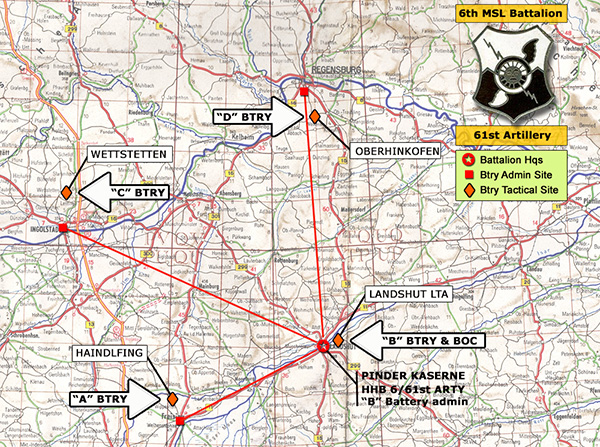 6th Missile Battalion, 61st Artillery in 1965 -- administrative & tactical locations (Walter Elkins) (click on image for enhanced view) |
||||||||||||||||||||||||||||||||||||||||||||||||
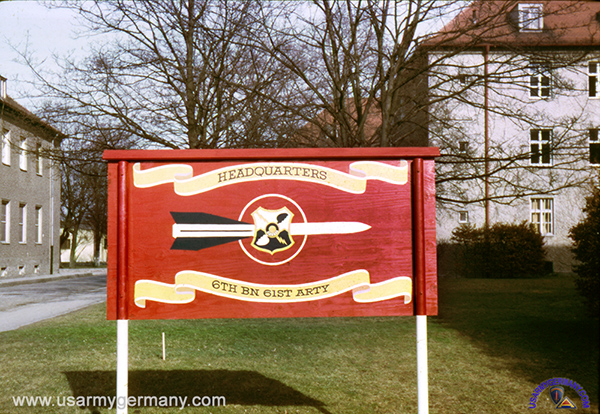 Sign in front of 6th MSL Bn, 61st Arty headquarters on Pinder Barracks, Landshut (Ray Leipold) |
||||||||||||||||||||||||||||||||||||||||||||||||
|
||||||||||||||||||||||||||||||||||||||||||||||||
| 10th Artillery Group (AD) | ||||||||||||||||||||||||||||||||||||||||||||||||
| 1961 | ||||||||||||||||||||||||||||||||||||||||||||||||
| (Source: Email from Jose A. Garcia-Anaya, A Btry, 6th MSL Bn, 61st Arty, 1961-64) | ||||||||||||||||||||||||||||||||||||||||||||||||
| In 1961, I was
a PVT driving the Hawk loader for the assembly section in A
Btry, 6th Bn, 61st Arty. I deployed with 6-61 ADA from
Bliss to a town called Freising, Germany. It took us 30 days by ship
to arrived at Bremerhaven, then we convoyed our equipment to Freising.
31, don't know how many days. I know we got lost couple of times.
Our Hawk site was #31. We wore the 7th Army patch, no Bde patch though. I remember we stayed in GP medium tents at the site, the only buildings were the ready room and the missile assembly buildings. We had no showers and we would go to a German and USAF Kaserne to clean up. Can't remember the name of the German Kaserne though, it was downtown Freising (Webmaster Note: possibly Vimy Kaserne; other units stationed there at the time: Flugmeldeabteilung 311, German Air Force; 604th AC&W Sq, USAF; both were radar units working at the GCI radar site near Freising - which is what A Battery was probably responsible for protecting). Then later on we moved the Btry to an abandoned motor pool, between the site and the town and we stayed there till I left in 64. Like to hear from anyone who served with me between 1961-64. |
||||||||||||||||||||||||||||||||||||||||||||||||
| ADDITIONAL INFORMATION | ||||||||||||||||||||||||||||||||||||||||||||||||
| I was a brand new Pvt out of basic training at Ft Jackson SC (at the time, the Army Infantry Training Center) and was held over for Basic Airborne School at Ft. Benning when the Sgt came in and told our group (10 guys), to get ready to move…I thought we were going to jump school. He stated, you are going to Bliss to train with a new “Rocket Arty Unit". No one in the Army had any idea what a HAWK missile was. Anyway, we were sent to Bliss, 2400 area. Most of the NCOs were Korean war vets, the rest were reclassified Arty NCOs…the majority of the BN enlisted were all Pvt/recruits after basic training, and some SP/4s. I was trained as a 174.10 HAWK Msl crewman. Best Msl loader operator in the BN!! (LOL) After almost 2 years of running around Bliss, Oro Grande. White Sands Msl Range and McGregor Range, the entire Bn (6th Msl Bn, 61st Arty) and equipment was shipped to Germany on the USNS Geiger. After arriving at Bremerhaven, we drove all our equipment to Freising, Germany, outside of Dachau, Munich. At first the entire Btry stayed on Site #31. Even though I was only a PVT (I had spent 4 years in the PRANG), I could tell the US Army was not ready for our coming. At Site #31 the only permanent areas were the admin area, ready room, and the missile assembly area; the Msl Launchers were nothing more than hard packed dirt. Later on the engineers build concrete pads. We slept in GP medium tents for a long time... I do remember our site was next to some radars and underground bunkers...German and US Air Force, and I believe A Btry's mission was to protect that site. BTW is was December 1961, you can picture our living conditions. A little bit cold for young PR who has never been cold let alone seeing snow for first time. We would go for for showers/PX in the back of duty open trucks then ride back to the site. Oh, almost forgot, I don't know what Bde or command we were assigned to...but all we wore the 7th Army patch (Seven steps to hell...we called it). Later on, we moved to an old rundown German motor pool with buildings down the road near Freising. Living conditions were spartan at best. Some of our vehicles were moved to this motor pool and were parked next to big 4-wheeled German vehicles. I can't remember if they were army or German air force. Anyway, we slept in an open bay area all together without any consideration to job title or rank. I was Hawk crewman and the guy sleeping below me was a Generator mechanic. After a short time, we moved to Vimy Kaserne in Freising. I left A-6-61 as an E4 and was discharged at Ft. Dix NJ after a long trip back on the same ship (Geiger) that brought me to Germany 3 years earlier. I reenlisted as a PFC in 1964 and retired as a 1SGT with 21 years of honorable service. I am 79 years young, if anyone remembers me, send me an email... I will answer all emails. "Non Est Ad Astra Mollis E Terris Via" (The Way To the Stars Is Not Easy) After 21 good army years I retired… then I worked for the ADA SHORAD department at the ADA Training Bde at Bliss; I retired from that job after 26 years…(the ADA school moved to Ft. Sill) ….it was time for me to step aside and let the new blood carry the ADA torch. (LOL) I understand the army is going to active SHORAD again, I was one the few that spoked again the Army deleting all SHORAD Bns from the Army. Wish ADA would bring the 61st regimental colors back!! |
||||||||||||||||||||||||||||||||||||||||||||||||
| 69th Artillery Group (AD) | ||||||||||||||||||||||||||||||||||||||||||||||||
| 1964 | ||||||||||||||||||||||||||||||||||||||||||||||||
| (Source: Email from Thomas Coop, D Btry, 6th MSL Bn, 61st Arty, 1964-65) | ||||||||||||||||||||||||||||||||||||||||||||||||
| A little added info: 6th 61st was headquartered with B Battery in Landshut; D Battery was in Regensburg; not quite sure about A & C. I was in Regensburg from the spring of 1964 till out in 1965. (Webmaster note: the USAREUR Station List for June 1965 shows C Battery at Wettstetten, which is north of Ingolstadt. When the 6-61st was returned to the States under REFORGER in 1968, a German HAWK battery took over the site.) |
||||||||||||||||||||||||||||||||||||||||||||||||
| (Source: Email from J. Arbogast, Hq/Hq Btry, 6th MSL Bn, 61st Arty, 1964-66) | ||||||||||||||||||||||||||||||||||||||||||||||||
| Found your site very interesting. I was stationed at Hq Btry 6th MSL Btn 61st Arty in Landshut from 1964/66. B Btry was also located there. We picked up all maint for C 62 when they moved out. Was a 25J20 CDC and OC repairman. All maint was done from Landshut for the firing batteries as far as the CDC was concerned. We had to travel to the different batteries to do the maint. Do you have any list of personnel? Looking for some friends. |
||||||||||||||||||||||||||||||||||||||||||||||||
| (Source: Email from Robert "Bob" Drolet) | ||||||||||||||||||||||||||||||||||||||||||||||||
| I was a 2nd Lt with C Battery, 6th MSL Bn, 61st Arty from 1964-1966. C/6/61st was located in Wettstetten, Germany outside of Ingolstadt. NCO’s and officers lived on the economy or in (Army) quarters in Munich. All others lived at the Admin site in Quonset Huts. |
||||||||||||||||||||||||||||||||||||||||||||||||
| 1967 | ||||||||||||||||||||||||||||||||||||||||||||||||
| (Source: Email from Ray Leipold) | ||||||||||||||||||||||||||||||||||||||||||||||||
| I have put together a brief summary of my military service experience with the 6th, 61st Arty. I arrived at headquarters battalion 6th, 61st in January of 1967. I was assigned to DSP as a CW radar repairman. I worked in that position for about six months at which point I was reassigned to be in charge of the American Youth Activities (AYA) until redeployment to the US in May of 1968. HQ Btry. was located at Pinder Bks. in Landshut along with B Btry. A Btry was located near Bad Aibling, C Btry was located near Ingolstadt and D Btry was located near Regensburg. Operation REFORGER relocated the entire 6th, 61st battalion, except for D Btry, to El Paso, Texas in 1968. I can remember that all of our equipment had to be brought up to top notch condition before the relocation. Our trucks which were in a rather poor condition all received new paint jobs, engine overhauls and new canvas. The ¾-ton truck assigned to me had never seen canvas probably since WWII and never had a working battery. It was good to see it run and look good for once. The radars, missiles and technical equipment were all sent back to Ft. Bliss, the trucks were driven to a collection point in Germany where we were told that they were scrapped. I lived off-post with my wife in military housing during my deployment in Germany. The housing was fantastic. I was one of very few that could speak German and made many friends with the locals in Landshut. I have been back to Landshut many times to visit with friends. The city has certainly changed over the years. Most of the buildings comprising the 6th, 61st except for three and the DSP building have been knocked down and an enormous cultural center has been built on the site. I still maintain contact with several of the other guys I worked with in the 6th 61st. It was a good time in Germany and I will always remember it, even those cold nights up on the hill repairing a radar. Upon relocation to Ft. Bliss, I was assigned to work for 4th Army Training Aids for six months as a military photographer. I was then reassigned to 6th Bn 71st Arty. Promoted to SP6 as section chief. I was discharged in January of 1970. |
||||||||||||||||||||||||||||||||||||||||||||||||
| 1968 | ||||||||||||||||||||||||||||||||||||||||||||||||
| (Source: Email from Ron Matviyak) | ||||||||||||||||||||||||||||||||||||||||||||||||
| I finally decided to look up the old HAWK site on Google Earth and come across your web site and the chart. The 6th Bn, 61st HAWK was headquartered at Landshut in 1968 with one of the batteries at Freising. I arrived in January 1968 just in time to help pack up the battalion and head back to El Paso on the “First Reforger”, intended to reduce the outflow of money. I believe it was later that “Reforger” came to mean an exercise at returning elements of a unit to Germany as if we were pulled out of reserve in the US and sent to the front lines; that may have been the plan all along. ADDITIONAL INFORMATION As of 1967/68 the Bn HQ was located in Landshut, Germany and Btry C was located at Freising Germany. We received orders to pack up and return to the USA, which was accomplished in the spring of 1968, returning to Ft Bliss to support HAWK missile launchings at White Sands, where we dramatically improved the ratio of kill shots. Our return was referred to as the "First REFORGER", where we were brought back to the US to reduce the flow of money overseas, with the idea that in time of crisis or war we would rapidly return to Germany. I have seen other references to REFORGER that refer to the first return in 1969, I believe, as the First REFORGER. Of course I look upon this as erroneous. One of the most distinct memories is the deplorable condition of the 2 1/2 ton trucks, our "prime movers", of which half did not run at any one time. To line the trucks up for the Col's inspection we had to get a bunch of guys out there pushing them back and forth to line up the bumpers. The trucks were all 1953 vintage; all of the new stuff was going to Vietnam. The much praised maintenance system was obviously a complete disaster, but it was praised from the lowest private to the highest general. It was refreshing to read Colin Powell's biography where he condemned the same system, for the same faults, and he was in a better position to observe the larger picture. Freising was a great place to be, where we shared our Kaserne with the German army. It took about a full year for the army to get the last of the 32nd AADCOM patches off of our uniforms once we returned to Ft Bliss. |
||||||||||||||||||||||||||||||||||||||||||||||||
| (Source: Email from John Henley) | ||||||||||||||||||||||||||||||||||||||||||||||||
| I stumbled across your address and understand you are looking into 1963 Hawk installations in Germany. I've had no contact with anyone from the old days and I'm having fun going through the information you have compiled. I was TCO at a Hawk unit in Ingolstadt: C Btry, 6th Bn, 61st Arty, 32nd AADCOM in 1968 until we were reassigned to FT Bliss in 1969. Operation "Reforger" if I remember correctly. Our battalion HQ was in Landshut. I've been trying to find info on our unique battery and trying to locate its original site to see what is there now. It was an isolated field installation, not a post. I don't remember the name Wettstetten, though there was a small village nearby, could have been it. Our battery was all tactical. We had no support HQ anywhere but in Landshut. Our battery HQ was a quonset hut as were our barracks and support buildings. All the men lived onsite. Officers lived in outlying villages. I was in an old lady's house in Oberhaunstadt. Just a couple of miles away. Our motor pool was onsite and was some sort of rectangular sheet metal building. Our site was said to be on an old castle setting and indeed there was a moat that we had to cross to access the radars. This was via a swinging cable bridge. Hard times, but good times. I haven't been able to locate any of our personnel. I'll try to keep researching, all my photos are on 35mm slides and not readily accessible. |
||||||||||||||||||||||||||||||||||||||||||||||||
|
||||||||||||||||||||||||||||||||||||||||||||||||
|
|
||||||||||||||||||||||||||||||||||||||||||||||||
| Kasernes and Tactical Sites Occupied by 69th ADA Brigade units | ||||||||||||||||||||||||||||||||||||||||||||||||
| (Webmaster Note: looking for anyone with more details on the HAWK sites operated by the 69th.) | ||||||||||||||||||||||||||||||||||||||||||||||||
| 3rd MSL Bn, 7th Arty -- 3rd Bn, 7th ADA | ||||||||||||||||||||||||||||||||||||||||||||||||
|
||||||||||||||||||||||||||||||||||||||||||||||||
|
|
||||||||||||||||||||||||||||||||||||||||||||||||
| 6th MSL Bn, 52nd Arty -- 6th Bn, 52nd ADA | ||||||||||||||||||||||||||||||||||||||||||||||||
|
||||||||||||||||||||||||||||||||||||||||||||||||
|
|
||||||||||||||||||||||||||||||||||||||||||||||||
| 4th MSL Bn, 57th Arty -- 2nd Bn, 57th ADA | ||||||||||||||||||||||||||||||||||||||||||||||||
|
||||||||||||||||||||||||||||||||||||||||||||||||
|
|
||||||||||||||||||||||||||||||||||||||||||||||||
| 6th MSL Bn, 60th Arty -- 3rd Bn, 60th ADA | ||||||||||||||||||||||||||||||||||||||||||||||||
|
||||||||||||||||||||||||||||||||||||||||||||||||
|
|
||||||||||||||||||||||||||||||||||||||||||||||||
| 6th MSL Bn, 61st Arty | ||||||||||||||||||||||||||||||||||||||||||||||||
|
||||||||||||||||||||||||||||||||||||||||||||||||
|
|
||||||||||||||||||||||||||||||||||||||||||||||||
| 6th MSL Bn, 62nd Arty -- 2nd Bn, 62nd ADA | ||||||||||||||||||||||||||||||||||||||||||||||||
|
||||||||||||||||||||||||||||||||||||||||||||||||
| [1]
STATION LIST, 30 Sept 1963 [2] STATION LIST, 31 Dec 1967 |
||||||||||||||||||||||||||||||||||||||||||||||||
|
||||||||||||||||||||||||||||||||||||||||||||||||
|
|
||||||||||||||||||||||||||||||||||||||||||||||||
| Related Links: 3rd Bn, 7th ADA (HAWK) Yahoo Group - Calvin Bridges (C Btry, 3rd Bn, 7th ADA, Bamberg, 1978-80) has started a new website for all veterans of the 3-7 ADA. Check it out! |
||||||||||||||||||||||||||||||||||||||||||||||||
 .
.