Click here to open 'USArmyGermany' frameset
LARSON BARRACKS |
WÜRZBURG AIRFIELD |
|
WÜRZBURG MISC. |
||
| MAPS |  |
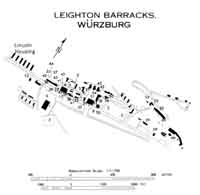 1. Leighton Barracks, late 1970s |
 2. Faulenberg Kaserne, late 1970s |
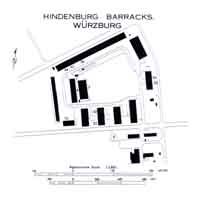 3. Hindenburg Barracks, late 1970s |
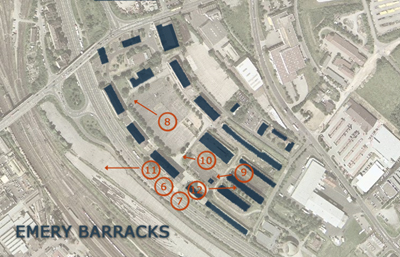
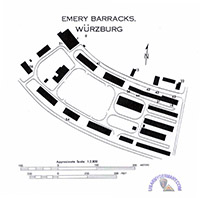 4. Emery Barracks, late 1970s Annotated maps: 1950s, 1970s |
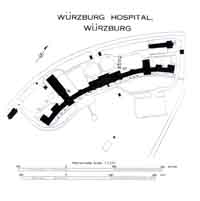 5. USAH Würzburg, late 1970s |
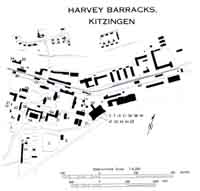 6. Harvey Barracks, late 1970s |
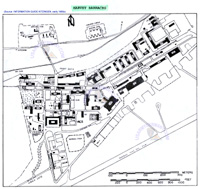 7. Harvey Barracks, early 1980s |
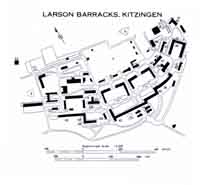 8. Larson Barracks, late 1970s |
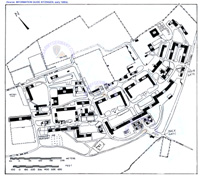 10. Larson Barracks, early 1980s |
| 1980 Topographical maps of Würzburg, Kitzingen and surrounding area. These maps are reproduced from the "U.S. Military Installation Atlas" published by the 37th Transportation Group in 1980. Click on the thumbnail to view a larger format of the same map. Click here for a list of the installations. |
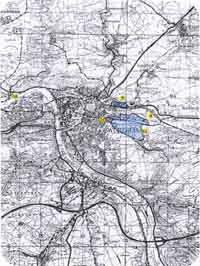 Würzburg area (332 KB) |
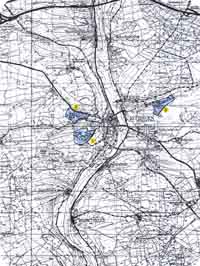 Kitzingen area (334 KB) |
 1. Post-Argus - Oct 27 1950 (PDF) |
|
|
 1. Pillars & Posts - Aug 5 1983 |
|
|
|
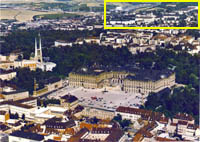
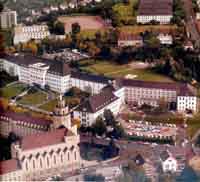
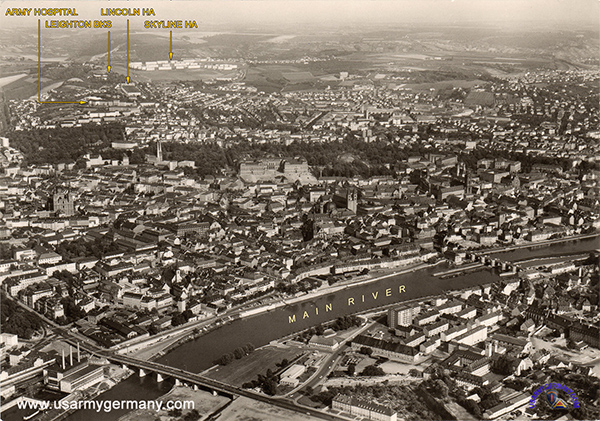 US Army installations in Würzburg (Webmaster's collection) (Faulenberg Ksn - outside of the frame, upper left; River Bldg - outside of the frame, center right) |
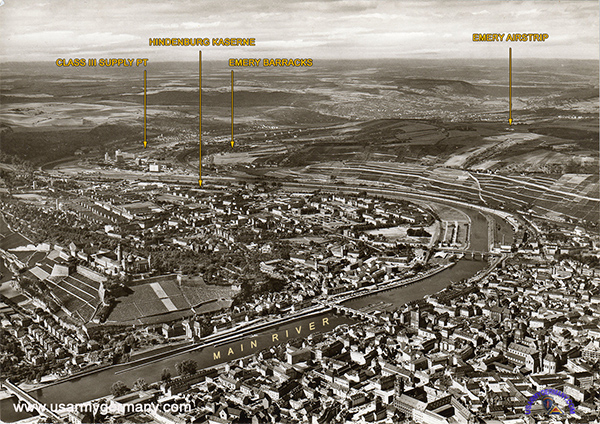 US Army installations in Würzburg (Webmaster's collection) |
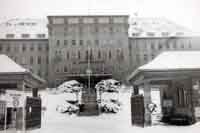
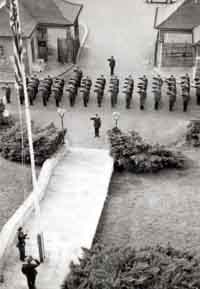
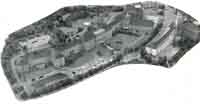
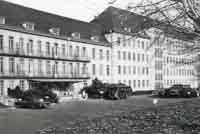
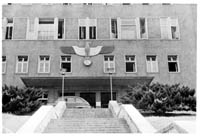
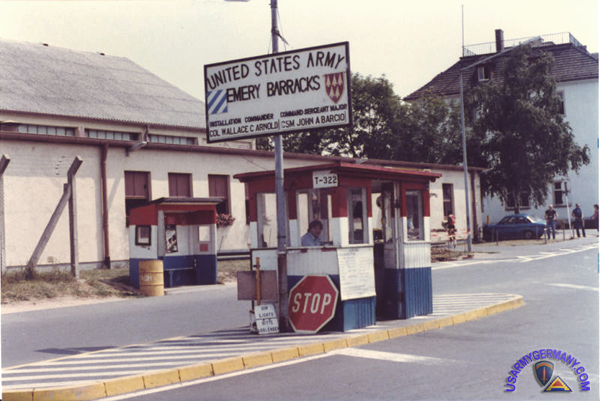 Emery Barracks - Gate on Albert-Einstein-Strasse (D 6/52nd ADA Yahoo Group) |
 |
 8. Emery Bks, 1960s (KB) 8. Emery Bks, 1960s (KB) |
 9. (KB) 9. (KB) |
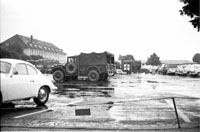 10. (KB) 10. (KB) |
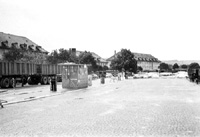 11. (KB) 11. (KB) |
|
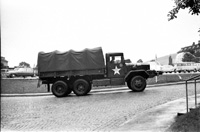 12. (KB) |
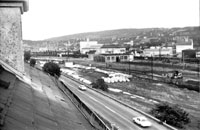 13. (KB) |
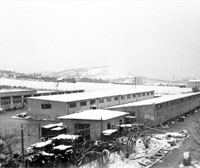 14. (KB) |
||
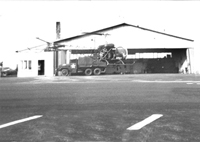 15. Würzburg Airfield (KB) 15. Würzburg Airfield (KB) |
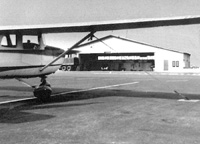 16. (KB) 16. (KB) |
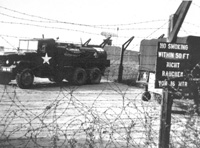 17. (KB) 17. (KB) |
||
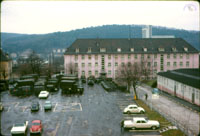 18. Emery Bks, 1969 (KB) |
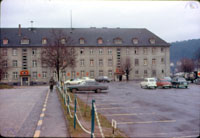 19. Emery Bks, 1969 (KB) |
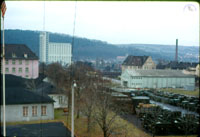 20. Emery Bks, 1969 (KB) |
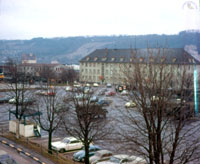 21. Emery Bks, 1969 (KB) |
|
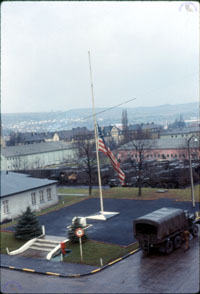 22. Emery Bks, 1969 (KB) |
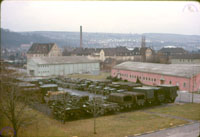 23. Emery Bks, 1969 (KB) |
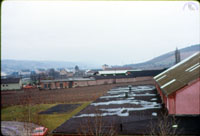 24. Emery Bks, 1969 (KB) |
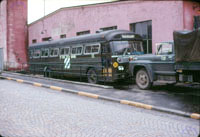 25. 3rd Inf Div Band - bus, 1969 (KB) |
|
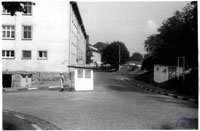 26. Emery Bks, 1970 (KB) |
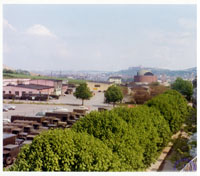 27. Emery Bks, 1971 (KB) |
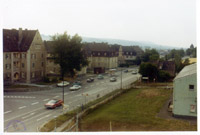 28. Emery Bks, 1970 (KB) |
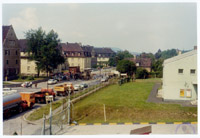 29. Emery Bks, 1970 (KB) |
|
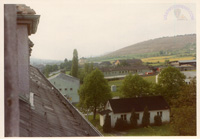 30. Emery Bks, 1970 (KB) |
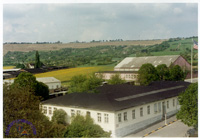 31. Emery Bks, 1970 (KB) |
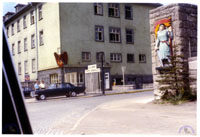 32. Emery Bks, 1970 (KB) |
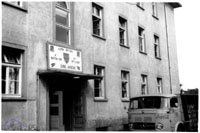 33. Emery Bks, 1970 (KB) |
|
|
||||
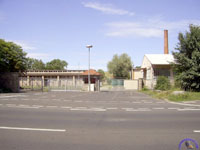 1. Main gate (180 KB) |
||||
|
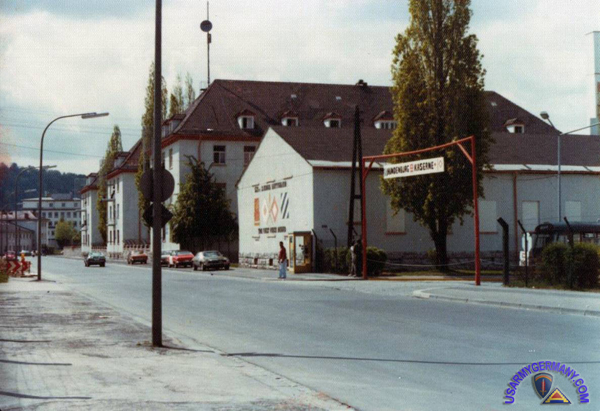 Hindenburg Kaserne - Main Gate (Tom Crowder) |
 1. Hindenburg Ksn (KB) |
 2. (KB) |
 3. (KB) |
|
|
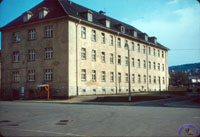 4. Hindenburg Ksn, mid-1950s (140 KB) |
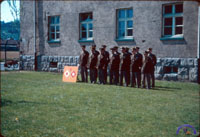 5. 10th Sig Co staff (181 KB) |
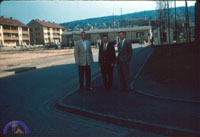 6. Main gate in background (85 KB) |
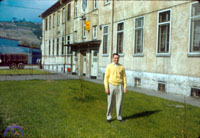 7. Hindenburg EM Club (176 KB) |
|
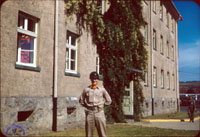 8. Ready for guard duty (179 KB) |
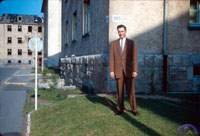 9. (161 KB) |
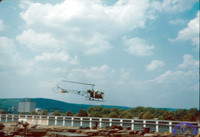 10. Armed Forces Day activities (134 KB) |
|
|
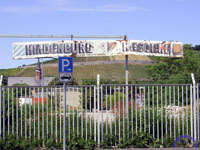 11. Old kaserne sign (199 KB) |
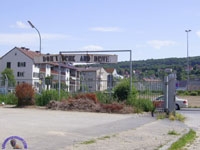 12. Near main gate, from inside kaserne (129 KB) |
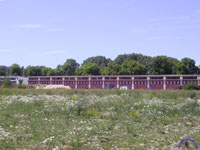 13. Motor pool area (205 KB) |
||
|
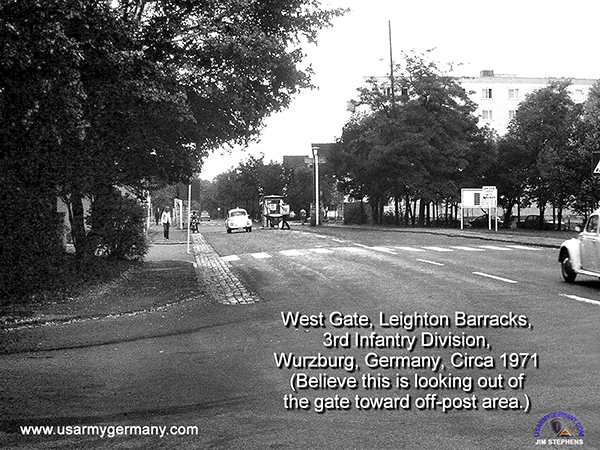 Leighton Barracks Main Gate, 1971 (Jim Stephens) |
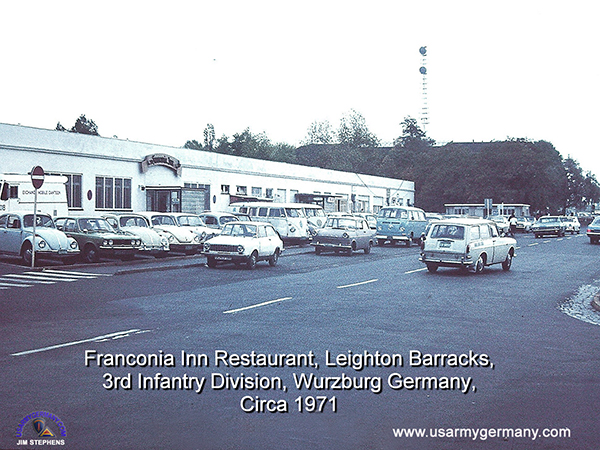 Franconia Inn, Bldg 9, Leighton Barracks (Jim Stephens) |
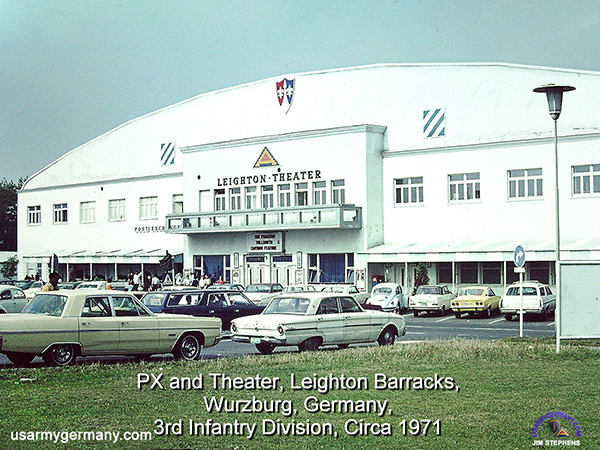 Leighton PX & Movie Theater, 1971 (Jim Stephens) |
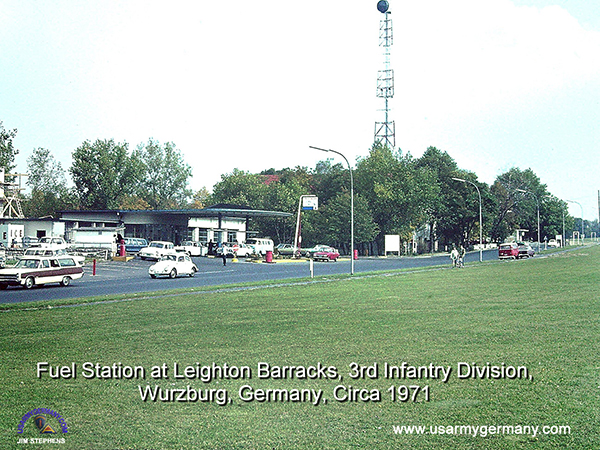 EES Service Station, Leighton Barracks, 1971 (Jim Stephens) |
 1. Back gate (167 KB) |
||||
|
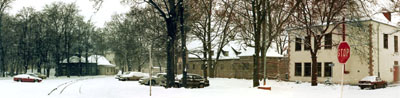 1. Harvey Bks, mid 1980s (KB) |
||
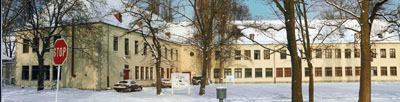 2. Harvey Bks, mid 1980s (KB) |
||
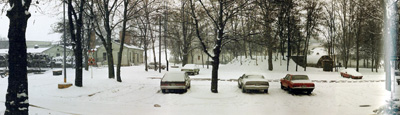 3. Harvey Bks, mid 1980s (KB) |
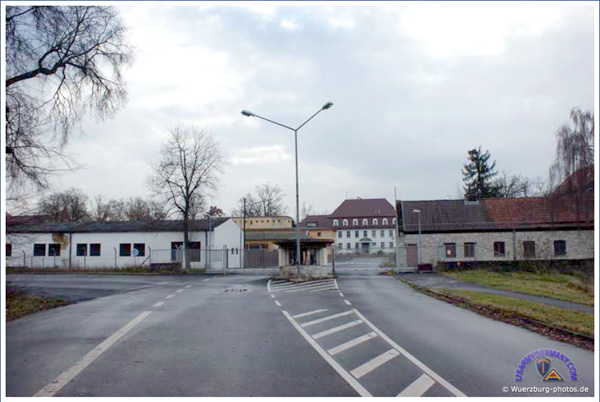 Harvey Barracks - Main Gate, 2008 |
|
|

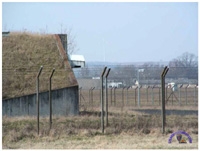
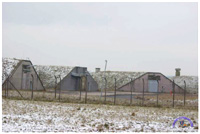
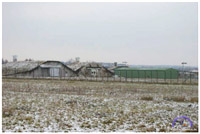
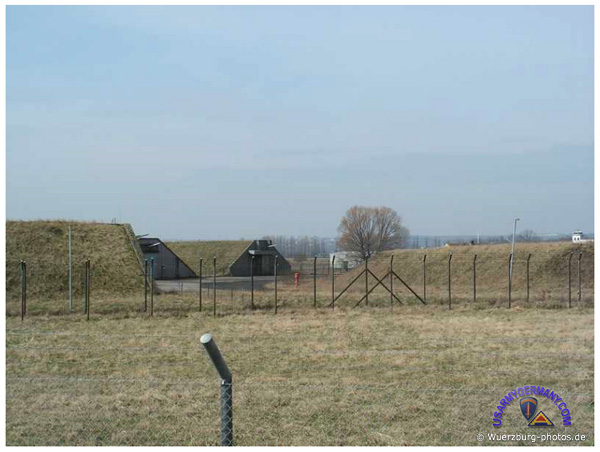 Special Weapons Storage - NATO Site 35 |
 1. NATO Site 35 (KB) |
 2. (KB) |
 3. (KB) |
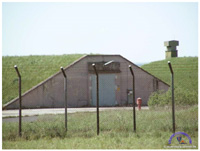 4. (KB) |
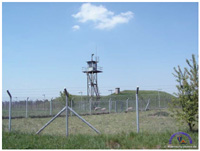 5. (KB) |
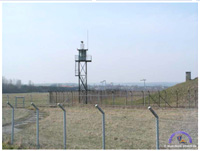 6. (KB) |
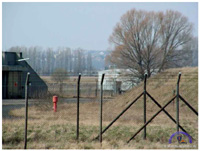 7. (KB) |
 8. (KB) |
 9. (KB) |
 10. (KB) |
|
|
|
|
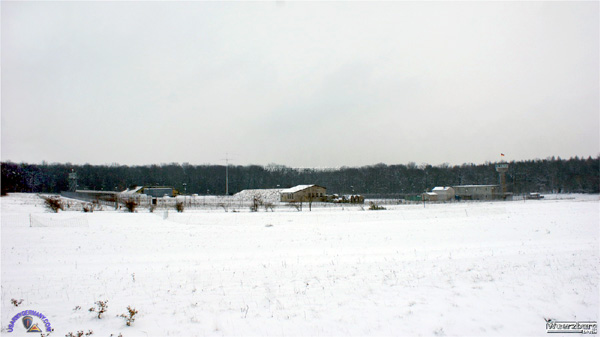 1. Special Weapons Storage Site Kaltensondheim (KB) |
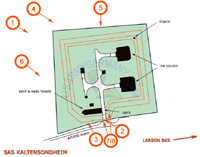 SAS Kaltensondheim map (KB) |
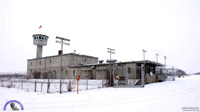 2. SSCC, Tower #1 and Main Gate (KB) |
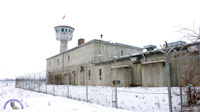 3. SSCC and Tower #1 (KB) |
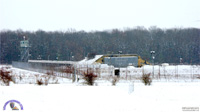 4. (KB) |
|
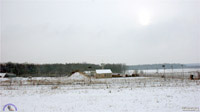 5. (KB) |
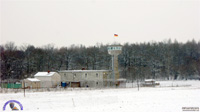 6. (KB) |
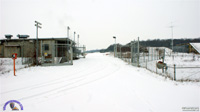 7. Main gate area (KB) |
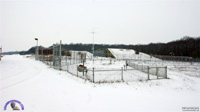 8. Main gate area (KB) |
|
|
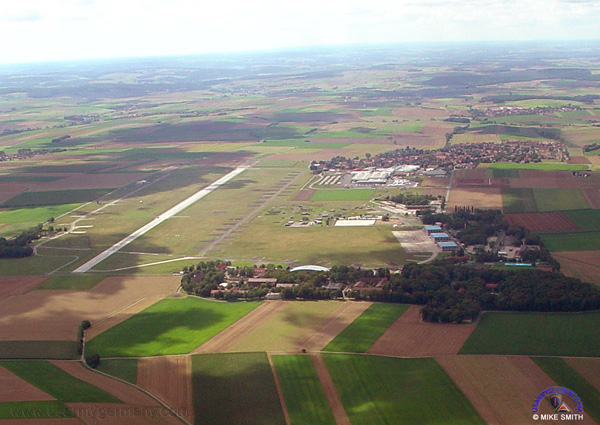 Giebelstadt Army Airfield, recent (Mike Smith) |
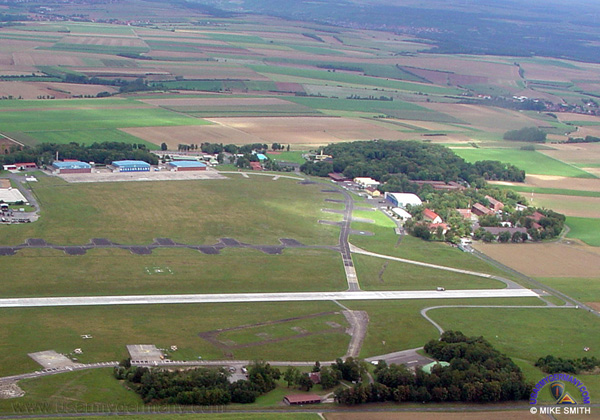 Giebelstadt Army Airfield, recent (Mike Smith) |
Who can help identify some of these buildings?  |
Thanks to Ed Allen (602nd AC&W Sq) and some of his buddies, we have been able to ID some of the pics. | ||
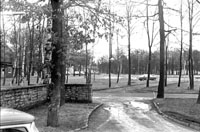 1. Rod Gun Club (KB) |
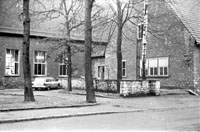 2. Mess hall and NCO Club (KB) |
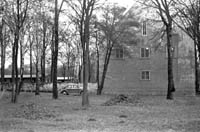 3. (KB) |
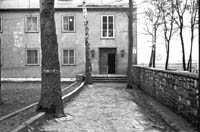 4. Same as #2 (KB) |
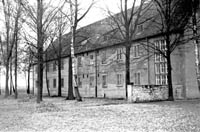 5. HQ Btry barracks (KB) |
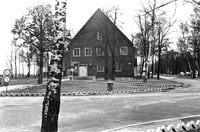 6. Post Chapel (KB) |
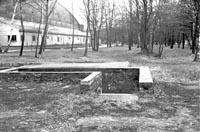 7. Hangar converted to consolidated motor pool (KB) |
|
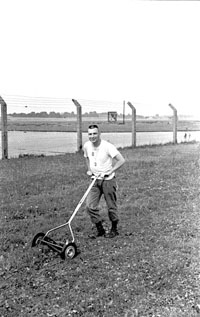 9. (KB) |
|||
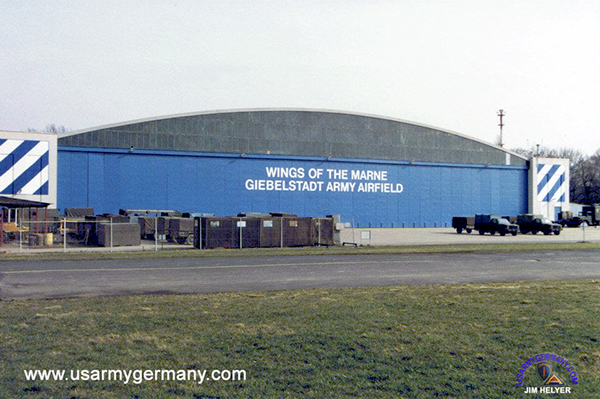 TF 23 hangar, Giebelstadt Army Airfield, late 1980s (Jim Helyer) |
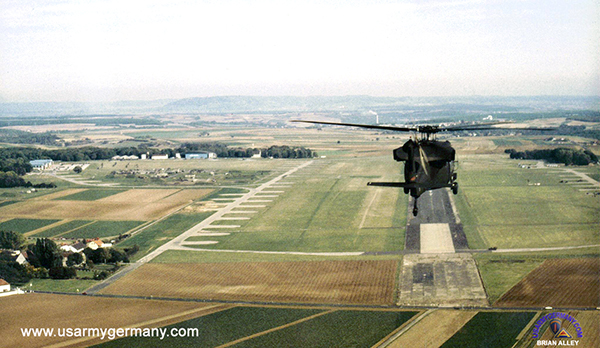 121st Avn Co BLACKHAWK on approach, 1982 (Brian Alley) |
 Aerial photo of Giebelstadt AAF, mid-1990s (Mark Sales) |
 Giebelstadt Army Airfield, mid-1990s (Mark Sales) |
|
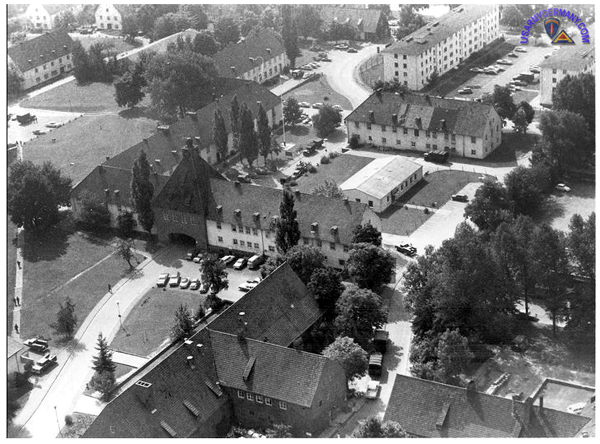 Aerial of Peden Barracks, Wertheim, 1976 (Allen Seich) |
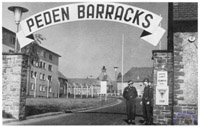 1. Main Gate, Peden Bks, 1954 1. Main Gate, Peden Bks, 1954 |
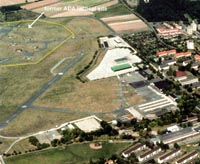 2. Peden Bks, 1990s 2. Peden Bks, 1990s |
||
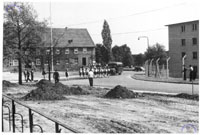 3. Peden Bks, 1952 3. Peden Bks, 1952 |
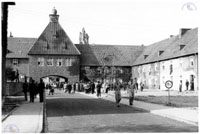 4. Peden Bks, 1952 |
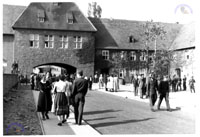 5. Peden Bks, 1952 |
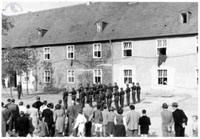 6. Peden Bks, 1952 |
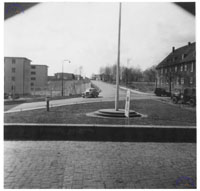 7. Peden Bks, 1952 |
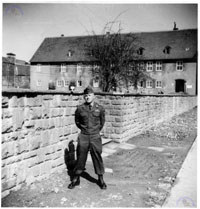 8. Peden Bks, 1952 |
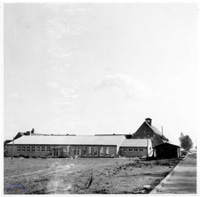 9. Service Club, 1952 |
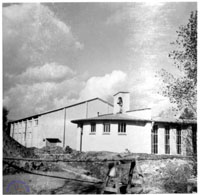 10. Post gym and chapel , 1952 |
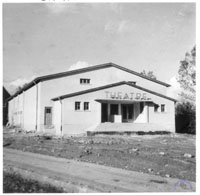 11. Post Theater, 1952 |
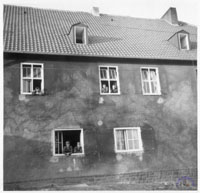 12. Barracks, 1952 |
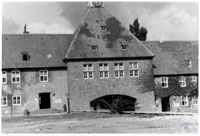 13. Peden Bks, 1952 |
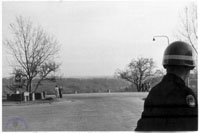 14. Main gate area, 1952 |
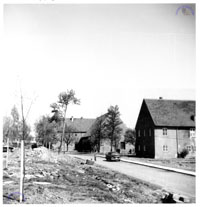 15. Mess hall, 1952 |
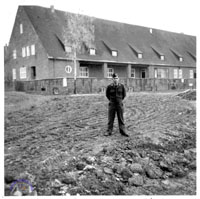 16. Mess hall, 1952 |
||
|
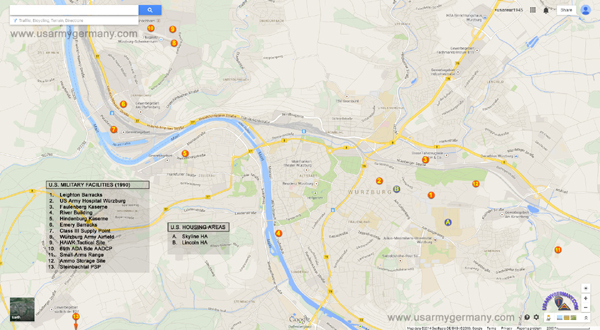
US Army installations in and around Würzburg, 1990 (GOOGLE)
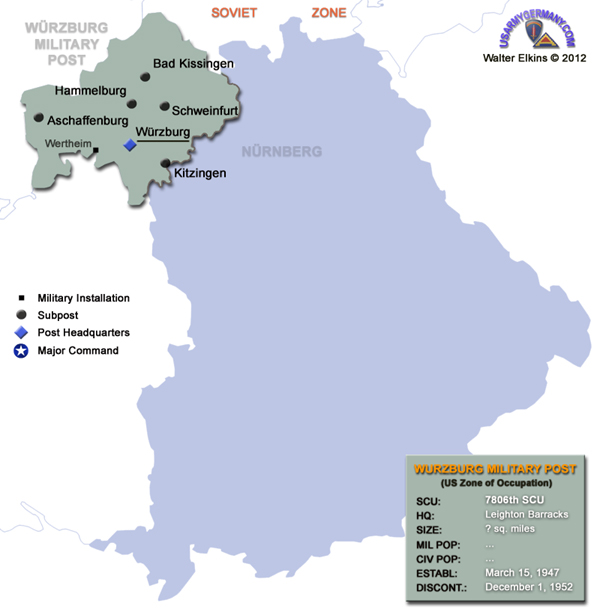
Map of Würzburg Military Post (Walter Elkins)
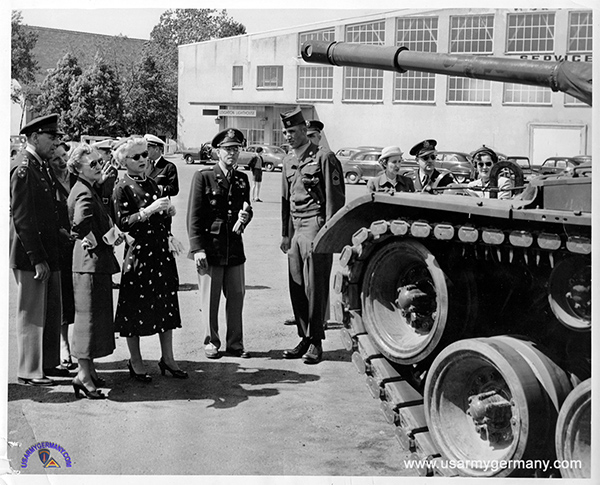
Equipment display at Leighton Barracks, May 1953 (Webmaster's collection)
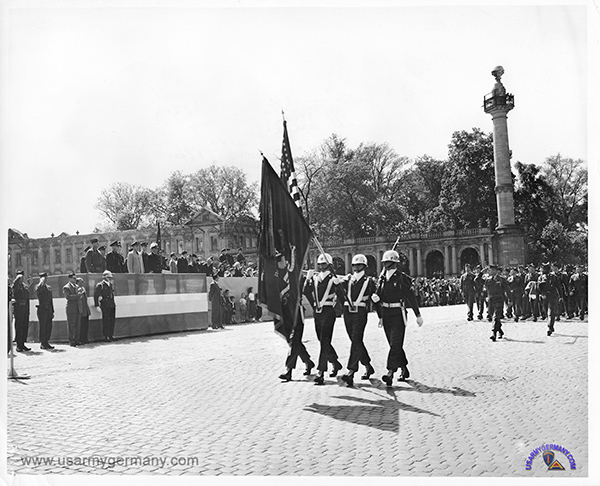
Armed Forces Day parade in front of Wuerzburg Residence, 1953 (Webmaster's collection)

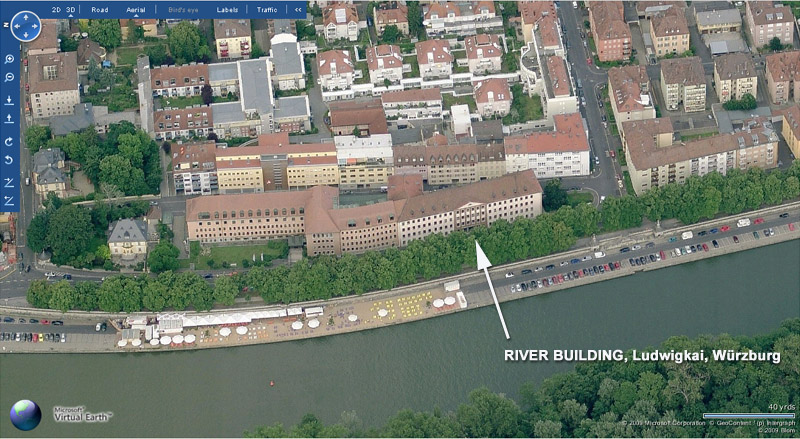 |
| Would like to hear from anyone who worked at the River Building - need confirmation that this is actually the former River Building and would like some details on history, units/activities housed at the bldg, etc. |
RESPONSES: (Souce: Email from Daniel J. Jeffries) I was on your website and saw the picture of the River Building. That is the correct building. It housed the Military Police Station, MP investigators, Physical Security, Provost Marshall, and Military Intelligence. I was an MP with the 3rd Division MP Company, 1988-1990, at Leighton Barracks. We had the whole building - not sure if it was always that way or changed after I left but from June 1988 until May 1990 3rd ID had the whole building. (Source: Email from Bernd Deppisch) Bernd points out that the building shown in the aerial view above is the River Building but that the US Army offices were all located in the southern third (right side) of the building. The other two-thirds of the building was occupied by the German Arbeitsamt (which is still located there). (Source: Email from Dale Little) You do have the correct building as the River Building in Wurzburg, Germany. As an MP I worked in the Provost Marshal's Office in 1967-1968. I can't remember the names, but I drove for the Provost Marshal who was a bird colonel and the Assistant Provost Marshal, a Lt. Colonel. Even thought I grew up in North Carolina the Provost Marshal said he would rather have me driving in the snow than any of the guys from the New York area. I drove full time for about 6 months until I intentionally got myself reassigned because I lived off base near the River Building on Franz-Ludwig Strasse and usually had to walk to Leighton Barracks Motor Pool to pick up a sedan or jeep. I usually had to walk a couple of miles a day to pick up the vehicle and then take it back in the evenings. I asked if one of the other MP's could bring the vehicle from the base, but the answer was no, so I intentionally quit doing a good job cleaning the vehicle until I was reassigned to another job at the River Building. Even then, the colonel still wanted me driving his jeep when we went on maneuvers. I was assigned to a job which involved traveling to outlying areas from Wurzburg and inspecting arms rooms and ammo dumps. The last couple of months of my tour, I worked alone as the night Desk Sergeant at the Provost Marshall's Office. I can still remember looking out the window by the street which ran by the Main River and seeing a car coming slowly down the street with the hood up with a mechanic standing on the front bumper and leaning under the hood while making some adjustments to the engine. Thanks for what you have already posted. It may sound strange but it has brought back some memories that were not always that pleasant at the time, but it has been pleasant to look back on those times. When I clicked on the picture I was able to find the location of the apartment (if it could even be called that) on Franz-Ludwig Strasse where I lived for almost a year. It was little building that was thrown up on the edge of the parking lot to a larger apartment building which housed almost exclusively military couples and prostitutes. What I lived in was an old rock structure shaped like an old mobile home about 7 or 8 ft. wide and maybe 30 ft. long with three rooms. I was also able to locate the Military Police barracks where I stayed a couple of months before my wife was able to come over. There were so many of us who arrived at one time they had to place a bunch of cots in the upstairs training room for us to sleep. Some of our records got misplaced for a while and some of us were forgotten about for 2 or 3 weeks. My first morning there, I was running down the stairwell to make morning lineup when I heard the sergeant yell "fall in" as I went by an open window. I hesitated and then decided I would rather have the sergeant come looking for me rather than being made an example of in front of everyone, so I went back up to the training room and waited, but no one ever came. The game room was adjacent, so I played pool most of the day. Unbelievably, the next morning I was at exactly the same place when I heard "fall in", so I turned around and went back to bed. I never bothered to get up after that until I was visiting some friends who were in a normal four man room downstairs when a sergeant came by making a duty roster. He couldn't believe it when I told him I had not yet been assigned to a squad when he asked what squad I was in. I always wanted to go back to visit, but it has been interesting to "visit" via the satellite imagery. I did map the distance from Leighton Barracks to the Provost Marshal's office and it was 2.4 miles. The 3rd MI Detachment was headquartered there and housed the C.O., the X.O. (me), counterintelligence officers, and supply and maintenance. The order of battle officer was collocated with the G-2 up at Leighton Barracks, and there were NCOs up near the East German border. The detachment also had billets on the same floor for the enlisted personnel who worked in the River building. One or two bays? The unit, along with others, had storage units in the basement. These were jail cells. During my time, we were told that the building was the former Gestapo headquarters in Germany, but I cannot confirm that. Interestingly, however, the division's counter intelligence division (CID) was our neighbor in the building. Its entrance, an attractive dark stained wooden door, was marred by a cut plywood piece covering part of it. When one removed the plywood piece, it revealed an inlaid swatzika, indicating that the River building certainly had some significant role during the war. I hope this is helpful and adds a bit to our understanding of the times. |
(Source: General Orders Naming Kasernes, USAREUR Military History Office) LEIGHTON BARRACKS - The kaserne of the 10th Constabulary Squadron located near Wurzburg, Germany (map coordinates: N-5835) is named Leighton Barracks. (HQ EUCOM GO #62, 17 June 1947) |
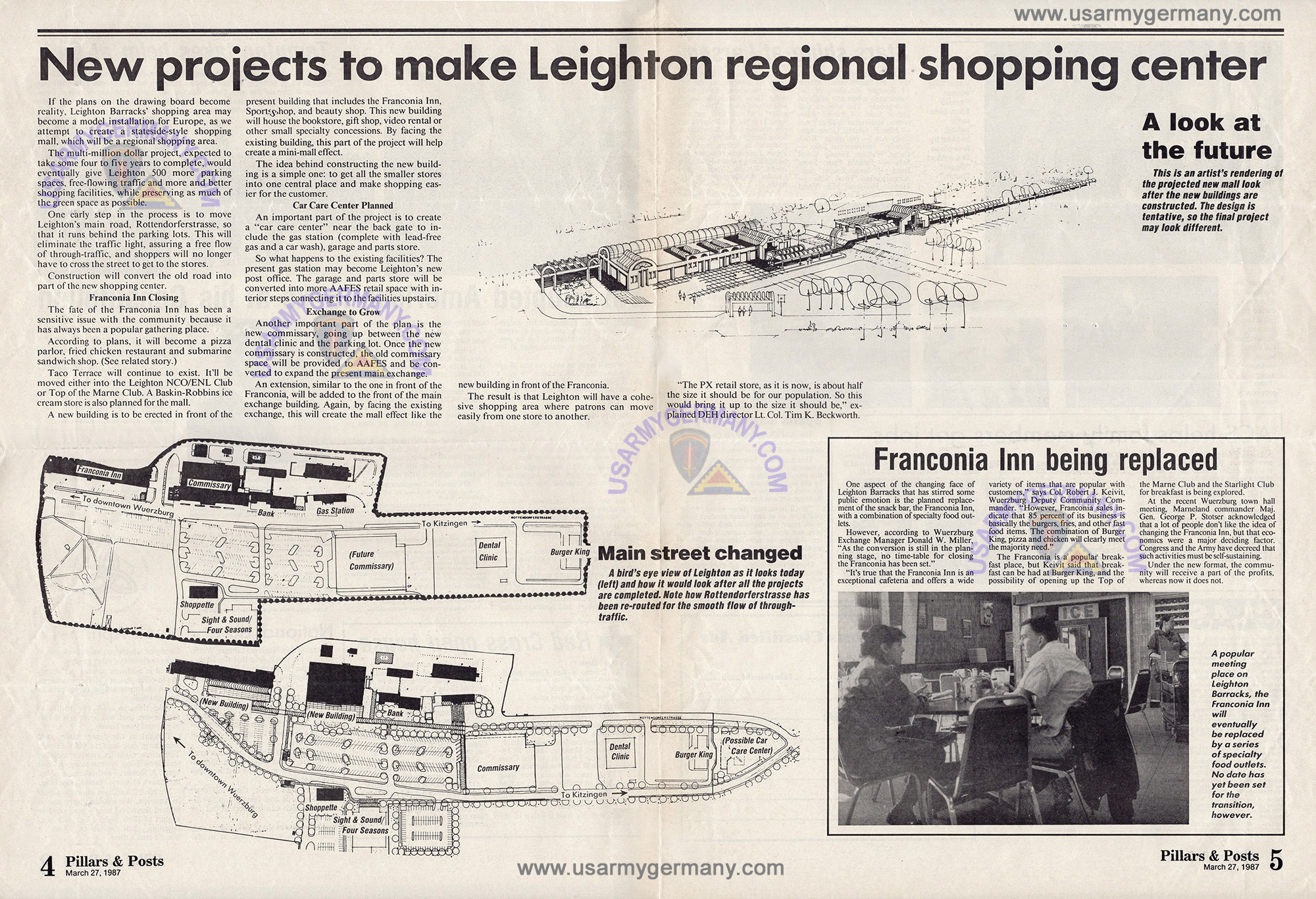
Construction plans for new shopping center at Leighton Barracks, 1987
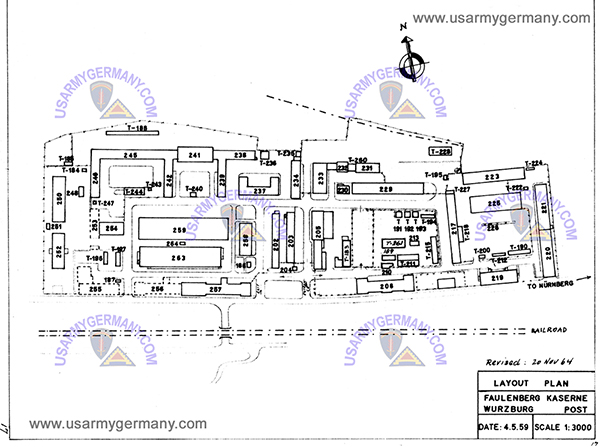
Faulenberg Kaserne installation map, 1964 (Webmaster's collection)
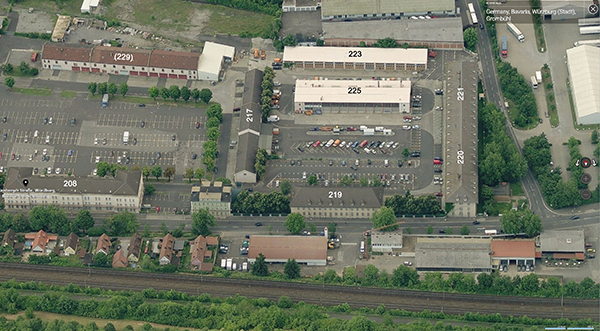
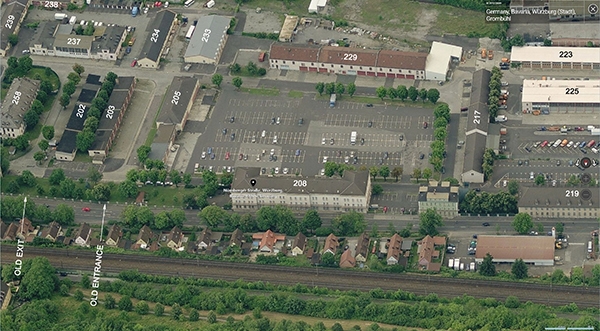
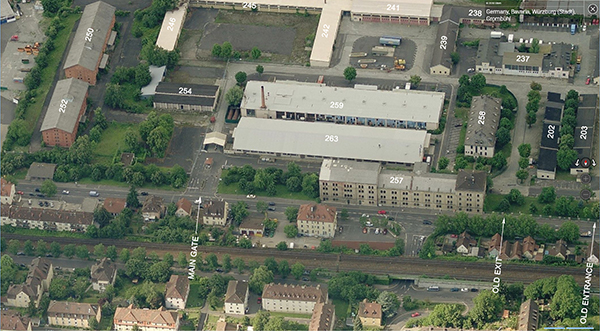

 Headquarters building, US Military Community Acitivity, Wuerzburg Consolidated Maintenance Center (several different shops) (remainder of CMC on Leighton Barracks) 493rd S&S Company headquarters/billets, shops, mess hall/DFAC and motor pool DEH DOL Family Housing Office Bakery Laundry & Dry Cleaning Plant TISA CIF Vet Clinic German Kantine Vehicle Registration Office MP Customs
Any other activties that I have missed?
Once Secret airbase grows Present-day Giebelstadt is a small industrial town with a boat factory, a furniture warehouse, a bag and net factory, several small bakeries and a few German "Gasthaus." These industries and shops support a population of over 1000 people and military population of over 2,000 soldiers and their family members. |
 |
|
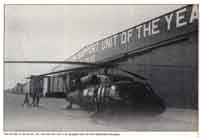
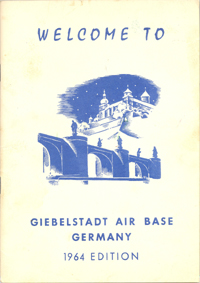
| As the war moved away from Giebelstadt, the base was converted into a training facility, and from 1939 to 1941 German pilots, observers and radio operators were trained at Giebelstadt. Between 1941 and 1945, the base was used for experimentation and development of secret aircraft, including the jet-powered Messerschmitt ME-262 and the rocket powered Messerschmitt ME-163. The base was placed "off-limits" to all personnel except those specifically authorized by the Air Ministry. In order to maintain the utmost in secrecy, the name of Giebelstadt was deleted from all German maps. The secrecy surrounding the base was successful and although many missions were flown against the base only two ever found their mark. In April 1945, Giebelstadt was captured by the 12th Armored Division, and shortly thereafter, the war in Europe came to an end. As the war moved away from Giebelstadt, the base was converted into a training facility, and from 1939 to 1941 German pilots, observers and radio operators were trained at Giebelstadt. Between 1941 and 1945, the base was used for experimentation and development of secret aircraft, including the jet-powered Messerschmitt ME-262 and the rocket powered Messerschmitt ME-163. The base was placed "off-limits" to all personnel except those specifically authorized by the Air Ministry. In order to maintain the utmost in secrecy, the name of Giebelstadt was deleted from all German maps. The secrecy surrounding the base was successful and although many missions were flown against the base only two ever found their mark. In April 1945, Giebelstadt was captured by the 12th Armored Division, and shortly thereafter, the war in Europe came to an end. A year later the base was again operational, but this time as a U.S. base with the assignment of the 55th Fighter Group, transferred from Kaufbeuren. General Carl A. Spatz, Commanding General of the Army Air Force visited the base in July 1946 and witnessed an aerial review of the newly acquired P-80s of the 55th Group. On August 20 of that year, the 55th Group was replaced by the 31st Group which remained at Giebelstadt until 1946. The 850th Engineer Aviation Battalion arrived in February 1947 to extend the runway to 7200 feet in preparation for bomber operations. Upon completion of the runway program, the base was then used as a training base and a temporary support for B-29s of the Strategic Air Command during temporary deployments to Europe. Then the base was completely closed and all U.S. personnel were reassigned. The years between 1950 and 1956 found the base used to billet transient units. These units practiced implementing a dispersal program to Europe. During one of these temporary stays, the Duke of Edinburg visited the airbase. When the 602nd Aircraft Control and Warning Squadron was permanently assigned to Giebelstadt in 1956, that started the longest stay any of the U.S. forces ever to be assigned to the base. (1) What started as a temporary affair was made permanent in August 1956 and the unit remained active on the base until 1968, a stay lasting 12 years. The Squadron deactivated in 1968 and the base remained empty except for Battery C, 6th Battalion (HAWK), 52nd Air Defense Artillery, until March 1970, when the 7th Battalion (Chaparral-Vulcan), 67th ADA and 218th Ordnance Detachment moved in and began its present stay as the major unit at Giebelstadt. The 7th Battalion, 67th ADA was redesignated Sept. 14. 1972 as the 3rd Battalion, 67th ADA. |
 |
|
| (1) Also located at Giebelstadt during that period, from 1959 - 1961, were the U-2 reconnaissance planes. These were high-flying, long-range spy planes. Gary Powers, the American U-2 pilot was shot down over Russia in 1960, also flew out of the forward deployment base at Giebelstadt. |
 |
|
| Suddenly in 1936 the "Deutsche Verkehrs-Flieger-Schule" was officially changed to the "Luftwaffe-Ausbildungs-Schule" (Luftwaffe Training School) and Germany already had two full years of well trained Luftwaffe pilots. Let's look at why Germany picked Giebelstadt as one of the main points for her Air Force. The town itself is small, unassuming. It is located near the center of the German Empire. The large nearby town of Wurzburg is conveniently located on the Main river, this allowing supplies to be easily brought into the area. The weather in the vicinity is about the best flying weather in Germany. Many woods are in this area allowing excellent camouflage. The camouflage was so good, in fact, that often the base could not be found in order to be bombed. In 1943 the base did receive one bad bombing, but this did not stop the bombers that were stationed here. Repairs were made and during the end of 1944 the people in this area were amazed by the sight of the Messerschmidt 262, a propellerless aircraft capable of unbelievable speed. Germany had developed the first jet type aircraft and Giebelstadt was chosen as the second great German Jet Air Base after the first, Lechfeld (near Augsburg), was destroyed. Again in 1945, Giebelstadt took a terrific bombing, so much so, that planes often had to use the main road leading into Wurzburg as a taxi strip to their hangars which were located on the side of this road. How did these jet planes take off then, with their runway broken up? Giebelstadt become the testing site for some of the first "jet rocket assist" take off. The pilots were a little afraid of these new, fast aircraft. Flights hat to be short, because of the great fuel consumption. Flights had to be made during daylight hours only, for too many men misjudged the speeds of these planes. Many techniques had to be learned by these pilots. Different experiments were made, such as fying in the prone position. After the war was over in 1945, the United States Army took over Giebelstadt Air Base and it was turned into an AC & W Site. The 602ACW Sq took over the main base function on July 20, 1956 and has continued this up to the present time. Giebelstadt Air Base has and will play a very important part as a link in the chain that holds together the NATO nations. Each day Giebelstadt helps to keep people free the world over. |
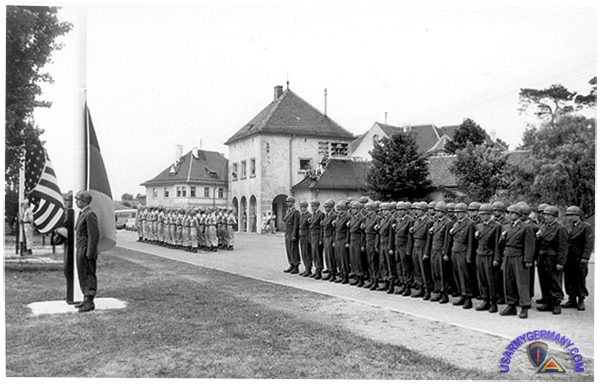
U.S. and German troops participate in the turn over ceremony as the U.S. Army hands
over Camp Clarke to the new Buneswehr, ca. 1956 (Charles Everett)
(Source: General Orders Naming Kasernes, USAREUR Military History Office) EMERY BARRACKS - The Northern Kaserne, located at Wurzburg, Germany (map coordinates: (UTM) 32U MA639178), is designated Emery Barrackls. (HQ USAREUR GO #42, 18 May 1953) |
By Louise Eaton
 |
|
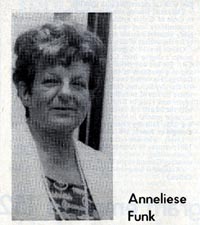
| "I finally found room on a train to Grosslangheim and walked from there. My mother was at our apartment in Kitzingen and when I rang the bell three times, she knew I was home." But home to what? "In 1945, everything was a catastrophe, nothing going, no economy and no work either. You think," she relates "I have to find a job, any job, and that is when I started with the Americans - just until things get back to normal on the German economy, I told myself. The only reluctance I felt was that it might affect my father, but it turned out that he didn't live to learn about it. "The Americans didn't ask what I had done during the war. They counted what I produced for them, not my past. I had had six years of English in school, but it was rather hard in the beginning to get used to American English. Sometimes they laughed and didn't say why. I know it was because I said things wrong or not the way they should be." She worked at first for an anti-aircraft unit, doing "little administrative things," and she trained to become more proficient in English. "In 1946, I took a class in how to use the German shorthand which I already knew to record English." In 1947 when the Kitzingen Training Center opened, she was promoted there as a secretary to G-4, and in 1950 she was promoted again to Report-of-Survey clerk. "You can't imagine how dry that was. Ugh!" she says as she now recalls it. "I did all the paperwork for liability on government things that were lost or damaged. I hated it but I couldn't quit because the German economy still was not going." She was rescued from Reports of Survey when the Training Center closed in 1951. She transferred to be the administrative assistant in G-4 of the new Kitzingen Quartermaster Sub-Post. In 1953 she transferred yet again to become secretary and administrative assistant at the commissary which was then located in the old candy factory downtown by the river. "At this point, the workers employed by the American military were practically all German," she remembers. "The labor would come and go, but the Germans in key positions stayed. There was a German core, maybe about 50 of us, who began to realize that these could be permanent jobs." Funk got more and more involved in her work and she can still remember details of the problems she dealt with daily at the commissary. "There was a lot of administrative work. Each family had a charge account. You could not pay in cash. But the biggest administrative problem was with the milkmen. There was home delivery of dairy products daily. (The dairy products came from Denmark and Holland and the meats from Yugoslavia.) People put in a milk order at the commissary and they could only change it every ten days. Then the milkmen took it each day to wherever they lived and we had to charge it to their accounts." She smiles and says, "One of my milkmen still drives a TMP 4 bus today. "The commissary only had five office personnel to handle all these changing accounts for almost 200 families. But it was a good working atmosphere, with a good crew. We put in many long hours, but it was a good job. I will never forget my supervisor. His last name was Jackson, his first name was General, but he was a civilian," she laughingly says. "He had two younger brothers named Colonel and Major Jackson." Marshall Heights was built in 1956, and the commissary moved to the housing area into the building it occupied until February 1983. Funk moved with it. She shook her head and said, "At the time of its construction, that commissary was designed for a maximum capacity of about 350 families. "The milk delivery problems eased a little then because the requisitioned houses downtown were released and many families moved into the housing area. But there was still a lot of work because all our accounts were separate from Wuerzburg." In 1965, the commissary administration was consolidated in Wuerzburg. Funk stayed on until 1966 to do the administrative transition, but then she began looking for another position because she didn't want to commute daily to Wuerzburg. "In 1966 I went to military family housing where I did property accounts for turn-in and issue of furniture. It was a very dry job . . . terrible. Because I was not satisfied, I went to school in the evening to improve my English. I thought seriously of turning back to the German economy and thought that with improved English, I could find a position with an international firm." The evening classes she attended at the Berlitz school in Wuerzburg were Advanced English, Commercial Correspondence, Translator and Interpreter. In eighteen months at the night school, she completed a course of study that usually took two years for full-time day students. "In 1968, when I finished the classes, I heard that the position at the Public Affairs Office was coming vacant in January 1969, when Herr Naurath was to retire. I stayed on and applied for his position." She got it, and from 1969 until July 31, 1983, she ran the Kitzingen Public Affairs Office, single-handedly for the first nine of those years. She began her career in public affairs at Larson Barracks, because the DIVARTY commander, at that time a Col. Connolley, was the senior officer in Kitzingen and thus the spokesman for the American military community. The transition was easy for her. "I was well aware of the mentality of both the Germans and the Americans in Kitzingen and could foresee the reactions on both sides. What mattered most were the first two difficult situations. Once you gave successful advice and they heard it, trust developed. In the Public Affairs Office (PAO), you have to be very neutral and factual, to avoid misinterpretations. It is most important that whatever you do is accepted as a fair contribution for both sides, that both sides feel, 'Yes, she is looking out for our interests.' This was not too hard for me because I feel that Germans and Americans in Germany should have the same rules and the same rights. As part of the war generation, I understand well the necessity of the NATO alliance to deter aggression from the east. I had long since resolved all doubts about working for the Americans. They were people with heart who made sincere efforts to live together harmoniously. "As public affairs officer, it was not my job to solve big problems, but to get people together and to explain to both sides so they both understood. It was rewarding." By this time, soldiers she had known in the early days began reappearing. "In 1972, I heard that a General Cartwright was to be the new assistant division commander. I remembered a black second lieutenant named Cartwright who worked with me in G-4 in 1947-48; he was commander of an honor guard then. I waited until General Cartwright came to Kitzingen to see if it was the same man. He saw the sign on my door and came in and said, 'Frau Funk, you are still here!' It was like that for years. Many of the young officers I had known came back with one or two stars and they all remembered me. But, now, most of my age group has retired." She, herself, could have retired in 1981, but she found it hard to make that decision. "I became involved with all my heart. The job was so much a part of my life. I feared that lack of fulfillment, of mission, of tasks, the empty times. Late last year I made the decision and faced the uncertainty of what will come after. I practiced retirement by using up accumulated leave, and now I'm glad to stop because the years in PAO were all-consuming." While cleaning out her files before her retirement, she sometimes stopped and shook her head and said, "You know, I can't believe all the work I did. You know what's funny is how out of a temporary job grew a very permanent thing, and then it became a mission." She pulled out one file and told me the story behind it. "In 1975, a German television station wanted to interview a black enlisted soldier, married and with children, who lived on the economy and whose father was in Germany during World War II. In addition to these requirements, the soldier had to be quite verbal, able to speak clearly and well." She opens the file. "See here, I interviewed many, many soldiers and I chose the nine most likely and wrote out a full profile on each one for the general and the television to choose the best. I don't know where I found the time to do all that." She came across another file and said, "Oh, I must write this man before I leave. He asked me to trace his natural mother. I started in Bremerhaven where he was born, but I lost her when she emigrated to Sidney, Australia." She sighs and smiles before continuing. "The job ate me up. You can't keep going until you shake. My heart will always lie with this work and my outlook will always be that of public affairs, but now it is time to think of myself and enjoy retirement while I still have time. I feel hopeful and happy about it." She has trouble deciding what she valued most in her years of PAO work. First, she says the friendships, but then she changes her mind. "Where my heart was connected most was in arranging the adoption of unwanted German children for American families. I still get Christmas cards from many of them." A few minutes later, she says, "I was most satisfied by the confidence people had in me. Even if the problem was not PAO work, they'd say, 'Go see Frau Funk; she'll help you.' That was a satisfaction even though it made more work." Reflecting on how that relationship of confidence developed, Funk describes the way she worked. "If people came to me with a problem, even if it seemed small to me, it seemed big to them and they needed help. I always considered that and listened patiently. I tried never to give people a run-around, even if their problems weren't part of my job. I tried to follow through. If 1 referred people somewhere else, I referred them to a person by name, not to an office. And I called to make sure that that person could help them. I always tried to remember the importance of the problem to the person who came for help. It's satisfying to look back on. I accomplished something more than a job to make money. It was my mission." One of her very best memories comes from the bicentennial in 1976. "The German and American school children formed a chain from Marshall Heights through town to the old bridge to symbolize unity. I'll miss the satisfaction of promoting good German-American relations now, but I'll find something rewarding to do. Kitzingen is still my town, German and American, and I will continue within my own little means to promote German-American understanding." At a farewell ceremony on July 29, in recognition of her 38 years of exemplary service to the Americans in Kitzingen, Anneliese Funk has made a lifetime honorary member of the Vll Corps of the United States Army. |
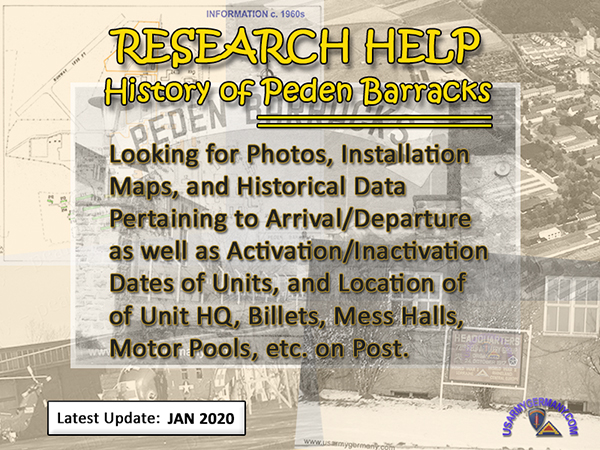


So, the questions I have are:
Does anyone have the date (month or exact day) of the inactivation of the 95th Med Co?
Does anyone have the date (month or exact day) of the relocation of the 557th Med Co to Hanau?
Does anyone have the date (month or exact day) of the relocation of the 655th Med Co to Landstuhl?
2. The 516th FA Searchlight Battery moved from Erlangen to Wertheim sometime in mid-1955. It was stationed at Wertheim for only approximately 2 years before being (apparently) inactivated in 1957.
Does anyone have the date (month or exact day) for the arrival of the 516th FA Battery (Slt) at Wertheim?
Does anyone know if the 516th was inactivated at Wertheim or if it moved to a different location? And when?
Some Historical Information on Wertheim With the end of the Cold War and the resulting drawdown of US forces in Europe, US troops began to withdraw from Wertheim in the spring of 1992. By mid 1994 Peden Barracks and the surrounding facilities were abandoned. The area has since been converted to civilian housing and a commercial area and now houses part of the police school for the Federal State of Baden Wuerttemberg. |
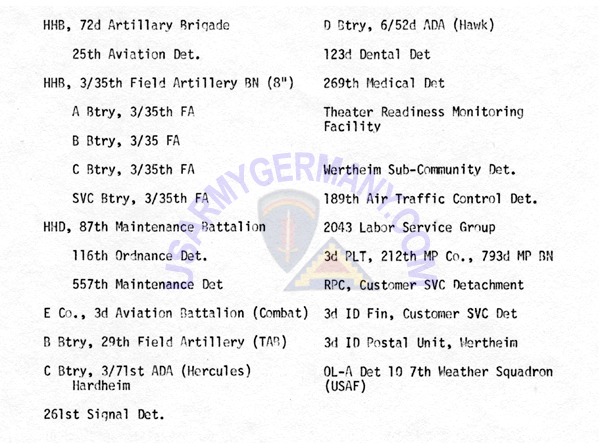
Tenant Units, Peden Barracks, Wertheim - early 1980s
US Army Hospital Würzburg - web site of MEDDAC Würzburg and 67th Combat Support Hospital (Broken LINK) Konversion Reinhardshof - German website (part of the Wertheim City site - Wertheim.de) provides some history and photos of the former US Army installation, Peden Barracks. Site's focus is the conversion of the military post to a civilian industrial park. (Broken LINK) |
|


