| If you do
NOT see the Table of Contents frame to the left of this page, then
Click here to open 'USArmyGermany' frameset |
||||||||||||||||||||||||||
|
15th
Ordnance Battalion |
||||||||||||||||||||||||||
|
|
||||||||||||||||||||||||||
|
||||||||||||||||||||||||||
|
|
||||||||||||||||||||||||||
| 15th Ordnance Battalion | ||||||||||||||||||||||||||
 |
||||||||||||||||||||||||||
| 1954 | ||||||||||||||||||||||||||
|
(Source:
History of the 15th Ordnance Battalion, Adjutant, HQ 15th
Ord Bn, 1980s)
|
||||||||||||||||||||||||||
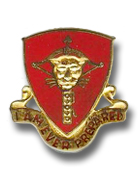 15th Ordnance Bn (Ammo) DUI
With the advent of new (nuclear) weaponry and modernization of the Army, the 15th Ord Bn (Maint) was called again to active service. On 21 April 1952, the 15th Ordnance Battalion was redesignated as the 22nd Very Heavy Artillery Group and allotted to the Regular Army. Activation tool place 7 May 1952 at Sandia Base, New Mexico, with concurrent assignment to Field Command, Armed Forces Special Weapons Project. The Very Heavy Artillery Group designation was in effect for approximately one year. On 1 April 1953, the new designation became the 15th Ordnance Battalion (Special Weapons Support). The next nine months were utilized for individual and unit training preparation for possible movement. Transfer orders were received in December 1953 with the actual move taking place on 12 January 1954. At this time the entire battalion, less B Company, moved by motor convoy from Sandia Base to Fort Bliss, Texas, where it was attached to the 1st Guided Missile Group. The 15th Ordnance Battalion participated in Exercise Flashburn during April-May 1954. In May 1954, movement orders were received transferring the 15th Ord Bn to Europe in support of the Seventh US Army. The actual move started at Fort Bliss on 24 November 1954, and was completed on 14 December 1954 at a location called North Point (Webmaster Note: Kriegsfeld). Initial attachment was to the 57th Ordnance Group. Several years passed before another organizational change. On 1 June 1959, the 15th Ord Bn was redesignated as the 188th Ordnance Battalion. This new designation was short lived, for on 1 January 1960, at the special request of the Commanding Officer, Louis T. Larson, the 188th was deactivated and the 15th Ordnance Battalion was reactivated the same day. On 1 November 1961, the Battalion was relieved from attachment to the 57th Ord Gp and made a part of the 51st Ordnance Group as part of a realignment of the support structure within Seventh Army. At the same time the mission was also changed, so that it became a composite battalion, incorporating special ammunition, field supply and general automotive maintenance support units. Due to increase in size and the more versatile mission, battalion headquarters was moved to Gutleut Kaserne, Frankfurt, Germany, on 7 March 1962. Approximately 18 months later, a change in mission placed the battalion back in the role of providing ammunition support to Seventh Army. It still belonged to the 51st Ord Gp which was a composite organization. This attachment remained in effect until 1 April 1965 when it was detached from the 51st and again attached to the 57th Ordnance Group. The next major organization took place when the COSTAR concept was placed into effect on 1 June 1965. HQ & HQ Det became HQ & HQ Co, and on 18 June, it was detached from the 57th Ord Gp, and attached to the 57th Ordnance Brigade. Several days later, on 22 June 1965, the Brigade was made part of the newly organized Seventh Army Support Command. The mission of the 15th Ordnance Bn from the inception of COSTAR to the present is to provide Class V ammunition support to V US Corps. On 1 July 1968, HHC, 15th Ord Bn moved from Gutleut Kaserne, Frankfurt, to Muenster Kaserne, Münster-Dieburg, Germany. On 14 February 1969, the battalion was transferred from the 57th Ord Gp to 2nd Support Brigade, with operational control of ammunition stock control and reporting retained by 57th Ord Bde. 2nd Support Brigade was then redesignated as V Corps Support Command (V COSCOM) (Prov). In June 1969, V COSCOM (Prov) was redesignated V COSCOM. In July 1969, HHC, 15th Ord Bn moved from Muenster Kaserne to Kelley Barracks, Darmstadt. In November 1969, an organizational change occurred with the approval of the Military Police Detachment MTOE change. Activation came in December 1969, for the 51st and 9th Military Police Detachments. The former was assigned to the 28th Ord Co and the latter to the 545th Ord Co. On 18 October 1972, HHC, 15th Ord Bn moved from Kelley Barracks to Cambrai-Fritsch Kaserne, also in Darmstadt. On 2 January 1973, the 15th Ord Bn was transferred from V COSCOM to Headquarters TASCOM with subsequent assignment to the newly activated 60th Ordnance Group. On 4 May 1976, another organizational change took place when the 184th Ordnance Company was assigned to the 15th Ord Bn from the 84th Ord Bn. Many changes occurred in 1977. On 21 February 1977, the 545th Ord Co, 9th MP Det, 28th Ord Co, and the 51st MP Det were transferred to the 72nd Ordnance Battalion, 59th Ordnance Bde. In another change, the 15th Ord Bn was transferred from the 21st Support Command's 60th Ord Gp to V Corps' 3rd Support Command (SUPCOM) on 1 April 1977. Finally, on 1 October 1977, the 2040th Labor Service (LS) Ordnance Ammunition Company, located in Darmstadt, and the 4230th LS Guard Company, located in Hanau, were reassigned from the 60th Ord Gp to 3rd SUPCOM. Effective that same date, both Labor Service units were attached to the 15th Ord Bn. On 21 April 1978, 15th Ord Bn was again moved from Cambrai-Fritsch Kaserne to Kelley Barracks in Darmstadt. |
||||||||||||||||||||||||||
| 1957 | ||||||||||||||||||||||||||
(Source: Email from
Harold Holley)
|
||||||||||||||||||||||||||
I was stationed at North Point 1957-1958. I was there when the nukes first arrived. Yep, the duty was rough. After pulling MP duty at Ft Lee, Va. with the 515th MP Co, this job was bad. The only way into Kirchheimbolanden was on the back of a deuce and a half. I have read on other websites about the changes made at NP in the past few years. In 1957 we had no bowling alley, no theater, no EM Club. There was one three story barracks, motor pool, mess hall, a mini px, and a few office buildings. We built our own beer hall. Sitting in a tower for 8 hrs a day in the winter was no picnic. I heard they closed NP in 1991. But before NP was closed the guys had HEATERS in the towers. Man, that would be like a mini condo. But the duty was rough regardless of the changes. I still respect anyone who was at NP and can still talk about it . If anyone was at NP in 1957-58, let me hear from you |
||||||||||||||||||||||||||
|
||||||||||||||||||||||||||
|
||||||||||||||||||||||||||
|
||||||||||||||||||||||||||
1960 |
||||||||||||||||||||||||||
 Kriegsfeld Depot 1960 Christmas Menu - Rosters for HHD, 15th Ord Bn; 619th Ord Co; 763rd Med Dept |
||||||||||||||||||||||||||
If you have more information on the history or organization of the 15th Ord Battalion, please contact me  . . |
||||||||||||||||||||||||||
1964 |
||||||||||||||||||||||||||
(Source: STARS & STRIPES, May 13, 1964) |
||||||||||||||||||||||||||
Headquarters of the 15th Ord Bn is located at Gutleut Kaserne in Frankfurt. The battalion is part of the 51st Ord Gp, 7th Army. CO of the battalion is Lt Col Raymond J. Astor. Subordinate units under the 15th include the 28th Ord Co, 184th Ord Co and the 2040th Labor Service Co (Lithuanian). |
||||||||||||||||||||||||||
1967 |
||||||||||||||||||||||||||
(Source: Email from Joseph McGuire, 545th Ord Co and 144th Ord Co, Oct 1967 - ) |
||||||||||||||||||||||||||
I served in two companies in the 15th Ordnance Battalion. From October 1967 for around 12 months I was a platoon leader in the 545th Ordnance Co. at Münster bei Dieburg. I recall that Major Snow was the company commander, succeeded by Captain Coleman. The Battalion Hq was originally in Gutleut Kaserne in Frankfurt but moved into our Kaserne at Münster in the summer of 1968. I remember a HAWK missile battery was also stationed there, maybe just outside the fence. I also recall that there were two conventional ammo companies in the battalion that operated Ammo Supply Points (ASPs) 3 and 4. One was the 144th Ordnance Co at Wildflecken (ASP 3) at Rhön Kaserne. The second was the 664th Ordnance Co in Baumholder (ASP 4). That unit was billeted at Strassburg Kaserne in Idar-Oberstein, a strikingly scenic town on the Nahe River, a short drive from Baumholder. The 664th went back to the States (maybe to Texas ) while I was in the 545th as part of a program that, as I recall, was called Reforger. All of its equipment was “prepositioned” somewhere in Germany in the event they were recalled. Its mission was taken over by the 144th which was then responsible for both ASPs. I was reassigned to the 144th Ordnance Co. around September/October 1968. I often made the trip between Wildflecken and our detachment in Baumholder. The CO of the 144th was Cpt Warren Tucker who had been an enlisted man in that very unit quite some years earlier. All our vehicles were quite old. In fact, Tucker insisted that one of our oldest had actually been his truck as a Pfc! I also remember that we had a fairly strange-looking deuce-and-a-half that was some sort of chemical decontamination truck. Since the post’s fire truck was inoperable ours was the de facto post fire truck. One of our sergeants took great care of it to be sure it could always work. As a practical matter the post needed it and we did, too, in case of fire in the ASP. However, one day with the tank fully loaded he took a sharp turn on those steep streets a little too fast and rolled the truck down the hill into the trees. The sergeant was not hurt. We had a hell of a time recovering the vehicle and keeping it out of sight until we got it totally repaired. I think there was a way to park it in a maintenance bay with a low ceiling and perhaps with the lights off so that visiting officers could not see the damage and start asking embarrassing questions. Wildflecken was a nice duty station, at least for me. I had a little apartment not far away in Gersfeld and worked pretty diligently on my German, which was quite handy for socializing with German girls. I remember you could see a monastery across the valley from the post. The monks brewed great beer which the nuns, compared to whom your meanest first sergeant came across like Mother Theresa, served it in huge steins. A full liter, as I recall. They also made and served their own cheese. The location in Wildflecken caused some logistical problems in bad winter weather because of the hilly terrain. Ammo trucks (semi-trailers) from the depots tended to get stuck on the way in. We usually had to help bring them in. I recall that the troops used an ancient WWII half-track for this. Of course, we weren’t supposed to have a vehicle THAT old but, this being the Army, it was OK as long as we kept it quiet about it. I recall somebody (our First Sergeant? Motor Sergeant?) telling me I was not supposed to know about it!. I think something happened to it while I was there and it disappeared. One of the nice things about the location was that the Battalion staff (and CO) rarely made the trip up to bother us. And since they always called ahead to ask about the road conditions, they never surprised us! But the Brigade Commander did! One bright day we got a phone call (the military phones were pitiful!) from Brigade that Col. Smith (Joseph H.S. “High Speed” Smith) was due to arrive by helicopter in something like 20 or 30 minutes. We nearly peed in our pants because we had two problem: (1) Our CO was in Baumholder; and (2) Every one of our jeeps was out of service and awaiting parts. We tried in vain to borrow a jeep. Our first sergeant had just bought a VW camper so we decided, what the hell, we’ll pick the Brigade Commander up in that. Well, we didn’t get fired. The Colonel loved the camper. But when he finally got around to asking about the unorthodox and decidedly unmilitary transport, we were able to show him that our support unit was unable to get the parts. He raised a little hell and for a few short weeks we actually got most of the parts we needed. I left Wildflecken the following summer when I was reassigned to the 43d Heavy Equipment Maintenance Co. in Kaiserslautern. I was there for only a month or two and was completely astonished that the unit had been awarded a big prize (“The Big M”) as the best maintenance unit in the theater. I think nobody noticed that the company had no actual mission! And hadn’t had one for a good while. That’s right: an entire maintenance company with absolutely nothing to do except keep the work spaces and tools shining. That might have sounded like a GI’s dream but it was a bit of a nightmare for morale. Then I was further reassigned to Hq & Co A, 66th Maintenance Battalion. I was the Shop Officer of a seriously busy maintenance unit. But that’s a different battalion and a different story. The Kaserne at Münster was later called NATO Site 111. I remember the small road from Münster to the Kaserne. To get to the actual highly restricted special weapons area back then you had to go out the front (and only) gate and take a sharp right. It took maybe 10 minutes of driving, mostly through the forest on dirt roads and a few turns, to reach the restricted area. I recall that we were discouraged from exploring the woods outside the restricted area where there were old abandoned ammo bunkers, mainly due to concerns about unexploded ordnance from the days after WWII when American troops tried to blow them up. We took it seriously. After all, we had a small EOD detachment working around the perimeter of the special weapons area after engineer troops clearing that area reported that their bulldozers were causing explosions! There were all sorts of stories about what might be found in the old abandoned parts of the site but I don’t recall any mysteries getting solved while I was there. The troops who were assigned to guard the special weapons site had the lousiest duty imaginable: nothing but guard duty—totally boring and, in winter, very cold. These were infantry troops then. I read that MPs were later assigned the work when there was more concern about possible terrorism and security there was significantly upgraded. But even with improved facilities they had lousy duty. |
||||||||||||||||||||||||||
| 1970 | ||||||||||||||||||||||||||
(Source: Email from Barry J. Gardner, former Commander, 15th Ord Bn) |
||||||||||||||||||||||||||
I was the Battalion Commander from Jun 1984-Jun 1986 and was previously the Battalion Material Officer from 1970-1973. These companies provided special ammunition support to V Corps Artillery and the Artillery units of 3rd Armored Division and 8th Infantry Division. The 144th Ordnance Company (Conventional Ammunition) DS/GS located at Wildflecken operated ASP 3 at Wildflecken and had a platoon at Baumholder operating ASP 4. The 144th's primary mission was operating these ASP is support of the two USAREUR major training areas (MTA) as well as providing Basic Load ammunition to V Corps units. Battalion Headquarters was at Kelly Barracks in The Headquarters moved to Cambrai-Fritsch Kaserne, also in |
||||||||||||||||||||||||||
ADDITIONAL DETAILS provided by Barry Gardner: (1) In the early 1970’s, the 15th ORD BN had only one conventional ammunition company -- the 144th Ordnance Company located at Wildflecken. The company had a platoon at Baumholder. The company's main mission was supporting MTA operations at Wildflecken (ASP 3) and Baumholder (ASP 4). The company also provided Basic Load and Training ammunition to V Corps units from these two ASP's. This support was mainly geographical, rather than a DS relationship, so ASP 3 supported 3rd Armored Division and 11th ACR, and ASP 4 supported 8th Infantry Division. The BN did not operate any of the Ammunition Pre-Stock Points (PSP) in the V Corps area in the early 1970’s. In the late 1970’s, the missions changed and the Special Ammunition mission (with the 28th and 545th Basic Load support remained geographical out of the ASP. In wartime, additional ammunition units would be assigned and the traditional DS/GS roles would begin. |
||||||||||||||||||||||||||
|
||||||||||||||||||||||||||
-- The 144th ORD CO operated ASP 3, supporting all training at the MTA and supporting Basic Loads for 3rd Armored Division and 11th ACR. The 144th -- The 184th and 60th ORD Companies operated the PSP’s . The 8th Infantry Division received Basic Load Ammunition support from ASP 4 with was now operated by 21st SUPCOM. -- 144th ORD CO and 184th ORD CO, after closing the FSTS and releasing control of the PSPs, would assume a more traditional DS/ GS mission; basically the 144th ORD CO supporting 3rd Armored Division, and the 184th ORD CO supporting the 8th Infantry Division. -- The 60th Additional ammunition companies, and later an Ammunition BN Headquarters, from the 303rd Ordnance Group (Army Reserve), would arrive as the mission expanded. (4) The 2040th CGS (Ammo) was also in the 15th ORD BN. They were located in Darmstadt-Eberstadt from the early 1970's and operated the PSP mission in the V Corps area. Initially they were a 21st SUPCOM asset. Then with the reorganization that gave the 15th ORD BN the PSP mission, they were assigned to the BN. They worked in conjunction with the US Ammunition companies at both ASP3 and the PSPs ( 2J, 3J, 4J). They provided the Battalions specialized ammunition handling capability by operating commercial MILVAN container handling equipment at German Railroad railheads and with the PSPs. They also performed the ammunition storage mission at a few German Army Ammunition Storage Sites where we stored US Stocks. These stocks were primarily engineer barrier materials (mines and charges). The 2040th also supported the Battalion during REFORGER exercises in the field with their US counterparts. They were an integral part of the Battalions capability. The ASP, FSTS, and PSP were guarded by the 4230th CSG (Guard). (5) The stocks in the PSP were "officially" PWRMS (a) for USAREUR (although V Corps considered the stocks as V Corps assets). There were also Operational Project Stocks (like the Engineer Barrier Materials) stored throughout the PSP's. Units stored their Basic Load in Basic Load Storage Areas or Basic Load Holding Areas near their Kasernes. Some Basic Load was also stored at ASP 3 for units in the Wildflecken area. 15th ORD BN QASAS (military MOS 55X and DA Civilians) inspected these sites. (6) Ammunition Stock Records were/are maintained on the Standard Army Ammunition System (SAAS). SAAS level 4 (SAAS-4) is the system of record at the ASP or storage location. SAAS level 1/3 is used at the Material Management Centers at the Corps and Theater Levels for ammunition management functions. The SAAS system has been modified and enhanced through the years and the current SAAS- MOD system combines the functionality of all previous levels into one baseline providing the ASP Accountable Officer, the Division Ammunition Officer, and the Material Managers with an integrated system. (a) NOTES (DA Pam 700-16, The Army Ammunition Management System, Dec 1982) : Ammunition assets are divided into five general categories:  Prepositioned War Reserve Materiel Stocks (PWRMS) Operational Project Stocks Basic Loads Training/Operational Stocks Combat Operations Support Levels Prepositioned War Reserve Materiel Stocks (PWRMS) Operational Project Stocks Basic Loads Training/Operational Stocks Combat Operations Support Levels
|
||||||||||||||||||||||||||
(Source: The COSCOM News, c. 1971) |
||||||||||||||||||||||||||
|
||||||||||||||||||||||||||
1976 |
||||||||||||||||||||||||||
(Source: Email from Michael Gay) |
||||||||||||||||||||||||||
I was assigned to HHC 15th Ord BN, worked in Material Control Section. I coordinated and monitored inventory levels of Class V at PSP 2J and PSP 3J. LTC Clifford Peterson was the Commander, Maj. Applebaum was the XO. We changed commands between 21st Supcom, 60th Ord Group, USAREUR and then 3rd Supcom. BG. Allen H. Light was the 3rd Supcom Commander. When I left in 1979 the 15th was commanded by LTC X. Carney. XO Roy Willis and CSM Calvin Cross. Besides working in MATO section, I was LTC Peterson’s relief driver. 1976,77 the 15th was at Cambrai-Fritsch then moved to Kelly Barracks, also in Darmstadt. As far as billets go, HHC was on the first floor with some Barracks rooms. Battalion was on the second floor, third and 4th floor was Barracks space. All in the same building. The Motor Pool was down the hill on the other side of the traffic circle. The Mess Hall was the other direction. |
||||||||||||||||||||||||||
1981 |
||||||||||||||||||||||||||
(Source: Email from Bon Hickma) |
||||||||||||||||||||||||||
I joined the 15th Ordnance Battalion in September 1981 and initially served as the S-3. In April 1982 I took command of the 184th Ordnance Company. After about 22 months I became the Material Officer and then XO until I left in May 1985. I also served on the USAREUR DCSLOG Ammo staff from June 1988 until June 1991 and helped coordinate the movement of ammo in support of Desert Storm. |
||||||||||||||||||||||||||
1984 |
||||||||||||||||||||||||||
| (Source: SUPCOM Log, December 1984) | ||||||||||||||||||||||||||
| Prestocked supply points critical to Corps by Tom Stover In V Corps, the 15th Ordnance Battalion is charged with making sure that ample stocks of ammunition are available where and when they're needed. They accomplish this mission by operating a number of prestocked supply points throughout the corps area. This mission requires constant updating and shifting of ammunition stores to ensure potential customer requirements can be met. According to SSgt. Larry Williams, NCOIC for one of the PSPs, a lot of steps are involved in maintaining adequate supplies of serviceable munitions. Williams explained that much of the ammunition comes into Europe by ship and is forwarded to the corps area by train. "It arrives from the United States in military vans (huge metal shipping containers) which are normally delivered to us by truck," Williams said. Once the milvans reach the PSPs, they are offloaded by a truck called a side-loader which can lift the milvans off the flatbed trucks, Williams explained ' "The use of the milvans has considerably increased the amount of munitions we can bring in while decreasing the number of people required to handle it," Williams said. "This system has greatly improved the efficiency of our operation," Williams said he operates one of the 15th's largest and best facilities. He said that on certain occasions, ammunition is transferred from that site to other facilities operated by the battalion. "Moving ammo is not a business you approach carelessly," he said. "Before anything moves out of this facility, we must make sure that it is properly packaged and loaded. That means that every skid load must be carefully inspected before it is set on a truck. We must make sure that each pallet is securely banded or crated. If it isn't, deficiencies must be corrected before it leaves this site." |
||||||||||||||||||||||||||
|
||||||||||||||||||||||||||
|
||||||||||||||||||||||||||
| (Source: SUPCOM Log, December 1984) | ||||||||||||||||||||||||||
| Passing the ammunition appropriate for 15th by Lt. Col. Barry J. Gardner "Praise the Lord - Pass the Ammunition!" Although not the motto of the 15th Ordnance Battalion, it is appropriate because the soldiers of the battalion sure have been passing the ammunition. Units of the 15th lifted more than 72,000 short tons of ammunition in fiscal year 1983. This year, more than 91,000 short tons of ammunition have been lifted. That's a 25 percent increase. Class five stocks on hand at Ammunition Supply Point Three, which supports the Wildflecken Training Area, have increased from a monthly average of 768 short tons in FY 83, to 1,029 short tons in FY 84. All this ammunition has been lifted by the 144th Ord. Co. in Wildflecken, the 184th Ord. Co. in Muenster and the 2040th Civilian Support Group in Darmstadt. Together, these units operate 18 ammunition storage sites located throughout the V Corps area. Repositioning of ammunition to support general deployment planning missions, modernization of the stockpile through the addition of new, modern munitions and positioning of additional stocks in the corps area are constant. The average amount of ammunition lifted each month has increased from 6,034 short tons in FY 83 to 7,595 short tons in FY 84. Ammunition projects have included the stocking of forward storage sites; railhead operations at Muenster, the only ammunition railhead in V Corps; the remodeling of unit basic loads to Division 86 configuration and supporting two corps-wide ammunition upload exercises. Through the efforts of the soldiers of the 15th Ord. Bn., the ammunition storage in V Corps has increased five percent over last year, a significant increase in the combat sustainability of V Corps. The battalion stands "ever prepared" to pass the ammunition, for as someone once said, "the fighting man in combat can go indefinitely without pay, weeks without mail, days without food, hours without water; but he cannot go one minute without ammunition." - Lt. Col. Gardner is commander of the 15th Ord. Bn. in Darmstadt. |
||||||||||||||||||||||||||
1985 |
||||||||||||||||||||||||||
(Source: SUPCOM Log, Jan 1985) |
||||||||||||||||||||||||||
New 15th Ord forward storage site opened at Alsberg By Linda Howley The 15th Ordnance Battalion gave a security and operations briefing on its newest storage site, Alsberg Depot (  ), for German public officials Nov. 27. ), for German public officials Nov. 27.Brig. Gen. Richard E. Stephenson and invited guests including Bad Soden-Salmuenster's Lord Mayor Bruno Doering and other Hessen and community officials also were given a tour of the depot. Participants saw how the supplies and ammunition contained at the depot are stored, although higher headquarters forbade discussing the type of munitions. In a speech given during a luncheon after the tour, Stephenson said he shares the concerns of the Alsberg community about the need for safety and security at the depot. But he said he hopes that the community will understand the need for such a facility. "This depot, as well as others like it throughout Central Germany, serves as a storage site for many important supplies we need - not only in case of war, but also in peace," Stephenson said. "By permitting us to centrally locate these supplies, the site serves as an important link in our efforts to maintain the peace in Europe through deterrence." We should also "be prepared to defend this country and the free world, should deterrence fail," the general said. Doering said Alsberg appreciated the employment the depot creates, and that the majority of Alsberg citizens have no objections to the depot. "Peace without moral standards is of no value; it is as quiet as a cemetery," Doering said. "The presence of the U.S. Army and NATO guarantees my freedom to give this speech without being censured." Alsberg Depot was approved for V Corps use in August and the 15th began stocking it in October. |
||||||||||||||||||||||||||
|
||||||||||||||||||||||||||
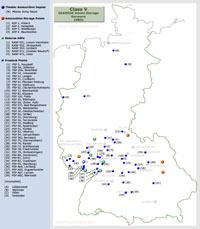
The other system was the training ammo and basic load ammo system which went from Miesau Army Depot directly to the four ASP's (two in each Corps Area near the MTA) as shown on your chart. Units picked up ammo from the ASP either for training or basic load replenishment. Training Ammunition was “forecast” by the units 60 days prior to use and shipped from Miesau to the ASP. Basic Load requests were filled as required, again as shipments from Miesau to the ASP. An ASP maintained a 90 day stockage level to handle surges, transportation delays, and un-forecasted requirements. You are correct concerning the “Training” ASP (Webmaster: the two ASP's in support of V Corps -- Wildflecken and Baumholder -- would probably not have become the two ASP's required to support the 3rd AD and 8th ID in a wartime scenario -- Wildflecken being too close to "the action" and Baumholder too far from the action and on the wrong side of the Rhine River to be of any use). Should hostilities have been imminent, units would have picked up any basic load stored in the ASP and anything they could haul. The ORD Companies would have a skeleton crew at the ASP to “hold the going out of business sale” and destroy the rest. Meanwhile the ORD Company's main element would set up a field ASP. Units would be supplied by the 15 FSTS (for up to 72 hours) until the field ASP was open. Some of these field ASP might be located at a former RASP or PSP as these were the best facilities but this would be mission dependent. In V Corps only 3J and 4J would have remained open as CSA’s As for the numbering scheme of PSP's and RASP's, all the older RASP's had “9” series numbers while the newer PSP had lower numbers 2J, 3J, 4J etc. As newer sites were added, the rationale for the numbers was lost in time. They were never renumbered as old habits are hard to change -- and we didn’t want to confuse the Labor Service Units… The other storage areas you mentioned (such as Gerlos, Reiterswiesen, Bernbach, etc.) were Basic load storage areas under (using) unit control. |
||||||||||||||||||||||||||
FORWARD STORAGE SITE (FSTS) FSTS Ottrau ( ) |
||||||||||||||||||||||||||
1986 |
||||||||||||||||||||||||||
| (Source: The Ordnance Magazine, Summer 1986) | ||||||||||||||||||||||||||
| 15th Ordnance Battalion By LTC Barry J. Gardner "I Am Ever prepared" is the motto of the 15th Ordnance Battalion (Ammunition) (DS/GS). The battalion's solders and civilian employees have lived up to that motto by providing ammunition support to USAREUR's V Corps. The 15th Ord Bn, V Corps' only ammunition battalion, provides Class V support to V Corps' divisional and non-divisional units, as well as other USAREUR units located in the V Corps area. The battalion's customer units cover the spectrum from detachment to division and are located from Baumholder to Bad Hersfeld, an area of approximately 33,000 square miles. In the performance of its support mission, the battalion's ammunition units lifted more than 72,000 short tons of ammunition in FY 83 and more than 91,000 tons in FY 84. These increases continued into FY 85 with more than 130,000 tons lifted. The average amount of ammunition lifted each month increased from 6,034 tons in FY 83 to 10,751 tons in FY 85, with a monthly peak of 14,774 tons achieved in June 1985. Class V stocks on hand at Ammunition Supply Point 3, which supports the 7th Army Training Center at Wildflecken, increased from a monthly average of 768 tons in FY 83 to more than 1,200 tons in FY 85. This increased stockage level has resulted in improved support of USAREUR's peacetime training mission, as well as unit basic load support for Wildflecken units. This ammunition has been lifted by the 144th Ordnance Company (DS) in Wildflecken, the 184th Ordnance Company (DS) in Muenster, and the 2040th Civilian Support Group (Ordnance) in Darmstadt. Together, these units operate 19 ammunition storage sites located throughout the V Corps area. To provide more responsive support to these increased mission requirements and attain the increased readiness achieved through forward stationed ammunition lift capablity, the 60th Ordnance Company (Ammunition) (DS) has been activated in Friedberg. In addition, the battalions lift capability recently improved with the receipt of 4,000-pound and 6,000-pound commercial clean-burn diesel forklifts and MILVAN sideloaders. The latter gives the battalion its own MILVAN handling capability. The soldiers of the 60th Ord Co and this increased lift capability will enhance the proven combat service support (CSS) provided by the battalion. A vital mission not normally associated with an ammunition battalion is that performed by the 4230th Civilian Support Group (CSG) (Guard), headquartered in Hanau, which presently guards nine ammunition storage sites, the USAREUR Equipment Support Center in Hausen (near Frankfurt) and the Soviet Military Liaison Mission (SMLM) in Frankfurt. A second CSG guard company (Webmaster note: the 4231st CSG) is scheduled for activation in FY 86, which will permit the battalion to guard all its ammunition sites with its own personnel, as well as the Hausen and SMLM locations. Command and control of this far-flung and diversified organisation is provided by personnel of headquarters and headquarters company, stationed in Darmstadt. A significant event for the battalion was the recent stocking of two forward storage sites (FSTS) at Alsberg and Sterbfritz. Stocking an FSTS, such as Alsberg, is an excellent general defense plan analog in that the battalion plans for and executes the movement of large quantities of ammunition from a corps storage area (CSA) forward into the corps area. The battalion materiel office, in close coordination with the Corps Materiel Management Center (CMMC), and the operating companies, the 144th Ord Co located at the FSTS and the 2040th CSG in the CSA, are the focal point of the operation. The 181st Transportation Battalion, 3d SUPCOM, provided transportation support for the operation. |
||||||||||||||||||||||||||
 |
||||||||||||||||||||||||||
| The operation planning began with the receipt of a Corps Positioning Directive, the "Operational Concept." From this concept, ammunition planners formulated the operational plan. CMMC provided a stockage objective from which ammunition lots were selected and cleared by battalion materiel office and quality assurance specialist ammunition surveillance (QASAS) personnel. Personnel of the 144th Ord Co used these lot listings to make up over 395 trailer load plans, prepare planographs of the storage magazines and make most of the supporting documentation in advance. The movement began with the FSTS control section calling forward trailer loads so that at the CSA, the 2040th CSG loaded exactly the lot numbers needed by the 144th Ord Co storage crews. What occurred was a textbook operation in which loads arrived directly at the magazine door with no delays or obstructions. Successful accomplishment of this load scheduling was critical because of the one-lane road networks in an FSTS. A truckmaster from the transportation battalion was on site to ensure precise dispatching of the 12 tractors and 35 M872 40-foot trailers supporting the operations. The result was the safe and efficient movement and storage of more than 6,000 tons of ammunition in 44 days. |
||||||||||||||||||||||||||
|
||||||||||||||||||||||||||
| This basic load download operation was an excellent training vehicle in which all elements of the battalion participated at two widely separated locations. Download sites were selected along the routes to the redeployment assembly areas, ammunition inspection lines were established, packing materials were assembled, and a round-the-clock download and repacking operation was successfully executed under adverse weather conditions. As a matter of routine, the battalion supports both announced and unannounced basic load upload exercises for up to division-size elements. Through the efforts of the soldiers and civilian employees of the 15th Ord Bn, the amount of ammunition stored in V Corps has steadily increased, translating directly into a significant increase in combat sustainability. Site security bas been enhanced through an increased guard force, and "shootable" ammunition stocks have increased as a result of an extensive ammunition inspection program. It has been a tough period, demanding hard work and dedication, but the battalion has met the challenge. By putting CSS first, the 15th Ord Bn remains "Ever Prepared" to provide Class V support to the combat units of V Corps. LTC Barry J. Gardner was the commander of the 15th Ordnance Battalion from June 1984 to June 1986. |
||||||||||||||||||||||||||
(Source: Email from
Harry Coon, 15th Ord Bn, 1983-91) |
||||||||||||||||||||||||||
I was stationed in the HQ S2 of 15th Ord Bn from 1983 to 1991. When I left Germany in February 1991, 15th Ord Bn consisted of the following:
|
||||||||||||||||||||||||||
ORGANIZATION (1986): |
||||||||||||||||||||||||||
|
||||||||||||||||||||||||||
The 15th Ord Bn was subordinate to the 3d Support Command at Wiesbaden Air Base, which was subordinate to V Corps in Frankfurt a.M. |
||||||||||||||||||||||||||
1988 |
||||||||||||||||||||||||||
| (Source: THE SUSTAINER, September 1988) | ||||||||||||||||||||||||||
Lt Col Jerry D Rogers recently replaced Lt Col Theodore L Roberts as commanding officer of the 15th Ordnance Battalion. The 15th Ordnance Bn is responsible for operating four prestock ammunition points (PSPs), six forward storage theater sites (FSTS) and the US share of several different German run sites. |
||||||||||||||||||||||||||
(Source: THE SUSTAINER, December 1988) |
||||||||||||||||||||||||||
In a ribbon-cutting ceremony held recently at the ammunition storage site at Köppern (Nord), the 15th Ord Bn commander and the Bürgermeister of Wehrheim officially opened the new $10 million V Corps Ammunition Maintenance and Surveillence Facility. |
||||||||||||||||||||||||||
| If you have more
information on the history or organization of the 15th Ord Bn, please
contact me. |
||||||||||||||||||||||||||
 |
||||||||||||||||||||||||||
|
|
||||||||||||||||||||||||||
| 28th Ordnance Company | ||||||||||||||||||||||||||
| 1967 | ||||||||||||||||||||||||||
| (Source: STATION LIST, 30 June 1967) | ||||||||||||||||||||||||||
| 28th Ordnance Company (Sp Ammo GS) (TOE 09-047E65) is located at Schloss Kaserne, Butzbach. Which special weapons site did the 28th operate during the mid-1960s? Koeppern? |
||||||||||||||||||||||||||
(Source: Brigade Banner, c. 1967) |
||||||||||||||||||||||||||
|
||||||||||||||||||||||||||
| 1970 | ||||||||||||||||||||||||||
| (Source: Email from Donald E. Thies) | ||||||||||||||||||||||||||
| Back in March 1970 a bunch of other draftees and me were assigned to a unit in Germany after receiving infantry training at Ft. Polk, LA. W hen we arrived in Germany from Ft. Dix we came into Frankfurt and were processed into V Corps. The patch on our shoulder looked like the old Chrysler emblem. From there we were assigned to the 28th Ordnance Company whose location was outside a small village called Wackernheim. The name of the barracks was McCully Barracks. From our barracks we could see the Rhine River valley and across the river was Wiesbaden. When we arrived in the unit we were told bluntly that we wouldn’t be staying there long as the Army was using the company as a staging point for levying GI’s to Vietnam. That way we would use up our 5 to 6 months of duty before heading to Vietnam instead of coming back to the states from Vietnam with 5 to 6 months left and they couldn’t assign us anyplace overseas and didn’t know what to do with these guys. We guarded a NATO site just up the road from the barracks. There were several other units in the compound as during an IG inspection of our vehicles we would exchange parts from the trucks to make sure they passed inspection. Finthen Airfield was just up the road toward Mainz from us. We would go into Mainz and catch a train across the river to the post at Wiesbaden. In September 1970 a group of us received our orders to ship out to Vietnam after a 30 day leave at home. This was the normal deal we were told. I had a military driver’s license along with being infantry and took dispatches down to Darmstadt I believe. It might have been Hanau. |
||||||||||||||||||||||||||
|
||||||||||||||||||||||||||
| 60th Ordnance Company | ||||||||||||||||||||||||||
 PSP-3J, Köppern (near Friedberg) (GOOGLE Maps) |
||||||||||||||||||||||||||
| 1988 | ||||||||||||||||||||||||||
| (Source: Email from Mike Hintz) | ||||||||||||||||||||||||||
| I'd love to add to your history of PSP 3J. I was in 60th Ordnance Company from 1988-1991. Best and worst time of my life. 60th Ord was billeted at Ray Barracks, Friedberg which is 40k's from Frankfurt. Our headquarters was in Darmstadt. We were part of 15th Ord Battalion and 3rd COSCOM. Our post was mostly 3rd Armored Division. Tanks always rolling in and out. I worked at 3J every day. When Desert Storm started we pretty much lived there. I'm not sure what you know about 3J besides its the largest ammo dump in USAREUR. The rumor was if it were bombed it would blow up a 10 mile radius! I'm emailing my army buddy about the J in psp3J. As far as I remember it was just a location but I'll ask. We also called it the "elephant graveyard." It actually was a grave to a few soldiers I worked with. The 2 friends were killed in forklift accidents. Speed was a factor. We called 60th Ord, "six o(oh)." Good ole' six o, myself included, was the co that busted our butts during the Gulf War. We worked 12-16 hour shifts, first and second and third and prob a fourth. Lol. Each over lapping into the next as were the days. It felt rewarding knowing that each bullet, rocket, claymore, MLRS and yes the Patriot missile came from us. "No bullets, No bang", was the company motto. As far as numbers, 60th had 3 magazines (platoons) that worked 3J. 1st and 2nd had about 30 and 3rd had about 5 (personnel). 3rd mag worked the wood shop making our blocking and bracing pieces. Headers and braces to hold the ammo in place on semi trailers. Along with that we used steel banding equipment. We also loaded the heck out of MILVANs. Especially during the war. We had about 5-10 officers and enlisted, including Cw3, Cw4 and german military and civilians overseeing everything. It was quite the operation. Once in a great while they would send out a few of us to places like Wildflecken to help out with ammo during a training exercise, otherwise 3J was 60th's second home. As far as other PSP's no other as large as 3J. Yes there were many ASP's but they were very small. The satellite photo. The area circled for 3J did take up the entire grounds. Divided into a few areas. It's hard to describe from the photo but the main, largest area, had basic munitions. Other smaller areas had chemicals. Neither myself nor my fellow soldiers had security clearance to know about nukes but we always assumed there was because it made sense to have them and there were bunkers we weren't allowed to go in. The map isn't clear enough to be exact on locations. It's hard to tell but 3J was up on a mountain pretty much. If I see the picture like I think I do, the 2nd smaller area was chemicals. I think it was alpha area, bravo, charlie and oscar. Oscar being chemicals. The smallest area....if I had closer photos it would be no problem telling you what is what but I think it was up range. That would be the offices, our motor pool area, security, general hang out area. This is all hinging on my memory of 20-25 years ago. We would get to work around 9am Monday thru Friday, mostly. We being 1st, 2nd and 3rd mag (platoon). 1st and 2nd was about 30 of us maybe? 3rd mag was about 5 people. 3rd mag didn't exist till close to the end of my tour. Pre Desert Sheild/Storm. 3rd mag was a huge time saving crew that made most of our blocking and bracing materials for shipping ammo. Like when we loaded flat bed semi trailers with removable side, no top, except a type of tarp if any. We loaded trailers and milvans mostly but occasionally other wheeled military vehicles like 5 tons or 2 1/2. The day would end around chow time or when the mission was done for the day. (Non war time) I think was 4 or 5? Most loads were for range, practice, exercises or restocking other ASP's or PSP's in the beginning of my tour. You have quite the history built and extensive knowledge of this matter that I also respect and appreciate. I hope one day my children can look up and see where dad was and what he did in the Army thanks to you. |
||||||||||||||||||||||||||
| 1989 | ||||||||||||||||||||||||||
| (Source: Email from Ray Patterson) | ||||||||||||||||||||||||||
| Great website! Really brings back memories. PSP3J may be marked wrong on the (original) map of Class V Storage. I was with 60th Ord Co. at Ray Barracks in Friedberg from 1989 to 1992 and worked at PSP 3J, near Koppern. PSP 3J can be seen in the upper left hand corner of this arial image. There were hundreds of magazines. The pads in front of the newer ones make them easy to spot, but the older (Nazi?) ones aren't so easy. Of course, the Friedberg Training Area borders 3J to the east. Here's something I had forgotten about until I saw the RASP's. My squad supported units stationed in Giessen from a German site that we knew as ASP 471. This isn't on your map, but I don't remember exactly where it was other than just N-E of Giessen. There was another site next to that one that we always assumed was n----- (let's just say "not conventional") because of the additional security. I've stayed in contact with some other squad members so I'll try to get more details. ADDITIONAL INFORMATION Actually, thanks to Google maps, I located ASP 471 and the "other" site. ASP 471 is in the center and the "other" site is upper left corner. The guards had dogs (German shepards of course) which they trained onsite. Where PSP 3J had a pretty good mix of storage, 471 was just UBL. They were FA but I can't remember if 155mm or 8inch. |
||||||||||||||||||||||||||
|
||||||||||||||||||||||||||
| 144th Ordnance Company | ||||||||||||||||||||||||||
| 1971 | ||||||||||||||||||||||||||
(Source: The COSCOM News, c.1971) |
||||||||||||||||||||||||||
|
||||||||||||||||||||||||||
|
||||||||||||||||||||||||||
| 184th Ordnance Company | ||||||||||||||||||||||||||
| (Source: Email from Frank Farrell, 184th Ordnance Company, 1980-83) | ||||||||||||||||||||||||||
| I was assigned
to the 184th Ordnance Company in October 1980. At that time, the 184th
Ordnance Company was stationed at Turley Barracks in Manheim. We had
to travel to Munster-Dieburg every day to work. In December of 1980, the 184th Ordnance Company moved to Kelley Barracks in Darmstadt. Our operations offices moved to Munster-Dieburg by 1982-83 which left just our barracks at Kelley Barracks. I left there in October 1983. Frank Farrell |
||||||||||||||||||||||||||
| (Source: Email from Terry Foster, 184th Ord Co, 1984-88) | ||||||||||||||||||||||||||
| My first duty stationed was at Kelley Barracks, Darmstadt W. Germany from 1984-1988. My roommate was Specialist James Ruben. I now reside in Mexia, Texas, and SPC Ruben now lives in West Virginia. I did not know where SPC Ruben was until last month when I found him on this site www.military.com under Buddy Finder, and looked him up on www.whitepages.com. 21 years later, we spoke on the phone. We worked the railhead rain, sleet, snow, or shine. I was a 62F10, and, no, they did not have any cranes, drag lines, nor bucket loaders, D8 dozers, etc... SPC Ruben was a 55B, and we sure operated 4,000 lb., 6,000 lb., and 10,000 lb. fork lifts moving projo's, powders, lance missiles, and other assorted munitions. We had to ride a bus with SPC Speavey driving from Kelley Barracks in Darmstadt to Muenster everyday. 1SG (Top) (Madmax) Flemmings would always be waiting for us at formation in the motor pool. I also remember SGT (Warrant Officer) Robin Peters, SSG Panell, and SGT Bowman in motor pool, SSG Bennet in commo, SSG Moon, Lt. Lopez, SPC Gonzales, SPC John Cartwright, SPC White, SPC Shaw, SPC Kerry, SPC Light. Friday's at 5:00 PM, we thought we were going to head home to Kelley Barracks to enjoy a weekend off, and it never failed we would have an alert. We had to stay most of the weekend at Muenster due to rail carts coming in on the rail head. That famous saying always came to mind. Here we go again same old ____ again! Funny how fast the years go by, I will never forget it. |
||||||||||||||||||||||||||
| (Source: Email from Mike Goodwin, 184th Ord Co, 1988-1991) | ||||||||||||||||||||||||||
| I was stationed with the 184th Ordnance Company from 1988-1991.
When I arrived in February 1988 they were still at Kelly Barracks in Darmstadt with the 15th Ordnance Battalion. We still took the bus every morning to Muenster to work at the Depot. I lived off-post so don't remember the date that we moved but it seemed to be that fall or early the next year that construction was completed on a new barracks at Muenster Kaserne that we shared with the MP's. When I first arrived I was an E2, MOS 62F (Crane Operator) but they didn't have any cranes so I was given the choice to work in a Mag Platoon, Motor Pool, Mail Room or the Orderly Room. I took the Orderly Room. Our 1SG was Chacon, I don't remember the Commander's name. The next commander was Michaud and 1SG John Casteneda. There wasn't anything really interesting to mention during this time accept that all the Kasernes were opened up so that the local communities could come on base unchallanged. This didn't last very long because of the Iraqi invasion of Kuwait which shut down all the bases again. I made E5 in 1989. One week before the invasion I went to work at Tech Support as the Tech. Support NCOIC. Tech. Support was located in an old WWII German Munitions Factory at the Depot. For the most part it was unused. There was a great deal of garbage and waste in the building. It had been stripped of anything useful or valuable during the years after the war (I guess to be sold on the black market). It had five bays the size of gymnasiums and one office complex of the same size. It also had three rail lines comming into the depot and a rail head so they could loop around. After the invasion we went to work 24/7. You can imagine a football field filled with as many bombs, bullets and explosives as it could hold. It was quite a site. Our sister unit, the 144th at Wildflecken, was deployed to the Gulf. Rumor has it that we were slated to go but we had the only Depot with a rail-head so they got tapped and would catch all the load we sent. When they brought in the first five rail cars no one knew what to do with them. It was funny. The Mag. platoon Sergeants came to me with a pile of photo-copied plans on blocking and bracing but couldn't figure them out. After a moment of instruction they understood and went to work. Those first five railcars took them a long time to load but after that they really took off. There were other problems. We didn't have a place to store construction materials and tools. No place for the garbage and waste and problems just getting the materials in and out of the shop which was way too crowded to be safe. We were only using one bay at that point and I started cleaning out the other bays, installing lighting and working out the logistics to get heating, new power tools, more generators and storage space. After a year of 24/7 operations we had three 15Kw generators running full bore, a fully lighted loading & unloading area and lighted and powered four of the five bays. Emptied all the bays of garbage and moved all the lumber in under shelter. We had installed a forced air heater, bought and installed new power tools and resolved all the problems with scrap and trash. We had reactivated the second rail line and built office spaces, break room space, docks and access ramps (some of which I got into trouble for). We uploaded until the shooting finished and then spent the next six months bringing it all back. I was recommended for an ArCom but it was downgraded to an AAM. The V Corps General came out to visit once and gave us all an "Atta-boy", signed our plaque and left. In the summer of 1991 I had saved up 60 days of leave and the stop loss order had been lifted. I used the opportunity to ETS and go to school. The last time I spoke with anyone from the 184th Ordnance Company in the mid 90's they were still stationed at Muenster Depot. I hope this will be useful to you in your records. |
||||||||||||||||||||||||||
|
||||||||||||||||||||||||||
|
|
||||||||||||||||||||||||||
| 545th Ordnance Company | ||||||||||||||||||||||||||
 Muenster Depot from Tower One, 1980s (Terry Overturf) |
||||||||||||||||||||||||||
| 1971 | ||||||||||||||||||||||||||
(Source: The COSCOM News, July 16, 1971) |
||||||||||||||||||||||||||
|
||||||||||||||||||||||||||
| (Source: Photos submitted by Terry Overturf) | ||||||||||||||||||||||||||
|
||||||||||||||||||||||||||
|
||||||||||||||||||||||||||
| 2040th CSG (Ord) | ||||||||||||||||||||||||||
 CSG Compound, Griesheim - Location identified by a former member of the 2040th CSG (Google Earth) |
||||||||||||||||||||||||||
1983 |
||||||||||||||||||||||||||
| 1992 | ||||||||||||||||||||||||||
| (Source: STARS & STRIPES, Aug 27, 1992) | ||||||||||||||||||||||||||
| The 2040th Civilian Support Group, currently stationed at a small kaserne in Griesheim (Webmaster note: known as the CSG Compound - looking for someone who can identify the exact location of this installation), will be relocated to Muenster Kaserne near Dieburg.) The unit will be moved by the end of Aug. The 2040th was originally formed in 1949 at Kaiserslautern (Rhine Ord Depot) as part of the 82nd Ord Bn. (In the early days, the unit was composed primarily of Lithuanian displaced persons. In the 1970s, the unit was almost 100 percent Polish.) In 1959, the unit moved to Muenster Kaserne and was attached to the 84th Ord Bn. In 1964, the 2040th moved to Griesheim and was attached to the 15th Ord Bn. The Group has a strength of 130 civilian support personnel (the unit's authorized strength is 186) - 48 of which are stationed at the compound in Griesheim. (Webmaster note: Another brief article in the S&S from June 1964 mentions that the Muenster Depot is operated by the 545th Ord Co and the 2040th Labor Service Co. That could mean that the 2040th personnel performing duties at the depot were bussed from their Griesheim installation to Muenster every day. Or was there a detachment of the 2040th stationed at the depot?) |
||||||||||||||||||||||||||
|
||||||||||||||||||||||||||
| 4230th CSG (Guard) | ||||||||||||||||||||||||||
| 1984 | ||||||||||||||||||||||||||
| (Source: SUPCOM Log, September 1984) | ||||||||||||||||||||||||||
| Guards have
peace, wartime missions By Zakiyyah Wahead HANAU - Even though their dress and titles are similar to the American they work with, the guards of the 4230th Civilian Labor Service Group (Guard) are not soldiers in the usual sense. There are no official military ranks for these workers. They are recognized by pay grade only. But according to Mr. Jonas Bartaska, 4230th commander, the civilians under his command will work in conjunction with the German Army in the event of war. "They will automatically be drafted into the German Army, and do whatever the commander says," he stated. The mission of the 4230th is to provide physical security for all Class V storage sites under the 15th Ordnance Battalion's control. |
||||||||||||||||||||||||||
|
||||||||||||||||||||||||||
| In 1950, the unit was reorganized and transferred to southern France, where they provide security guard support for U.S. Army installations. After the evacuation of the U.S. Army from France in 1967, the 4230th was transferred to Hanau and assigned to Nahbollenbach Army Depot, where it provided internal guard support at Wolfgang Kaserne, Mühlheim Depot and Yorkhof Kaserne. The unit was later released from all previous missions and assigned to the 6956th Labor Service Ammunition Group in July 1971. |
||||||||||||||||||||||||||
|
||||||||||||||||||||||||||
|
|
||||||||||||||||||||||||||
|
Related Links: |
||||||||||||||||||||||||||