| If you do
NOT see the Table of Contents frame to the left of this page, then
Click here to open 'USArmyGermany' frameset |
||||||||||||||||||||||||||||||||||||||||||||||||||||||||||||
|
84th
Ordnance Battalion |
||||||||||||||||||||||||||||||||||||||||||||||||||||||||||||
|
|
||||||||||||||||||||||||||||||||||||||||||||||||||||||||||||
|
||||||||||||||||||||||||||||||||||||||||||||||||||||||||||||
|
|
||||||||||||||||||||||||||||||||||||||||||||||||||||||||||||
| 84th Ordnance Battalion | ||||||||||||||||||||||||||||||||||||||||||||||||||||||||||||
| 1951 - 19.. | ||||||||||||||||||||||||||||||||||||||||||||||||||||||||||||
|
(Source:
History, HQ 84th Ord Bn, 1980s)
|
||||||||||||||||||||||||||||||||||||||||||||||||||||||||||||
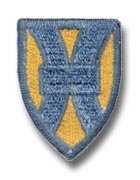
 84th Ordnance Bn (Ammo) DUI
The Headquarters and Headquarters Detachment, 84th Ordnance Battalion was reactivated on 5 June 1951, at the Karlsfeld Ordnance Depot in Karlsfeld, Germany. On 5 October 1953, the unit moved to Rhein Ordnance Barracks at Kaiserslautern, Germany, under which command they remained until 3 January 1955. At that time, the unit was redesignated as the 84th Ordnance Battalion (Ammo) without a change of station. The Headquarters (and Headquarters) Detachment became the Headquarters and Headquarters Company on 1 June 1965. The present 84th Ord Bn was assigned to the 57th Ordnance Group from 30 June 1954 to 18 June 1965. On 18 June 1965, the 57th Ord Gp became the 57th Ord Brigade. ORGANIZATION (30 June 1956): |
||||||||||||||||||||||||||||||||||||||||||||||||||||||||||||
|
||||||||||||||||||||||||||||||||||||||||||||||||||||||||||||
|
[1]
STATION LIST, 17 April 1957
On 1 April 1969, the 84th Ord Bn was assigned to the Miesau Army Depot until 21 December 1972 at which time it was assigned to the 60th Ordnance Group, its present immediate higher headquarters. |
||||||||||||||||||||||||||||||||||||||||||||||||||||||||||||
(Webmaster Note: Studied the 31 March 1973 and Dec 1974 STATION LISTS. I believe the following organization for the 84th Ord Bn during that period is correct:) |
||||||||||||||||||||||||||||||||||||||||||||||||||||||||||||
|
||||||||||||||||||||||||||||||||||||||||||||||||||||||||||||
|
HHC, 84th Ord Bn relocated to Münchweiler, Germany, on 1 February
1976 with no change in mission.
The present units assigned to the 84th Ord Bn are the following: |
||||||||||||||||||||||||||||||||||||||||||||||||||||||||||||
|
||||||||||||||||||||||||||||||||||||||||||||||||||||||||||||
MISCELLANEOUS INFORMATION: |
||||||||||||||||||||||||||||||||||||||||||||||||||||||||||||
1.) The STATION LIST for 16 August 1954 lists the 84th Ord Bn as a Maint & Supply unit. Station is identified as Kaiserslautern. The 84th Ord Bn is listed on the troop list for 7th Army (as of 30 June 1954) under the 57th Ord Gp (Ammo). But it doesn't look like it has any units attached to it yet. 2.) S&S mentions Maj Harold F. Smith as the CO of the 84th Ord Bn in the Feb 1953 time frame. |
||||||||||||||||||||||||||||||||||||||||||||||||||||||||||||
If you have more
information on the history or organization of the 84th Ord Bn, please
contact me . . |
||||||||||||||||||||||||||||||||||||||||||||||||||||||||||||
|
|
||||||||||||||||||||||||||||||||||||||||||||||||||||||||||||
| (Source: Email from David J. Irish) | ||||||||||||||||||||||||||||||||||||||||||||||||||||||||||||
| I enlisted from
Albany, NY in February of 1958. I was sent to Fort Dix for basic and
assigned to 664th Ordnance Co (Ammo). We remained until November when
we rotated to Germany. I arrived in Bremerhaven Germany on board the
General Buckner in November of 1958 with the 664th Ordnance
Co (Ammo). I was with the 664th Ordnance Co at Baumholder, APO 34, November 1958 to 19 January 1960. I did many TDY trips to various ammo dumps (operated by the 664th). On 19 January 1960 I was assigned to 663rd Ordnance Co (Ammo), APO 114, but was assigned (attached) to, worked at and lived at Headquarters Detachment, 100th Ordnance Battalion, APO 28, Taylor Barracks in Mannheim/Kaefertal. I was there as a clerk typist. The detachment commander at the 100th was 1st Lt John C. Avery. The 1st Sgt was William C. Doan. I believed then and I believe now these two people were two of the finest people I have yet to meet. We also had two Sergeants first class in the 664th Ord who I idolized and I would have followed these two through hell and back, think they were what Sergeants were all about, (example). Sgt First Class Stokes and Sgt. First Class Boyeau. I have a company roster with all the 664th`s grunts but no Non Coms or Officers. So I am not sure of the spelling of Sgt. Boyeau`s name.The First of 664 was a big man named Vinson he was a great man also honorable, honest and cherished his men. David J.Irish |
||||||||||||||||||||||||||||||||||||||||||||||||||||||||||||
| 1969 | ||||||||||||||||||||||||||||||||||||||||||||||||||||||||||||
| (Source: STARS & STRIPES, July 10, 1969) | ||||||||||||||||||||||||||||||||||||||||||||||||||||||||||||
| The 4080th Labor Service Company, Karlsruhe provides guards for the ammo storage site at Friedrichstal. The 4080th is subordinate to the 84th Ord Bn. | ||||||||||||||||||||||||||||||||||||||||||||||||||||||||||||
| Early 1970s | ||||||||||||||||||||||||||||||||||||||||||||||||||||||||||||
| (Source: Undated historical notes from the 84th Ord Bn) | ||||||||||||||||||||||||||||||||||||||||||||||||||||||||||||
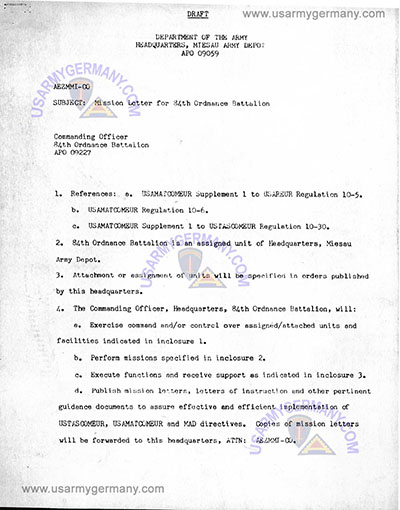 Historical Notes, early 1970s (Webmaster's collection) (Click on the image to view the PDF file) |
||||||||||||||||||||||||||||||||||||||||||||||||||||||||||||
| 1976 | ||||||||||||||||||||||||||||||||||||||||||||||||||||||||||||
| (Source: Headquarters, 84th Ordnance Battalion - Historical Summary 1 July 1976 - 31 December 1976) | ||||||||||||||||||||||||||||||||||||||||||||||||||||||||||||
| 84th Ordnance Battalion 1 July 1976 - 31 December 1976 1. MISSION:  a. Provide explosive ordnance disposal (EOD) surety capabilities in support of mission stocks. b. Provide command, administrative, tactical and technical supervision over conventional, special ammunition and guided missile support companies and other attached units.c. Perform stock control for conventional Class V and missile material.d. Exercise court-martials jurisdiction, authority under Article 15, UCMJ, and take other military justice related actions as specified by CG, exercising general court-martials jurisdiction over 84th Ordnance Battalion.e. Perform, supervise, control and direct conventional Class V munitions surveillance, explosive safety and quality control programs.f. Provide conventional ammunition logistical support.g. Maintain physical security of ABREST sites, Reserve Ammunition Supply Points (RASP), Prestock Points (PSP), Rear Area Storage Sites (RASS), and Ammunition Supply Points (ASP 4).
h. Perform installation coordinator functions at the Muenchweiler
Hospital Complex IAW UR 10-20. i. Operate the consolidated dining facility at the Muenchweiler Hospital Complex. j. Establish, administer, coordinate and monitor the Battalion's Safety Program IAW AR 385-10.
k. Receive and disseminate technical and tactical intelligence information and requirements. a. Provide explosive ordnance disposal (EOD) surety capabilities in support of mission stocks. b. Provide command, administrative, tactical and technical supervision over conventional, special ammunition and guided missile support companies and other attached units.c. Perform stock control for conventional Class V and missile material.d. Exercise court-martials jurisdiction, authority under Article 15, UCMJ, and take other military justice related actions as specified by CG, exercising general court-martials jurisdiction over 84th Ordnance Battalion.e. Perform, supervise, control and direct conventional Class V munitions surveillance, explosive safety and quality control programs.f. Provide conventional ammunition logistical support.g. Maintain physical security of ABREST sites, Reserve Ammunition Supply Points (RASP), Prestock Points (PSP), Rear Area Storage Sites (RASS), and Ammunition Supply Points (ASP 4).
h. Perform installation coordinator functions at the Muenchweiler
Hospital Complex IAW UR 10-20. i. Operate the consolidated dining facility at the Muenchweiler Hospital Complex. j. Establish, administer, coordinate and monitor the Battalion's Safety Program IAW AR 385-10.
k. Receive and disseminate technical and tactical intelligence information and requirements.2. PERSONNEL RELATIONS AND MORALE: See attached inclosures 1, 2, and 3. 3. MAJOR ACCOMPLISHMENTS: During the period of 9-20 August 1976, the 812th Ordnance Company (Active Reserve) conducted its annual two week training period in which this unit actively utilized them to assist in ammunition operations. On 1 September 1976, the Headquarters Company established and opened the consolidated dining facility, which supports units assigned to Muenchweiler Post. Previously there was no other US dining facility within the compound. During October 1976, an alert reaction force exercise was conducted utilizing elements of the 184th, 501st, 636th and HHC as security forces for the 636th Ordnance Company (EOD). As of 1 November 1976 the 144th Ordnance Detachment (ASP 4) was assigned to this headquarters. In addition, during November 1976, this Headquarters conducted a test utilizing generator power for four PSP's without commercial power. The power was required for newly installed IDA systems and will be expanded to include twelve additional PSP's. This project requires $190,000.00 worth of petroleum, repair parts and additional equipment. See Inclosures 1, 2 and 3 for specifics. 4. PLANS, PROGRAMS, TRAINING AND ORGANIZATION CHANGES: a. Relinquished responsibilities of V & VII Corps points.
b. Assumed responsibilities of ASP #4 and all of MAD off-depot sites (Saarland & ABREST). 144th Ordnance Detachment (Prov) assigned to 84th Ordnance Battalion on 1 November 1976.c. Started rewarehousing/palletization of ABREST sites.
d. Completion of modelling concept at PSP's.e. Prepositioning of UBL Material Handling Equipment.
f. Started installation of IDA System at all points.5. OPERATIONS AND EXERCISES: Participated in the following Upload Exercises on dates indicated: |
||||||||||||||||||||||||||||||||||||||||||||||||||||||||||||
|
||||||||||||||||||||||||||||||||||||||||||||||||||||||||||||
6. HISTORICAL SUMMARY NCO/OFFICER: Jerry L. Brackney 2LT, MI S-2/3 Officer |
||||||||||||||||||||||||||||||||||||||||||||||||||||||||||||
| 184th Ordnance Company Historical Summary for 1 July 1976 - 31 December 1976 1. Unit Mission: The basic TO&E mission is establishing and operating four (4) ammunition supply points for receipt, issue, shipping, storage and conducting cyclic inventory procedures and surveillance. The 184th Ordnance Company (Ammunition) has the current mission to operate 4J (Muenster), 953 (Limbach), 3J (Freiburg) and 2J (Langen). 2. Personnel Relations and Morale: a. Key Personnel Changes
(1) Departures - Leonard, Monk, SFC, Motor Sergeant
(2) Arrivals - Brodowski, Jerrold, 2LT, Catus, Richard, SFC, Breuner, Charles, SFC(3) Changes/Reassignments - None
b. VIP Visits - None
c. Public and Personnel Morale:
(1) Numerous letters of appreciation were given out to unit personnel for outstanding performance and exemplary contribution to the unit's accomplishment of mission and resulting to high satisfactory rating received by the unit during the Annual General Inspection, FY 76.
(2) Fifteen (15) personnel of this unit participated in Adventure Training for three (3) days at Black Forest, Germany.3. Major Accomplishments: - This unit received a high Satisfactory rating on the Annual General Inspection for FY 76. 4. Plans, Programs, Training and Organizational Changes: - None 5. Operations and Excercises: This unit was tasked to establish and operate ASP Blue in support of Reforger 76. The support was provided under field conditions. 22 Personnel from the unit participated. 41.43 S tons of ammunition were issued from the field location 132 kilometers from Mannheim. |
||||||||||||||||||||||||||||||||||||||||||||||||||||||||||||
| 545th Ordnance Company Historical Summary 1 July 76 to 31 December 76 1. Mission: To establish and operate 2 special ammunition supply points, to provide technical assistance to supported units, to provide for evacuation of unserviceable items to general support and to provide security of classified storage. 2. Personnel Relationship and Morale: a. Key Personnel Changes
(1) Stephen S. Carey, Cpt, S&I platoon leader, departed 2 Aug 76.(2) John J. Sensi, Cpt, Operations Officer, departed 9 Dec 76.
(3) Kermit F. Gombert Jr, Cpt, Operations Officer, arrived 15 Oct 76.
(4) Ronnie D. Stuckey, 2Lt, Shop Officer, arrived 1 Oct 76.
(5) Charles E. McKee, 2Lt, Infantry Platoon leader, arrived 2 Dec 76.(6) Deborah A. Windham, 2Lt, PBO, arrived 21 Sep 76.
(7) Donald R. Leathers, 1LT, S&I Platoon header, arrived 18 Sep 76.
|
||||||||||||||||||||||||||||||||||||||||||||||||||||||||||||
| AERODE-CDR 168th Ordnance Detachment (EODCC) Semi-Annual Historical Report July - December 1976 The Semi-Annual Historical Report for the last six month period is submitted IAW Message 2018402, your office.
|
||||||||||||||||||||||||||||||||||||||||||||||||||||||||||||
| AERODM-DAS-PA Headquarters, Miesau Army Depot Semi-Annual Historical Report for the Period 1 July thru 31 December 1976 1. Reference letter, your HQ, dated 10 May 1976, subject same as above.
2. The following Semi-Annual Historical Report is submitted for the period 1 July thru 31 December 1976:
a. Designation of Submitting Unit: Miesau Army Depot, APO 09059
b. Mission:
(1) Receive, store, maintain and issue prepositioned war reserve, operational project, basic load, and peacetime conventional class V operating stocks.
(2) Receive, store, protect, maintain, end exchange (or issue) small missiles with conventional warheads.
(3) Maintain, preserve, and inspects ordnance and related mission items.
(4) Renovate ammunition stored in the depot, and in Prestock, Reserve Ammunition Supply Points and ABREST.
(5) Provide technical assistance to personnel who use, transport or dispose of class V items.
(6) Demilitarize hazardous supplies as directed by the Commander, 60th Ordnance Group.
(7) Receive, inspect, classify and process returns of all class V items and salvageable material.
(8) Store, secure, and maintain in a state of readiness, class V and other prestock.(9) Establish and maintain an Ammmition Surveillance and Quality Assurance Program.
(10) Provide logistic support to US Air Force on receipts and intransit shipments of ammunition (class V).
(11) Prepare and submit required stock status, storage, surveillance, and maintenance reports (e.g. feeder reports required by worldwide ammunition reporting system, ABREST report, Class V activities reports, etc.).
c. Personnel Relations and Morale:
(1) Flu-shots were given free of charges to 130 LN/LS employees by the German Sick Insurance Company, AOK Landstuhl at the Depot Dispensary.(2) During a blood drive on 2 August 1976 conducted by the German Red Cross a total of 77 LN and LS employees and one military donated blood.
(3) A 16 hour first aid training course was given to 22 LN and LS employees by the German Red Cross Kaiserslautern during the period 13 Dec thru 17 Dec 1976.
(4). On 9 Dec ten (10) employees were honored for 20 years of services with the US Forces.
d. Key Personnel Changes:
(1) On 29 July 1976 Colonel Carlton P. Weidenthal, Commander, Miesau Army Depot, turned over command of the depot to Colonel John E. Adams.
(2) On 29 July 1976 Mr. James A. Gibson, DAC, GS-12, was assigned to Miesau Anny Depot as Safety Officer.
(3) On 4 October 1976 Mr. Barney Chung took over as Civilian Executive Assistant. He came from Kaiserslautern Army Depot. He took over the position of Mr. Lee Stimmell, who was transferred to the 60th Ordnance Group, Zweibruecken.
(4) On 4 October 1976 Mr. Robert E. Boshinsky, DAC, was assigned to Directorate for Management Information Systems. He replaced Major Dorsey, who rotated on 28 July 1976.(5) Private Association formed to coordinate the DYA effort in Waldmohr with a German Community Center building to house the DYA.
(6) Transfer off-post storage sites to 84th Ord Bn on dates indicated: |
||||||||||||||||||||||||||||||||||||||||||||||||||||||||||||
|
||||||||||||||||||||||||||||||||||||||||||||||||||||||||||||
| (7) 1 Dec 76 - the 60th Ordnance Group was transferred to the 21st Support Command.
FOR THE CONMANDER: |
||||||||||||||||||||||||||||||||||||||||||||||||||||||||||||
| AERODL-O 6956th Labor Service Ammunition & Guard Center Semi-Annual Historical Report for the Period 1 July thru 31 December 1976 1. DESIGNATION OF SUBMITTING UNIT: 6956th Labor Service Ammunition and Guard Center, APO 09189. 2. MISSION: a. 6956th Labor Service Ammunition and Guard Center commands, administers, supervises , and coordinates operations of subordinate CLG/LS units engaged in ammunition and physical security activities.b. LS Ordnance Ammunition Units perform receiving, storing, maintenance, rewarehousing and shipping of ordnance conventional and chemical Class V material, and provide administrative services for ammunition prestock points (PSP) and other ammunition storage sites, as directed.c. CLG/LS Guard Units provide physical guard security for ammunition prestock and storage sites, and other installations or targets, as assigned.3. PERSONNEL RELATIONS AND MORALE: a. Promotions of key personnel |
||||||||||||||||||||||||||||||||||||||||||||||||||||||||||||
|
||||||||||||||||||||||||||||||||||||||||||||||||||||||||||||
| 4. KEY PERSONNEL CHANGES: During the reporting period the authorized strength of the 6956th Labor Service Ammunition and Guard Center increased from 33 to 50. Increase of the Center strength was necessitated by activation of three (3) LS Liaison Sections within three (3) US Army Battalions: the 15th, 84th, and 101st Ordnance Battalions, on 26 July 1976, and through the increase of the Center mission responsibilities. The following changes in key personnel occured in connection with the activation of the above mentioned Liaison Sections:a. LSO-2 Josef MARCIULONIS, 6956th Labor Service Ammunition and Guard Center, was promoted to LSO-4 and appointed Labor Service Staff Advisor at the Labor Service Liaison Section with the 101st Ordnance Battalion.b. LSO-3 Stanislaw PROKOPOWICZ, 6956th Labor Service Ammunition and Guard Center, was promoted to LSO-4 and appointed Labor Service Staff Advisor at the Labor Service Liaison Section with the 84th Ordnance Battalion.c. LSO-3 Zbigniew STURM, 6956th Labor Service Ammunition and Guard Center, was promoted to LSO-4 and appointed Labor Service Staff Advisor at the Labor Service Liaison Section with the 15th Ordnance Battalion. 5. VIP VISITS: |
||||||||||||||||||||||||||||||||||||||||||||||||||||||||||||
|
||||||||||||||||||||||||||||||||||||||||||||||||||||||||||||
| 6. PUBLIC AND PERSONNEL MORALE: | ||||||||||||||||||||||||||||||||||||||||||||||||||||||||||||
|
||||||||||||||||||||||||||||||||||||||||||||||||||||||||||||
| 7. MAJOR ACCOMPLISHMENTS: Completion of activation of LS Ammo Detachments at ASP #1, 2, 3, and 4. | ||||||||||||||||||||||||||||||||||||||||||||||||||||||||||||
| 8. PLANS, PROGRAM AND TRAINING:a. Plans -- IAW USAREUR Message 291320Z Dec 76, 28 LS Guard spaces have been allocated effective 1 Jan 77 to activate LS Guard Detachment at Wildflecken, 4230th LS Co (Gd). Mission: To provide guard post for ASP #3. Completion of activation is programmed for 15th Feb 1977.b. Plans -- IAW USAREUR Message 291320Z Dec 76, 119 LS Guard spaces have been allocated effective 1 March 1977 to provide guard force for VII Corps for PSPs currently guarded by combat troops. These spaces will be utilized as follows:(1) Activation of LS Guard Detachment Schwaebisch Hall, 4075th Civilian Labor Group (Guard), with an authorized strength of 23 men. Mission: To provide guard force for PSP #26. Completion of activation is programmed for 31 May 1977.(2) Activation of LS Guard Detachment Hepberg, 4067th Civilian Labor Group (Guard), with an authorized strength of 26 men. Mission: To provide guard force for PSP #35. Completion of activation is programmed for 31 May 1977.(3) Activation of LS Guard Detachment Erlangen, 4067th Civilian Labor Group (Guard), with an authorized strength of 49 men. Mission: To provide guard force for PSP #34 and SAIB, Herzo Base. Completion of activation is programmed for 30 Jun 1977.(4) Activation of LS Guard Detachment Bamberg with an required strength of 43 men, but currently authorized 21 men only. Mission: To provide partial guard force for PSP #94. Completion of activation is programmed for 30 Jun 1977.c. Command Inspections have been scheduled to be conducted within all assigned CLG/LS units during the month of January and February 1977.d. Training. Personnel instated into the above mentioned LS Detachments, programmed to be activated, will receive basic Labor Service initial training at the respective units by personnel from this Center. |
||||||||||||||||||||||||||||||||||||||||||||||||||||||||||||
| 9. OPERATIONS AND EXERCISES: Besides the normal ammunition operations and physical security activities, the 2040th and 2041st LS Ord Ammo Companies were involved in exercises as indicated: | ||||||||||||||||||||||||||||||||||||||||||||||||||||||||||||
|
||||||||||||||||||||||||||||||||||||||||||||||||||||||||||||
|
||||||||||||||||||||||||||||||||||||||||||||||||||||||||||||
|
||||||||||||||||||||||||||||||||||||||||||||||||||||||||||||
|
||||||||||||||||||||||||||||||||||||||||||||||||||||||||||||
|
||||||||||||||||||||||||||||||||||||||||||||||||||||||||||||
| 10. NAME/TELEPHONE NUMBER OF ACTION OFFICER: CPT (LS) Jan CZERNIK, MWL (2214-) 654/719. | ||||||||||||||||||||||||||||||||||||||||||||||||||||||||||||
| (Source: Email from "name withheld" by request of author) | ||||||||||||||||||||||||||||||||||||||||||||||||||||||||||||
| I was a former Ammo Tech Officer in the MATO office of 84th Ord Bn. I arrived in Muenchweiler in Oct. 1976. I have information on 60th Ord Group / 84th Ord Bn / 6956 LSG/CLG operations in the Rheinland-Palatinate, circa 1976-79, I wish to contribute. I looked thru the 84th Ord. Bn and 60th Gp. records on the site, and concur with the dates shown for events during and around my time. I will say that when I arrived in Oct. 1976, we knew that the reorganizations that happened officially later in 1977, such as passing sites to 15th and 101st Ord. Bns. and those Bns. to the Corps, were going to happen, and we were already fully focused on our newly revised areas of responsibility. Interesting to see the history report by Jerry Brackney – I knew him well – a really nice guy who departed the world too young. ORGANIZATION (late 1970s): We had the 84th Headquarters and Headquarters Company (HHC) in Muenchweiler, the 636th and its associated MP Company (I don’t recall a number) in Clausen (on Site 59), and, I think within a year after I arrived in Oct. 1976, acquired a small ordnance company (the 44th ?) at ASP 4, Baumholder. The 44th in Baumholder was really a platoon / detachment (see account by Barry Gardner re 15th Ord. Bn.), and I had little exposure to them. In 1978 we opened a detachment at Bremerhaven to manage basic load stocks for Bde 75 / 2AD (Fwd) in a German depot at Lübberstedt (I managed this planning and was present for initial receipt & storage) and war reserves at Olfen, a new NATO site, if I recall correctly. We also started ammo storage operations in Belgium at German storage sites in Sugny and later Baronville (despite WWs 1 & 2, jobs were scarce in southeast Belgium, and the Belgians were glad to have the Germans pay to build sites there and pay locals to manage storage operations). I was present for ammo arriving at Beauraing railhead for Sugny in 1978 or ‘79 – American ammo, received by uniformed, Uzi-armed German officers speaking German and French, and French-speaking laborers. That was different…. The 6956th Labor Service Group / later Civilian Labor Group, was located in the other end of our wing in the Muenchweiler Hospital – they had the 2040th, until reassignment as below, the 2041st, and later the 2042 LS Cos. as described below – -- as I recall, 6956th actually reported as we did to 60th Ord. Gp. In Zweibruecken, but were in direct support to the 84th. HOME STATION: The 84th Ord Bn was located at the Muenchweiler Hospital Complex some miles to the east of Pirmasens. It was demolished some years ago. I was able to get inside in 2004 with my son and one daughter after the complex was abandoned and vandalized, before demolition. Have lots of photos. The 84th was originally at Rhine Ordnance Barracks in Vogelweh (Kaiserslautern) for some years but moved to Muenchweiller – I thought that was some time before 1976, a year or more perhaps, but I don’t know definitively. I also know the locations of all the old storage sites, with exception of 3 of the 4 Saar sites and ASP-4 in Baumholder LABOR SERVICES UNITS: The LS / CLG units were not TOE deployable units like the US units – LS / CLG had some form of TDA providing for them to support the RASPs and PSPs, etc. As the Ammo Tech Officer, I worked with the 2040th LS Co. in Griesheim (until it was assigned in 1977 to 15th Ord. Bn. supporting V Corps.), the 2041st in Turley Barracks Mannheim, and the 2042d in Zweibruecken (established in 1977 to take over our former 2040th sites – RASP 952, PSPs 50, 51, the Saar sites, etc.). I managed the basic load stocks for the 8th DIVARTY (Baumholder area) at RASP 952, 2d Bde (Baumholder) and Div. HQ (Bad Kreuznach) at PSP 51, and 3d Bde (Coleman barracks, Mannheim) at PSP54, as well as other unit basic loads, Reforger / 2+10 basic loads, and (the vast majority by tonnage) war reserve stocks. I led some “urgent” training support ammo transport missions on occasion -- e.g., when training ammo orders were fouled up for whatever reason (I had no regular role in training processes). |
||||||||||||||||||||||||||||||||||||||||||||||||||||||||||||
| 1980 | ||||||||||||||||||||||||||||||||||||||||||||||||||||||||||||
| (Source: Email from Michael Gerhardt, 84th Ord Bn) | ||||||||||||||||||||||||||||||||||||||||||||||||||||||||||||
| I was the S-2 there from 1980-1983. There was also the 636th EOD and the 110th MP Co. They worked the "Mystery Site-59", at Clausen.
The site is abandoned, and it is no longer classified, although I still wouldn't go in oscar or november bunkers without wearing level-A. There was also the 330th Ord Co, that took over after they disbanded the 636th EOD. The 763rd Met Det was not subordinate to the 84th Ord Bn, but supported chemical operations at Clausen. |
||||||||||||||||||||||||||||||||||||||||||||||||||||||||||||
| MISCELLANEOUS INFORMATION In December 1957, HQ 57th Ord Gp, HQ 84th Ord Bn and the 50th Ord Co were all located at Rhine Ordnance Barracks in Kaiserslautern (STARS & STRIPES, Dec 25, 1957). |
||||||||||||||||||||||||||||||||||||||||||||||||||||||||||||
 |
||||||||||||||||||||||||||||||||||||||||||||||||||||||||||||
|
|
||||||||||||||||||||||||||||||||||||||||||||||||||||||||||||
| 606th Ordnance Company (Ammo) | ||||||||||||||||||||||||||||||||||||||||||||||||||||||||||||
| 1955 | ||||||||||||||||||||||||||||||||||||||||||||||||||||||||||||
| (Source: Email from Gene Koch, 606th Ord Co, 1955-58) | ||||||||||||||||||||||||||||||||||||||||||||||||||||||||||||
I entered above outfit on or about 12/31/1955 at Smoke Bomb Hill, Ft. Bragg, after basic at Ft. Jackson. About 4/1/56 we embarked the Maurice C. Rose for Hamburg then to Baumholder where we split into two groups. One was to run ASP 4 at Baumholder and the other went to ASP 3 at Wildflecken. CO was a Capt. Witt.
I started at ASP 4 as a checker in the Small Arms Section, then went into the office as a Stock Records Clerk then up to Chief Stock Records Clerk (E5 rank) in May of 1958. I rotated home in Sept 1958 on the USNS Upshur.
Others in the outfit:
SFC Billie Jay IkemireSFC ElderSgt BrawleySgt McDonaldPfc KautzmanPfc Horst StaigerPfc Sal. BonnanoPfc Johnson We reported to the 84th Ord Bn in Kaiserslauten.
In roughly April-June we ran the ASP at the Bergen-Belsen NATO tank gunnery range, outside of Celle. Those not associated with either of the ASP's were working on rotation of AT (anti-tank) land mines throughout the American sector along the Rhine etc. The main objective of the combat troops (at that time) was to fight a delaying war until we and NATO etc. could get troops in and reinforce them. Part of this battle plan was for the combatants and engineers was to lay as many Anti Tank mines as possible to slow down the Russian tanks. Our job was to replace those that had past their expiration date or had been recalled for some reason. They were stashed all over the place and as I was told, usually guarded by former DP's that were cleared and given jobs in "Labor Companies". These companies were like the unskilled labor on construction jobs, driving trucks for the QM, etc.
I know that our guys could "hump" those things, 50 LBS each, as one crew of 4 unloaded 100 tons in one day.
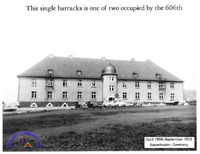
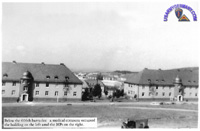
I have done some searching into online maps of Germany and have determined that from April 1956 to July/Aug. 1956 the 606th was in the two southwestern most barracks on what is now called Vermont Ave. The opposing barracks on Mass Ave (across the "parade" field from us) were Labor Service Companies.
In July/Aug. the 606th was moved to two barracks on the east side of what is now Pear St.
|
||||||||||||||||||||||||||||||||||||||||||||||||||||||||||||
|
||||||||||||||||||||||||||||||||||||||||||||||||||||||||||||
| 1956 | ||||||||||||||||||||||||||||||||||||||||||||||||||||||||||||
| (Source: Email from David M. Neville, 606th Ord Co (Ammo), 1956-58) | ||||||||||||||||||||||||||||||||||||||||||||||||||||||||||||
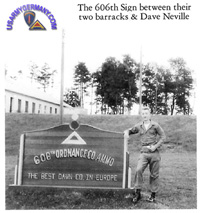
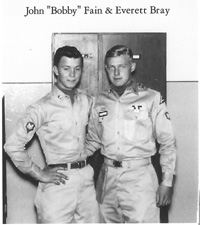
| With Gene Koch, I, too, was in the 606th Ordnance Company (Ammo) at Ft. Bragg, NC and Baumholder, Germany (January 1956-September 1958).
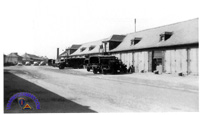
Assigned to the Motor Pool initially as a Jeep driver, then as the "part's man," and finally as staff car driver. In retrospect, it was great duty for a single, 18 year old -- not only traveling around Germany (on and off duty), but also being able to see other parts of Europe. I remember many things about my time in Baumholder (at 18, mainly food, drink and girls): the schnitzel stand downtown, rock hard salami on a roll with a beer in the barrack's Attic Club of the German Labor Service Company, pizza at the Lido Restaurant (served by the lovely Ricky), 60 cents (2 marks/40) bottles of champagne at the French Army Post EM Service Club. (Early in 1956 Germany was still under occupation and Baumholder was either in the French Zone or on the line). Baumholder had large artillery range areas on which they occasionally held NATO fire power demonstrations. I remember they fired 8-inch shells, and maybe 280 millimeter cannon shells over a corner of the camp. At one of these deomonstrations some of us were "caught in the open," standing at attention, salulting, while 20+ generals passed by in their staff cars. In the attachment to this email are some pictures from this period. While on vacation in 1998, my wife and I passed through Baumholder. Surprisingly, the 606's barrack and motor pool were still in use, and the camp looked much like it did some 40 years before. I have been in recent contact with two 1956-58 606th soldiers: Horst Staiger and John Kosior (John and I shared a car in this period). |
||||||||||||||||||||||||||||||||||||||||||||||||||||||||||||
|
||||||||||||||||||||||||||||||||||||||||||||||||||||||||||||
|
||||||||||||||||||||||||||||||||||||||||||||||||||||||||||||
| 636th Ordnance Company (EOD) | ||||||||||||||||||||||||||||||||||||||||||||||||||||||||||||
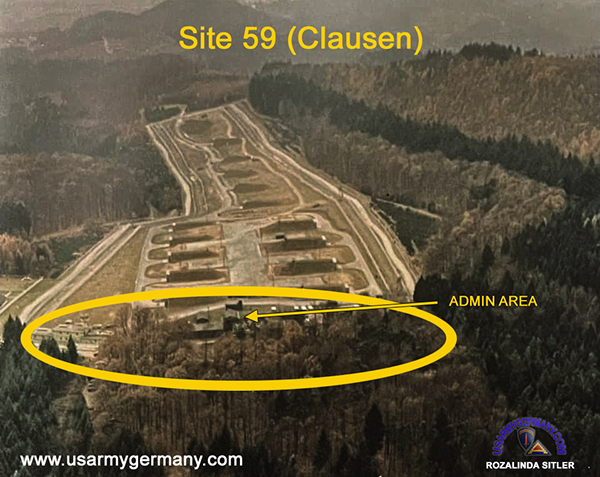 Aerial view of former Clausen storage site, early 1990s (Rozalinda Sitler) |
||||||||||||||||||||||||||||||||||||||||||||||||||||||||||||
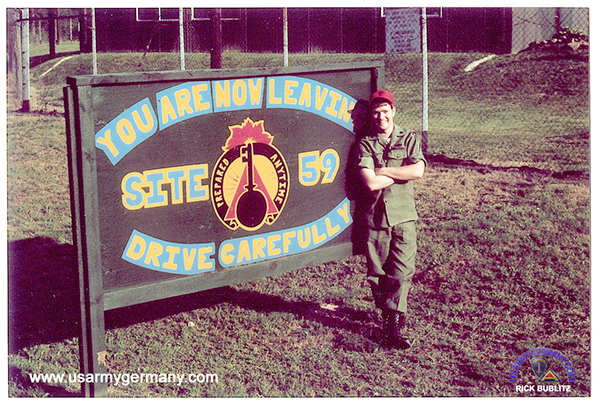 Sign close to gate heading towards the exit, mid-1970s (Rick Bublitz) |
||||||||||||||||||||||||||||||||||||||||||||||||||||||||||||
 Motor pool area, Site 59, mid-1970s (Rick Bublitz) |
||||||||||||||||||||||||||||||||||||||||||||||||||||||||||||
| 1973 | ||||||||||||||||||||||||||||||||||||||||||||||||||||||||||||
| (Source: Email from Vance R. Bublitz, 636th Ord Co, 1973-77) | ||||||||||||||||||||||||||||||||||||||||||||||||||||||||||||
| I arrived in Germany April 10th, 1973. Upon arriving at Rhein-Main AFB, all soldiers (myself included) without pinpoint assignments were sent to Gutlet Kaserne in Frankfurt pending further assignment instructions. I was there one night and then sent on to Worms, FRG, and 1st TASCOM Headquarters for assignment. I spent a week there and finally on a Friday morning I was given instructions for the 636th Ordnance Company (EOD), APO NY 09227. I thought there was a mistake and I told the personnel SFC that I was a Military Policeman (95B) and there must be some kind of mistake. When he stopped laughing he assured me that there was no mistake. A covered deuce and half truck picked about 10 of us up from the barracks where we had been staying for the long journey to our new assignments. Some were dropped off in Mannheim, some in Kaiserslautern and then I was finally taken all the way to Pirmasens. I stayed at the Personnel Center there until another truck picked me up and took me to Site 59, home of the 636th at that time. Site 59 was located approximately 4 kilometers off the main road that ran through Clausen, Germany (  ). The site had five quontset hut type structures for barracks for the single soldiers who lived on site, It also had a building for supply with a shower facility in the front of the building, administration building which had the messhall, classified document vault, PX exchange, mail room, orderly room and Commander's office. Another building housed the motor pool bay with the vehicle motor park to the north and south of the building. The unit armory was located on one side of a barracks building. The kennels were at the end of an unpaved dirt street which ran through the middle of the site. The kennels had a building that worked as a temporary vet station and storage area for dog crates, training equipment, and food for the dogs. About a year after I arrived another building was erected that became the unit dayroom and lounge. It had a PX bar stocked with beer (Parkbrau which was the local beer of choice) and snacks. It also had a pool table and jukebox. Medics from the supporting medical unit in Muenchweiler, the 763rd Medical Detachment, also had an office in the supply building. ). The site had five quontset hut type structures for barracks for the single soldiers who lived on site, It also had a building for supply with a shower facility in the front of the building, administration building which had the messhall, classified document vault, PX exchange, mail room, orderly room and Commander's office. Another building housed the motor pool bay with the vehicle motor park to the north and south of the building. The unit armory was located on one side of a barracks building. The kennels were at the end of an unpaved dirt street which ran through the middle of the site. The kennels had a building that worked as a temporary vet station and storage area for dog crates, training equipment, and food for the dogs. About a year after I arrived another building was erected that became the unit dayroom and lounge. It had a PX bar stocked with beer (Parkbrau which was the local beer of choice) and snacks. It also had a pool table and jukebox. Medics from the supporting medical unit in Muenchweiler, the 763rd Medical Detachment, also had an office in the supply building.Another unique building was an old single wide trailer that was the unit "theater". The movies were the old 16mm type with projector. The movies arrived were picked up on the mail run once a week and they were usually movies that were 6-8 months removed from the main theater circuit. The movies were provided by the PX exchange system. However, anyone assigned to the 636 during the days I was there had to encounter the main guard shack. It was located at the front gate and manned 24 hours a day by MP's. All entry and exit was through the front gate whether by foot or vehicle. The gate was always opened by an armed MP with a second armed MP backing him up. It was a one story blockhouse with an emergency generator within the building but separated from the MP guards by a solid 12 inch thick concrete brick wall. The MP's were responsible for ensuring that the generator was full of fuel and operational each shift they came on duty. The generator was for emergency backup power for the site's security lights and communication. A couple of years after my arrival they knocked a small hole in the wall so that MP's could get to the generator if they ever came under hostile fire from outside the site. There was always a requirement to perform hourly communications with 84th Ord Bn headquarters at Rhein Ordnance Barracks in Kaiserslautern to ensure the site had not been overrun. Failure to conduct or respond to these checks would allegedly result in response from supporting units from Baumholder which was at least 3 hours away. There was also another site that fell under the command of the 636 and that was Site 67. It was a conventional ammunition storage site with barracks for US soldiers who supported the classified mission at Site 59. Site 67 security was provided by Polish labor force guards. Site 67 was about 2 kilometers through the woods and about 4 by the logging roads in the area to Site 59. The 636th was an unusual unit in a number of ways but its force structure was most unique. The commanders slot called for an EOD 0-4 with two EOD 0-3's. One was for Support/Maintenance and one was for Operations. The Security Platoon was authorized an MP 02 even though there were 72 authorized MP security slots and 24 non-MP enlisted slots for mechanics, cooks, ammo handlers and EOD personnel. Since the site was designated an "isolated site" there was a minimal stipend for all personnel assigned. EOD personnel managed to retain their "hazardous duty pay" by periodically destroying Code H ammunition at the Baumholder demo ranges. This was usually done on one Saturday during the month except on a few occasions that I recall due to USAREUR requirements for accelerated destruction of some munitions. My knowledge of this is first hand since I worked for one of the EOD Captains for quite awhile as the classified document custodian and orderly room clerk. In those days, if the First Sergeant learned you could type you were definitely captured in the "admin" net. I did manage to work as a Day Squad Leader, Night Watch Dog Squad Leader, and eventually as Platoon Sergeant for a brief period before I left. MP's also provided range security during these trips to Baumholder. A task that a lot of them did not relish since it was on their weekend or day off and was almost as boring as "walking the hill" which was their normal duty at Site 59. In the spring of 1977 there was a Department of Defense Explosive Safety Board inspection of Site 59. As a result of that inspection it was deemed unsafe to no longer let soldiers be billeted closer than 2000 meters to the items stored at Site 59. The fact that anywhere between 35 and 50 MP's had been living on site less than 50 meters from the two closest bunkers continuously since 1971 seemed to make a big impression on someone at the DOD. Immediate plans were made to move the personnel living on site to a recently refurbished barracks in Pirmasens. Personnel E6 and below who lived off site (myself) had their off post authorization cancelled and were forced to make the move to the barracks in Pirmasens. I resided there until my PCS to CONUS on 28 July 1977. There was a unique blend of the bitter with the sweet at the 636. MP's hated the job because the job was boring, cold in the winter, hot in the summer, and unrewarding. The MP's yearned for the life of a "White Hat" MP doing law enforcement somewhere in USAREUR. In fact, there was a USAREUR policy that allowed that and it was called the ROTA plan. It allowed physical security MP's to PCS to a law enforcement MP unit in USAREUR after serving 13 months in the physical security unit like the 636. I can count on one hand the number of MP's who exercised that option while I was stationed with the 636. The EOD enlisted hated the place because of the boredom of their job which most of the time was maintenance or caretaker mission. They missed the excitement and prestige of the EOD detachments that were performing real-world tasks across Europe. However, the unit had a strange camaraderie that kept everyone together with very few problems. There were unit picnics where all the wives and kids would come from the housing units in Pirmasens or the off post apartments. There would be a day long party and ex-636er's talk fondly of them today, 30 years later. Definitely, a one of kind unit. Some of the personnel that I can recall and their assignment within the unit: |
||||||||||||||||||||||||||||||||||||||||||||||||||||||||||||
|
||||||||||||||||||||||||||||||||||||||||||||||||||||||||||||
| The personnel listed above were indeed important to the unit but for all the enlisted personnel, MP, EOD, and otherwise, too many to list here. They ran the unit and made it what it was then and will always be the important part of the story of the 636. | ||||||||||||||||||||||||||||||||||||||||||||||||||||||||||||
| ADDITIONAL INFORMATION | ||||||||||||||||||||||||||||||||||||||||||||||||||||||||||||
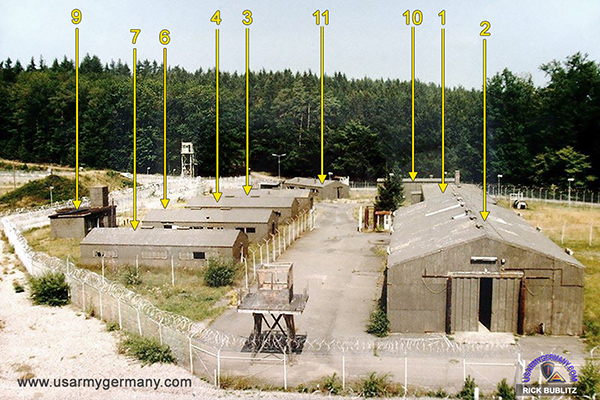 Admin area, Site 59, mid-1970s (Rick Bublitz) (Click on the image to view building use information) |
||||||||||||||||||||||||||||||||||||||||||||||||||||||||||||
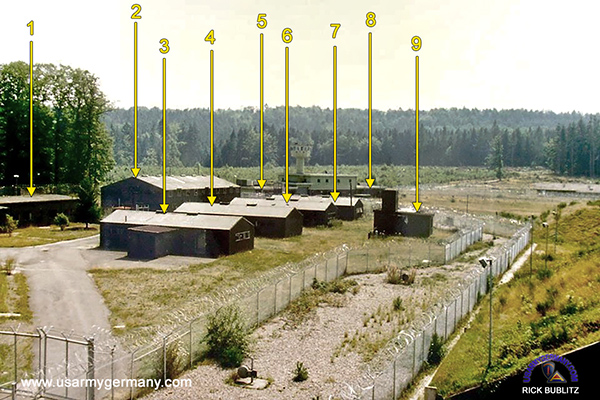 Admin area, Site 59, mid-1970s (Rick Bublitz) (Click on the image to view building use information) |
||||||||||||||||||||||||||||||||||||||||||||||||||||||||||||
| It’s not numbered but thought I should bring it up since it was the center of all operations each and every day I was there. On your top photo between number 3 and 11 there is a building. That would be the equivalent of the SSCC in my days but was routinely called the “guard house.” The Commander of Relief (COR) along with on-duty MPs operated out of that building. Gate 1 (out of site in both photos) was the focal point of all personnel and vehicles entering and leaving the site. Crew served weapons, communications, lighting controls, fire alarms, and emergency keys were stored in this building with part of the building housing an emergency generator. One side note. I have no idea why the NCOIC in charge was called the COR instead of the Sergeant of the Guard. I spent 25 years in the Army and that is what most other special weapons called their security force NCOIC. |
||||||||||||||||||||||||||||||||||||||||||||||||||||||||||||
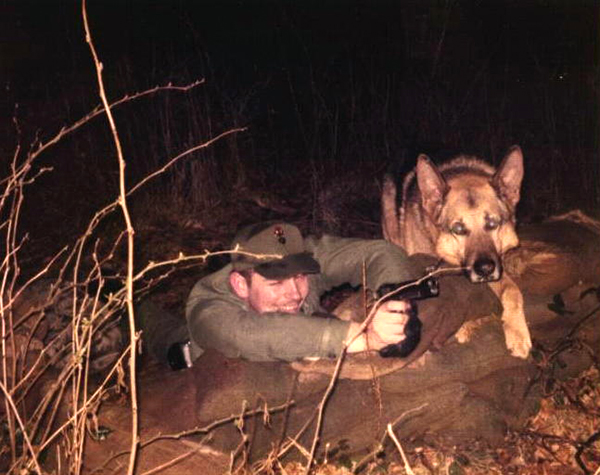 Sp4 Patrick Rielly & K-9 "Satan," Site 59, Clausen |
||||||||||||||||||||||||||||||||||||||||||||||||||||||||||||
| 1974 | ||||||||||||||||||||||||||||||||||||||||||||||||||||||||||||
| (Source: Email from Patrick Rielly) | ||||||||||||||||||||||||||||||||||||||||||||||||||||||||||||
|
||||||||||||||||||||||||||||||||||||||||||||||||||||||||||||
| I have never seen online a picture of Site 59 from the time I was there which was 1974-76. The mission there was obviously a Secret. Some pictures online do show some of the old buildings. If you have some pictures of the Quonset hut type metal buildings on site I can assist identifying those. The smaller Quonset hut buildings next to the bunkers were barracks. I lived there for 2 years 10 months and 6 days. The largest building was a motor pool and then we also had a command building and mess hall. Maybe 1 year after I had been there the Army decided to cut all the trees down that were growing on top of the bunkers. This ruined the camouflage. It remained this way until I left then at some point the Army put up guard towers and cut down all the trees. They also built some type of tower command center for observation and defense. We had no towers only foot patrols through the woods. Numerous young Soldiers like me lived on site in the barracks and we were there for defense of the site. After about 1977 everyone was moved down to Pirmasens and then Muenchweiler from what I understand. The US DoD advised that it was to dangerous to live within close proximity to the bunkers at Site 59. I had decided just after my enlistment in the US Army that I would get out after 1 enlistment and go home to college. In 1976 Satan died of gastric dilatation-volvulus. I was devastated. I patrolled alone for awhile on night shift but the Command came to me and said I had to take another K-9 to remain on nights. I took a scout dog named "Pat". The job was never the same and the Command called me in and asked if I would take an assignment in EOD. I said yes and they briefed me on the mission of Site 59 and assigned me to bunker checks with the EOD personnel. I was amazed at what I saw and everyone else knows as the unit doesn't exist any longer. Site 59 in the old days was an isolated assignment for young soldiers and we received extra pay for being stationed there. I think it was $25 a month. After the Army moved everyone from living there permanently there was no extra pay. It seems that after they built the large observation/Defense tower and command center that some troops report that they spent 3-4 days there as some type of quick defense unit then returned to Muenchweiler where their permanent barracks and company were located. I preferred the old days of foot patrol through the woods with my K-9. If they had towers and no trees I don't think I would have lasted long and I definitely would have transferred out at the first opportunity. |
||||||||||||||||||||||||||||||||||||||||||||||||||||||||||||
| 1977 | ||||||||||||||||||||||||||||||||||||||||||||||||||||||||||||
| (Source: Email from Gerrit "Dutch" Vander Kamp) | ||||||||||||||||||||||||||||||||||||||||||||||||||||||||||||
| I served at Site 59 (636 Ord. Co.) from Feb. 1977- May. 1978. I was an MP assigned to the BAF Team (Backup Alert Force). I was reading with great interest the account of life at 636 by Vance Bublitz. In it, Mr. Bublitz states that the DOD did an inspection in the Spring of 77 and decided no troops should be billeted within 2000 meters from any Bunker. As part of the BAF team I can tell you we not only lived on site, but did numerous night training and manuvers inside the exclusion area. Our team was required to live onsite, usually 3-4 days at a time with 2-3 days off (Pirmasens). While the EOD, Operations, Motor Pool, and Hillwalkers (MP's with or without Sentry Dogs) did their shifts and stayed in Pirmasens, our mission was to be the second team to respond to a site threat. The first team was the SAT, which was a 2-man team sent out to recon. and assess, and if possible-neutralize the situation. If the SAT team was unsuccessful or needed reinforcements, then we (BAF) were sent out. We were trained in Infantry and S.W.A.T. tactics, and did some training with the French Commandos. We were trained in all small arms, M-16, M-60, M-203, LAWS rocket, C-4, .45 Automatic Pistol. Each of us on the team carried 180 rounds of ammo. I was Pointman and did duty as the Radioman also. I will never forget my time at the 636, and as Mr. Bublitz alluded to, the comaraderie was great, we had each others "back". 30 plus years after I walked out the Guardshack for the last time, I still see my fellow soldiers faces forever in my mind and in my heart. |
||||||||||||||||||||||||||||||||||||||||||||||||||||||||||||
|
||||||||||||||||||||||||||||||||||||||||||||||||||||||||||||
|
Related Links: |
||||||||||||||||||||||||||||||||||||||||||||||||||||||||||||