| If you do
NOT see the Table of Contents frame to the left of this page, then
Click here to open 'USArmyGermany' frameset |
|||||||||||||||||||||||||||||||||||||||||||||||||||
|
101st
Ordnance Battalion |
|||||||||||||||||||||||||||||||||||||||||||||||||||
|
|
|||||||||||||||||||||||||||||||||||||||||||||||||||
|
|||||||||||||||||||||||||||||||||||||||||||||||||||
|
|
|||||||||||||||||||||||||||||||||||||||||||||||||||
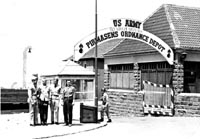
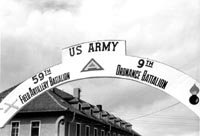
| 9th Ordnance Battalion (Special Weapons Support) | |||||||||||||||||||||||||||||||||||||||||||||||||||
| 1954 - 1959 | |||||||||||||||||||||||||||||||||||||||||||||||||||
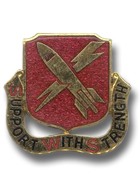 9th Ord Bn DUI
 |
|||||||||||||||||||||||||||||||||||||||||||||||||||
| (Source: Gerald "Jack" Goodlive, 1954-56) | |||||||||||||||||||||||||||||||||||||||||||||||||||
| I joined the
9th Ord Bn in Feb 1954 at Fort Bliss, TX and left June 25, 1956 from
Siegelsbach. "Hq.", "A", and "C" companies have been have reunions since 1988. Reunion Number 12 is coming up in May in Lexington, KY. |
|||||||||||||||||||||||||||||||||||||||||||||||||||
|
|
|||||||||||||||||||||||||||||||||||||||||||||||||||
|
|||||||||||||||||||||||||||||||||||||||||||||||||||
|
|||||||||||||||||||||||||||||||||||||||||||||||||||
| Constituted
13 February 1952 in the Regular Army as 1ST Very Heavy Artillery Support
Group. Activated 7 April 52 at Sandia Base, New Mexico. Converted and redesignated 1 April 1953 as 9th Ordnance Battalion (Organic elements constituted 4 March 1953 in the Regular Army; Company A activated 1 April 1953 at Sandia Base, New Mexico; Company B activated 27 March 1953 at Fort Sill, Oklahoma). (Company B, 9th Ordnance Battalion inactivated 20 December 1958 in Germany). Inactivated (less Company B), 1 June 1959 in Germany. Redesignated 1 December 1966 as Headquarters and Main Support Company, 9th Maintenance Battalion, and activated in Okinawa. (Inactivated in 1971 on Okinawa). |
|||||||||||||||||||||||||||||||||||||||||||||||||||
|
|
|||||||||||||||||||||||||||||||||||||||||||||||||||
| Unit History
of the 9th Ordnance Battalion 23 November 1959 The 9th Ordnance Battalion was one of the first Special Weapons Battalions activated in the United States Army. This unit history accounts for the notable activities of the 9th Ordnance Battalion from the time of its activation in 1952 at Sandia Base, Albuquerque, New Mexico, until its deactivation in Germany in 1959. |
|||||||||||||||||||||||||||||||||||||||||||||||||||
|
|||||||||||||||||||||||||||||||||||||||||||||||||||
| 1953 JANUARY
- DECEMBER: The unit was redesignated the 9th Ordnance Battalion on 7 April 1953, per paragraph 1, General Order 15, Headquarters, Field Command, AFSWP, Dated 26 March 1953, at Sandia Base, Albuquerque, New Mexico. The battalion was organized under TOE 9-45, less the security company TOE 19-77, with Lt Col Edward J. Kloos, Commanding. 19 May, the entire battalion went to Camp Desert Rock, Nevada, and witnessed the first firing of a 280 mm gun with an atomic projectile. On 28 May 1953, the battalion returned to Sandia Base, New Mexico. 11 September, Completed Unit Training with an Operational Readiness Inspection conducted by Field Command Inspector General. 5 October, the battalion moved from Sandia Base, New Mexico, to Fort Bliss, Texas, per Movement Order 1, Headquarters Field Command, AFSWP, Sandia Base, Albuquerque, New Mexico, dated 13 August 1953. The Military Police Security Company was assigned to the battalion upon arrival. 1954 JANUARY - DECEMBER: The battalion was reorganized under TOE 9-45A per General Order 10, Headquarters, AAA and GM Center, Fort Bliss, Texas, on 10 February 1954. While at Fort Bliss, Texas, the activities of the battalion were limited to maintaining mission proficiency through continuous training. The Battalion departed Fort Bliss, Texas, enroute to Overseas Command, USAREUR, on 15 April 1954, per Movement Order Letter (3.2), file AKBAAC 370.5, Fort Bliss, Texas, dated 10 February 1954. 26 April, the battalion arrived at Pirmasens, Germany, the overseas destination, and was assigned to the 42nd Field Artillery Group. During this period, the battalion assumed support mission of artillery and engineer units within Seventh Army. 12 September, the battalion was relieved from its assignment to the 42nd FA Group and reassigned to the 57th Ordnance Group. 1955 JANUARY - DECEMBER: 23 May, the battalion was reorganized under TOE 9-45R with Major Mayo J. Elliott. Commanding. 6 June, the battalion made a PCS move from Pirmasens, Germany, to Neckarsulm, Germany, and was assigned under the 71st Ordnance Group effective 13 June 1955. 1956 JANUARY - JULY: 1 January 1956, the battalion moved PCS from Neckarsulm, Germany, to Siegelsbach, Germany. 9 - 11 January, the battalion received its annual IG Inspection, Major Billie M. Barbee assumed command of the battalion on 12 January 1956. Lt. Col. William 0. Ohl assumed command of the battalion on 5 April 1956. The third organization day of the battalion was celebrated on 6 April 1956, at Siegelsbach, Germany, with a battalion formation for the dedication of the flag pole and the presentation of mechanics and safe driving awards. 7 May, Major General Emerson L. Cummings and Major General Dietrich visited the battalion area. 1956 AUGUST: 6 - 8 August, the battalion was inspected by the Department of the Army Technical Proficiency Inspection Team. 1956 SEPTEMBER - NOVEMBER: 1 September, the official morning report location of the battalion was changed from Neckarsulm, Germany, to Siegelsbach, Germany, even though the battalion had physically moved in January 1956. From 4 - 15 September, the battalion conducted annual qualification in arms firing which included all crew served weapons. 25 - 28 September, the battalion participated in CPX Whipsaw. 11 October, the battalion was visited by Lt General John F. Uncles. 16 October, the battalion was visited by Brigadier General J.K. Wilson. 15 & 16 Nov, the battalion underwent its annual ATT. 1956 DECEMBER: The entire battalion participated in FTX "War Hawk" 4 thru 11 December. This participation was unique in that there was a maximum of reality and a minimum of simulation during the exercise. 1957 JANUARY: The battalion underwent a CMI conducted by Seventh Army January 28 thru the 30th of January 1957 1957 FEBRUARY: 25 February, the battalion received a call for immediate aid from the city officials of the town of Wollenburg, Germany, to assist in fighting a flood that threatened to burst a dam at their community and flood the city. The battalion responded with enthusiasm, sending a large number of personnel to the dam site with several thousand sand bags and tarps. By 2300 hours, the flood was under control. 1957 MARCH: 7 March, the new Battalion Recreation building and EES facility was officially open with Col Edward J. Soares, CO, 71st Ordnance Group, and Lt Col William B. Whitney, CO, Heilbronn Station, attending the opening ceremonies. 15 March, the Battalion German/American Advisory Council consisting of the Commanding Officer and his Staff met with the city officials of Bad Wimpfen, Bad Rappenau, Huffenhardt and Sinsheim, Germany. The meeting was held at the Kur Hotel, Bad Rappenau, Germany, and dealt primarily with soldier/civilian relations and participation in the summer sports-program. 19 - 22 March, the battalion and its supported units underwent a TPI conducted by the Department of the Army. 1957 APRIL: 8 - 10 April, the battalion underwent its annual IG Inspection conducted by Headquarters, Seventh US Army. 11 April, the battalion celebrated its fourth anniversary which had been put off until after the IG Inspection. There was a Battalion formation for presentation of medals and awards. The afternoon was devoted to various sports and in the evening the festivities culminated in a dance at the Battalion Club. 25 April, the battalion was visited by the General Oakes Committee appointed by the CG, Seventh Army, for the purpose of making a survey of the units of this type. The committee consisted of Maj Gen Oakes, Brig Gen Wilson, Brig Gen Hayden, Col Blair, Col Shuden, Lt Col Maynard and Maj Walker. 1957 MAY: 5 May, the Siegelsbach Fire Department participated in a joint exercise with the Bad Wimpfen Fire Department. This exercise was conducted at Bad Wimpfen for purpose of studying the operating methods of both Fire Departments and the feasibility of the Siegelsbach equipment operating from German hydrants and booster pumps. After the exercise, the 9th Ordnance personnel were joined by the Burgermeister and his staff who discussed the operation and German/American relations in general. 10 May, the 9th Ordnance Battalion formed two TD units with personnel from the battalion. These units were designated the SWASP 7894 and SWASP 7895 and were organized pursuant to General Order Number 77, Headquarters USAREUR, dated 17 April 1957. Both units were immediately attached the 9th Ordnance Battalion for rations, quarters, and administration until further notice. 15 May, the 9th Ordnance Battalion and the two attached SWASP units were relieved from attachment to the 71st Ordnance Group and attached to the 57th Ordnance Group with both SWASP units remaining attached to the 9th Ordnance Battalion. 17 May, the battalion German/American Advisory Council consisting of the Commanding Officer and his Staff met with the city officials of Bad Wimpfen, Bad Rappenau, Huffenhardt and Siegelsbach, Germany. The meeting dealt primarily with soldier/civilian relations, summer sports program and curtailment of minor incidents between soldier and civilian personnel. 1957 JUNE - JULY: 12 June, the organization was visited by Maj Gen Westphalinger, USAREUR G4. Gen Westthalinger was briefed on the operations of the Battalion by Lt Col William C. Ohl, the Battalion Commander, who then took Gen Westphalinger on a tour of the Technical and Administrative areas of the installation. 1957 AUGUST: 57th Ordnance Group conducted a technical proficiency inspection on 14 thru 16 August with the battalion emerging with a rating of Satisfactory. During period 5 thru 10 August, the battalion participated in CPX " For Count ", this participation being unique in that it was a world wide test of the SW reporting system. 1957 SEPTEMBER: CMI conducted by Seventh Army on 3 & 4 September from which the battalion emerged with an overall rating of Satisfactory. 11 Sept, the battalion German/American Advisory Council met again with the officials of local towns. This meeting was held at the Guesthaus Adler, Huffenhardt, Germany. The Battalion Commander and his Staff attended this meeting at which the main theme was better soldier/civilian relations and a more active participation in joint sports programs and social activities. During period 17 thru 22 Sept, the battalion participated in the joint USAREUR and NATO exercise FXT "Counter Punch". 25 Sept, the organization was visited by Maj General Oakes who was briefed by Lt Col Ohl and taken on an extensive tour of the Siegelsbach Ordnance Area. 1957 OCTOBER: During the month of October, the battalion received a Group TPI, an AFSWP TPI, and a visit by Major General Oakes. Also, the battalion rendered more than usual material and technical support to supported artillery units in an effort to bring them up to desired operational standards prior to their AFSWP TPI. The battalion received the Group TPI 1 - 3 October. This inspection was more than a normal TPI. All areas directly affecting or remotely related to the technical mission of tho battalion were thoroughly inspected. After some changes in operational procedure, the battalion was given a Satisfactory rating. During the period 10 October thru 9 November, the battalion and all supported artillery units received their annual APSWP TPI's. All phases of technical operations were observed and all units received Satisfactory ratings. The mechanical section was capable of performing only 50% of the battalion's mission, due to shortage of fully qualified personnel, however, mechanical personnel inspected were rated as outstanding. Major General Oakes, the Deputy Commanding General Seventh US Army, visited the battalion on 2 October. The General was interested in what results if any, that had been achieved by the Oakes Board report. 1957 NOVEMBER: 29 November, Maj General Gordon B. Rogers, Deputy Commander Seventh Army, accompanied by Brig General James K. Wilson, Jr, head of the Artillery Section, Seventh US Army, visited the 9th Ordnance Battalion. Both Generals were favorably impressed and praised Company "B" for its appearance and quiet efficient manner in which they are carrying out their missions. 1957 DECEMBER: 3 December, Lt Col John Etniz, 77th Engr Battalion, paid a visit to Lt Col Ohl, Battalion Commander, and was taken on a tour inspecting construction of the, 9th Ordnance Battalion. 5 December, Lt Col C. M. Morfit, Jr., S2 Office, HACOM, paid a Staff visit to Lt Col Ohl, Battalion Commander. 9 December, Lt Col L. T. Oselcour Jr., HACOM Engr Div. paid a visit to Lt Col Ohl and inspected new construction in the battalion area. 17 - 19 December, the battalion underwent a CMI inspection by the 57th Ordnance Group and emerged with a rating of Satisfactory. 25 December, a Christmas Party for under-privileged children from the local towns of Siegelsbach, Huffenhardt, Bad Rappenau and Bad Wimpfen was held in the Battalion Mesa Hall with approximately 74 children attending. A turkey dinner in true American Style was served. The party was highlighted in the afternoon by passing out Christmas stockings and gifts to the children. The party was brought to a close with the children being shown a Cartoon Movie in the Battalion Club. 1958 JANUARY: 21 January, SWASP Units 7894 and 7895 were reorganized as Company "C", (Provisional), which continued as a unit of the 9th Ordnance Battalion pursuant to General Order 3, Headquarters, 57th Ordnance Group, dated 21 Jan 1958. 22 January, Lt Col Hewey W. Scharf, Hq VII Corps, paid a visit to Lt Col Ohl, Battalion Commander, for the purpose of liaison for operation "Sabre Hawk". 1958 FEBRUARY: 5 February, Brig General Coburn C. Smith and Col Robert C. McDonald, Hq VIII Corps Arty paid a Staff visit and were briefed by Lt Col Ohl, Battalion Commander, and taken on a tour of the installation. Lt Col Frederick Alworth, PM Section, Hq Seventh US Army, paid a Staff visit to Lt Col Ohl, Battalion Commander. 10 - 20 February, the entire battalion participated in Operation "Sabre Hawk". 11 February, Col N. R. Hoskot and Lt Col W. W. Jordan, Laison Officers for HACOM, paid a visit to the 9th Ordnance Battalion area. 12 February, Lt Col John E. Fritz, 77th Engr Bn, conducted a project inspection of the 9th Ordnance Battalion. 24 February, Col W. M. Tisdale, Hq, USAREUR, paid an informal Staff visit to Lt Col Ohl Battalion Commander. 28 February, Col Eifler, Group Commander, 57th Ordnance Group, paid a visit to Lt Col Ohl and inspected the 9th Ordnance Battalion. 1958 MARCH: 4 - 6 March, the battalion underwent a CMI inspection by 57th Ordnance Group and emerged with a rating of Unsatisfactory. 18 - 20 March, the battalion underwent an IG Inspection by the Seventh United States Army and emerged with a rating of Satisfactory. 25 - 27 March, the battalion underwent a TPI inspection by 57th Ordnance Group and emerged with a rating of Unsatisfactory. 1958 APRIL: 7 April, the battalion celebrated its 6th Anniversary. The Anniversary was high-lighted by Lt Col Ohl, Battalion Commander, reviewing the troops and making awards and presentations to members of the battalion. Good Conduct, Vehicle Driving and Mechanic Safety Awards were presented. Lt Col George H. Rankin, VII Corps Ordnance Officer, was present for the awards and ceremonies. After the formal presentations an Open House Buffet was held in the Battalion Mass Hall, with dependents and local officials being invited. In the afternoon competitive sports events between all units within the battalion were held with Company "C" coming out victorious and winning the Organizational Day Trolly. The day's activities were brought to a close with a dance being held in the Battalion Club. 9 April, Col K. E. Adamson, Heidelberg Post, visited the battalion area. The Battalion German/American Advisory Council consisting of the Commanding Officer and his Staff met with the city officials of Bad Wimpfen, Bad Rappenau, Huffenhardt, Siegelsbach and Sinsheim, Germany. The meeting was held at 1400 hours in the Kur Hotel in Bad Rappenau. 10 April, the battalion participated in an operational readiness test. No major deficiencies were noted. 21 - 23 April, 57th Ordnance Group conducted a Technical Proficiency Inspection on the battalion. There were no major deficiencies noted. 1958 MAY: 5 - 8 May, the Department of the Army, Office of the Inspector General, conducted a Technical Proficiency Inspection on the battalion, Lt General Bruce C. Clarke, Commanding General, Seventh US Army, sent a commendation telegram to Lt Col Ohl for the outstanding performance of the battalion. 8 May, Maj General Sherbourne, USAREUR G3 and Col Eifler, Commanding Officer, 57th Ordnance Group visited the battalion area. 26 - 30 May, the battalion participated in the USAREUR Command Post Exercise "Full Play". The battalion remained at home station for the paper play logistic exercise. 1958 JUNE: The battalion conducted the yearly qualification of individual weapons throughout the month of June. 1958 JULY: 1 July, Company "C" moved from the Siegelsbach Ordnance Area to their own location at Badenerhof Kaserne, in Heilbronn. 21 July, the battalion participated in an Operational Readiness Test. There were no major deficiencies noted. 1958 AUGUST: 11 August, General Maxwell D, Taylor, Chief of Staff United States Army, and Lt General Eddleman, Commanding General, Seventh US Army, visited the battalion area. 12 - 15 August, the battalion went to the field and ran a Practice ATT. Logistics procedures were extensively tested. 25 - 29 August, 57th Ordnance Group conducted a Practice ATT on the battalion. The unit went to a field location and practiced resupply procedures. 1958 SEPTEMBER: 9 - 12 September, 57th Ordnance Group conducted a Technical Proficiency Inspection on the battalion. There were no major deficiencies noted that would affect the atomic capability of the unit. 24 - 27 September, the battalion conducted a Command Maintenance Inspection on each company. There were no major deficiencies noted, however, several areas required improvement. 1958 OCTOBER: 6 - 10 October, the battalion participated in the Seventh US Army conducted Field Training Exercise, Exercise "First Serve". The unit moved to a field location and under simulated wartime conditions, performed its emergency mission. During the problem, the battalion was visited by Lt General C. D. Eddleman, Commanding General, Seventh US Army, and Col Joseph Petroline, Seventh US Army Ordnance Officer. 13 October, the Craft Shop at the Siegelsbach Ordnance Area was officially opened by the Battalion Commander, Lt Col William C. Ohl. There was a ribbon cutting ceremony at 1600 with Col Ohl presiding. The shop was open from 1600 to 2200 for inspection by all personnel. Coffee and cake were furnished by the battalion mess hall for the occasion. 27 - 30 October, the battalion participated in the USAREUR Field Training Exercise, Exercise "Quick Serve". The battalion again moved to a field position under simulated wartime conditions and performed its emergency mission. During the exercise, the battalion was visited by Maj General Osbourne, USAREUR G2, Maj General Westphalinger USAREUR G3, Lt General C. D. Eddleman, Commanding General, Seventh Army and Col Joseph Petrolino, Seventh Army Ordnance Officer. 1958 NOVEMBER: 11 - 16 November, Company "C" fielded one complete AWASP in a demonstration for DA and USAREUR officials. A field location was established and complete working section set up. 19 - 22 November, 57th Ordnance Group conducted a Technical Proficiency Inspection on the battalion. There were no major deficiencies noted that would effect the atomic capability of the battalion. 1958 DECEMBER: 1 - 4 December, CPX "Roadbound V" - test of NEO MISEV plans for USAREUR. 6 December, Lt Col William A. Stanford, arrived at the battalion. 8 December, Capt John B. Hanby assumed command of Company "C", Vice Capt Noble E.T. Rice 9 - 12 December, CPX "Bounceback" - test of rear area security and damage control (theater wide). 10 - 11 December, members of the 2d EOD conducted team training on the Honest John warhead section. 15 - 20 December, a Command Maintenance Inspection conducted by the 57th Ordnance Group. The Battalion received an overall rating of Satisfactory. 18 December, annual qualification crew served weapons at Grafenwohr. 22 December, graduation of the 9th Ordnance Battalion's Technical Instruction Course. Col Eifler, Commanding Officer, 57th Ordnance Groups was guest speaker. 22 December, the battalion had the annual Christmas Party for the underprivileged children of the surrounding communities. Approximately 70 children were present. 31 December, Lt Col William A. Stanford assumed command of the 9th Ordnance Battalion, vice Lt Col William C. Ohl. 1959 JANUARY - JUNE: 29 January - 10 February, Company "C" moved into field positions and performed its support mission during the VII Corps FTX "Free Play". 16 - 20 February, Seventh US Army Support Command conducted an annual General Inspection on the battalion. There were several outstanding areas noted, however, the battalion received an Overall rating of Unsatisfactory. The battalion will be reinspected within 90 days. 24 - 27 February, 57th Ordnance Group (Ammo), conducted a Technical Proficiency Inspection on the battalion. There were no major deficiencies noted that would affect the atomic capability of this unit. 6 March, Maj General Paul D. Adams, Deputy Commanding General, Seventh US Army, visited the battalion areas 12 March, Lt Col Robert C. Stack, Seventh US Army Ordnance Section, visited the battalion. 16 March, Col Charles W. Eifler, Commanding Officer, 57th Ordnance Group (Ammo), visited the battalion. 17 March, Lt Col Miller, Seventh Army G1 Section, visited battalion and discussed recreation facilities at Siegelsbach with Lt Col Stanford. 18 - 20 March, the battalion participated in the 57th Ordnance Group, conducted CPX "1-59". New logistical AW procedures were tested. 30 March, the Department of the Army Technical Proficiency Inspection began for the battalion. The expected date of completion of the inspection is 3 April 1959. 1959 APRIL: 1-3 April, Department of the Army conducted an Inspector General Technical Proficiency Inspection on the 9th Ordnance Battalion. The unit received an overall rating of satisfactory. 7 - 9 April, the battalion participated in the 57th Ordnance Group CPX "3-59". New AW logistical procedures were fully tested. 8 April, Major General T. L. Sherbourne, the new Deputy Commander Seventh Army, and Colonel C. W. Eifler, 57th Ordnance Group Commander, visited the Siegelsbach Ordnance Area. 12 - 17 April, the battalion went into field positions and participated in the USAREUR FTX "Quick Serve II". Advanced Weapons logistical procedures fully tested during the four day operation. The battalion also underwent the technical phase of the battalion ATT. A rating of satisfactory was rendered. 13 April, Secretary of the Army, Wilbur M. Brucker, visited the field position of AWASP 982. Lt Col Stanford briefed Secretary Brucker on SWS Battalion and AWASP Logistics procedures. 23 - 27 April, the battalion was inspected by the Seventh US Army CMI Team. The battalion received an overall rating of satisfactory. 30 April, Lt Col M. W. Kingdom, Headquarter, Support Command, made a Staff visit to the battalion. The purpose of the Staff visit was to discuss safety problems within the battalion. 1959 MAY: 11 - 12 May. 57th Ordnance Group supervised the conduction of the tactical phase of the 9th Ordnance Battalion ATT. Company "C" did not participate. The battalion minus Company "C" received an overall rating of Excellent. 13 - 14 May, Company "C" underwent the tactical phase of their ATT. The Company received an overall rating of Excellent. 21 May, Col Eifler, Commanding Officer, 57th Ordnance Group, and Lt Col Hamblin, 57th Ordnance Group Special Weapons Officer, visited the battalion area. 1959 JUNE: 1 June, effective this date, the 9th Ordnance Battalion was inactivated per GO 148, Headquarters, USAREUR, dated 29 May 1959. The Seventh Army Security Company (TD 73-3773) was discontinued per GO 148, Headquarters, USAREUR, dated 29 May 1959. The 9th Ordnance Battalion Special Weapons Support Battalion augmentation (TD 73-0009) was discontinued per GO 157, Headquarters, USAREUR, dated 27 May 1959. 1 June, effective this date, the following units were activated and assigned to Seventh Army per GO 142, Headquarters, USAREUR, dated 27 May 1959:  Headquarters and
Headquarters Detachment, 101st Ordnance Battalion 23rd Ordnance Company
525th Ordnance Company. Headquarters and
Headquarters Detachment, 101st Ordnance Battalion 23rd Ordnance Company
525th Ordnance Company.
The deactivation of the 9th Ordnance Battalion and the activation of the 101st Ordnance Battalion on 1 June 1959, complete this unit history. RICHARD H. HAMPSON 1st Lt, Ord C Unit Historian |
|||||||||||||||||||||||||||||||||||||||||||||||||||
|
|
|||||||||||||||||||||||||||||||||||||||||||||||||||
| (Source: Email from John Wierda, B Co, 9th Ord Bn, 1955-57) | |||||||||||||||||||||||||||||||||||||||||||||||||||
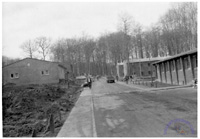
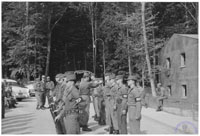
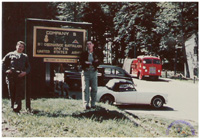
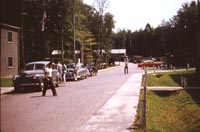
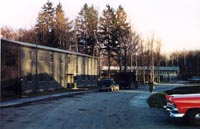
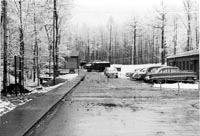
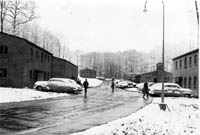
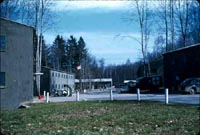
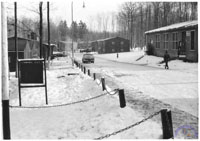
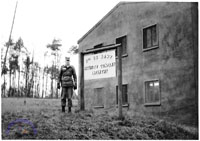
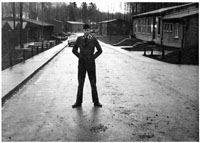
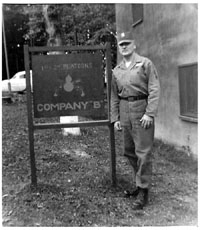
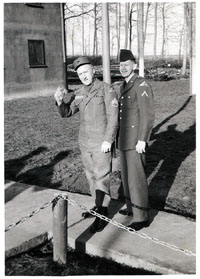
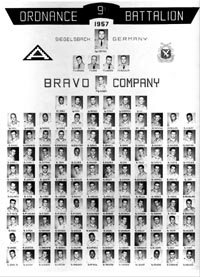
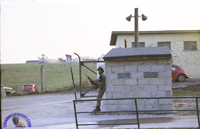
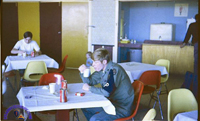
| I was assigned to the above company, and took part in the move from Pirmasens to Siegelsbach. I have pictures of the Company area and some of the people assigned to "B" Company. Attached are two of the pictures one of me standing by the 2nd platoon sign. The other of me, being inspect by, I think Lt Burpee, prior to going on guard duty. In the early days, if you were picked to be the sharpest of the bunch during inspection, you got the day off. (I never got the day off). I was reassigned some time in March 1957. I didn't see my picture in the Co. photo, however I did recognize a lot of the people |
|||||||||||||||||||||||||||||||||||||||||||||||||||
|
|||||||||||||||||||||||||||||||||||||||||||||||||||
| (Source: Email from Frank Gentry) | |||||||||||||||||||||||||||||||||||||||||||||||||||
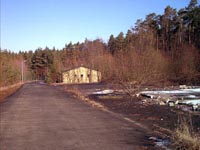
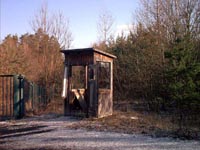
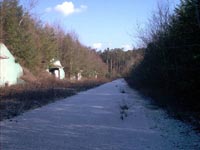
| I was in the 9th Ord Bn, Company B, which was the MP Company. Our Company was the first American outfit there. We moved from Pirmasens to Siegelsbach in May 1955. I stayed there until I returned to the States for discharge in July 1957. When we got to Siegelsbach we had no PX or even a flag pole. We went to Heilbronn by Deuce and a half until we finally got a bus. The lower ranking EM had to pull KP until we started paying $5 a month for German servers and KP help. Our Company worked 2 days on and one day off. I understand it was given back to the German Army but has since closed completely. The rumor when I was there that it had been a Secret under ground factory for making V1 and V2 rockets, but do not know if this is true. I would like to hear about Siegelsbach if you don't mind. |
|||||||||||||||||||||||||||||||||||||||||||||||||||
| (Source: Eugene (Gene) F. Piraino, 9th Ord Bn, 1956-57) | |||||||||||||||||||||||||||||||||||||||||||||||||||
|
|||||||||||||||||||||||||||||||||||||||||||||||||||
|
|||||||||||||||||||||||||||||||||||||||||||||||||||
| Additional
information
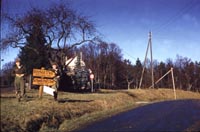
submitted by Gene Piraino: Q. The teams that performed (nuclear surety?) inspections - were they part of Hq Co. 9th Ord Bn? A. As I had said, Co A of the 9th ORD BN was composed of 27 enlisted men and 27 officers and they formed 27 inspection teams. We had a full bird colonel as our company commander, whose name has slipped my mind. Q. Can you tell me more about the inspection process? Did the team primarily inspect the special weapons storage site, or did it also concern itself with the firing unit's procedures for SW warheads, etc? A. As a team of 2 we would go to the Artillery Corps and conduct inspections of their handling, cleaning, and storage procedures. We also went on maneuvers as referees to insure the firing procedures were according to specs. Q. Was each team responsible for inspecting SW sites under a particular command (for example - all 3rd Inf Div sites; or all V Corps Artillery sites)? A. I can't remember the names of the outfits we inspected but we were pretty much restricted to the southern section of Germany. Q. Can you remember where some of these sites were located? A. As I recall.. Lt Stone and myself went to Karlsruhe, Dortmund, Frankfurt, and we had maneuvers in Bitzfeld and Schwab. Hall, Germany. Attached are two pictures. Q. Do you remember how the 9th Ord Bn was organized? How many companies, dets.. A. The 9th ORD BN in Siegelsbach was comprised of Co A, B, C and - I believe - D. Co A was the inspection teams and Co's B, C, and D were approx 500 MP's that guarded the entire compound. CORRECTIONS: A few corrections have come to light regarding Company "A", 9th Ord Bn: Our Company commander was a Capt. His name was Capt. Boyd. Also, there were only two companies at Siegelsbach: Co A and Co B. Company B had the 500 MP's. Gene |
|||||||||||||||||||||||||||||||||||||||||||||||||||
|
|
|||||||||||||||||||||||||||||||||||||||||||||||||||
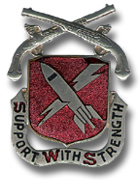 DI worn by Co "B" and Co "C", 9th Ord Bn DI worn by Co "B" and Co "C", 9th Ord Bn |
|||||||||||||||||||||||||||||||||||||||||||||||||||
| (Source: Email from Eldon A. "Buddy" Gee , "B" Co, 9th Ord Bn) | |||||||||||||||||||||||||||||||||||||||||||||||||||
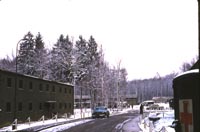
| I was stationed in Siegelsbach as a 17 year old PFC in July, 1958 for about a year. I was assigned to Company B, 9th Ordnance Battalion as an MP. Company B was the MP Company that provided security; Company A was the Ordnance Company and HQ Company provided support such as mess hall, personnel and motor pool. Company C was a sister MP Company stationed with the Battalion HQ in Heilbronn. I was an MP when I arrived there, but the Company was redesignated 7th US Army Security Company, Infantry and I was given a secondary MOS of Infantry. The rationale for the change from MP to Infantry was explained that infantry would have more firepower than a MP TDA/TOE. I was later reassigned back into my military police MOS and transferred to the 110th MP Platoon, HQ, VII Corps. It was pretty rough duty when I was there. Bed check, curfew, alerts, field duty and long lonely scarry nights on guard duty. We worked three days on stand by (doing details and training), three days on guard duty and three days off. We came off duty just in time to miss the bus to town and went back on duty before the bus came back from town. We spent a lot of time in the snack bar. I have a few photos of the company area back then, and one of me by the "new" Infantry Company sign. I also have a photo of my platoon sergeant standing by the old sign and one or two of the company street. BTW, my Platoon Sgt. was SSG (E-5) Emil V. Ankelmann who is still alive and residing in St. Ann, MO. A unique remembrance for me is the unit crest which I still have one of: The MPs wore the Ordnance Battalion Crest with crossed pistols added to the top. At sometime later the 9th Ordnance Bn was redesignated 101st Ordnance Bn. My last active duty assignment to Germany was 1980 to 1983 as IG Sergeant Major, 2nd Support Command, Nellingen Barracks, Stuttgart, Germany. The 101st Ord Bn was under 2nd Support Command and I had the privilege of returning to Heilbronn & Sieglesbach to conduct annual general inspections there. This was a very nostalgic experience. |
|||||||||||||||||||||||||||||||||||||||||||||||||||
|
|||||||||||||||||||||||||||||||||||||||||||||||||||
| (Source: Email from Michele Grant, daughter of Thomas M. Lee, B Co, 9th Ord Bn, 1957) | |||||||||||||||||||||||||||||||||||||||||||||||||||
|
|||||||||||||||||||||||||||||||||||||||||||||||||||
 |
|||||||||||||||||||||||||||||||||||||||||||||||||||
|
|
|||||||||||||||||||||||||||||||||||||||||||||||||||
| 101st Ordnance Battalion | |||||||||||||||||||||||||||||||||||||||||||||||||||
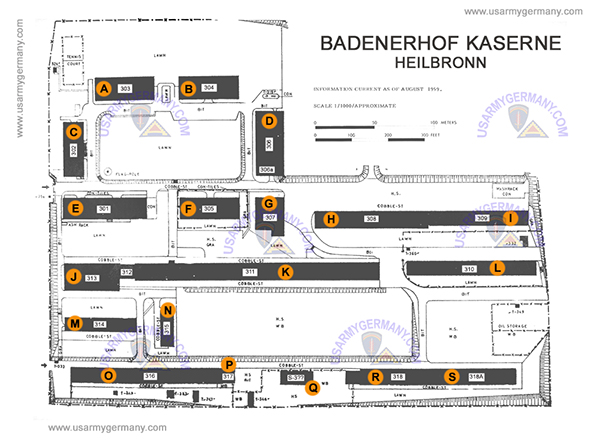 Badenerhof Kaserne, Heilbronn - annotated map |
|||||||||||||||||||||||||||||||||||||||||||||||||||
| 1959 - 19.. | |||||||||||||||||||||||||||||||||||||||||||||||||||
| (Source: JOBBER, Aug 30, 1989) | |||||||||||||||||||||||||||||||||||||||||||||||||||
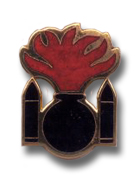 101st Ordnance Bn DUI
History behind 101st Ordnance The 101st Ordnance Battalion was activated on August 27, 1942, at Fort McClellan, Alabama. During World War II, the battalion served in the European Theater and acquired campaign streamers from Normandy, North France, Rhineland, Ardennes-Alsace, and was inactivated in France. On June 1 1959, it was reactivated at Siegelsbach, Germany, and assigned to the 57th Ordnance Group. On Dec. 1, the battaIion was reassigned to the 47th Ordnance Group and attached to the 57th Ordnance Brigade and Seventh Army Support Command. In 1967, the battalion received its distinctive battalion flag and crest, which is symbolized by the projectile and flaming grenade and by the arrangement of the organization's numerical designation "101." On Nov 30, 1968, the battalion came under the command of 3d Support Brigade (VII COSCOM) (PROV) with operational control remaining with the 57th Ordnance Brigade. On April 1, 1969, the battalion became fully subordinate to the VII Corps/3d Support Brigade redesignated VII COSCOM. On Dec. 12, 1972, the battalion was assigned to the Theater Support Command, which on Jan. 2, 1973 was assigned to the United States Army Materiel Management Activity, Europe, and in December 1976, reassigned to the 21st Support Command. On Oct. 1, 1977, the battalion was assigned to the 2d Support Command (Corps); which was recently redesignated 2d Corps Support Command; and remains so at this time. During April 1989, the 101st Ordnance Bn. moved to Dolan Barracks, located at Schwabisch Hall, its present location. The battalion, whose motto is "First Only First," has proudly served the United Stales Army for over 47 years. |
|||||||||||||||||||||||||||||||||||||||||||||||||||
|
|
|||||||||||||||||||||||||||||||||||||||||||||||||||
(Source: Email from
Thomas O'Donnell, Scty Pltn, B Co, 101st Ord Bn, 1959-61) |
|||||||||||||||||||||||||||||||||||||||||||||||||||
I was privilaged to serve in Siegelsbach for 27 months, between Feb.1959 till May 1961. I left Siegelsbach on my 21st birthday.
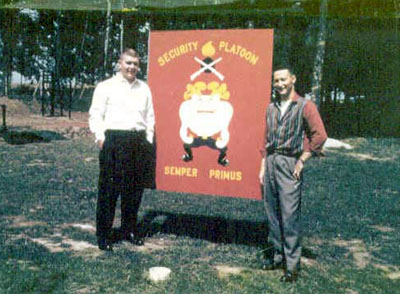
I was a member B Company 1st Platoon Security. The pictures posted bring back memories. Some of the article posted be Lt. Steve Takacs do not jive with my memories of that time.
As I recall we pulled guard in the towers, granted not all were full. The only time we had to walk was when the fog was so thick that we could not see the ground, in fact some times you could not see the guard rail around the tower when you were standing on cat walk. This only happened a couple of times that I remember. When I arrived the guards were MP's. The group I arrived with were the first infantry to arrive on the post. The MP's were phased out as more infantry replacements arrived. By the end of July 59 most of the MP's had been reassigned to Heilbronn. I remember a Capt Green who was the Shop Officer, along with a three Warrant Officers: Mr. Stardock, Mr. Carricaho (hope I spelled their names right) and another one who's name I can't recall. |
|||||||||||||||||||||||||||||||||||||||||||||||||||
|
|||||||||||||||||||||||||||||||||||||||||||||||||||
1968 |
|||||||||||||||||||||||||||||||||||||||||||||||||||
(Source: 57th Ord Bde Banner, March 1968) |
|||||||||||||||||||||||||||||||||||||||||||||||||||
The 50th Ord Co (TOE 09-047E65) at Dolan Bks, Heilbronn, is one of two SADS (Special Ammunition Direct Support) units in the 101st Ord Bn. (Webmaster note: The other SADS unit was the 23rd Ord Co located at Badnerhof Kaserne, Heilbronn.) |
|||||||||||||||||||||||||||||||||||||||||||||||||||
(Source: STARS & STRIPES, December 9, 1969) |
|||||||||||||||||||||||||||||||||||||||||||||||||||
ORGANIZATION (Dec 1969): |
|||||||||||||||||||||||||||||||||||||||||||||||||||
|
|||||||||||||||||||||||||||||||||||||||||||||||||||
(1) The 50th Ord Co was returned to the States as part of REFORGER in 1968 (2) Not sure if any Civilian Support Group units were attached to the 101st at this time or if CSG ammo or guard units were part of the 6930th CSC |
|||||||||||||||||||||||||||||||||||||||||||||||||||
| 1976 | |||||||||||||||||||||||||||||||||||||||||||||||||||
|
(Source:
Semi-Annual Historical Report, Hqs, 101st Ordnance Battalion, 26
January 1977)
|
|||||||||||||||||||||||||||||||||||||||||||||||||||
|
1.
Designation/title of unit: 101st Ordnance
Battalion
|
|||||||||||||||||||||||||||||||||||||||||||||||||||
|
2.
Mission: Provide DS/GS conventional
ammunition and special waepons support to VII Corps by:
|
|||||||||||||||||||||||||||||||||||||||||||||||||||
|
|||||||||||||||||||||||||||||||||||||||||||||||||||
|
3.
Personnel relations and morale: The
Battalion and all subordinate units are enjoying a period of extreme
high morale. Drug and racial incidents have been virtually eliminated.
|
|||||||||||||||||||||||||||||||||||||||||||||||||||
|
4.
Key personnel changes.
|
|||||||||||||||||||||||||||||||||||||||||||||||||||
|
|||||||||||||||||||||||||||||||||||||||||||||||||||
|
|||||||||||||||||||||||||||||||||||||||||||||||||||
|
The
remainder of Section 4 and Sections 5 - 7 are missing!
|
|||||||||||||||||||||||||||||||||||||||||||||||||||
|
8.
Plans, programs and organizational changes:
|
|||||||||||||||||||||||||||||||||||||||||||||||||||
|
|||||||||||||||||||||||||||||||||||||||||||||||||||
|
|||||||||||||||||||||||||||||||||||||||||||||||||||
|
9.
Operations and Exercises:
|
|||||||||||||||||||||||||||||||||||||||||||||||||||
|
|||||||||||||||||||||||||||||||||||||||||||||||||||
|
|||||||||||||||||||||||||||||||||||||||||||||||||||
|
|||||||||||||||||||||||||||||||||||||||||||||||||||
|
|||||||||||||||||||||||||||||||||||||||||||||||||||
|
|||||||||||||||||||||||||||||||||||||||||||||||||||
|
|||||||||||||||||||||||||||||||||||||||||||||||||||
|
|
|||||||||||||||||||||||||||||||||||||||||||||||||||
1986 |
|||||||||||||||||||||||||||||||||||||||||||||||||||
|
ORGANIZATION
(1986):
|
|||||||||||||||||||||||||||||||||||||||||||||||||||
|
|||||||||||||||||||||||||||||||||||||||||||||||||||
| (Source: Heilbronn Eagle, Feb 17, 1986) | |||||||||||||||||||||||||||||||||||||||||||||||||||
| 101st Ordnance Battalion dedicated to ammunition supply for VII Corps and USAREUR by Cynthia Banner No military unit is complete without ammunition to train and defend with, so the 101st Ordnance Battalion has their work cut out for them. The 101st Ordnance Battalion has the important responsibility of supplying ammunition to all of VII Corps and 90 percent of the training needs for USAREUR. The 101st consists of five military companies and three civilian support groups which cover 40,000 kilometers in Germany. The 101st has the ammo ready and waiting for any unit that answers the call of an alert. "Our mission is to supply all the ammunition needed during war and peacetime," said Ist Lt. Valerie Weaver, assistant material officer. "We provide all kinds of ammunition, from the 5.56 millimeter to rounds for tanks and aircrafts. We have everything from the smallest ammo to the largest." During REFORGER, 101st Ordnance Battalion was responsible for the amnesty points. Amnesty points defines the act of turning in all rounds that were not used. "This year there was no live-round-play during REFORGER," Weaver said. "So the units turned in all the ammo they brought with them from the States . . . which was quite a lot." There are several prestocked ammunition points in Germany where the war reserves are stored. These points are guarded by German civilians. The 101st magazine platoon is responsible for issuing and receiving ammo from each of these units. The surveillance section, which is manned by Department of Defense civilians, is responsible for assuring the ammo has not became corroded or unstable. They also observe the upload of the unit's basic load. Each unit has a certain amount of ammo assigned to them in case of war. When a unit is on "alert" they go to the ammunition supply points and load their basic load or just complete a walk-through to assure that what they need to accomplish their mission is always available. |
|||||||||||||||||||||||||||||||||||||||||||||||||||
If you have more
information on the history or organization of the 101st Ord Bn, please
contact me . . |
|||||||||||||||||||||||||||||||||||||||||||||||||||
|
|||||||||||||||||||||||||||||||||||||||||||||||||||
|
|
|||||||||||||||||||||||||||||||||||||||||||||||||||
| (Source: Email from Steve Takacs, 101st Ord Bn) | |||||||||||||||||||||||||||||||||||||||||||||||||||
| I served in the
101st Ordnance Bn from Jan 1960 to Feb 1963. As I recall the unit had originally deployed from White Sand Missile Range in the summer of 1959. I had received orders assigning me to the unit while I was attending the Armed Forces Special Weapons Project at Sandia Base, NM. When the unit deployed it was the 9th Ordnance Bn (SA) with HHC, A Co. (Depot), B Co. (Security) and C Co. (Direct Support). Shortly after arriving in Germany the 9th was deactivated and the 101st was organized with HHC and the 525th OD Co. (SA Depot) at Siegelsbach and the 23d Ordnance Co. (SA DS) at Badenerhof Kaserne in Heilbronn. The reorganization of the units created horrendous property book problems as it took over a year and a half to straighten them out. B Co. (Security) had been an overstrengh Infantry Company and was broken up between the 23d and 525. As an example, the bulk of "B" went to the 525th to become the Security Platoon. Some went to the 23d and formed the Security Sections of the two SASPs (981 and 982). The 9th was "Gyro'd" to Germany under the old "Gyroscope" program as an entire unit. This resulted in a massive problem in 1961 when the bulk of the unit, which was draftees went home when their time was up. When I arrived in Jan of 1960 I was assigned to the Security Section of the 525th (they had all the ordnance Lts they needed but were short Infantry Officers -- I had transferred from the Inf to OD in Jun 1959. Sieglesbach, in those days, was in the "boonies" and we were pretty much on our own. In the spring of 1960 LTC Stan Tesko became the Bn Co and CPT (later LTG) Hal Hardin commanded the 525th. LT (Later MG) Chuck Murray commanded the Security Platoon to which I belonged. The most significant activity in 1960 was the alerts and loadout associated with the shooting down of Frances Gary Powers. In the fall of 1960 it was decided that all depot companies would belong to 57th OD GP of COMZ and the 101st Hq and HHC moved from Siegelsbach to Badenerhof Kaserne in Heilbronn. I was reassigned to the 23d as the Asst. Ops officer. The 23d did a lot of field duty support US VII Corps and German II Corps US Custodial Detachments. I took command of SASP 982 (2d Platoon) of the 23d in mid 1961 and had that unit during the Berlin Crisis. We were in the field at the time, supporting 4th Armd Div and moved back to Siegelsbach "up loaded" and moved to our GDP position. It was an interesting time. I have many good memories of those times, lots of field duty, TPIs and great troops! I spent 20 years in the Army and eventually commanded a Battalion in Korea but the 101st will always have a place in my heart. At Sieglesbach we had to "walk" the fence as we could not man the towers. One of our proudest records is that we road convoyed the weapons about 90% of the time and flew in H-34s and H-37s the rest of the time. We never had an accident or incident with the weapons. On field exercises the Artillery and Engineer Units we supported always had their weapons with them and it made for some interesting incidents -- but nothing serious. 7th Army wanted to control all of the weapons it had assigned but, COMZ, headquartered in France, wanted all weapons controlled by the 59th Ord Gp. USAREUR solved this dilemma in 1961 by assigning the DS companies (23d, 545, and 28th) to 7th Army and the depot companies (525 and 619) went to 59th Gp. This created a big problem as COMZ felt that they should establish SW policy for USAREUR and this resulted in lots of conflicts between the units. In the field the SASPs worked for VII Corps Fire Support Coordination Center, which caused the 101st and 47th Gp chain of command a lot of problems. We SASP commanders were an independent lot and loved being in the field working for Corps. VII Corps wanted us to wear their patch, as opposed to the 7th Army patch, but 7th Army "nixed" the idea. All of the Officer and NCO leaders, in the security units and the 23d wore the Green Combat Leader ribbons on our uniforms At the time I am speaking about the 101st did not have a unit crest and that was a bummer for all of us as we had no real unit identity. There were a lot of ideas floating around one of which I still have, it hangs in my garage. So, I was delighted years later when I was in Korea and an NCO was assigned to the BN who had just arrived from the 101st and he gave me one of the "new" crests. Also, a lot of the "old timers" from the 9th still had their crests and wore them from time to time. Each SASP was assigned a division to support as well as part of VII Corps and the Custodial Units with German II Corps. I supported 24th Division, 11th ACR, 2 ACR and 1/2 half of Corps Artillery and Engineers. My associated with the two Cav units extened over 30 years. |
|||||||||||||||||||||||||||||||||||||||||||||||||||
ADDITIONAL INFORMATION:
I served as a security section leader in the 525th Ord Co. I had just completed the Armed Forces Special Weapons School at Sandia Base, NM. The security platoon needed officers and I had been an infantry officer before transfering to the ORDC. The platoon was commanded by Lt. Chuck Murray (retired as a Ordnance MG) and our Platoon Sgt was SFC Leo B. Smith (who retired as an SGM). My section Sgt was SSG Bill Skinner who retired as a Major. The 525th was commanded Cpt. Hal Harden (LTG USA Ret), the XO was Cpt. Graffis and the First Sargeant was Joe Carbonne. When I arrived, the 101st Hq was at Siegelsbach along with the 525th Ord. Co (Depot). The 23d Ord Co. (SAS DS) was at Badenerhof Kaserne in Heilbronn. At the time I arrived the Bn was commanded by Maj. Ledley Ogden. LTC Stand Tesko took over the battalion and when special weapons support was reorganized the 525th was transferred to COMZ and the 101st moved to Badenerhof. I left the 525th and got my first ordnance assignment as the ass't storage officer of SASP 982, which I later commanded. Some of the other personnel were CWO's Hal Baliff and Guy Jean; Lts. Dick Dixon, Jack Schmidt and Stan Murphy. Jack retired as a COL. and Stan served two tours in RVN as a helo pilot in the 1st Cav and left the Army and retired as a Capt with United Airlines. What amazed me about that time was the amount of road convoys we ran. Remember, at that time there were only two autobahns in Germany. So, most of our convoys were on the regular german roads. One time I commanded a convoy of two weapons on our way back to a COMZ and became part of the Fashing Parade in Speyer. Helicopter missions were always a thrill especially in the winter. We would leave Siegelsbach headed for COMZ and it would be fogged in most of the time. So we would grope our way through the fog. Once at the 529th (Trans Co), one of the helo crews got a mattress cover and a can of red paint. The red mattress cover was then flown over the high tension lines that were in the approach lane to the 529th heloport. I met some great people in the 101st, some of whom ended up in the 5th Infantry Div, where I went after Germany and in Korea where I commanded the 83d Ordnance Bn. All of those Officers, NCOs, and EM were the best. They taught me "The School of the Soldier." I was in Siegelsbach in 1998 and saw that the most of the buildings were being torn down. I was told that the storage area was also gone and replaced with modern facilities. It was sad to see. One, last story. This past October at our community October Fest a couple sat down at our table. As we introduced ourselves, I found that the wife was German and further discussion revealed that she grew up in Bad Wimpfen. When I told her that I was at Siegelsbach, she said are you one of those GIs who use to toss candy and chewing gum to us kids? We did do that and nice to hear that it was remembered. Some additional things I remember:
CPT Jim Jordan was the Bn S-2. I later served with Jim in the 5th Inf Div.(M) at Ft. Carson. CPT Horiation Buck was the assistant shop officer of the 525 and later became the 101st Bn SWO. SGT Mike Cody was one of the NCOs in the Shop and later, I believe, got a commission and retired from the Army as a COL. CWO3 Falko (not sure about the spelling was the S-1) CPT Parker was the S-4 MAJ. Tounge was the XO SFC Polka was the 525 Tech Supply Sgt under CWO4 Baliff. SSG Falshing was the 525 Supply Sgt. SSG Von Rosenberg was in charge of the Fire Dept which was manned by German Civilians. The fire station was right next to the guard house/radio shack and in 1960 they bought a TV and we got to watch the 1960 Rome Olympics. My original section sgt. was SSG Killian who was replaced by SSG Skinner. (SSG Skinner was one of the most professional NCOs I ever served with and I lost track of him after I left Germany. In 2001 I was in Budapest, Hungary teaching and ran into the a former SGT MAJ of the Army who had served in Skinner's squad in the 101st Airborne. The SGM told me that Skinner had gone on to OCS and retired as a Major. SSG Murphy was the 3d Security Section NCO under LT Jack Schmidt. One of their Sgt. was Sgt Barney who was also in the 5th Inf Div(M) at Carson.
|
|||||||||||||||||||||||||||||||||||||||||||||||||||
|
|||||||||||||||||||||||||||||||||||||||||||||||||||
|
|
|||||||||||||||||||||||||||||||||||||||||||||||||||
| 20th Ordnance Company | |||||||||||||||||||||||||||||||||||||||||||||||||||
| 1957 | |||||||||||||||||||||||||||||||||||||||||||||||||||
| (Source: Email from Robert Dunlap, 20th Ord Co, 1957-59) | |||||||||||||||||||||||||||||||||||||||||||||||||||
| 57th Ord Group - 9th Ord Battalion - 20th Ord Company Here is a rundown concerning my association with the above units 1957-1959. I was drafted into the Army June 1957, and served Basic Training at Ft. Ord. Then went to Special Weapons School at Sandia Base. When I went through the school at Sandia Base, we were trained in atomic weapons of all branches of the service, including the Army Corps of Engineers. Members in my class were sent to Korea, Sandia Base as cadre, Ft. Bliss, and Germany. I was sent to 20th Ord Co in Heilbronn. We went by bus daily to Siegelsbach. Our personnel and belongings were relocated to Siegelsbach, but someone jumped the gun and we had to return to Heilbronn and in a few weeks officially were sent to Siegelsbach. We were divided into two sections - Mech and Elect. We went to Pirmasens for training. The Siegelsbach Depot stored war heads for HJ Missiles and we did do inspections of HJ units and an AF Base once in awhile. All of the construction was completed at the depot when we moved from Heilbronn to Siegelsbach. I remember that we were on the end of the movie film route, because if you had been in K Town a few weeks prior, you were just getting the film you saw then in Siegelsbach. We were the only special weapons unit in the area. When I got out of the Army June 1959, I think that the units identification was changed. Our Gp Commander was Lt Col William Ohl. I was able to play baseball for the 57th Ord Gp 1958 & 1959. Col Charles W. Eifler was our commander. I got out of the Army Jun 1979 in Germany and worked as Youth Activities Spots Director, Wiesbaden. Returned to Seattle to finish my BA degree (U of Washington). I retired in July 1995 after being a Civilian Recreation Director (GS-12) for the Air Force for 35 years. I worked at McClellan AFB (Sacramento (Got my MA degree), RAF Mildenhall(Near Newmarket), RAF Upper Heyford ( Near Banbury) WPAFB (Dayton), and Elmendorf AFB (Anchorage - 19 years). When I got out of the Army June 1959, I think that the units identification was changed. I hope that this information is of assistance. ADDITIONAL INFORMATION Drafted into the Army, 8 July 1957 and ordered to Ft. Ord, CA for Basic Training. On 30 Aug 57 ordered to proceed to Sandia Base Atomic Wpns GM Mech (AFSWP-AAM) by 14 Sep 57. 16 Jan 58 ordered to proceed to 9th Ord SWS Bn Aug ID 77-0009, APO 176. There were three separate AFSWP augmented units. We were part of the 20th Ord Co. On 11 Oct 58 ordered to attend 7th Army Special Weapons School (Pirmasens) for 21 days. Discharged in Germany, 8 July 59 and assigned to US Army Europe ( Reserve). |
|||||||||||||||||||||||||||||||||||||||||||||||||||
| 1984 | |||||||||||||||||||||||||||||||||||||||||||||||||||
| (Source: Email from David Watts, 20th Ord Co, 1984-86) | |||||||||||||||||||||||||||||||||||||||||||||||||||
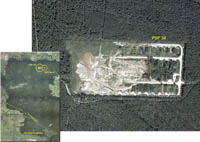
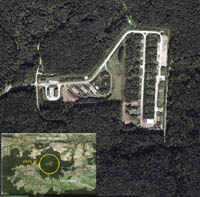
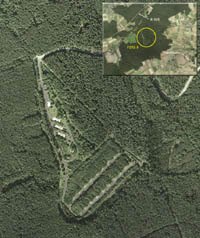
I was with the 20th Ordnance Company 1984-1986. Below I tried to give you a bit of the history. The only PSP that we ran when I was with the 20th was up in Something not in the pictures that was very seldom used was a single building, located off the road between the Motor Pool office and the actual motor pool was a racket ball court. The temps were kind of cool in the winter, but never the less a nice recreation activity.
|
|||||||||||||||||||||||||||||||||||||||||||||||||||
| (Source: JOBBER, Jul 10, 1985) | |||||||||||||||||||||||||||||||||||||||||||||||||||
| Small company strives for success by Dayna A. Potts They are only 43 soldiers doing a 171 soldier mission. They handle 96 different types of ammunition, using their 56 vehicles (for which there are just three mechanics) to support the 3rd Infantry Division. And, to ad to the complications, they have a brand new commander and 1st sergeant. "We are the biggest, smallest Ammunition Company in USAREUR," said Capt. Terry Patton, commander, 20th Ordnance Company, 101st Ordnance Battalion. "I mean, our mission is so much larger than our company," Patton explained. "To accomplish our mission, each soldier performs three or four duties simultaneously. It's rough. "But they handle it! That's been proven during our recent ARTEP near Würzburg." "It has been very rough," said SSgt. Donald L. Lemons, Magazine Platoon Sgt., 20th Ord. Co. |
|||||||||||||||||||||||||||||||||||||||||||||||||||
|
|||||||||||||||||||||||||||||||||||||||||||||||||||
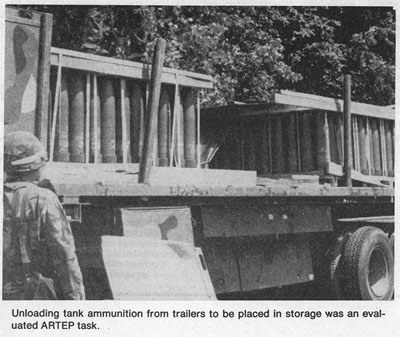
| "Everyone was so busy doing their jobs, maintaining field procedures, pulling KP and guard duty. To top it off, soldiers from Company C, 24th Infantry Division (Webmaster Note: probably 2nd Bn, 4th Inf) were aggressing us. "Things slowed down for the next two days. We moved into a village, set up operations in an indoor tennis court and worked more on our day to day missions," continued CW2 Daniel Anderson, Operations chief. "During the village concept portion of the ARTEP, (which was the last two days), we were evaluated on wearing MOPP suits, supply operations and a 'real' mission concerning ammunition unloading and storage. "That's finally when the soldiers got to take a little breather," added 1st Lt. Darryl Hook, 20th Ord's XO. "We also received some help from 10 soldiers of the 529th Ordnance Company, 101st Ord. Bn (20th's sister company, which is scheduled for activation this month). "It's been a terrific ARTEP!" exclaimed 1st Sgt. Charles Howell, 20th Ord. Co.'s 1st Sgt. "It gave us a chance to learn how good we really are and to find the areas we need work in. It was also great because it gave the CO and myself a chance to learn about our new company." "Being back at the rear will be great," said Sp4 Ronald Johnson, Mag. Plt. "You just don't realize how tough it can be in the field until you come out and work your -- off'. But you can sure bet we all learned a lot out here." "I'm very proud of my soldiers," Patton stated. "They've proved they're hard workers, tough troops and can adapt to most any situation. "For as small a unit as they are, they're the biggest and best one I've seen yet!" |
|||||||||||||||||||||||||||||||||||||||||||||||||||
| (Source: JOBBER, April 27, 1987) | |||||||||||||||||||||||||||||||||||||||||||||||||||
| 20th Ord. 'digging in' to its own kaserne by Robert Mithem How many companies do you know that can say they own their own installation? Meet the 20th Ordnance Company, 101st Ordnance Battalion. Not only can the 20th lay claim to being on the only American kaserne in Regensburg, it also has the dubious distinction of being the only (complete) American unit in that ancient city. However, according to the soldiers of the company, that fact has its advantages and disadvantages. Pioneer Kaserne is a 26-building facility, about a 10 to 15 minute walk from the center of town. The Regensburg Military Community, consisting of a liaison mission, remnant of B Battery, 60th Air Defense Artillery Brigade (Webmaster Note: should be "B" Btry, 3rd Bn, 60th ADA), and the 20th Ord. Co., is a sub-community of Grafenwoehr. "It's about 60 kilometers from our front gate to Hohenfels," said SP4 John Brown, an ammunition specialist. Noting that the company has been in Regensburg since September 1986, Brown added, "I don't consider it lonely out here. Actually, I like it. It's a bit of an inconvenience when you want to get back to the 'rear,' but other than that, I like it. Actually, it's an honor and a privilege (to be stationed in an old city)," he said. Pioneer Kaserne is in many ways 'self-sustaining.' However, it doesn't have everything. According to the installation coordinator and commander of the 20th Ord. Co., Capt. Karl I. Gohlke, the kaserne has its own dining facility, elementary/grade school, commissary, PX, theater and chapel. "It's also our own and far from the flag pole," he said. |
|||||||||||||||||||||||||||||||||||||||||||||||||||
|
|||||||||||||||||||||||||||||||||||||||||||||||||||
| No matter what the company does, though, it is aware that it's always on parade. "We are very visible," said SFC Jose Lopez, platoon sergeant of the Magazine Platoon. "If anything happens (in Regensburg and is blamed or credited to Americans), then it has to be the 20th Ordnance Company," he said. "Then again, we're like one big family. We depend on each other for support, so our teamwork is more evident." The unseparability of the 20th from its kaserne is very evident when talking to its soldiers. Gohlke speaks about matters of community welfare, such as housing conditions and the education of the kaserne's 44 school chldren, just as fluently as on matters of mission and soldiering -- as if they were all one job. For him, they are. "It's an honor (being here) as long as we do it well," Gohlke said, "but it will be a disgrace if we screw up." Realizing this, the company has develped a fitting motto. "Our company motto os 'Do it right the first time,"' said Gohlke. "In our situation, we have to do things right the first time because mistakes can be very costly. For example, if a soldier has to take care of some business in Hohenfels and gets there only to find out that he's got to come back because he forgot to dot an 'i' or cross a 't', that means he has just wasted the three hours it took him to get there. It means he has to repeat that three hours on the road to correct those deficiencies. That goes for any place we have to go, be it to Hohenfels, Nuernburg or Grafenwoehr." The 20's mission is to run three Pre-Stockage Points full of bullets, small arms and artillery shells. One PSP is located near Ansbach, another near Ingolsladt, and the other is nearly three hours away by military vehicle, in Würzburg. However, most of the company's business is conducted from its Ansbach site, supporting 35 customers there. So, between supporting the mission and supporting the soldier and his family with trips to its Records Processing Center in Grafenwochr, its Supply Support Activity in Nuernberg, and medical facilities in Hohenfels, the company spends a large percentage of its time on the road. Plus, it also runs a shuttle service between Regensburg and Nuernberg three times a week. "We racked up 225,000 miles on TMP (Transportation Motor Pool) and AMP (Army Motor Pool) vehicles alone last year," said Gohlke. "That doesn't include the mileage we put on our POVs. And we've got one of the safest driving records in the battalion," he added. Gohlke is also very proud of the fact that, although his unit is half the size of its sister units in strength and amount of equipment, "we move about the same amount of tonnage in and out of our PSPs as they do," he said. Sandwiched between the road trips and performance of the mission, like every other unit, the 20th must maintain a schedule of training. On its latest calendar, the company was scheduled for training in night firing, night driving and orienteering. The soldiers are also preparing for a field training exercise, weapons qualification, command inspection, Operational Readiness Test, and some Mission Oriented Protective Posture training. Yet, according to Brown, although "the work load is heavy, we always have time for classes and plenty of free time." "I see no changes in our near future," said Gohlke. "I see nothing but improvements as we continue to dig in and take control of the kaserne. We'll be here for a while." |
|||||||||||||||||||||||||||||||||||||||||||||||||||
|
|||||||||||||||||||||||||||||||||||||||||||||||||||
| 23rd Ordnance Company | |||||||||||||||||||||||||||||||||||||||||||||||||||
| 101st Ordnance Battalion (Ammo) | |||||||||||||||||||||||||||||||||||||||||||||||||||
| 1960 | |||||||||||||||||||||||||||||||||||||||||||||||||||
| (Source: Email from Ronald D. Scurry, 23rd Ord Co & Hq Det, 101st Ord Bn, 1960-1962) | |||||||||||||||||||||||||||||||||||||||||||||||||||
| I was initially assigned as a 17 year old Private E2 to the 23d Ordnance Company of the 101st Ordnance Battalion in June of 1960. At that time we were part of the 57th Ordnance Group out of Kaiserslautern. We were then transferred to the 47th Ordnance Group. The Commander of the 23d Ordnance Company was a Captain Kenneth Keating and the 1SG was Master Sergeant Elliott. He was later promoted to Sergeant Major and replaced Master Sergeant Hershberger as the battalion sergeant major. I remember Lieutenant Tackas and a Lieutenant Wells as being platoon leaders. I also vaguely remember a Lieutenant McPhaul. The headquarters detachment was commanded by a Captain Walter Martin James Garrett and the 1SG was a Master Sergeant (E7) Tuttle. I was moved from the Commo Section to the Orderly Room where I was the Company Clerk until I left to come back to the States. If anyone has any pictures of the battalion in Heilbronn, would certainly appreciate seeing them. |
|||||||||||||||||||||||||||||||||||||||||||||||||||
| 1985 | |||||||||||||||||||||||||||||||||||||||||||||||||||
| (Source: Email from Mark Brewster) | |||||||||||||||||||||||||||||||||||||||||||||||||||
| I was stationed with the 23rd Ordnance Company from September 1985 - August 1988. At THAT time, we didn't get remote site pay, although there was a lotta gas about it at the time. Supposedly, the gate was 30 ft. too close to K-Town, or some sh**. The only ASP # I can recall is 952, the biggie just outside our post (North Point); there were two others that the 23rd was operating then. I've been trying to track down some old buds from that era; the only link I found to ANY of them was a Stars & Stripes headline about one of my best buds being up on charges in a homicide. Chills! A few things I remember: The 619th Ord didn't like us, cuz they thought they were getting the new barracks, and we their old one. 558th MP didn't like us because a.) they didn't like anybody; and b.) 619th didn't like us, and they were both under the same battalion. The hourly flyovers from the AF bases, low AND high altitude. After the business w/ Libya in the Spring of 1986, we were on a heightened level of alert for the rest of the time I was there. Roving vehicle patrols 24/7 in the ASP's throughout the 191st (Ord Bn) holdings. The joke that was NEO (Non-combatant Evacuation Operation). Let's see, what else.... The 23rd was activated in the summer of 1985, about 5-6 weeks before I arrived; the barracks and support buildings were new, a lot of basic supplies hadn't arrived by the time I did, but we had bunks with bedding and blankets, we could clean the place, and we could eat. Getting to KAD (Kaiserslautern Army Depot) was an experience in itself; I remember the CO's driver was the one who picked me up from Turley Barracks in Mannheim, 191st Ord Bn HQ. He was a funny guy, real upbeat. He talked up all the good things, and minimized the bad -- good 'salesman' for the isolation we were experiencing. The motor pool -- my first job slot -- was on the hardstand past the gym & bowling alley, where we had a SMALL fleet of Blazers and pickups, maybe a deuce or two; I was fresh out of AIT, 63S school, and not a single truck I was trained on within sight! But the guys there made me feel welcome, and our humble little startup (motor pool offices/ops were in discarded trailers -- one a mobile commo box off the frame!) was 'quaint' but fun. After the strict formality of training, a permanent post was, I realized, just like everyday life. I liked it! I cared little about the isolation or the lack of amusements on-post, as my whole focus was getting set up for my family to join me. I had plenty of help, and it took 2 months to get an off-post place. Family followed a month after that. Funny thing about the 23rd -- an inordinate % of troops worked outside their specialty. 55B's ran the orderly room, armory, NBC closet, admin ops. There was ONE 71L in the orderly room, one supply clerk. At one point, there were six 63S10's there, myself one of them, and NO heavy trucks! So the 1SG recruited me to do legal & awards in the orderly room; I had high ASVAB scores w/ no college, and he read me like a book in a three-minute conversation. In the end, I guess, the only people who regretted his moving me into the office was the motor pool. Drinking was an issue there -- little else to do, you can only bowl so much! Lots of troops sent home w/ ruined careers because of the German beer. I often wondered what it was the 55B's were doing at 952 (the ASP), but I had my own work to do. It wasn't until two years later that I saw any ops they were doing in the bunkers. I mentioned before the underlying animosity between 23rd and 619th; 558th shared that, I presume, because of 'command structure loyalty' -- they were both under the 59th (?). It spilled over pretty rarely, mostly at the club. I had a drink there ONCE; that was enough. Those poor privates on post, man.... Things ramped up after Libya; we spent a week posting guards in the off-post housing areas -- guards w/ empty weapons. 60th Gp HQ decided it was better to lose us than an innocent German national in the case of an armed confrontation. That gave a lot of us a real "F*** it" attitude, real quick! Throw the Gramm-Rudman cutbacks in there, and morale was taking hits. Roving vehicle patrols were a fact of life for us from then on; we'd get a week's worth of that at a time, rotated amongst the platoons. Every so often, when it was our turn in the barrel, a handful of us displaced BB-stackers and wrenches would pack our gear and go camp out in Mannheim, driving slow laps in the ASP's at night. I remember being glad when 191st moved from Turley to Taylor Barracks, as Turley seemed to bring out the worst in people (NCODP was there, so everybody tried to be strack). I had to send a lot of guys home because of the booze; that was part of my function -- admin separations, under legal ops. I recall doing 75 Art 15's there, with probably half of those resulting in seps. I was good at writing, so when it cam etime for someone to get an award, I usually guaranteed it with my prose. One senior NCO said, "Only you could take a few comments, turn it into 9 lines of bullshit that makes a soldier sound like he walked on water!" PCS awards were commonplace; I remember one soldier being recommended for an MSM, and probably a couple dozen for ARCOM's (myself included; had to write my own recommendation for that!). The MSM wound up being downgraded for what I called politics; the 60th GP CMDR said it was 'too early in his career', & the man had 12 years in! If anybody on that post walked on water, it was this guy; I worked HARD on that award, and was personally offended when it was downgraded. Promotions up to E-4 came like glasses of water for awhile; there were 9 of us that got caught in a bit of 'flux' there, about the time of Gramm-Rudman. We'd get a monthly report of available promo slots, and one month (Mar. '86), the written report said 9, 191st HQ verballed 0. 1SG went by the written report, promoted 9 (I was one, to E-4), and basically flipped the bird to 191st. 9 days later, we had to hand back the rank. I was the first of the 9 to get it back -- in Dec. '86. My treat for that promo -- a week's guard duty! Hoo-RAH!! Personnel came and went, of course, commands changed hands, and life went on; the last 2 years there were just more of the same. Drama.... My wife (now ex) volunteered at Weierhof, Cmty HQ, and wound up being handed the job of NEO Coordinator; between her work and mine, we earned a sit-down with the Cmty HQ CMDR in Worms, a 3-star. He wanted OUR input for improving things in the Cmty! Heady stuff for a SP4! Well, I guess that's about all the trivial drama I can recall right now; hope it helps. Thanks for listening. |
|||||||||||||||||||||||||||||||||||||||||||||||||||
|
|||||||||||||||||||||||||||||||||||||||||||||||||||
| 501st Ordnance Company | |||||||||||||||||||||||||||||||||||||||||||||||||||
| 101st Ordnance Battalion (Ammo) | |||||||||||||||||||||||||||||||||||||||||||||||||||
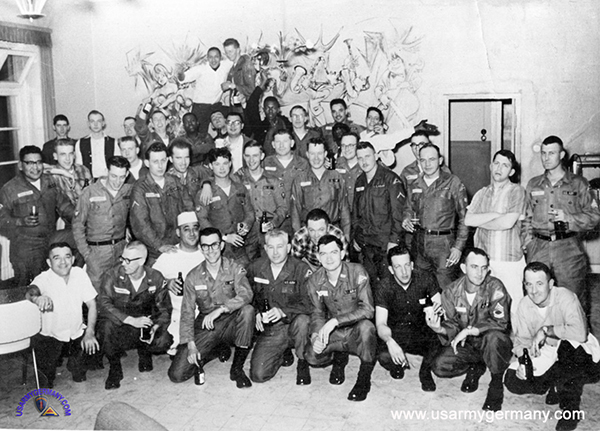 501st Ordnance Company, 1964 (Don Boice) |
|||||||||||||||||||||||||||||||||||||||||||||||||||
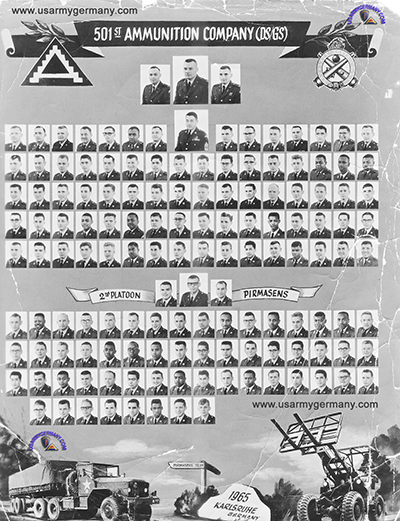 501st Ordnance Company, 1965 (Don Boice) |
|||||||||||||||||||||||||||||||||||||||||||||||||||
| 1963 | |||||||||||||||||||||||||||||||||||||||||||||||||||
| (Source: Email from Don Boice, 501st Ord Co, 1963-66) | |||||||||||||||||||||||||||||||||||||||||||||||||||
| I was assigned to the 501st Ord Co from Nov 1963-Nov 1966. When I arrived in 1963 the unit was at Rhineland Kaserne outside of Karlsruhe. In 1964 we moved to Gerszweski Barracks on the other side of Karlsruhe. We had no mission other than PSP's until mid 1964 when we opened Training ASP # 5. We operated under a zero stockage objective. Units forecasted in advance and we ordered what they needed and issued it when it came in. The zero stockage objective was a farce as we were required to take turn-ins from units supported by other ASP's. We soon became a junk yard with packing material and brass. We were located within the confines of ASP 971, Bruchsal. We used the small huts located in the J storage area. I was the senior stock records clerk for Tng ASP 5 until we got a new OIC and then I took over the Stock Control for ASP 971. When I was getting ready to leave in 1966, we started receiving Ammo (mainly Prop Charges) from France. It was funny since I was in France from 58-62 and had stored the same Ammo there that they were sending us. I had to ship our Prop Charges to North Point to make room for the shipments coming from France. North Point sent theirs to other ASP's (1, 3, 4) for use in training. We also sent a lot to ASP 1. We were under the 101st Ord Bn for half my tour and then we went under the 84th Ord Bn. It was a good tour. I enjoyed it and made a few friends while I was there. We had a good storage crew and they always did a good job for me when we had shipping orders to fill. ADDITIONAL INFORMATION Inside of ASP 971, the small prefab storage huts were numbered alphabetically. All the huts on one street would be lettered with the designated letter such as J. There were about 20 huts in the J series; J1, J2, etc. The Igloos were numbered numerically. Training ASP 5 was located within the confines of ASP 971. The storage huts in the J series were used to store the training ammo. Training ASP 5 handled all training ammo except Artillery and Howitzer. When I left in Nov of 1966, a study was being done and some work had started to build a seclusion area inside of ASP 971. I made two trips to Bremen to escort the new COFRAM items to Miesau. This seclusion area was to be used for COFRAM ammo. They sort of went overboard on the security since as soon as it was used in the field it became common ammo. We had about a half dozen PSP's but I could not tell you where they were. The 501st at the time frame I was there picked up a second platoon which was located at Pirmasens. They were designated as the 2nd Plt, 501st Ord Co. I have a company picture but since I was the only person working at the ASP that day, I am not in it. I will scan it and send it along to you. |
|||||||||||||||||||||||||||||||||||||||||||||||||||
| (Source: STARS & STRIPES, Sept 5, 1966) | |||||||||||||||||||||||||||||||||||||||||||||||||||
| The 501st Ord Co (Ammo) is a subordinate unit of the 57th Ordnance Brigade. The 57th is responsible for the storage of over 100 different types of munitions from the 200-pound 175mm shells to small .45 calibre cartridges - used by 7th Army in Germany. The munitions are stored in Ammo Supply Points (ASPs) throughout Germany. One of these supply points is ASP 972 (see photos) near Pirmasens. This supply point is operated by 2nd Pltn, 501st Ord Co, which is responsible for receiving and storing munitions at the ASP until smaller pre-stock points (PSPs) need them. The muntions are stored under lock in ventilated huts or bunker type "magazines." Each type of munition is stored in a certain area of the ASP for identification and safety reasons. Another measure that addresses safety are the 50-gallon drums of water located by each hut along with other fire fighting equipment. Personnel at ASP 972 are currently reconditioning some 17,000 cans of powder in a small shop that has been constructed for this purpose. (The cans are loaded with explosive charges for howitzer cannons.) After being stored for over 20 years, the outside of the cans show signs of deterioration. The cans are steel-brushed and cleaned, then repainted and re-stenciled. The article also mentions that the units of the 57th Ord Bde will soon be wearing the Bde's new shoulder patch. |
|||||||||||||||||||||||||||||||||||||||||||||||||||
84th Ordnance Battalion (AMMO) |
|||||||||||||||||||||||||||||||||||||||||||||||||||
| 1982 | |||||||||||||||||||||||||||||||||||||||||||||||||||
| (Source: JOBBER, Nov 29, 1982) | |||||||||||||||||||||||||||||||||||||||||||||||||||
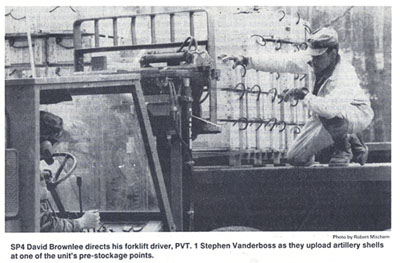
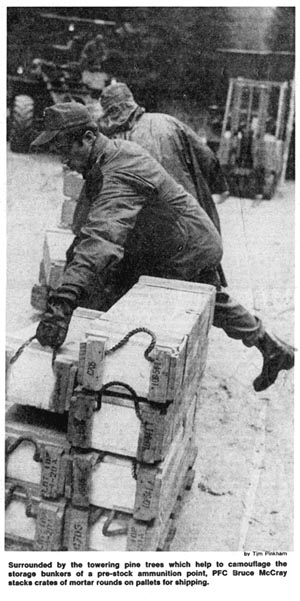
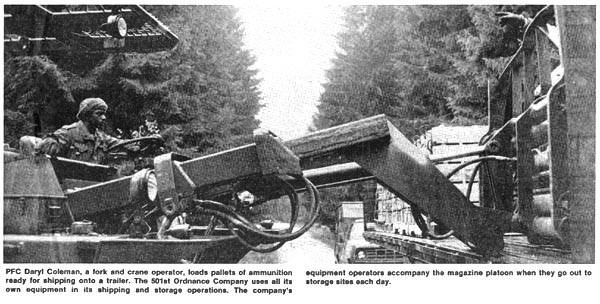
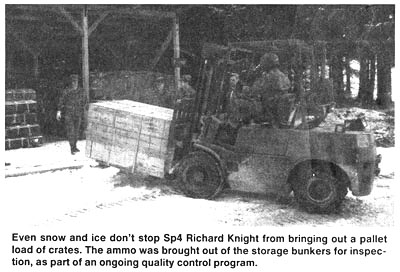
| Ammo Action - Ordnance specialists assure ammunition points well-stocked by Robin Hawkins During training exercises, most troops carry around empty weapons to simulate a combat atmosphere and blank rounds are used in rifles, machine guns and tanks during pretend "battles". But in an actual combat situation, there won't be anyone carrying around an empty rifle or shooting blanks at the enemy. All the ammunition will be very real. It will have to be in excellent condition and it must be stored in easily accessible locations and ready to go at a moment's notice. The success or failure of our defense effort will depend in large part on those factors. The 501st Ordnance Company, 101st Ordnance Battalion is responsible for maintaining five pre-stock ammunition points (PSP), located at different spots in Germany, where ammunition is kept ready for wartime issue to VII Corps units. The company handles all types of ammunition from bullets for M-16A1 rifles to tank main gun rounds. |
|||||||||||||||||||||||||||||||||||||||||||||||||||
|
|||||||||||||||||||||||||||||||||||||||||||||||||||
| The members of the platoon travel out to the PSPs early in the morning, remain there all day and return in the evening. They ride to and from the sites in the back of a deuce-and-a-half and eat cold C-rations for lunch. In icy winter weather though, the soldiers heat their cans of food on one of the radiators in a guard shack. A trip or two back into the guard shack may be the only warm moments the soldiers spend during an entire day out at a site. "Sometimes the only hot meal they'll get is breakfast. They might have to load six trailers and won't get back until 6:30 p.m. or so and the mess hall will be closed. Even if you can get somebody in the mess hall to get you something to eat, it will only be a cold sandwich. I've known NCOs who have taken troops to their houses and fed them," said SSgt. Edward Austin, the company's shipping clerk. The farthest the magazine platoon has to travel to a PSP is about 60 miles. When members of the platoon have more than a day's work to do at that particular site, they stay in barracks at a nearby kaserne until their job is finished. The PSP sites are usually well camouflaged in wooded areas where ammunition is stored in as many as 30 or more separate bunkers. The bunkers resemble large garages built into hills in the landscape. The bunkers serve as miniature ammunition warehouses, each storing several types of ammunition. "Each PSP is divided into sections which all store the same types of ammunition so if one section should get blown up, we could find that same type of ammunition in another section," Austin said. "We handle just about as many types of ammunition as the Army has different weapons." Austin added that all five of the company's PSP sites are guarded 24 hours a day by German civilian workers. The company uses all its own equipment; fork lifts, cranes, dozers and trucks, and the equipment operators must also travel out to the PSPs with the magazine platoon. "It looks like hard work," said PFC Bruce McCray, an ammunition storage specialist and a member of the magazine platoon, "but the only bad thing about it is cold weather. But with everybody doing their share, it's not hard work." During wartime, Wilson said that the company would function much the same way it did during the most recent REFORGER exercises. Ammunition was issued from portable PSPs which were stationed in field locations as they would be during wartime. At the end of the exercise, all the ammunition that was not used was turned in and inspected for damage before it went back into storage. The ammunition stocks at the company's PSPs can be mobilized at any time and transported to VII Corps forward combat positions. If a conflict arises, the 501st Ordnance Company will have ready the ammunition VII Corps units need to fight any kind of battle. |
|||||||||||||||||||||||||||||||||||||||||||||||||||
|
|||||||||||||||||||||||||||||||||||||||||||||||||||
| 1987 | |||||||||||||||||||||||||||||||||||||||||||||||||||
| (Source: JOBBER, March 16, 1987) | |||||||||||||||||||||||||||||||||||||||||||||||||||
| 501st Ordnance Company providing VII Corps with 'No-Slack' support by Chuck Gordon "FIVE-O-NO SLACK, SIR?" That's the word in the 501st Ordnance Company, 101st Ordnance Battalion. You can hear it when the company falls in, when they do their physical training, and when a soldier and officer exchange greetings. Then, of course, there's No SLACC Day, when the No Slack soldiers take over the No Slack Company. Every leadership slot, from company commander to platoon sergeant, is filled and run in a No Slack manner by the month's No Slack soldiers, all E-4 and below. SLACC, in the case of the 501st, is an acronym for "Subordinate Level Alternate Chain of Command." Capt. Ronald Settle, 501st company commander, said, "I only recently took over this command, but when I did step into this slot, the company was already tight. "To me, that says a lot about the 501st's former commander. To the soldiers here, he was sort of a minor deity, you know, he walked on two layers of water!" Settle said. |
|||||||||||||||||||||||||||||||||||||||||||||||||||
|
|||||||||||||||||||||||||||||||||||||||||||||||||||
| Their main mission is handling munitions for the largest sector of support of any ammo company in VII Corps. "These soldiers bust their butts out here. Nobody realizes how much effort goes into that little crate of blanks for an FTX, or the case of M60 rounds for qualification. It is a demanding and often thankless job, but these people do it, day in and day out. We hump the ammo out to any unit in our sector that needs it," said CWO 3 Jimmy Calloway, the 501st's accountable officer. As accountable officer, Calloway is responsible for the records and tons of ammo that the unit deals with on a constant basis. "We work. We work hard! This is a good job though," said Sgt. James Dawes, assistant ammunition storage specialist. "Ammo can be dangerous, and you think about that sometimes, but not too much. You can't let that worry you. Our training is good and safety first." The 501st works mainly at Pre-Stock Points (PSPs) and Forward Storage Theater Sites (FSTSs). There, rows of squat, earth-covered storage bunkers hold the ammo, which will be used by VII Corps. "We get a lot of time out in the magazines, the bunkers. We stack, sort, inspect and restack the ammo. And we get a lot of experience running the forklifts, but a lot of the ammo gets moved by muscle power," said Dawes. Winters slow things down for a lot of units, and the 501st is no exception. However, the slack time gets put to good use, doing internal "housekeeping," getting equipment and gear inspection-ready, and cleaning. "Winter means maintenance," said Dawes. "We clean and repair and inspect and clean some more. We use the time to check out our vehicles and equipment to be sure they're field-ready and in usable shape." "Right now we are just back out of the field, and we have to get all our gear ready for a validation inspection. Everything from TA-50 to the vehicles will be cleaned and ready to go," said SFC Allen Clinton, maintenance NCO for the company. Clinton's maintenance and service platoon takes care of more than 70 vehicles, including forklifts, ranging from 4,000 to 10,000 pounds, and vehicles from one-and-a-quarter CUCVs to the 501st's massive 12-ton tractor rigs. And the company even has a genuine John Deere discing machine. "As near as I can figure, the disc is for plowing around in a field," said Clinton. "But it would come in handy for building a fire break or turning up the ground for mines and such. We've never used it, and we don't really have anything designed to pull it. But we have it if we ever need it." As far as structure, the 501st is composed of the M and S platoon, two magazine platoons, and the headquarters platoon. A magazine, to the 501st, is more than something to read or slap into your trusty M-16. It is also a storage facility for large amounts of ammo. The magazines and their contents are the prime concern for the 501st. The company is responsible for more than 98 of the thick-walled bunkers scattered around their sector, ranging in distance from three to 75 miles from the company's home base. "Something is always moving. At times, we'll get a line of trailers stretching all along the rows of bunkers, all full and waiting to be loaded or unloaded. The soldiers will unload the crates onto a forklift, stack it into the bunker, re-arrange it so everything fits and is stored safely, and then the next day, start loading them out of the bunkers back into trailers to be sent to a unit," said CWO 2 Bill Sutton, Calloway's replacement. And the 501st goes through all of this, just for that round of blank ammo you'll blast into an aggressor on an FTX. So the next time you qualify, or play Rambo in the field, think of all the work, dedication and planning it took to get that round to you. Think of the 501st, the "No Slack" Company. |
|||||||||||||||||||||||||||||||||||||||||||||||||||
|
|||||||||||||||||||||||||||||||||||||||||||||||||||
| 529th Ordnance Company | |||||||||||||||||||||||||||||||||||||||||||||||||||
| 71st Ordnance Group | |||||||||||||||||||||||||||||||||||||||||||||||||||
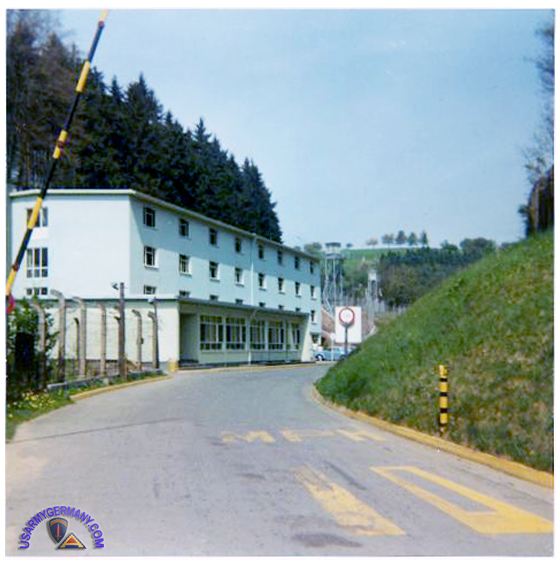 Ordnance barracks and mess hall, Massweiler, c. 1966 |
|||||||||||||||||||||||||||||||||||||||||||||||||||
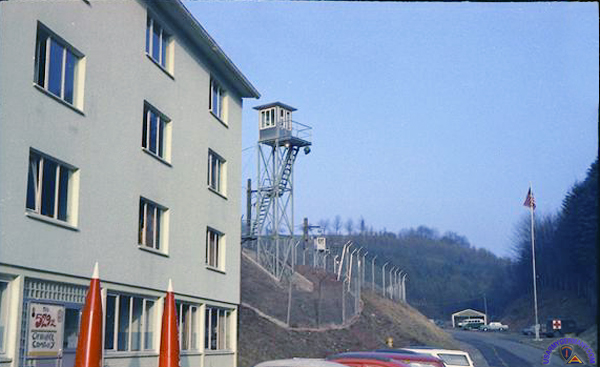 Ordnance barracks with security towers in background, c. 1966 |
|||||||||||||||||||||||||||||||||||||||||||||||||||
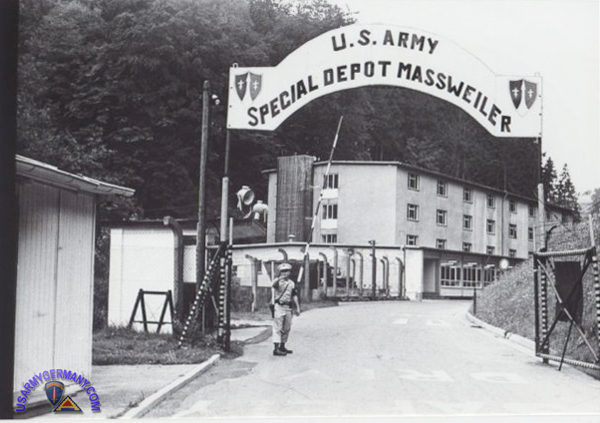 Main gate, Massweiler Special Weapons Depot (Garry Parraga) |
|||||||||||||||||||||||||||||||||||||||||||||||||||
| 1966 | |||||||||||||||||||||||||||||||||||||||||||||||||||
| (Source: Email from Michael D. Baudry, 529th Ord Co, 1966-1968) | |||||||||||||||||||||||||||||||||||||||||||||||||||
|
|||||||||||||||||||||||||||||||||||||||||||||||||||
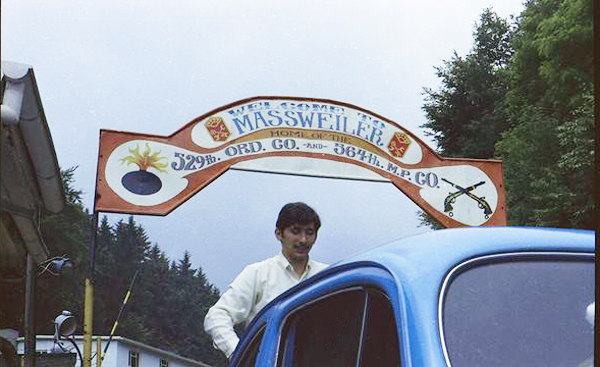 Depot sign lists units at Massweiler |
|||||||||||||||||||||||||||||||||||||||||||||||||||
|
|||||||||||||||||||||||||||||||||||||||||||||||||||
| 101st Ordnance Battalion | |||||||||||||||||||||||||||||||||||||||||||||||||||
| 1985 - 19.. | |||||||||||||||||||||||||||||||||||||||||||||||||||
| (Source: JOBBER, Sep 22, 1986) | |||||||||||||||||||||||||||||||||||||||||||||||||||
Ordnance mission important during peacetime or war |
|||||||||||||||||||||||||||||||||||||||||||||||||||
|
|||||||||||||||||||||||||||||||||||||||||||||||||||
| [1] It appears that the FSTS 8 site was also operated by the 529th Ord Co. | |||||||||||||||||||||||||||||||||||||||||||||||||||
|
|||||||||||||||||||||||||||||||||||||||||||||||||||
| 663rd Ordnance Company | |||||||||||||||||||||||||||||||||||||||||||||||||||
| 1973 | |||||||||||||||||||||||||||||||||||||||||||||||||||
| (Source: STARS & STRIPES, April 12, 1973) | |||||||||||||||||||||||||||||||||||||||||||||||||||
663rd Ord Co, an ammo supply unit located at Vilseck, operates the Ammunition Supply Point One, located near Vilseck, and another ASP (ASP #2) at Hohenfels. The company is the only TOE outfit stationed at Rose Barracks. |
|||||||||||||||||||||||||||||||||||||||||||||||||||
| 1976 | |||||||||||||||||||||||||||||||||||||||||||||||||||
| (Source: Email from Greg Anderson, 663rd Ord Co, 1976-78) | |||||||||||||||||||||||||||||||||||||||||||||||||||
I was at Vilseck from 1976-78. This is one hell of a web site! It has been long enough. |
|||||||||||||||||||||||||||||||||||||||||||||||||||
| (Source: Email from Steve Winnie, 663rd Ord Co, 1976-78) | |||||||||||||||||||||||||||||||||||||||||||||||||||
| I was stationed with the 663rd Ordinance Company from Jan 1976 - Aug 1978. I recognize Gary Anderson's name but can't place him....growing old ;)
What he says is essentially correct; however, there were two definite management teams. When I arrived the CO was Capt. Jack Nunn, (who can be found on Facebook) and the 1st Sergeant was Warner Roth. 1st Sgt Roth had a heart attack and went back to the States. With nobody immediately available, he was replaced by a SFC named Joe (last name escapes me at the moment). Sadly, he had been promoted to MSG while in Viet Nam, but transferred before the orders reached him and they never caught up. He retired and on the day of his retirement the folks in Personnel said "Say....did you know that you were really an E-8?" I believe that it was around this time...within about 6 months of 1st Sgt's heart attack, our CO also was replaced for what, as I recall, may have also been health reasons. This was significant because we needed a 1st Sgt and so one day 1st Sgt Bill Lukasiewicz arrived. Around this same period, Cpt Nunn was replaced by Cpt Aurthur Montoya. The unit patch is 2nd Support Command, which would be about January 1978 or so on. Prior to that the unit was under USAREUR. In the pic, I'm the guy in the blue shirt. |
|||||||||||||||||||||||||||||||||||||||||||||||||||
|
|||||||||||||||||||||||||||||||||||||||||||||||||||
| 2041st CSG (Ordnance) | |||||||||||||||||||||||||||||||||||||||||||||||||||
|
|||||||||||||||||||||||||||||||||||||||||||||||||||
| 2043rd CSG (Ordnance) | |||||||||||||||||||||||||||||||||||||||||||||||||||
| (Source: JOBBER, Dec 21, 1987) | |||||||||||||||||||||||||||||||||||||||||||||||||||
| The 2043rd Civilian Support Group celebrated its 10-year anniversary at Heppdiel, West Germany. The unit has approximately 150 personnel who receive, store, handle, issue and maintain conventional ammunition for units in the VII Corps area. | |||||||||||||||||||||||||||||||||||||||||||||||||||
|
|||||||||||||||||||||||||||||||||||||||||||||||||||
| 4068th CSG (Guard) | |||||||||||||||||||||||||||||||||||||||||||||||||||
| 19.. - 19.. | |||||||||||||||||||||||||||||||||||||||||||||||||||
| (Email from Dieter Tröster, 4068th CSG) | |||||||||||||||||||||||||||||||||||||||||||||||||||
| As one of three
Civilian Support guard units within the 101st Ord Bn, the 4068th CSG
provided security at several ammo and supply storage sites in the
Nürnberg area in the 1980s: PSP 34 (north of the Nürnberg airport, near
Tennenlohe); FSTS 25; FSTS 8 and BLSA Erlangen. The 4068th was headquartered at Feucht. |
|||||||||||||||||||||||||||||||||||||||||||||||||||
|
|||||||||||||||||||||||||||||||||||||||||||||||||||
|
|||||||||||||||||||||||||||||||||||||||||||||||||||
|
|
|||||||||||||||||||||||||||||||||||||||||||||||||||
|
Related Links: |
|||||||||||||||||||||||||||||||||||||||||||||||||||