| If you do
NOT see the Table of Contents frame to the left of this page, then
Click here to open 'USArmyGermany' frameset |
||||||||||||||||||||||||||||||||||||||||||||||||||||||||||||||||||||||||||||||||||||||||||||||||||||||||
V Corps |
||||||||||||||||||||||||||||||||||||||||||||||||||||||||||||||||||||||||||||||||||||||||||||||||||||||||
|
|
||||||||||||||||||||||||||||||||||||||||||||||||||||||||||||||||||||||||||||||||||||||||||||||||||||||||
|
||||||||||||||||||||||||||||||||||||||||||||||||||||||||||||||||||||||||||||||||||||||||||||||||||||||||
|
|
||||||||||||||||||||||||||||||||||||||||||||||||||||||||||||||||||||||||||||||||||||||||||||||||||||||||
|
||||||||||||||||||||||||||||||||||||||||||||||||||||||||||||||||||||||||||||||||||||||||||||||||||||||||
| V Corps History | ||||||||||||||||||||||||||||||||||||||||||||||||||||||||||||||||||||||||||||||||||||||||||||||||||||||||
| News | ||||||||||||||||||||||||||||||||||||||||||||||||||||||||||||||||||||||||||||||||||||||||||||||||||||||||
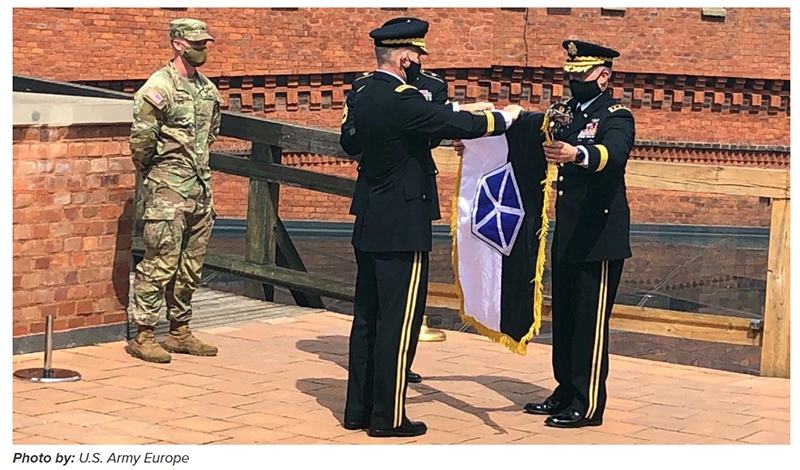 V Corps has returned to Europe - activated in Poland, August 2020 (USAREUR photo) (Click on photo above to read the full report - you will be redirected to the AUSA website) |
||||||||||||||||||||||||||||||||||||||||||||||||||||||||||||||||||||||||||||||||||||||||||||||||||||||||
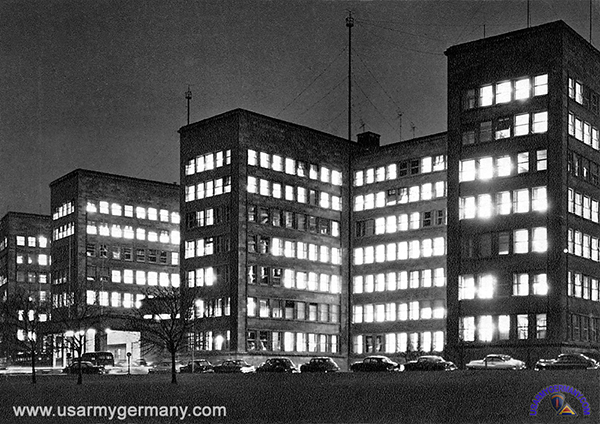 HQ V Corps, IG Farben Bldg, at night, 1950s (postcard) |
||||||||||||||||||||||||||||||||||||||||||||||||||||||||||||||||||||||||||||||||||||||||||||||||||||||||
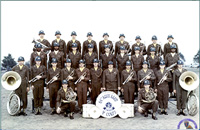
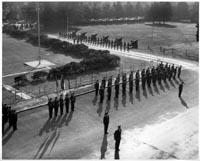
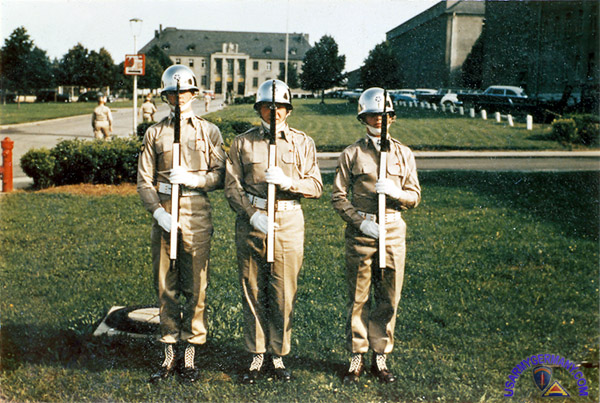 Members of HQ V Corps Honor Guard, Gibbs Bks, 1955 |
||||||||||||||||||||||||||||||||||||||||||||||||||||||||||||||||||||||||||||||||||||||||||||||||||||||||
| (Source: The History of V Corps) | ||||||||||||||||||||||||||||||||||||||||||||||||||||||||||||||||||||||||||||||||||||||||||||||||||||||||
| V Corps Commanders (after corps arrived in Germany in 1951 until the end of the Cold War) | ||||||||||||||||||||||||||||||||||||||||||||||||||||||||||||||||||||||||||||||||||||||||||||||||||||||||
|
||||||||||||||||||||||||||||||||||||||||||||||||||||||||||||||||||||||||||||||||||||||||||||||||||||||||
| (Source: Accessed from V Corps - official web site, 2003) | ||||||||||||||||||||||||||||||||||||||||||||||||||||||||||||||||||||||||||||||||||||||||||||||||||||||||
|
||||||||||||||||||||||||||||||||||||||||||||||||||||||||||||||||||||||||||||||||||||||||||||||||||||||||
|
|
||||||||||||||||||||||||||||||||||||||||||||||||||||||||||||||||||||||||||||||||||||||||||||||||||||||||
| 1951 | ||||||||||||||||||||||||||||||||||||||||||||||||||||||||||||||||||||||||||||||||||||||||||||||||||||||||
| (Source: Several issues of the STARS & STRIPES from August 1951) | ||||||||||||||||||||||||||||||||||||||||||||||||||||||||||||||||||||||||||||||||||||||||||||||||||||||||
| Members (350 EM and 100 officers) of V Corps Headquarters; Hqs Co, V Corps; V Corps Artillery; and Hq Btry, V Corps Arty arrived on board the transport Gen G.M. Randall at Bremerhaven POE on August 2, 1951. Maj Gen John E. Dahlquist, V Corps CG and Brig Gen Boniface Campbell, V Corps Arty CG were among those debarking the transport at Bremerhaven. Advance elements of the corps had already arrived in June by air to make arrangements for the arrival of the corps headquarters. V Corps hqs will temporarily operate out of the Grand Hotel in Bad Nauheim, about 25 miles north of Frankfurt. V Corps Arty headquarters will be located at 22 Ludwig Ring (now Ludwigstrasse?), also in Bad Nauheim. Troops will be billeted in requisitioned hotels. |
||||||||||||||||||||||||||||||||||||||||||||||||||||||||||||||||||||||||||||||||||||||||||||||||||||||||
| (Source: STARS & STRIPES, September 28, 1951) | ||||||||||||||||||||||||||||||||||||||||||||||||||||||||||||||||||||||||||||||||||||||||||||||||||||||||
| The first field test for V Corps after its arrival in Europe was the three-day, French-led (French 1st Army) "Exercise Jupiter," a field exercise held along a 80-mile stretch of the Rhine River between Karlsruhe and Mainz. The participating V Corps forces, with 45,000 troops, included 1st Inf Div and the 2nd Armd Div and attached engineer and artillery units. The war games included an assault crossing of the Rhine River by both American and French forces. 1st Inf Div made the assault crossing by boat from two separate points near Worms and 2nd Armd Div then crossed over two bridges built by the 547th Engr (C) Bn, 552nd Engr Ponton Bridge Co, and the 109th Engr (C) Bn. (French forces - French II and I Corps - crossed at five bridgeheads on the north and south flanks of V Corps respectively.) (Webmaster note: photos of the 2nd Armd Div units during the FTX show (at least some of ) the tank battalions still equipped with Sherman tanks.) |
||||||||||||||||||||||||||||||||||||||||||||||||||||||||||||||||||||||||||||||||||||||||||||||||||||||||
| (Source: Author's private collection) | ||||||||||||||||||||||||||||||||||||||||||||||||||||||||||||||||||||||||||||||||||||||||||||||||||||||||
|
||||||||||||||||||||||||||||||||||||||||||||||||||||||||||||||||||||||||||||||||||||||||||||||||||||||||
| 1952 | ||||||||||||||||||||||||||||||||||||||||||||||||||||||||||||||||||||||||||||||||||||||||||||||||||||||||
The December 5, 1952 issue of THE GUARDIAN (V Corps) has been removed and will be replaced with a better scan in the near future. |
||||||||||||||||||||||||||||||||||||||||||||||||||||||||||||||||||||||||||||||||||||||||||||||||||||||||
| 1953 | ||||||||||||||||||||||||||||||||||||||||||||||||||||||||||||||||||||||||||||||||||||||||||||||||||||||||
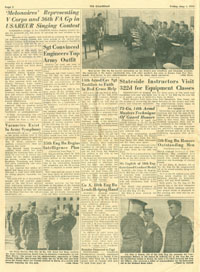
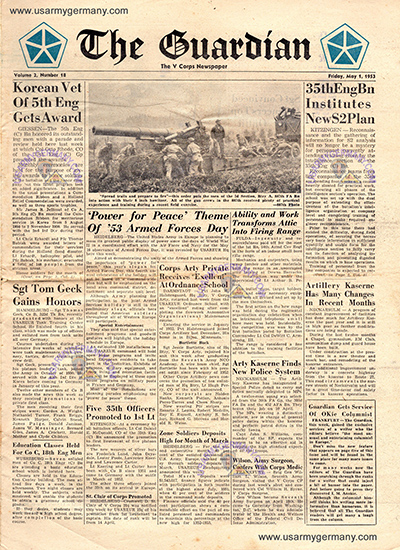 The Guardian newspaper, HQ V Corps, May 1, 1953 |
||||||||||||||||||||||||||||||||||||||||||||||||||||||||||||||||||||||||||||||||||||||||||||||||||||||||
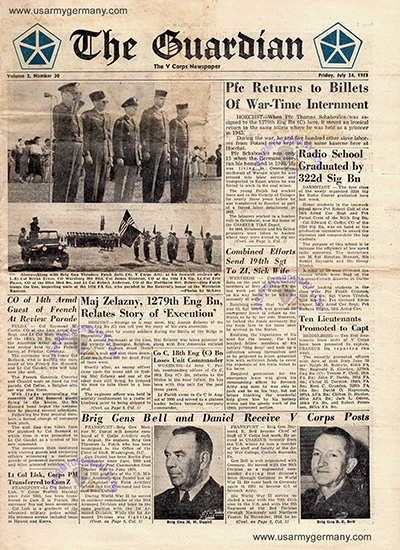 The Guardian newspaper, HQ V Corps, July 24, 1953 |
||||||||||||||||||||||||||||||||||||||||||||||||||||||||||||||||||||||||||||||||||||||||||||||||||||||||
| 1954 | ||||||||||||||||||||||||||||||||||||||||||||||||||||||||||||||||||||||||||||||||||||||||||||||||||||||||
| (Source: Seventh Army Annual History) | ||||||||||||||||||||||||||||||||||||||||||||||||||||||||||||||||||||||||||||||||||||||||||||||||||||||||
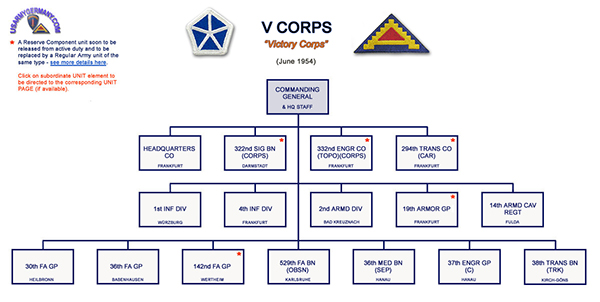 V Corps Organization, June 1954 (Walter Elkins) |
||||||||||||||||||||||||||||||||||||||||||||||||||||||||||||||||||||||||||||||||||||||||||||||||||||||||
| 1960 | ||||||||||||||||||||||||||||||||||||||||||||||||||||||||||||||||||||||||||||||||||||||||||||||||||||||||
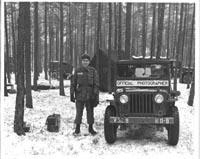
| (Source: Photo books given to Sp5 Thomas J. McDougal, Hq/Hq Co, 32nd Sig Bn, 1960) Sp5 Thomas McDougal served as Senior Staff Photographer in liaison to the Information Section, Hqs, V US Corps, from Jan 1959 to June 1960. Besides several letters of appreciation from officers at V Corps and 32nd Sig Bn, McDougal was presented with two photo books containing copies of photos that he took during his tour with the HQ V Corps IO. Only a few are presented below. |
||||||||||||||||||||||||||||||||||||||||||||||||||||||||||||||||||||||||||||||||||||||||||||||||||||||||
|
||||||||||||||||||||||||||||||||||||||||||||||||||||||||||||||||||||||||||||||||||||||||||||||||||||||||
| 1964 | ||||||||||||||||||||||||||||||||||||||||||||||||||||||||||||||||||||||||||||||||||||||||||||||||||||||||
| (Source: Norm Newhouse) | ||||||||||||||||||||||||||||||||||||||||||||||||||||||||||||||||||||||||||||||||||||||||||||||||||||||||
|
||||||||||||||||||||||||||||||||||||||||||||||||||||||||||||||||||||||||||||||||||||||||||||||||||||||||
| 1966 | ||||||||||||||||||||||||||||||||||||||||||||||||||||||||||||||||||||||||||||||||||||||||||||||||||||||||
| (Source: FM 100-15 Change 1, Field Service Regulations, Larger Units, March 1966) | ||||||||||||||||||||||||||||||||||||||||||||||||||||||||||||||||||||||||||||||||||||||||||||||||||||||||
|
||||||||||||||||||||||||||||||||||||||||||||||||||||||||||||||||||||||||||||||||||||||||||||||||||||||||
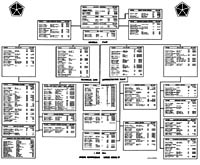
| V CORPS ORGANIZATION - 1966 | ||||||||||||||||||||||||||||||||||||||||||||||||||||||||||||||||||||||||||||||||||||||||||||||||||||||||
|
||||||||||||||||||||||||||||||||||||||||||||||||||||||||||||||||||||||||||||||||||||||||||||||||||||||||
|
||||||||||||||||||||||||||||||||||||||||||||||||||||||||||||||||||||||||||||||||||||||||||||||||||||||||
| The above list is not complete. I will update periodically as I gather more details. | ||||||||||||||||||||||||||||||||||||||||||||||||||||||||||||||||||||||||||||||||||||||||||||||||||||||||
| 1968 | ||||||||||||||||||||||||||||||||||||||||||||||||||||||||||||||||||||||||||||||||||||||||||||||||||||||||
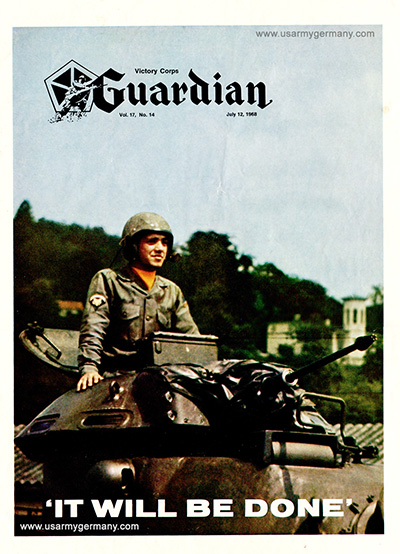 50th Anniversary Special Issue, July 12, 1968 |
||||||||||||||||||||||||||||||||||||||||||||||||||||||||||||||||||||||||||||||||||||||||||||||||||||||||
 |
||||||||||||||||||||||||||||||||||||||||||||||||||||||||||||||||||||||||||||||||||||||||||||||||||||||||
| 1981 | ||||||||||||||||||||||||||||||||||||||||||||||||||||||||||||||||||||||||||||||||||||||||||||||||||||||||
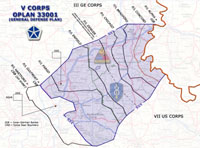
(Source: OPLAN 33001 , Parallel History Project on NATO and Warsaw Pact web site) , Parallel History Project on NATO and Warsaw Pact web site) |
||||||||||||||||||||||||||||||||||||||||||||||||||||||||||||||||||||||||||||||||||||||||||||||||||||||||
|
||||||||||||||||||||||||||||||||||||||||||||||||||||||||||||||||||||||||||||||||||||||||||||||||||||||||
|
|
||||||||||||||||||||||||||||||||||||||||||||||||||||||||||||||||||||||||||||||||||||||||||||||||||||||||
| 1987 | ||||||||||||||||||||||||||||||||||||||||||||||||||||||||||||||||||||||||||||||||||||||||||||||||||||||||
| (Source: Ruck It Up, The Post-Cold War Transformation of V Corps, 1990-2001, by Charles E. Kirkpatrick) | ||||||||||||||||||||||||||||||||||||||||||||||||||||||||||||||||||||||||||||||||||||||||||||||||||||||||
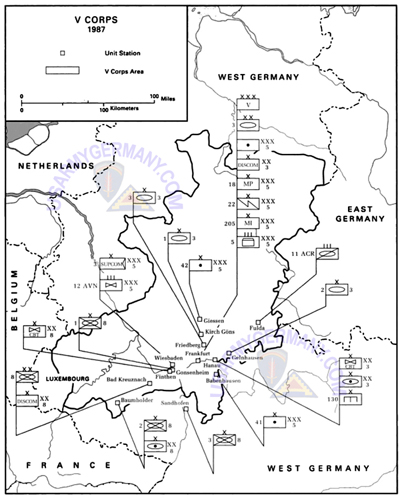 V Corps, 1987 (Ruck it Up) |
||||||||||||||||||||||||||||||||||||||||||||||||||||||||||||||||||||||||||||||||||||||||||||||||||||||||
 |
||||||||||||||||||||||||||||||||||||||||||||||||||||||||||||||||||||||||||||||||||||||||||||||||||||||||
| 84th Army Band | ||||||||||||||||||||||||||||||||||||||||||||||||||||||||||||||||||||||||||||||||||||||||||||||||||||||||
| (Source: Email from James Rogers) | ||||||||||||||||||||||||||||||||||||||||||||||||||||||||||||||||||||||||||||||||||||||||||||||||||||||||
| The 84th Army Band was the regimental band of the 14th Armored Cavalry, for how long I don't know. However, as a flute and piccolo player in that band (1953-54), I can say with some conviction that the 84th Army Band was stationed at Fulda, Ludendorff Kaserne, while I was there, and not in Wildflecken (as stated in the 7th Army Troop List, June 1956). The troops thought we had it made, and they were right. Thanks for the opportunity to contribute. |
||||||||||||||||||||||||||||||||||||||||||||||||||||||||||||||||||||||||||||||||||||||||||||||||||||||||
| (Source: Email from Bob Greco) | ||||||||||||||||||||||||||||||||||||||||||||||||||||||||||||||||||||||||||||||||||||||||||||||||||||||||
|
||||||||||||||||||||||||||||||||||||||||||||||||||||||||||||||||||||||||||||||||||||||||||||||||||||||||
| (Source: Email from Larry Roberts ) | ||||||||||||||||||||||||||||||||||||||||||||||||||||||||||||||||||||||||||||||||||||||||||||||||||||||||
I was a musician with the 84th Army Band, stationed at Downs Barracks...Fulda...from 1964 to early 1966.
We were not at Wildflecken, as stated. The band at Wildflecken was the V Corps band.
The 84th was primarily involved in German-American relations...performing in concerts, parades and other special events all over Europe....such as NATO Taptoe, the 1000th anniversary of the city of Bremen, Fasching in Bonn, etc.
All in all, a great way to spend 2 years. |
||||||||||||||||||||||||||||||||||||||||||||||||||||||||||||||||||||||||||||||||||||||||||||||||||||||||
| (Source: Email from Stephen Gilbert) | ||||||||||||||||||||||||||||||||||||||||||||||||||||||||||||||||||||||||||||||||||||||||||||||||||||||||
| I was a musician stationed in Fulda with the 84th Army Band from the fall of 1964 to the spring of 1967. The email from Larry Roberts describes some of the activities of the band during that time, but one correction should be made, I think. There was no Band in Wildflecken during that time. The 84th Band was the V Corps band. It was stationed in Fulda so that it was central to the area in which V Corps units were stationed and was attached to the 14th AC for rations and billeting. The V Corps Headquarters was in Frankfurt at that time, and under the usual circumstances, the band would have been stationed there. I remember Larry Roberts as a Tuba player with the 84th Band. I played the flute and Piccolo with the band for close to 30 months. I agree with him when he says that it wasn't a bad way to spend your military time. I have returned to Fulda a few times since I left in 1967. The most recent visit was in 1998 when my mother-in-law died and my wife and I had to close out her estate. By that time, all of the American troops had long since left the area. The Downs Barracks are no longer used for military purposes. The kaserne has been converted into a complex for refugees from Eastern Europe. With the fall of the Soviet system, Germany allowed all ethnic Germans from Eastern Europe to return to Germany as a means of correcting the problems created for them by WWII. Most of the refugees were German in ancestry only; the vast majority couldn't even speak German. The Downs Barracks then became housing for them as well as a training center in which they learned German and obtained skills necessary to enter the German work force. In addition, shops were constructed in the buildings so that they can sell some of the wares they manufacture in the converted kaserne. |
||||||||||||||||||||||||||||||||||||||||||||||||||||||||||||||||||||||||||||||||||||||||||||||||||||||||
|
||||||||||||||||||||||||||||||||||||||||||||||||||||||||||||||||||||||||||||||||||||||||||||||||||||||||
| 601st Air Support Operations Center (ASOC) | ||||||||||||||||||||||||||||||||||||||||||||||||||||||||||||||||||||||||||||||||||||||||||||||||||||||||
 601st Air Support Operations Center patch 601st Air Support Operations Center patch |
||||||||||||||||||||||||||||||||||||||||||||||||||||||||||||||||||||||||||||||||||||||||||||||||||||||||
| 1967 | ||||||||||||||||||||||||||||||||||||||||||||||||||||||||||||||||||||||||||||||||||||||||||||||||||||||||
| (Source: STARS & STRIPES, several articles in 1967) | ||||||||||||||||||||||||||||||||||||||||||||||||||||||||||||||||||||||||||||||||||||||||||||||||||||||||
| On Oct 1 1966, Detachment 1, 601st Tactical Control Group (a 17th Air Force element) was activated in Frankfurt to provide direct air support to the Army's V Corps. The detachment operates the V Corps Direct Air Support Center (located at Bonames Army Airfield) which receives and processes requests from forward air controllers to scramble fighters (F-4C's, F-4D's, and F-100's) and reconnaissance aircraft (RF-4C's and RF-101's) in support of V Corps' infantry and armored elements. Det 1 is stationed at Gibbs Barracks, Frankfurt, and is commanded by Col Edward W. Cutler. Gibbs is where the unit's administrative and control activities are performed. Most of the detachment's four officers and 62 airmen, however, work at the DASC at Bonames AAF - the center of operations for the unit. Prior to the activation of Det 1 in October, there was one DASC unit in Germany with headquarters in Mannheim. That unit provided direct air support to 7th Army. In October 1966 that unit was then split into two detachments with each unit supporting one Army corps (Det 1, Gibbs Bks, Frankfurt - V Corps; Det 2, Robinson Bks, Stuttgart - VII Corps). The DASC is the hub of a mobile communications network that reaches from the forward air controllers on the maneuver area battlefield to five US air bases in Germany and four US air bases in Great Britain. Utilizing the concept of "rapid mobility", each DASC is capable of moving to the field with its respective corps headquarters during readiness tests, field problems and actual alerts. The mobile command center's numerous vehicles, portable operations shelters and self-contained power generators can be on the road in less than one hour. Det 1 personnel work closely with V Corps' G2 and G3 sections. Within 10 minutes of receiving a request, the Det can plot target locations, determine type of air power and ordnance required, and scramble fighter or request recon aircraft via instant communications (UHF, VF and FM radio and radioteletype) with any of several Air Force bases in Germany and Great Britain. |
||||||||||||||||||||||||||||||||||||||||||||||||||||||||||||||||||||||||||||||||||||||||||||||||||||||||
| 1970 | ||||||||||||||||||||||||||||||||||||||||||||||||||||||||||||||||||||||||||||||||||||||||||||||||||||||||
| (Source: Email from Paul Andreasen) | ||||||||||||||||||||||||||||||||||||||||||||||||||||||||||||||||||||||||||||||||||||||||||||||||||||||||
| I am interested in more info (i.e. documents) and proof of the 601st DASS and DASC existance at Frankfurt! I was there from 1970-74. Your dates are a little off on their closure/reassignment. I left there in Nov 1974 after being sent back from a cross training attempt into CCT, from which I was removed because of wounds received on Cyprus in June 74. I was a ROMAD at the 601st DASS during all that time (Nov 1970 - Apr 1974, then back in Oct 1974 - Nov 1974), and when sent back to be reassigned to a stateside billet (after several months in hospitals) it was about Oct 1974. The unit, under commander Col. Christ, was still operational at Maurice Rose AAF, at Bonames. I left in the first week in Nov and no official word on unit changes had been received. They Air Force has categorically denied, under requests placed through the FOI Act, that the 601st DASS and DASC at Bonames NEVER EXISTED. Only the 602, 603, 604 ever existed. ALL of my military records, (official archives, service assignments records, medical records, etc) no longer exist. I have a four year gap in my career that the AF refuses to even comment on, though I retired in 83 with 20 yrs uninterupted service. The VA and Vandenbery AFB commanders have all tried to obtain data but have also been told no such data exists. I served several classified assignments from there that there is no record of, yet I know of 2 personnel from the 602nd who participated with me, that have those classified assignments documented on their DD-214's. Mine has NO assignment data other than retired at Vandenberg AFB with 2 yrs on station. NO assignments, NO awards, NO overseas credits (even though the archived service record shows a TS assignment to Pakistan from 67-68), no nothing. So far that 4 year period is a figment of my imagination. I even have a re-enlistment statement during that time that says it was at an "unspecified" location and time! I don't even have a picture of the squadron patch, though I was informed through an anonymous email that the name was changed around 1975 or so to the 601st ASOC, and later absorbed into the 4th ASOG. |
||||||||||||||||||||||||||||||||||||||||||||||||||||||||||||||||||||||||||||||||||||||||||||||||||||||||
| 1974 | ||||||||||||||||||||||||||||||||||||||||||||||||||||||||||||||||||||||||||||||||||||||||||||||||||||||||
| (Source: Email from Robert Tyrrell) | ||||||||||||||||||||||||||||||||||||||||||||||||||||||||||||||||||||||||||||||||||||||||||||||||||||||||
I have been reading the history on the 601st TCW with some interest because I was in one of the units from 1974-1977. The 601st DASC at Maurice Army Air Field in Bonames Germany which was located on the north west side of Frankfurt. I hope the picture will be added to your history. The mug is about the only thing I have left from there other than the memories. Speaking as if I were still there (1974-1977), we supported field exercises by the V Corps. We had HFSSB radio vans, microwave vans and expandable vans to use as control centers operated by pilots assigned to our unit. Basically the Army would call us for air support and describe the problem and our pilots would choose the aircraft and ordnance. We also had quick response teams in MRC-107 jeeps that would go to the field with smaller Army units. As far as an Air Force unit we all felt closer to are Army contacts as we seldom had any contacts with other Air Force units. Even the TCW had trouble finding our location. The location was Maurice Rose AAF, which had Huey's at the time. We all lived in Army housing in downtown Frankfurt; even single enlisted lived in a rented apartment downtown. During my time there the (sp) "Baader Meinhoff gang" were active and trying to bomb military facilities in Frankfurt. There were two such happenings, one in the officers club (V Corps) and one in the "Abrams Building" (V Corps Hq). Interesting assignment that I was glad to be away from when I left . (Webmaster note: the MRC-107 jeeps each each had a 500 watt HF radio for communications with the Direct Air Support Center; a UHF radio to communicate with the aircraft; and a VHF radio to communicate with the supported Army unit. In addition, there was a portable UHF radio and a generator.) |
||||||||||||||||||||||||||||||||||||||||||||||||||||||||||||||||||||||||||||||||||||||||||||||||||||||||
| 1983 | ||||||||||||||||||||||||||||||||||||||||||||||||||||||||||||||||||||||||||||||||||||||||||||||||||||||||
| (Source: Email from Glenn Gloeckner) | ||||||||||||||||||||||||||||||||||||||||||||||||||||||||||||||||||||||||||||||||||||||||||||||||||||||||
| I was with the 601st ASOC (Air Force supporting V Corps) in Bonames from 1983-1985. Then the entire unit moved to Roedelheim in 1985 and I left there in 1986. I came back to Germany in 1988, this time to support 3rd BDE 1st AD in Bamberg. After the 1st Gulf War, I PCS’d in 1990. I want to say there were 50-60 people at the 601st ASOC when I was there. We had Command and Control; Radio & Sat Maintenance; Vehicle Maintenance; Fuels; and admin folks. We fell under V Corps (4th ASOG, I think) and the 4th ASOG had detachments all over Germany. Wherever there was a maneuver unit, there was a TACP (Tactical Air Control Party). When we moved to Roedelheim, we had a new complex built for us right beside the Army Publications & Training Aids Center. I was in the area a few years ago (son played soccer on a German team) and I tried to locate my old stomping grounds there but couldn’t locate it. Based on your map (Roedelheim Ordnance Facility) and looking the current map of Roedelheim, I can say the 4th ASOG building was located in the northwest part of the compound. I believe Building 2502 was taken down to make room for us. |
||||||||||||||||||||||||||||||||||||||||||||||||||||||||||||||||||||||||||||||||||||||||||||||||||||||||
|
||||||||||||||||||||||||||||||||||||||||||||||||||||||||||||||||||||||||||||||||||||||||||||||||||||||||
| Newspaper Pages | ||||||||||||||||||||||||||||||||||||||||||||||||||||||||||||||||||||||||||||||||||||||||||||||||||||||||
| The Guardian - Some of the issues published while in Germany | ||||||||||||||||||||||||||||||||||||||||||||||||||||||||||||||||||||||||||||||||||||||||||||||||||||||||
|
||||||||||||||||||||||||||||||||||||||||||||||||||||||||||||||||||||||||||||||||||||||||||||||||||||||||
| ISSUES IN COLLECTION | ||||||||||||||||||||||||||||||||||||||||||||||||||||||||||||||||||||||||||||||||||||||||||||||||||||||||
|
||||||||||||||||||||||||||||||||||||||||||||||||||||||||||||||||||||||||||||||||||||||||||||||||||||||||
|
||||||||||||||||||||||||||||||||||||||||||||||||||||||||||||||||||||||||||||||||||||||||||||||||||||||||
| Related Links: 75th RANGER REGIMENT ASSOCIATION - very nice website also includes LRRP units assigned to V and VII Corps V Corps History - an excellent historical manuscript in PDF
format can be downloaded from the official V Corps homepage. Good
coverage of the Cold War years. |
||||||||||||||||||||||||||||||||||||||||||||||||||||||||||||||||||||||||||||||||||||||||||||||||||||||||

 Corps
Support Bde
Corps
Support Bde