If you do NOT see the Table of Contents frame to the left of this page, then
Click here to open 'USArmyGermany' frameset

59th Ordnance Brigade
2 PAGE 2 - Details on NATO Nuclear Artillery Units (excl. German Army)
Looking for more information from military/civilian personnel assigned to or associated with the U.S. Army in Germany from 1945 to 1989. If you have any stories or thoughts on the subject, please email me (webmaster).


Page 1 (59th Ord Bde)

Page 3
(GE Army Nuc Arty)

AFNORTH
LANDJUT Corps

NORTHAG
I (NE) Corps
I (GE) Corps
(Page 3)
I (BR) Corps
Canadian Brigade
I (BE) Corps
2 ATAF

CENTAG
III (GE) Corps
(Page 3)
II (GE) Corps
(Page 3)
II (FR) Corps
4 ATAF

AFSOUTH


SASCOM Patch

59th Ord Bde Patch


I (NE) Corps - Warhead Custodial Detachments & Supported Formations
I NE Corps Formation Insignia
 
I (Netherlands) Corps, NORTHAG - Nuclear-Capable Artillery and Support Units:
Unit History/General Information
Artillery Command
19th Artillery Battalion ()
109th Artillery Battalion ()
119th Artillery Battalion ()
129th Artillery Battalion ()
Support Units (Logistics and Security)

Warhead Custodial Units (US Army)
Personal recollections submitted by former members of the US Army warhead custodial detachments can be found in the corresponding USAAG sections on Page 1!

Personal recollections submitted by former members of Dutch nuclear-capable outfits can be found in the corresponding unit sections on this page!

I (NE) Corps - Unit History and General Information


(Artillery Command)


109th Artillery Battalion (109e Afdeling Veldartillerie)
 
 
The 109th battalion was formed in May 1959 as an Honest John unit.

In 1978 the HJ's were phased out of the Dutch Army and the battalion was inactivated (Dec 1978).
 

119th Artillery Battalion (119e Afdeling Veldartillerie)
 
(Source: Ed Starks, webmaster of the 8th Missile Detachment website)

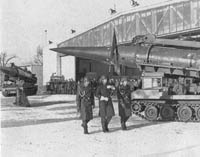
That's Ed Starts with the 8th MSL Det standing next to an Honest John launcher of the 119th Dutch Field Artillery Battalion (119 Afdva).

The Dutch battalion was formed in Nov 1960 as an Honest John unit. The unit was stationed at Steenwijkerwold/Havelte, the Netherlands.

In 1978 the HJ's were phased out of the Dutch Army and the battalion was inactivated (July 1978).

Click here for additional pictures of the 119 Afdva and the Dutch Honest Johns (41AFDVA.net website).
 

129th Artillery Battalion (129e Afdeling Veldartillerie)
 
The 129th Artillery Battalion was formed in May 1978 (probably using personnel from the inactivated 119th Arty Bn, Honest John) as a LANCE battalion. It appears that personnel from the 109th Arty Bn, another Dutch HJ unit, also joined the 129th when the 109th battalion was inactivated later in the year.

The 129th became operational in March 1979. The battalion comprised two firing batteries and a headquarters and service battery.

The battalion remained active until 1992.

 
(Source: )

109th Field Artillery Battalion (Honest John), Joh. Postkazerne, Havelte, 1970
119th Field Artillery Battalion (Honest John), t Harde
19th Field Artillery Battalion M-110 at Tonnetkazerne, 't Harde, The Netherlands, in the 1970s; A, B, Hqs & Svc Btry
107th Field Artillery Battalion M-107 at 't Harde, late 1960s, 1970s; Hq & Svc Btry, A, B Btry
129th Field Artillery Battalion (LANCE) - 1st Firing Pltn (1e lanceer plt);

 
Related Links:
19e Afdeling Veldartillerie - Dutch field artillery battalion stationed at Tonnet Kazerne, Havelte, The Netherlands; the unit was equipped with the Honest John rocket and later the M110 howitzer (Dutch language only - has pics)
129 afd Veldartillerie Lance Raketten (dead link) - Dutch LANCE battalion stationed at Johannes Post Kazerne, Havelete, the Netherlands. (Dutch language only)
425 Mob Cie van Heutsz 't Harde
- Pieke van der Schaaf's blog dedicated to the history of the 425 Van Heutsz Company (Mobile), the Dutch security unit at 't Harde, the Netherlands.
435 van Heutsz - an MSN Group page dedicated to the Dutch security unit at Büren.
434 IBC (van Heutsz) - a website for former members of the 434 IBC at Havelte (Steenwjik), NL (incl. photo of the SAS at Darp).

 
I (BE) Corps - Warhead Custodial Detachments & Supported Formations
I BE Corps Formation Insignia
 
I (Belgium) Corps, NORTHAG - Nuclear-Capable Artillery, Engineer and Support Units:
Unit History/General Information
3rd Artillery Battalion (3A)
14th Artillery Battalion (14A)
20th Artillery Battalion (20A)
75th Artillery Battalion (75A)
ADM Platoon, 1st Engineer Battalion / ADM Company, 1st Engineer Battalion
ADM Platoon, 6th Engineer Battalion
Support Units (Logistics and Security)

Warhead Custodial Units (US Army)
Personal recollections submitted by former members of the US Army warhead custodial detachments can be found in the corresponding USAAG sections on Page 1!

Personal recollections submitted by former members of Belgium nuclear-capable outfits can be found in the corresponding unit sections on this page!

I (BE) Corps - Unit History and General Information
(Source: Information provided by Jürgen Dreifke; other sources - Armies of NATO's Central Front, Isby & Kamps; Die Armeen der NATO-Staaten, Wiener; "Museum of the Belgian Forces in Germany" web site)
In the late 1950s, the Belgian Army gained nuclear capability with the introduction of the Honest John surface-to-surface missile and, later, with dual-capable tube artillery (203mm). Apparently, there were plans in the early 1960s to equip one Belgian artillery battalion with the SERGEANT missile, but these plans were later cancelled - probably for budgetary reasons (Overview Page, Field Artillery section).

By the mid-1960s, Belgian nuclear artillery within I (BE) Corps was comprised of four units:

UNIT DESIGNATION

DUTY STATION COMMENTS
3 Arty Bn (3A) Köln-Dellbrück divisional, HJ and 203mm How
14 Arty Bn (14A) Werl corps, Honest John
20 Arty Bn (20A) Werl divisional, HJ and 203mm How
75 Arty Bn (75A) Köln-Dellbrück corps, Honest John
     

At this time, I BE Corps consisted of two divisions: the 1st Infantry Division (Bensberg, Germany) and the 16th Armored Division (Neheim-Hüsten, Germany). The 20 Arty Bn (designated "20ème Régiment d'Artillerie" in French or "20de Artillerieregiment" in Flemish) was the nuclear-capable, direct support artillery battalion assigned to the 16th Armd Div. Thus, 3 Arty Bn was most likely assigned to the 1st Inf Div and supported it with its nuclear capability. Each of these mixed artillery battalions appear to have consisted of a headquarters battery, a battery of Honest John rockets (two launchers) and a battery of M-115 (203mm) towed howitzers (four howitzers) [1].


The Artillery Command of I (BE) Corps was located at Quartier Klerken in Köln-Ossendorf and included two Honest John battalions, 14 Arty Bn and 75 Arty Bn. These corps-level missile battalions appear to have been composed of a headquarters battery and two firing batteries of two 762mm HJ launchers each. [2]

In 1969, I (BE) Corps underwent a major reorganization that also affected the nuclear-capable artillery units. 20 Arty Bn and 3 Arty Bn came under corps control. 20A's HJ Battery was transferred to the 3A, and 3A's 203mm battery was moved to the 20A. Thus, 3A became a pure missile battalion and 20A a 203mm howizter battalion, both under the command of I BE Corps. 75A at Dellbrück was inactivated at the same time.
Also in 1969, the dual-capable (conventional and nuclear warheads) self propelled howitzer M-109 (155mm) was introduced replacing the M-44's in two Belgian artillery battalions: the 17 Arty Bn at Altenrath and 6 Arty Bn at Soest. Both units were placed under Corps Artillery command.

By the end of the 1960s, I (BE) Corps Artillery included three nuclear-capable artillery units [3]:

UNIT DESIGNATION

DUTY STATION COMMENTS
3 Arty Bn (3A) Köln-Dellbrück corps, Honest John
6 Arty Bn (6A) Soest corps, 155mm
14 Arty Bn (14A) Werl corps, Honest John
17 Arty Bn (17A) Altenrath corps, 155mm
20 Arty Bn (20A) Werl corps, M-55 (203mm)
     
The 1970s brought about more changes. In Dec 1972, the 13 Arty Bn was formed as a logistical unit at Büren, Germany. This unit provided security at the Haarener Wald special weapons depot (north of Büren) and nuclear warhead transportation support. (The US Army's 27th Ordnance Company provided warhead custodial support for the nuclear weapons stockpiled at the depot.) One of the subordinate units of 13A was the Belgian 30 Transportation Company. It provided the warhead transportation support.

Another unit located at Büren was the Dutch 435 (NL) Infantry Company. This unit provided physical security services at the depot and might have been attached to 13A. (Confirmation or corrections would be much appreciated!)

(Some of my research findings indicate that there was a predecessor unit, the Gemengde Groepering, that was formed in 1969 and was responsible for similar support at Büren prior to 13A. (Any details on this unit would be very helpful!)

Also in 1972, 20A in Werl replaced their M-55's with the M-110 203mm dual-capable, self-propelled howitzers.

Besides nuclear-capabale artillery, I (BE) Corps appears to have had an ADM company within the 1st (BE) Engineer Battalion, at least after 1973. Previously part of the 16th Armd Div, the 1st Engr Bn was reassigned to I (BE) Corps at that time as part of an overall reorganization of engineering assets. As part of the new mission under corps, an ADM company was added to the battalion. [4]

In 1978, due to the rising costs of forward deployment and the procurement and maintenance of modern weapons (e.g. the LANCE missile), a significant reduction of Belgian units in Germany was implemented. The 1st Inf Div HQ and two brigades were pulled back to Belgium. Several changes within Corps artillery were also made at this time. 14A lost their Honest John rockets and became an anti-aircraft outfit. 3A replaced their Honest John rockets for the new Lance missiles. It is reported that 3A was the only non-US Lance unit in Europe that was dual-capable - having the ability to fire conventional as well as nuclear warheads. During these changes 6A (M-109), 17A (M-109) and 20A (M-110) remained unchanged.

By the end of the 1970s, I (BE) Corps Artillery included the following nuclear-capable artillery units:

UNIT DESIGNATION

DUTY STATION COMMENTS
3 Arty Bn (3A) Köln-Dellbrück corps, Lance
6 Arty Bn (6A) Soest corps, M-109 (155mm)
17 Arty Bn (17A) Altenrath corps, M-109 (155mm)
20 Arty Bn (20A) Werl corps, M-110 (203mm)
     
In the mid-1980s, the Belgian Army replaced many of the first model M-109's in its forward deployed artillery battalions with the newer M-109A2. This included the two nuclear-capable corps artillery battalions: 6A and 17A.

Also, an ordnance company, the 73rd Arty Co, was formed in Soest in 1986 to provide special weapons ammunition support to divisional 155mm units. This separate unit came under command of the 13A in 1990.

With the fall of the Berlin Wall in 1989, the Belgian Army in Germany underwent a significant drawdown similar to USAREUR. Major budget cuts that were imposed with the new strategic realities in Western Europe forced a major restructuring of the Belgian Army and the withdrawal of many units from Germany. This included the elimination of the nuclear role of the army's artillery units and the inactivation or reorganization of the nuclear-capable units.
 

[1] The M115 8in (203 mm) howitzer, which was replaced by the M110 self-propelled howitzer, was a towed weapon developed prior to World War II as a heavy artillery weapon. The weapon used NATO-standard 203mm ammunition. In NATO service, its primary mission was to fire nuclear rounds.
[2] Wiener, in his 4th edition of Die Armeen der NATO-Staaten, states that each missile battalion at corps consisted of two batteries. However, that information was correct for the early 1970s. Did it also pertain to the organization in the mid-1960s?
[3] According to Dreifke, there also existed - until the 1980s - a nuclear-capable reserve unit, the 72A in Elsenborn, Belgium which was configured as a heavy artillery battalion equipped with M-115 towed howitzers.
[4] Source: History of the 1st Engineers, Belgium web page - http://mitglied.lycos.de/pclaeys/Historiek.htm.


(Source: Historique de l'Artillerie de Corps, published by the Belgian I Corps, early 1960s)
A unit history of the I BE Corps Artillery from the Occupation Period to 1962. The booklet includes information relating to the formation of various nuclear-capable artillery units assigned to the artillery command.

The booklet is written in French and Flemish. Will post some of the information relating to the units once I have had a chance to translate the relevant sections.
 
BELGIAN NUCLEAR-CAPABLE ARTILLERY UNITS , 1962

Corps Arty, Weiden

1 Arty Gp, Dellbrück

14A, Dellbrück

73A, Dellbrück

75A, Dellbrück

(Source: Insignia courtesy Christophe Cobbaut, Pocket Badges of the Belgian Army)
BELGIAN NUCLEAR-CAPABLE ARTILLERY & ENGINEER UNITS

3A, Werl

13A, Büren

14A, Werl

20A, Werl

75A, Dellbrück

1st Engr Bn

6th Engr Bn

 
MISCELLANEOUS INFORMATION

14th Artillery Battalion (Honest John) in Werl, Germany
20th Artillery Battalion (M-110 & Honest John?) in Werl, Germany

1 January 1963 sees the 14th Artillery Battalion in Dellbrück (Germany). It is equipped with Honest-John missiles. In 1964 the battalion moves to Werl.

The battalion was equipped with 8" (203 mm) howitzers and Honest John (ground-to-ground) rockets.

On 16 February 1978 the last Honest-John missile is fired. In May, the battalion moves to Spich near Cologne and is equipped with the high tech 35mm gun GEPARD weapon system.

 
(Source: La Belgique et les armes nucléaires, by André Dumoulin and Quentin Michel, 2005)
List of land-based nuclear weapons used by the Belgian Army and Air Force:

WEAPON TYPE

NUC. WARHEAD

PROBABLE HOME STATIONS
TIMEFRAME
Atomic demolition munition (ADM)
W-54, W-45
Kassel later Westhoven, Germany
1964 - 1986
Honest John surface-to-surface rocket
W-31
Delbrück, Germany
1959 - 1978
M-109 (155mm) self-propelled howitzer
W-48
Altenrath and Soest, Germany
1967 - 1992
M-2 (203mm) towed howitzer
W-33
Germany
1960 - 1962
M-55 (203mm) self-propelled howitzer
W-33
Werl, Germany
1962 - 1972
M-110 (203mm) self-propelled howitzer
W-33, W-79
Werl, Germany
1972 - 1992
Lance surface-to-surface missile
W-70
Werl, Germany
1978 - 1992
Nike-Hercules surface-to-air missile
W-31
Elsenborn and Bierset, Xanten, Blankenheim, Thum, Grefrath, Düren, Euskirchen, Kaster, Kapellen
1962 - 1988


3rd Artillery Battalion (3ème Régiment d'Artillerie)
 
(Source: Letter from Marc Fontaine, Belgium)

3A Unit History
Will translate and add some of the unit history in the near future.

 
(Source: Centre Liegeois d'Histoire et d'Archeologie Militaires)

Werl
Found an article (http://www.ifrance.com/CLHAM/050260.htm) with some history of the 3ème Régiment d'Artillerie which, in May 1986, was located at Werl, Germany. The page is a brief unit history written on occasion of the unit's 150 anniversary.

Between 1946 ans 1978, the 3A (3rd Artillery) was stationed successively at
Hasselt (Bel.)
Euskirchen (Sept. 1946 – Nov. 1948)
Liège (Bel.)
Lüdenscheid (27. Sept 1951 – 27. April 1957)
Spich (1. Feb. 1957 --  Aug. 1960)
Siegen (2 . Aug. 1960 – 23. Jan. 1963)
Köln-Dellbrück ( 23 Jan. 1963 – 28. Juni 1978 )
Werl (28. Juni 1978 – 1990)
(The dates were taken from the station lists on the web site of the Museum of Belgium Forces in Germany - see Related Links.)

During that period, the unit was equipped with the 25-pound cannon, Honest John rocket, the 155mm and 8in howitzers, and finally, the LANCE missile.

14th Artillery Battalion (14ème Régiment d'Artillerie)


20th Artillery Battalion (20ème Régiment d'Artillerie)


75th Artillery Battalion (75ème Régiment d'Artillerie)
 
(Source: Email from Willy "Bill" Junes)

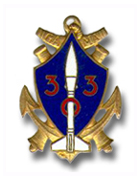
I was in the Belgian Army back in 1964 and stationed in Germany with the 75th Artillery (Battalion) of the Belgian Forces. The warhead custodial support of our Honest John rockets was provided by the 33rd Missile Detachment, US Army (at least in 1964). We were located in Köln-Dellbrück; Bergischgladbachstrasse - the name of the barracks was "Quartier Moorslede."

The 75th was composed by two "batteries"; one administration and the other "field" (firing). We went several times to a place named "(Bergen-)Hohne" (major training area) for night shooting exercises (located near Bergen Belsen, the former SS concentration camp) and occupied by the British army until 1958/59.


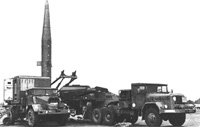
The silhouette of an Honest John rocket on its trailer rises out of the morning darkness as another day of "deterrence" begins in the I BE Corps sector

The 75th Artillery Battalion was assigned to I Belgian Corps Artillery (I think they were located in Spich). As mentioned before, we were equipped with the Honest John rockets with special big trucks from which we fired the rockets in Hohne.

The 3rd Artillery (Battalion) was also located at the same barracks. They were equipped with 155mm howitzers. This unit was also part of I Belgian Corps in Germany. They would go with us to Höhne on firing exercises but were not supported by the 33rd Det.

Another unit at Quartier Moorslede was 15th Ordnance - a kind of big PX....

While I was in Delbrück, the commanding officer of the 33rd MSL Det was a Captain by the name of CRESCY. His 1st Lt was Lt Rhobacker - I had a marvelous time with your compatriots.

I heard about the 4th MSL detachment (warhead custodial detachment that arrived in Germany in Jan 1963 to provide support to I Belgian Corps) but I thought the 33rd MSL Det was replaced by the 4th. Anyway I could be wrong about it. In any case, the 4th MSL Det was located in Werl.

 
(Source: Email from Willy Junes)

The following information regarding the unit history of the 75th Artillery Battalion was provided by Lt Col Roger Lothaire, Belgian Artillery School, via Col. Jean-Pierre HAUSMAN, Chargé de mission:

The 75th Bn Aie was formed on April 20 1959. That battalion was located at Köln-Dellbrück and was the first Belgian artillery unit to be equipped with the new 762mm Honest John rockets with nuclear capability. The battalion was composed of a headquarters battery and a firing battery.

THe equipment was officially handed over to the battalion on October 1, 1959. King Boudouin of Belgium presented Lt Col Gravy, the commanding officer of the 75th, with the unit colors (organizational flag) in a ceremony held on April 1 (1960). The colors were new and had no lineage. The flag and crest of the battalion were designed by unit members.

On August 20 1959, the battalion was assigned to the 1st Artillery Group. The Group was composed of the following artillery battalions:
71st Artillery Bn (155mm & 8in, towed)
72nd Artillery Bn
(155mm & 8in, towed)
73rd Artillery Bn (155mm & 8in, towed)
74th Artillery Bn (155mm & 8in, towed)
75th Artillery Bn
(Honest John)

This group was considered as the corps artillery of the 1 BE Corps.

All tests where passed succesfully by the battalion.

In July 61 this bataillon received new equipment that would be used to create a second firing battery, the 3rd Battery.


Battalion commanders:
Lt Col Gravy, April 20 1959 to September 1 1960
Lt Col Masset, October 3 1960 to October  15 1962
Lt Col Wibin, October 16 1962 to ??  ( I guess 1964 )
Lt Col Bem FRANKIGNOUL, from 1964 - to ??

The battalion was inactivated on March 3 1969. The unit's colors were transferred to the Royal Army Museum on February 19 1969.


(Source: Email from Pol Degosserie, Belgium)
In 1962, I was transferred from 1(BE) Headquarters (1Cie ESR-LRP) in KOLN-WEIDEN to the 75th FA Bn in DELLBRUCK.

In 1963, the 14th FA Bn was formed in DELLBRUCK and, after the training period finished, was were moved to KOLN-PORZ. A little later the batalion moved to WERL where the 20th FA Bn was also to be located soon. The 75th remained in DELLBRUCK.

Both the 75th and 14th were equipped with Honest John rockets (1Bty/Bn with 4 launchers)
The 3rd and 20th were equipped with 8" M55 (1 battery with 4 Howitzers) and HJ 762mm (1 battery with 2 launchers).

In 1966, I came back to 80th FA Battery (Webmaster: was this a target acquisition unit?). I was in charge of a FLASH Platoon in the field, but when in garrison at DELLBRUCK spent most of my time with logistical duties.

The US Army's 33rd FA Det was attached to the 3rd FA Bn (LANCE) in SPICH. Most of the logistical problems were handled by my services. I received support from 3rd FA Bn to enable a fast service to the 33rd Det.

A good friend of mine was Sgt-Major SANTOS of the 33rd ... he later moved to BUREN. I would like to contact him if possible. The Det Sgt for the 33rd FA Det was E8 WARREN....a real gentleman! The Mess Chief was SP6 PRAYOR... I also remember 2 Officers....Lt PETERS (WP) and SCHWARZENBURG....
Pol DEGOSSERIE
RSM of 74th Res FA Bn

ADDITIONAL INFORMATION:
1 (BE) Corps had nine 8" M55 (Big MAMA) SPs.........4 at the 3th FA Bn; 4 at the 20th FA; a 9th howitzer was used for spares and was located at the Ord Depot in Probsteierwald near Aachen. We had lots of technical problems -- mostly with the periscopes and azote pression.....

The 155mm M44 was in used in the 20th FA Bn in year 1957 and a little later. Then the divisional artillery units (17,18 and 19th FA SP Bn) were converted to "mixed" battalions with 2 batteries of 105mm SP M7 and 1 battery of 155mm SP M44. These were later replaced by the M108 and M109 respectively.

The 75th HJ Bn was responsible for training new personal like me during the formation of the second HJ Bn.  In the beginning, everybody spoke about a 78th HJ Bn, speaking French.  But in 1963, the Belgian DOD transferred many graduates (Officers and NCOs) coming from the Field Arty School in Brasschaat (near Antwerp) to the new unit. They were mostly Flemish speaking while at the 75th HJ we spoke French.

In 1963, after finishing training in Dellbruck, the 14th HJ  moved to Porz (near Cologne on the Rhine River, Quartier NIEUWPOORT) with all its equipment. It now became the second Belgian HJ Bn. Incidently, we took over the facilities of the 20th FA Bn which had previously moved to Werl. As of the end of 1963, we were at full OT with our soldiers speaking French and Officers and NCOs speaking both Flemisch and French.

In 1964, we (the 14th FA Bn) also moved to Werl, joining the 20th 8" FA Bn at Quartier HOUTHULST.

The 80th Arty was originally a Target Acquisition Bn with one Hw/Hq Battery and two Target Acquisition Batteries. Acquisition was performed came using three methods:
Radar (AN/MPQ-10A)
Sound Ranging (GR-8)
Flash

Radar and Sound Ranging were eventually abandoned.
Only one Bty remained.....It was responsible for supporting all of the units from 1 (BE) Corps & NATO, to establish new (?) after Nuclear destruction. We used about 60 Men in two Topo platoons. A 3rd Platoon (Flash Platoon) was in charge of Acquisition of Targets.

The 80th FA Bty was used by 1 (BE) Corps to test the ability of all (BE) Firing Units (Conventional Ammunitions or Nuclear "Spotting Rounds").
Measuring the right impacts was done with 4 POs (Observation Post) intersecting into an LB (Long Base). We used the BCM 65 aiming in Direction and the Director N°7 to measure the vertical angles. Precision was within as little as 5 Meters in X and Y...about 10 Meters in Height. Recordings of Observations were logged on a circular drawing board M5. Later we used electronic calculators. Calculations were made with mechanical computer BRUNSWIGA and natural functions. As a Platoon leader, I  followed with the "Arty Slide Rule"  to control the output calculations!

With HJ Rockets, we worked on another scale on the drawing board M5. My observers watch the Burst (Direction and Inclination) of the Head with the Director N°7 and the Engine flying farther with the BCM65
 
The 2 Topo Platoons were responsible for controlling all the Topo activities of the tested unit at 2 Levels:
Firing Positions and
Forward Observers positions

1st BE Engineer Battalion
 
On 1 July 1973, the divisional engineer units in I (BE) Corps were reorganized and formed a new 1st Engr Bn under I (BE) Corps. ADM assets were merged to form the ADM Company under the new 1st Engr Bn.

In the early 1970s, ADM Cie (Webmaster note: ADM Company), 1e Bataillon du Genie, was located at Westhoven, Germany.


6th BE Engineer Battalion
 
(Source: Email from Roland Van Holderbeke, ADM Pltn, 1st BE Engr Bn)
Roland Van Holderbek, 1985
Surfing on the Internet I found your website. Maybe I can help with some more details and explanations.

I was a member of the first
ADM Platoon formed in the Belgian Army. The platoon was formed in 1964 as a part of the 6th BE Engineer Battalion, which was stationed in KASSEL (NOORDVAART KAZERNE) in Western-Germany.

Soon after the activation, the platoon left Kassel to take up station near its US control and support unit, the
22nd US Detachment in SENNELAGER (near Paderborn, Western-Germany). The new home station for the platoon was in the "ANTWERP BARRACKS" of the Britisch Army. The 22nd US Det was located at "DEMPSEY BARRACKS", a few km away, together with a Brittish Artillery Battalion.

My function at that time was deputy platoon leader and chief of signals for the platoon. My rank was 1st Sergeant. I was in Sennelager until the platoon returned to his battallion at the end of 1966. The platoon leader at that time was 1st Lt MAES Roger for a short time. He stayed with the Staff of the Battalion in Kassel. Lt Gen MAES Roger later (in the 1990's) became the Chief of Staff of the Belgian Army.

During the big NATO exercises, we had the support of a special US Engr ADM company from Mannheim.
 
My control officer in the 22nd US Det was 1st Lt Joseph HIGGINS (I hope I wrote the name correct). If my information is good, this 1 Lt died later as a major in Lebanon where he was killed by terrorists. The CSM of the 22nd US Det was Mr ANDERSON (as fas as I can remember). The training was hard, alerts were held all the time, but I learned a lot during that period.

In 1966, the Belgian Army underwent some reorganization and ADM Platoons were assigned to both of the Belgian Divisonal engineer battalions; so our sister unit, the 1st BE Engr Bn. received its ADM Platoon. (The 6th Engr Bn was part of the 1 (BE) Division; the 1st Engr Bn. was part of the 16th (BE) Armored Div.)

My ADM platoon returned to KASSEL, the new ADM platoon of the 1 Engr Batt stayed with the its battalion in KOLN-WESTHOVEN. The control and support unit for this platoon was the 33rd US Det in KOLN-DELLBRUCK.

After the return to Kassel, I left the ADM platoon to became deputy signal officer of the 6th BE Engr Bn, but as the ADM Pl was subordinate to the Headquarters Company, I still was occupied with forming the signalers of that platoon as well those of the Bn.

End of 1969 the 6th Engr Bn left Kassel and moved to KOLN-DELLBRUCK. The US support unit was now the 33rd US Detwhich was also located in the same MOORSLEDE KAZERNE.

Later, in 1973, we had a new reorganization - the divisional engineer battalions were taken out of the Division to form together with all Engr units into the Engr Support formation of the 1 (BE) Corps in Germany. As part of this reorganization, the 6th BE Engr Bn lost its ADM Platoon, which was transferred to the 1st Engr Bn to form there a new ADM Company in that Battalion.

The ADM Co stayed in the 1st Engr Bn until the end of the ADM's in the Belgian Army (sometime in the early 1990's ?).

I continued my path in the 6th BE Engr Bn, later I becoming platoon leader of the Signal Platoon, and later in 1976 the Signal Officer of the Bn and also Pltn Leader until 1992 when the battallion was inactivated. I then joined the Staff of the 1 (BE) Corps Engr Section as the S-2 and Signal Officer. All this time, from 1960 until 1994, I served in Germany, with only short interruptions.

I participated with a special BE Company in Desert Shield and Desert Storm in 1991 in support of the 84th US Ordnance Battalion. I was the RSM for that unit (Command Sergeant Major) and received the medal of Honorary Sergeant Major of the Army from the US Army Sergeant Major. Now, I am retired at home in Ghent, Belgium after 47 years of service for my country (1958-2005).
Roland Van Holderbeke

ADDITIONAL INFORMATION
Sennelager and the 22nd US Missile Det
The 22nd also provide support to the 39th (UK) Regiment Royal Artillery.


In 1958 the Regiment deployed on a nine month Emergency Tour to Cyprus to support operations against EOKA, with batteries based in Episkopi, Jophinou and Dhekhlia. On return to the UK, the news was broken that the Regiment was to move to join the British Army of the Rhine (BAOR).

By February 1960, the Regiment had reorganized at Dempsey Barracks, Sennelager to become one of the Corps Artillery's three Nuclear Regiments, equipped with two 'HONEST JOHN' Rocket batteries and two towed 8" M115 Howitzer batteries. This was to become home for the next 35 years.

Support Units (Logistics and Security)
 
(Source: Email from Lieven Blanckaert, Belgian Army)
I discovered your web page while looking for information on my army duty (Legerdienst) for the Belgiam army in Germany in 1986, and there it was: the 73rd Arty Co. We were the very first group to start the unit; in fact, when we arrived in Soest, there was no unit yet. That came a short time later with a lot of fanfare.

When I was drafted for the ABL  (Armee Belge - Belgisch Leger or Belgian Army) as a private, the height of the cold war had reached somewhat its climax. President Ronald Reagan was setting up his “Star Wars” project, and now since there is more declassified information we know more then ever how close it ever came to the “dooms day” at that particular time.


In 1986, the 73 Arty of the 1st BE Corps was reinstated, as a support unit for special weapons, mostly strategic nuclear weapons but also chemical and biological ammo that was to be fired with a modified M-109A2 howitzer 155mm.


After six weeks of boot camp in Belgium, we received march orders to Soest, Germany. There was no 73 Arty Co yet, and everything was very hush hush about it. We had to train in parade marching every day sometimes even twice a day for the big event, the parade marching was not something I liked. I remember we all had sore feet from hacking with our combat boots on the concrete parade ground to get that chap-chap noise when marching. After weeks of training, the ceremony and the parade finally came to pass and there was a reasonable good party, Belgian Army style with lots of good food and of course plenty of beer…


At first our barracks in the kasern in Soest were nearly empty with only our platoon present when we arrived, but every month more recruits came and slowly it filled up till we were discharged.


I had lived in the states for 6 years previously and was one of the few Belgians around that spoke “American” fluently, and I was somewhat the oldest private around with 27 years of age, I had good map reading and navigation skills, due to my yachting and sailing experiences, also I had a steady hand, controlled my breathing and that made me a good shot. Those skills are appreciated in the Army and they gave me two stripes, a brigadier or corporal status.


The training was extensive, there were maneuvers all the time, it seemed that the army was in a high state of readiness at all times. There was a no-nonsense attitude about it. Our main duties were to guard several of the nuclear ammo depots. Training in the transportation of the nuclear ammunition to the forward howitzers. Training in destroying the nuclear weapons with explosives (to keep them out of enemy hands, most likely a suicide mission in real time we were told). Training as a light infantry (lichte infantrie) soldier, with the FN FAL 7.92mm caliber NATO ammo, the Vingeron 9mm (“grease gun”, terrible jamming weapon!), FN GP 9mm sidearm. FN MAG 7.62mm caliber machine gun. LAW disposable anti tank weapon and other anti tank weapons. Handgranades etc. Close combat training. There was also repeated NBC (Nuclear, Biologic and Chemical) training.  


Don’t let the term “light infantry” fool you, (it had fooled me at first) there was nothing “light” about it, we carried all our weapons and gear so there were no heavy mobile weapons about really. The most heavy and hardest to haul around was the MAG, about 30 pounds by itself, that weapon had a gunner and a feeder. The gunner carried the weapon and the feeder the ammo and a spare barrel. The barrel would heat up red hot during firing that after a while it needed to be replaced to cool off in the soil or snow, to use again for the next box of ammo. I used it several times during training and it is a powerful weapon and kind of fun to shoot with, with the tracers bullets, rather than aiming, you guide the bullets to target.


We learned “guerilla” tactics with the American Army. They played the enemy (Russians) to steal the special weapons from us. For us it was more hide and sneak, digging fox holes, hiding the trucks mostly MAN 4x4 and other vehicles like the Mercedes Benz Unimog with camouflage nets and bushes. Making dummy sites that would give away their position if they went for them. Americans would track us with all they had, helicopters, APC, infantry even tanks. We would usually sneak away during the night. It seemed like they really enjoyed hunting us down. If it would become a real war, the nuclear weapons were American property, we the Belgian Army were only the delivery boys, so they expected the very best, and therefore our training was also very extensive. We had to do it over and over again till even our Belgian superiors got frustrated (that was a while after us). Now I also realize that the Americans knew more about the reality of a nuclear war than we did. Recently it was revealed that if the Russians would have attact at the time the use of Nuclear Tactical Weapons (NTW) would have been a certainty and the only way to keep the Russians put, with their overwhelming amount of rolling equipment.


One day we had the experience to see howitzers fire, the firing explosion really goes through your whole body, I understand what “shell shock” is by that experience. Neighboring trees lost all their leaves from the air expansion. First a shell is loaded in the barrel with a piston, then several bags of explosives, a fire cap is placed and then the gunner pulls the firing cord and kaboom. The front of the thirty ton machine lifted like a rearin stallion. The howitzer has a bulldozer blade on the back so it can “dig in”, otherwise it would just slide back several meters every time it fires and loose its position. Our first sergeant or gunny was also a tank commander and he claimed that they could hit a  “zakdoek” (handkerchief) with it. They have forward scouts that report every shot back to the gun crew, by computing triangulation they claim the fourth or fifth shot is always a bull’s-eye. Reality is that to kill a bridge at 15-20 km distance, it takes more than 10,000 100-pound shells in average, and that is one of the reasons they would have used NTW to take the bridges out with one shot. The linear implosion plutonium weapon had a yield of less that 0.1 kiloton. Detonation by mechanical time-delay or proximity airburst, or contact. Remember this was before the “stealth air planes” and “smart-bombs” came about, those could do the job now more effectively with conventional weapons as proven in the Gulf wars.


By winter time Germany wasn’t a fun place to be in a field camp, we had only the basic clothing, compared with the American Army, they had luxury winter gear and even anti-freeze filled boots! ABL gave us long underwear knickers. It was very cold, I remember once it was minus 15 Celsius about the same temperature as in a deep freezer, and we could not make fire to give away our position until the maneuvers were over. We had to sleep with our MAG or FAL wrapped in a cloth against dampness, in our sleeping bag so our body temperature would prevent it from freezing solid and unable to fire. On maneuvers we fired blanks. The weapons were inspected freaquent on cleanliness and readiness. Ususally the Americans would attack at night, too. I told my platoon comrades to use newspapers in their clothing, a trick I also used when motorcycle riding in the winter, cheap but very effective paper is an excelent insulator. Now years later I look at it as a good time, but sometimes I remember the not so good times too, and realize having being so close to it that we were lucky that the “Cold War” stayed Cold or else we would not be here after a nuclear holocaust. Something that still hangs above all our heads like a sword.


(Source: Email from Christophe Van Acker, the Netherlands)
Between 1987 and 1991, I was a Dutch corporal (maintenance technician) responsible for the LRS Program (Long Range Security Program) (1) at the Büren site in Germany. The LRSP provided electronic and technical security for the special weapons depot. My job was to train Dutch, Belgian and US personnel on the LRSP, and to repair and service the electrical systems of the LRSP.

I can confirm what you have written about the 13 Arty Bn except that the 435 NL Infantry Company did not stay for the whole time. The Dutch unit alternated security responsibilities at the Haarener Wald depot with three Belgian companies (a unit from Soest, another from Werl and the 1e Jagers Te Paard from Arolsen). Each company would deploy to the depot for three months each year.

Also, the depot comprised, I believe, about 9 bunkers.

In reference to the Büren photos displayed on Dirk Duym's BZD-Kazernes Page:

Left column - 3rd photo down (aerial view of
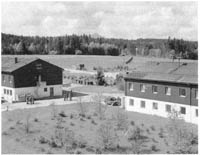
Kwartier Cortemark)
The buildings in the front were used by US personnel. Of the three larger buildings in the back, the one on the left was used by the 13 Arty Bn; the bldgs in the middle and on the right housed the security units (incl. 435 NL Infantry Company) and other units.

Left column - 4th photo down
This photo shows the US buildings and a part of a Belgian building used by the 13A.

Right column - 2nd photo down
The building surrounded by trees was used by the security forces at the depot. This is where the guards stayed and observed. The US personnel were located on the left side of the building and were responsible for observing the inner-area of the site. The Belgian and Dutch security forces occupied the right side of the building and observed the outer area. A closed door separated the Americans from the others.


(1) The Long Range Security Program was developed in response to the rise in terrorist activity in the early 1970's and the resulting need to upgrade security at ammunition and weapons storage areas around the world. The U.S. agreed to finance a long-range security program to upgrade NATO facilities in the early 1980s to improve security at U.S. Army special weapons storage sites. Some of the components: construction of hardened facilities for protection of site security forces; installation of the Intrusion Detection System; and implementation of the Weapons Access Delay System (WADS), an initiative to delay intruders from removing weapons at storage sites.

Kwartier Cortemark
Büren


1.
Mess hall and motor pool (KB)

2. Motor pool (KB)

3. Dutch bus (KB)


4. Dutch trucks and barracks (KB)
     

Warhead Custodial Units (US Army)
 
4th US Army Missile Detachment  
 
The Belgian 14th and 20th Artillery Battalions were supported by the 4th US Army Missile Detachment.

The 4th U.S. Army Field Artillery Detachment was activated in September 1962 at Fort Sill, Okla. It was originally designated the 4th U.S. Army Missile Detachment and assigned to the 5th U.S. Army Artillery Group.

In January 1963, the 4th Missile Detachment, along with other units of the 5th USAAG, left for Germany and arrived in Bremerhaven in February 1963.

In September 1970, the 4th Missile Detachment was redesignated the 4th U.S. Army Artillery Detachment.

In October 1978, the 4th was reassigned to the 570th USAAG. The unit was inactivated in June 1992.
 
Also, I have found mention of at least one ADM company under I BE Corps engineers in the 1975 timeframe. This unit could have been supported by the 4th USAFAD.
 
33rd US Army Missile Detachment  
 
Information provided by Willy "Bill" Junes indicates that there was a 33rd MSL Det located in Dellbrück and tasked with providing warhead custodial support to the Belgian 75th Artillery Battalion, equipped with Honest John rockets. The 7th was assigned to I BE Corps Artillery. If anybody has additional details on the 33rd MSL Det, please contact me!

The Belgian museum web site (see Related Links below) states that the 75th Artillery Battalion was located at Delbrück from April 1959 to Feb 1969. Not sure if they were equipped with the HJ during the entire period or what happened to them after Feb 1969.

Quartier Moorslede
Delbrück

 
1. 33rd Msl Det sign (KB)
2. Quartier Moorslede main gate (KB)

3. Members of 33rd Det (KB)


4. M-115 8in (203mm) towed howitzer (KB)
5. M-55 8in self propelled howitzer (KB) 6. Belgian truck (KB)  
7. Part of Quartier Moorslede (KB) 8. A motor pool (KB)    

 
(Source: Email from George Perez, 33rd USA Missile Det, April 1965 - June 1967)
The 33rd US Army Missile Detachment was located in Köln-Dellbrück, Germany. It was consisted of teams for both the Honest John and 8” Howitzer Artillery and supported by the Belgian Forces.

I was assign there from April 1965 – June 1967 as the Detachment Clerk, MOS 71B20 coming right out of AIT.

After arriving in Germany through Bremerhaven on one of the last troop-ships, I was put on a train bound for the 5th USA Artillery Group in Büren, GE. I stayed there about a week for in-processing then shipped to the 33rd USA Msl Det.

The unit consisted of “Honest John” Teams and an 8” Howitzer Artillery team. The Detachment was commanded by a CPT with two LT positions serving as Team Leaders. The unit had its own supply and cook section and augmented by a signal team. The Detachment Sergeant billet was for an SFC.

The entire Detachment personnel consisted of about 50/50 percent married personnel and single soldiers. Government quarters were provided by the Belgian Forces for those that were authorized housing.

For a young soldier, this was the best assignments I ever had. For those of us stationed at Köln-Dellbrück, we had the whole city of Köln (Cologne) and Dellbrück for our recreation and entertainment. The highlight of the month was the bus trip to the Mainz PX/Commissary for the latest in stereo/albums and rations. Mail was supported daily through the American Embassy in Bonn, Germany.

Enjoyed it so much, that when I returned for my second tour in Germany, I applied for an assignment to SASCOM and was sent to the 294th US Army Artillery Group, Itzehoe, GE. Another great assignment as the Personnel Sergeant for the 294th. The actual Group consisted of about 8 people commanded by a MAJ and had two detachments under the command which consisted of the 75th USA FA Detachment, Itzehoe, GE and the 13th USA FA Detachment in Kellinghusen, GE.s
 
Related Links:
Museum of the Belgian Forces in Germany
- very nice web site provides great detail on the history of the Belgian Forces in Germany from 1945 to the present.
BSD-Kazernes - a page that covers the Belgian installations in Germany during the Cold War. Thi page and many others are on Dirk Duym's great site.
BSD Stöckerbusch - a Belgian MSN Group web site for former members of units stationed around Büren. Lots of old pictures of Stöckerbusch Kaserne, including the American section.
20th Artillery Battalion (20A) Association web site - very complete and well designed web site features the Belgian 20th Artillery Battalion. Some good information and pictures of the unit's "nuclear" role from the 1960s-80s.

 
I (BR) Corps - Warhead Custodial Detachments & Supported Formations
 
I (BR) Corps Formation Insignia
 

I (British) Corps, NORTHAG - Nuclear-Capable Artillery and Support Units:
Unit History/General Information
24 Missile Regt RA
27 GW Regt RA
39 Missile Regt RA
45 Medium Regt RA
47 GW Regt RA
50 Missile Regt RA
1st Surface-to-Surface Missile Btry RCA
8 Regt RCT
Warhead Custodial Units (US Army)

Personal recollections submitted by former members of the US Army warhead custodial detachments can be found in the corresponding USAAG sections on Page 1!

Personal recollections submitted by former members of British nuclear-capable outfits can be found in the corresponding unit sections on this page!

I (BR) Corps - Unit History and General Information
 
BRITISH UNIT HIGHER HQS HOME STATION USAFAD  
24 Missile Regt RA   Paderborn, 1972 Dormund 15th Msl Det  
27 Guided Weapons Regt RA I BR Corps Dortmund 26th Msl Det  
39 Missile Regt RA   Sennelager 22nd Msl Det  
45 Medium Regt RA 1st Division Paderborn 15th Msl Det  
47 Guided Weapons Regt RA I BR Corps Dortmund 26th Msl Det  
50 Missile Regt RA I BR Corps Menden 69th Msl Det  
         
8 Regt RCT BAOR Münster 570th USAAG  
 
(Source: Klaus Stark)

RA units in BAOR
Klaus Start has been doing some research on the British Royal Artillery units that were assigned to BAOR (British Army on the Rhine) in NORTHAG and were nuclear-capable.

The weapons systems ranged from HONEST JOHN rockets, and CORPORAL and LANCE missiles to the various tube artillery systems.
 
Related Links:
Royal Artillery Association - great site with lots of historical information on the Royal Artillery regiments of the British Army.

 
24 Missile Regiment RA (BAOR) - 1960/61 to 1977?
 
(Source: 24th Missile Regiment MSN Group at http://groups.msn.com/24thMissileRegtRA/welcome.msnw)
In 1956, the 24 Medium Regiment Royal Artillery moved from Carlisle to Luneburg, Germany and then to Nienburg (Assaye Bks), Germany.

In June 1960 the Regiment was redesignated as 24th Missile Regiment RA.
In 1960 the Regiment began its conversion to a nuclear role with Honest John. This was completed by 1961.

Initial organization of 24th Msl Regt RA:
Hq Bty
2 Bty (8" gun)
34 Bty (8" gun)
51 Msl Bty (Honest John)
76 Msl Bty (Honest John)
The 24th Missile Regiment moved to Paderborn (Barker Bks) in 1962 and then to Dortmund in 1972.

In Jul 1972 - 2 Bty transferred to JLRRA
Nov 1972 - 19 Bty transferred from 39th Regt and 34 Bty transferred to 45th Regt

In February 1977, 24 Missile Regiment disbanded in Dortmund
In Feb 1977 - 51 Bty transferred to 50th Msl Regt; 76 Bty transferred to 26th Regt; in Mar 1977, 19 Bty transferred to 50th Msl Regt
 
15th US Army Missile Detachment  
The 24th Missile Regiment was supported by the 15th US Army Missile Detachment.

Constituted 14 December 1960 in the Regular Army as the 15th United States Army Missile Detachment
Activated 11 February 1961 at Fort Sill, Oklahoma
Inactivated 15 September 1966 in Germany

Reactivated 1 May 1969 in Germany
Reorganized and redesignated 12 September 1970 as the 15th United States Army Artillery Detachment
Inactivated 15 October 1988 in Germany

 
(Source: Email from John C. Calhoun, 15th USAFAD, 1974-75)
Moved John's email to the 15th USAFAD section on the main 59th Ordr Bde Page -- link

Related Links:
24th Missile Regiment MSN Group - several great photos of British Honest John

 
27 Guided Weapons Regiment RA (BAOR)
(Source: 27 Missile Regiment)
 
September 1957 saw the 27 Heavy Anti Aircraft Regiment (previously stationed in Hong Kong) in Oswestry, Shropshire being retitled as 27th Guided Weapons Regiment Royal Artillery. 137 Bty were placed into suspended animation at this time.

The unit became the first GW regiment in the British army and were equipped with the Corporal missile. After a short time the regiment moved yet again to Crookham just outside Aldershot and remained there until 1961 when they were moved to Napier Barracks Dortmund in BAOR to become 27 Army Missile Regiment in support of NORTHAG.

The regiment remained in Napier Barracks until the end of 1966. During this time rumours were abound as to the regiments next tour of duty. The missiles and all American equipment were handed back and for a short and little documented time the regiment took on it's anti aircraft role again with the L40/70 Bofors and was known as 27 Light Air Defence Regiment although this title was short lived. A regimental muster parade was called at the gymnasium and on display were two 5.5 guns. This is your new equipment we were told and in January 1967 the regiment moved to Devizes in Wiltshire where it took its role as 27 Medium Regiment as part of 3rd Division and the Strategic Reserve. During this period the regiment gained a further Battery this being 132 Battery (The Bengal Rocket Troop).

January 1969 saw the regiment return to BAOR in support of 4th Armoured Division. This time to a small town called Lippstadt. The regiment was equipped with the American M109 Self propelled Howitzer. 27 Regiment spent 17 years in Lippstadt and during that time carried out many roles including four tours of Northern Ireland and sadly losing four outstanding members of the regiment during the 1971 tour.

132 Bty left the regiment after returning from Ireland in 1971 and was replaced by 56 Olpherts Bty who became the Heavy Battery of the Regiment equipped with the M110 8" tracked howitzer. There were other changes whilst in BAOR and the regiment gained a fourth battery which was 21 AD Bty armed with the Blowpipe air defence system.

56 Olpherts Bty also left to form the 39 Heavy Regiment and 49 Inkerman Bty became the regiments third M109 sub unit. To add to all this upheaval, 21 AD Bty were also posted to Gutersloh to become part of 47 Regiment.
 
(Source: Annual Historical Summary, USAREUR & Seventh Army, 1 Jan to 31 Dec 1966)
British Inactivation of Corporal

Early in 1966, USAREUR learned that Great Britain planned to inactivate its 27th (sic) Artillery Regiment (Corporal) -- the last Corporal unit in Europe -- on 31 December, and the British subsequently expressed interest in the Lance system as a replacement.

In the interim the British Army on the Rhine (BAOR) would equip two medium artillery regiments with 155mm self-propelled howtitzers.

By the end of the year plans for the return of the remaining Corporal warheads to the United States were complete. USAREUR intended to inactivate its 26th Missile Detachment early in 1967 and use the Dortmund storage site to meet other programmed requirements.

 
39 Missile Regiment RA (BAOR)
 
(Source: The Royal Regiment of Artillery website at http://www.army.mod.uk/royalartillery/index.htm)
By February 1960, the 39th Heavy Regiment had re-organised in Dempsey Barracks, Sennelager to become one of the Corps Artillery's three Nuclear Regiments, with two 'Honest John' Rocket Batteries and two towed 8" M115 Howitzer Batteries. This was to become home for the next 35 years.

Initial organization of 39th Hvy Regt RA:
Hq Bty
75? Bty (8" gun)
171? Bty (8" gun)
19 Msl Bty (Honest John)
36 Msl Bty (Honest John)

In Apr 1964, the unit was redesignated 39th Missile Regiment RA

Following a period of some stability, it was announced in 1967 that 75 Battery was to be placed in suspended animation. In an unusual parade the Battery drove 200 yards out of Dempsey Barracks, turned around, replaced vehicle identification marks and drove back into camp as H Battery, Royal Artillery.

In Mar 1971, the unit was redesignated as 39th Medium Regiment RA
A further re-organisation in 1972, as 39 Medium Regiment equipped with the 155mm M 109 and 203 mm M 110, saw 132 Battery and 176 Battery joining H Battery. Nov 1972 - M109 (132, 176); M110 (H Bty)

In Jan 1977, another redesignation to 39th Field Regiment RA

In 1981, the Regiment changed role once again, to become a General Support Regiment equipped entirely with the M 110. This change of role also involved a change of organisation.

In Apr 1982, it became the 39th Heavy Regiment RA

In April 1982, 39 Heavy Regiment was joined by 56 Battery, 34 Battery and 76 Battery. H Battery was placed into suspended animation and 132 Battery and 176 Battery departed for the Royal School of Artillery, Larkhill.

Some five years later, 132 Battery and 176 Battery rejoined the Regiment in the conventional M 110 Field Gunnery role and 56 Battery converted to a special weapons battery, equipped with M 109.
 
22nd US Army Missile Detachment  
The 39th (Missile) Regiment was supported by the 22nd US Army Missile Detachment. (Webmaster Note: I need confirmation on this. STATION LIST for 16 April 1962 places the 22nd USA Msl Det in Sennelager, so I am fairly confident that this is correct.)
 
Related Links:
39 Missile Regiment Page - unit history page

 
45 Medium Regiment RA (BAOR)


47 Guided Weapons Regiment RA (BAOR)
(Source: 47 Missile Regiment)
The 47th Regiment RA was re-equipped with the Corporal Guided Weapon in 1957 and moved to Dortmund (Napier Bks), Germany.

In Mar 1957, the 47th Regiment was redesignated as 47th Guided Weapons Regiment Royal Artillery.

Initial organization of 47th Regt RA:
Hq Bty
3 Bty (Corporal)
4 Bty (Corporal)

In Apr 1964, the regiment was redesignated 47th Missile Regiment Royal Artillery.

In 1965, the Regiment was again re-equipped, this time with the 105mm Pack Howitzer.

 
(Source: Email from David Vickers)

GW Signal Support

I have been reading the history of these two regiments on your web site. In the story of 27 Regiment it is stated that the regiment became the first GW regiment in the British Army in Sept 1957. However 47 (GW) Regiment was formed in March 1957 so surely 47 was the first GW regiment. Also the order of battle for both regiments omits the attached Signals Squadrons. 256 Signal Squadron for 47 Regiment and 257 Signal Squadron for 27 Regiment.

These two squadrons merged together with 1 Arty Bde Signal Troop to form 257 Signal Squadron (Arty Bde) in about 1964.

I was posted into 256 Signal Squadron in 1962 and remember well the exercises and guard duties on the missile compound.

I can only talk about 256 Signal Squadron, although, apart from the equipment used, the two squadrons were probably very similar in organisation etc.

The administrative organisation of the squadron was:
HQ Troop
Radio Troop
Radio Relay Troop

Technical support was embedded in the operational troops.

The graphic on the left shows the operational organisation for 47 Regiment RA. The signal support for 27 Regiment RA was probably similar.

(1) This detachment was tasked with passing nuclear fire missions to Regiment and Brigade
(2) Administration of 27 and 47 Regiments RA
(3)
1 Arty Bde was more or less just an administrative unit covering 27/47 RA as they were the only regiments in the Bde and they operated directly to 1 BR Corps in the field.

 
50 Missile Regiment RA (BAOR)
 
(Source: 50th Missile Regiment website at http://members.aol.com/missilereg/)
In November 1959 the 50th Medium Regiment RA moved to Northumberland Barracks in Menden, West Germany.

On the 12 August 1960 the Regiment was re-named the 50th Missile Regiment R.A. The Regiment's 4 Batteries were 15 Battery, 21 Gibralter Battery, 33 Heavy Battery and 78 Heavy Battery.

In September 1960 the Regiment was re-equipped, 15 and 21 Btys with Honest John Rockets and 33 and 78 Btys with 8in Guns.

Initial organization of 50th Msl Regt RA:
Hq Bty
15 Msl Bty (Honest John)
21 Msl Bty (Honest John)
33 Bty (8" gun)
78 Bty (8" gun)

In 1972 the organisation was changed to three Missile Batteries.

In 1976 the Regiment converted to the Lance Tactical Nuclear Missile System. Shortly after the demise of Honest John in 1976, the Regiment amalgamated with 24th Missile Regiment (1977) and reverted to four Missile Batteries. All four batteries were equipped with the Lance System.

A further re-organisation in 1985 saw the disbandment of 51 Missile Battery which left the Regiment with three Missile Batteries (19, 36 and 15 Msl Bty) of four launcher sections.

The Missile Battery's moved independantly for live firings in the Outer Hebrides every year and other training took place in many countries in Western Europe. The Regiment had a close affiliation with 150 Raketenartillerie Battalion of the West German Army stationed on the Rhine at Wesel


50 MSL Regt Shield

50 MSL Regt Shield

Colours of the Regiment's subordinate units:
19 Missile Battery R.A.
36 Missile Battery R.A.
15 Missile Battery R.A.
Headquarters Battery
R.E.M.E. Workshop

In the center of the plaque (below) are the scrolled initials of the Royal Artillery Regiment with the Queen's Crown above.


69th US Army Missile Detachment  
The 50th Missile Regiment was supported by the 69th US Army Missile Detachment.

The 69th U.S. Army Field Artillery Detachment was constituted in April 1963 in the regular Army as the 69th U.S. Army Missile Detachment. It was activated in September 1963 in Menden, Germany.

It was then reorganized and redesignated as the 69th U.S. Army Field Artillery Detachment in June 1970 and assigned to the 570th USAAG.

The unit was inactivated in May 1992.
 
Related Links:
50th Missile Regiment RA
- history of the Regiment and associated Batteries.
50 Missile Club RA - a reunion group of 50 Msl Regt veterans

 
1st Surface-to-Surface Missile Battery, RCA (4 CIBG)
 
(Sources: Canadian Nuclear Weapons: The Untold Story of Canada's Cold War Arsenal by John Clearwater. Toronto / Oxford, 1998; Klaus Stark and Rick Anders, Germany)
The Canadian Army was equipped with the HONEST JOHN rocket system in Europe between 1964 and 1970. It was the only nuclear capable weapon system used by the Canadian Army.

Similar to other elements of the NATO forces in central Europe, 4 CIBG (4th Canadian Infantry Brigade) - assigned to BAOR - operated under the NATO strategy outlined by NATO Document MC 14/2. The Brigade deployed one HONEST JOHN battery (official designation: 1 SSM, RCA) with four launchers. Its mission was to use its nuclear capabilities to prevent the Canadian Brigade from being overrun if conventional weapons failed to contain Soviet forces in the event of an attack by the Soviets.

1 SSM, RCA was formed on 15 September 1960 in Canada, trained on the HONEST JOHN in Canada and at Fort Sill, Okl. and then delpoyed to Germany on 8 December 1961 where it was initially stationed at Fort Prince of Wales in Deilinghofen, Germany, about 4 km from Hemer. In the autumn of 1968, the battaery moved to new quarters at Fort Qu'Appelle, Iserlohn, Germany. Operationally, 1 SSM, RCA was under direct control of HQ 4 CIBG.

The Battery became "nuclear certified" in September 1964.

A team of the 69th Arty Det provided custodial support. In the initial phase, the team consisted of one captain, one sergeant and three EM's. The author, John Clearwater, assumes that there were 16 W-31s assigned to the Canadian battery, 4 warheads per launcher. The warheads were stored at the Hemer SAS (special ammo storage?) site about 20 minutes from the kaserne housing the 1 SSM. Apparently, the nuclear warheads of two other units (probably British and most likely NATO units also supported by the 69th Arty Det) were stored at the same site, totalling about 48 W-31 warheads. The security force for the SAS consisted of British, Canadian and US troops.

With the reorganization of the Canadian military in 1967-68, 1 SSM, RCA was reduced on 30 April 1968 to 2 launchers. On 19 September 1969, the Canadian government announced that the Canadian Brigade would drop the HONEST JOHN nuclear role in 1970 as part of a new defense posture introduced by Pierre Trudeau, the new Canadian prime minister..

1 SSM, RCA had its final Nuclear Surety Inspection on 11-15 May 1970. It was given a "satisfactory" rating with no deficiencies found. The unit participated in its last field exercise, "Exercise Gravy Train," in May 1970 and had its final parade on 1 June 1970. The unit was disbanded on 1 July 1970.
 
69th US Army Missile Detachment  
(Sources: Canadian Nuclear Weapons: The Untold Story of Canada's Cold War Arsenal by John Clearwater. Toronto / Oxford, 1998; Klaus Stark and Rick Anders, Germany)
1 SSM Bty, RCA was supported by the 69th US Army Missile Detachment.

The 69th US Army Missile Warhead Support Detachment, also known as the 69th USA Msl (Whd Spt) (HJ), was stationed at Hemer, Germany. Under the command of the 514th US Army Missile Group, it was responsible for all HONEST JOHN warheads assigned to Canada in Germany. The 69th also supported the British Army 50 Missile Regiment, which also used the HONEST JOHN, at the same site.

The 69th was organized under the US Army Special Ammunition Support Command (SASCOM) at Heidelberg, and fell under the operational control of the 514th US Army Artillery (Missile) Group commanded by COL Wilson at Mönchengladbach. In this capacity, the 69th operated safe and secure "igloos" for storgae of nuclear warheads at or near Hemer, Germany.

British/Canadian HONEST JOHN Units and their US Army Support Detachments

1 SSM (?)
Formation Patch


8 Regiment RCT (BAOR) - 1964 to 1988
 
8 Regiment RCT
 
(Source: Email from Jimmy Aspinall, 8 RCT Regt)
I served with 8 Regt from 1979 - 1985, 1989 - 1992 and finally from 1995 - 1998.  My first 2 tours where in Munster, Germany and the latter in Catterick, North Yorkshire, England where the regiment remains to this day.  I can remember a few US Army guys from my time, however I have forgotten their names now and they have probably forgotten me. 
 
I organise the 8 Regt reunion each year in a town called Wigan (my home) which is located between Liverpool and Manchester in the North West of England.  This year is the 5th time we have come together and it is a fantastic event.  I think everyone who served in 8 Regt during the Munster days will know me due to the fact I organise this event, however I am not sure if I will be able to put names to faces if they were to make contact with me over the phone and tell me who they are.   
 
I see you are after some information on 8 Regt and its Squadrons.  I would be delighted to assist you with any request you have and put you in touch with any old comrades you may want to make contact with again. 
Jimmy Aspinall
 
8 TRANSPORT REGIMENT RLC
REGIMENTAL HISTORY  


8 Transport Column, Royal Army Service Corps, was formed in Nelson Barracks, Munster in 1964 and assumed the role of the carriage of 1 (BR) Corps special weapons, a task previously carried out by the Royal Artillery. Initially, two RASC companies (5 and 13 Companies) carried weapons and provided transport support to 570th US Army Artillery Group, the US custodians. Protection was provided by a dedicated mechanised infantry battalion and the whole organisation was given the title Weapons Support Group (WSG). In 1965 the WSG was joined by 604 Signals Troop which came under command of the Regiment. On the formation of the Royal Corps of Transport (RCT) on 15 July 1965, the unit was re-titled as 8 Transport Regiment RCT and moved to Portsmouth Barracks, Munster, in 1968. The Regiment at that time consisted of 5 Squadron RCT, 13 Squadron RCT, 604 Signals Troop The Royal Signals and 8 Transport Regiment RCT Workshop REME. In 1970, 27 Squadron RCT joined the Regiment, moving to Munster from Bielefeld.

In 1981 the Regiment was expanded to incorporate ten platoons, composing of RCT and Royal Pioneer Corps (RPC) soldiers in the infantry role. Six of the platoons were found by the RPC, the remaining four by the RCT. In 1986 a further reorganisation witnessed the disbandment of the RCT close support troops and the reorganisation of the remaining RPC manpower into four defence platoons.

The Regiment's unique task of special weapons movement came to a conclusion on 15 March 1988. It was marked by a Regimental parade which not only commemorated the re-roling of the Regiment from its special weapons task, but also marked the disbandment of 604 Signals Troop and the removal from the Regimental ORBAT of the RPC close support platoons.

Since 1988 the Regiment's role has been that of providing conventional artillery ammunition transport support. On 01 February 1989 12 Squadron RCT became the fourth squadron in the Regiment's ORBAT. 5 Squadron RCT continued its support to 570th US Artillery Group until 1992, by which time all the artillery group's personnel had departed from Germany. In the meantime, 27 Squadron RCT had been disbanded.

12 Squadron RCT deployed to the Gulf on Op GRANBY from 20 October 1990 until 05 May 1991 while 13 Squadron deployed to Northern Ireland on Op BANNER from 04 December 1990 until 20 May 1991.

On 05 April 1993, upon the formation of the Royal Logistic Corps, the Regiment was re-titled to 8 Artillery Support Regiment The Royal Logistic Corps. 12 Squadron deployed to Northern Ireland later in the year on Op BANNER, returning to Munster on 20 April 1994.

During the summer of 1994, under the continuing "Options for Change" process, 8 Artillery Support Regiment RLC moved to its current location at Marne Barracks, Catterick (the former RAF Catterick). The Regiment provided support to the 3 MLRS equipped regiments of the Royal Artillery, which were also in the process of re-deploying to the United Kingdom.

The Regiment when it formed up in Marne Barracks consisted of 5 (HQ) Squadron RLC, 12 Artillery Support Squadron RLC, 13 Artillery Support Squadron RLC and 8 Artillery Support Regiment RLC Workshop REME. In time of war the Regiment would be joined by 17 Artillery Support Regiment RLC from 7 Transport RLC in Bielefeld. 12, 13 and 17 Squadrons provided second line transport support to 1st Artillery Brigade (5, 32 and 39 Regiments Royal Artillery).

In October 1996 13 Artillery Support Squadron once again deployed as the roulement transport squadron in Northern Ireland as part of Op BANNER. The Squadron returned to Catterick on 17 April 1997. Six months later, on 04 October 1997, 12 Artillery Support Squadron departed on Op LODESTAR in Bosnia, serving with 4 (UK) Logistic Regiment RLC. 12 Squadron returned to Catterick on 24 March 1998.

On 01 April 1998 as part of the Commander-in-Chief's Review of the LAND Command Logistic ORBATs the Regiment was once again re-titled to become 8 Transport Regiment The Royal Logistic Corps. 12 and 13 Squadrons were similarly re-titled to become transport squadrons.

The Regiment is in the process of adapting to the continuing changes taking place in the British Army. On 01 September 1998, after almost ten years in the Regiment, 12 Transport Squadron departed to Gutersloh, Germany, where they were re-roled into the AS90 artillery support role, coming under command of 1 GS Regiment RLC. Their place, both in Catterick and on the Regimental ORBAT, has been assumed by 3 Tank Transporter Squadron RLC following their re-deployment from Sennelager, Germany.

With the completion of recent changes, 8 Transport Regiment RLC currently consists of 5 (HQ) Squadron RLC, 3 Tank Transporter Squadron RLC and 13 Transport Squadron RLC. If deployed on operations in support of 1 (UK) Artillery Brigade the Regiment would require augmentation by 2 additional DROPS squadrons.

With effect 1 April 1999 the Regiment was placed under command of 102 Logistic Brigade, thereby shifting the Regiment's focus to third line CSS operations. However, the Regiment will continue to have an operational and training commitment to provide the second line logistic support to the MLRS regiments of 1st Artillery Brigade when required.

 
(Source: British Army: Transport & Logistics, by Robert Swan and Geoff Fletcher, Shepperton, Surrey, 1991; research done by Rick Anders, Germany)
 
On 9 August 1962, an agreement was signed between the UK and the USA that stipulated the conditions under which the US would supply nuclear warheads for Royal Artillery systems assigned to BAOR. This agreement (known as the 'Heidelberg Agreement') established the 'two-key' procedure that would ensure that no nuclear weapon could be launched either accidentally or without proper authorization from both governments.

8 Regiment RCT
(Royal Corps of Transport) was formed in 1964 and was responsible for providing transportation support and security for all of the tactical nuclear warheads allocated to the artillery units within BAOR. The Nuclear Convoy Escort Battalion, an infantry unit, was attached to the Regiment to provide security.

In 1981, the infantry battalion was disbanded and the security role was reassigned to 8 Regt, with six platoons of Royal Pioneer Corps and four of RCT assuming the responsiblity for all aspects of security during movement of the "special weapons."

In June 1988, the SW role of 8 Regt came to an end when a large number of the nuclear warheads were transported back to the US for destruction as part of the disarmament program. The Royal Artillery regiments left with a nuclear role assumed the responsibility of collecting and transporting the remaining nuclear warheads for themselves.

8 Regt headquarters was at one time located at Nelson Barracks, Münster, but later moved to Portsmouth Barracks.

Some units assigned to the Regiment in the 1970s, 1980s:
5 SW Squadron RCT
13 SW Squadron RCT
27 SW Squadron RCT

5 SW Sqn RCT had a unique role - in peacetime it provided administrative and transport support to the US custodial detachments and NAIRA (nuclear accident & incident response & assessment) in Nordrhein-Westfalen. Whenever US Army Chinooks (CH-47) airlifted nuclear warheads, NAIRA teams would deploy along the projected flight path in case of an accident. Using RATT rigs, the teams would be in constant contact with the Chinooks.

In a wartime situation, the 570th Arty Gp would send nuclear weapons liaison officers to both I Corps Main headquarters and I Corps Rear, and courier officers to the two SW forward storage sites to which all British-allocated warheads are outloaded. One of these storage sites is commanded by the CO (commanding officer) of 5 Sqn, the other by the CO of 56 SW Battery RA. Each storage site has a US Army Field Artillery detachment assigned which is responsible for handling the warheads and shells and issuing them to the user units after they have been armed. The 583rd Ord Co (of the 570th USAAG) is responsible for the storage site that holds the warheads for 50 Missile Regt RA, BAOR's sole Lance tactical missile unit.

Additional notes on the British storage sites:
We do not yet have an operator for it, but the one at Dortmund-Brakel () is mentioned several times in the 1960s, and it was connected by telephone cable to Block 22 of Napier Barracks.

The site near Holzen in the Neheimer Forst () (
location ID'd by Angus Mathie) was tied to Fort Prince of Wales in Deilinghofen.

The VLM Münster ("Münster-Nord Stockpile Site") in the Schirlheide () near Ostbevern consisted of nine bunkers.

Sennelager-Süd () was said to be connected to Block 13 of Dempsey Bks in 1960, but then to Normandy Bks in 1962. Unfortunately neither British designations nor NATO site numbers appear in the files that Rick is studying at the German Bundesarchiv.
 
Can anybody provide additional details on the unit history, organization and mission of 8 Regiment RCT, its subordinate units, its predecessor organizations and the collaboration between 8 Regt RCT and the 570th USAAG?

 
(Source: Email from Angus Mathie, 6 Arty Sp Sqn)
This link (added as Google Maps link to SAS Neheimer Forst mentioned above) will show you the location of the now demolished WSA in the Neheim Forst. I knew where it was because I commanded 3 separate Site Guards (known in the British Army as Op BEGGAR) there between 1984 and 1989.

It was pretty small site (2 weapon bunkers) and I have no idea what number it was. I don’t know anything about the US guys but there used to be about 3 of them in the inner part of the site controlling access – access was incredibly strict. Site Guards took two weeks out of your life – a week of training and a week on the site. They came around about once a year and were shared around most British Army units on a roster. The Guard was 3 platoons of 30. One platoon (the On Site Force or OSF) was in the site itself with 4 soldiers on SAT (Security Alert Team), basically sitting with helmets and webbing on and weapons loaded on immediate notice to move. Next was the BAF (Backup Alert Force), a full section of eight at, I think, 5 minutes NTM. I was in an artillery support transport squadron at the time (6 Arty Sp Sqn RCT) so the OSF was commanded by my Troop Staff Sergeant and I commanded the Augmentation Force (AF) based in a building at the front gate of the site, basically another platoon of 30 men at, I think 10 minutes notice to reinforce the perimeter of the site. A third platoon of 30 (the Reserve Force or RF) commanded by a Captain (the Sqn Ops Offr) was based back in barracks (in Duisburg) at, I think 6 hrs notice to reinforce us.

The week basically consisted of total boredom punctuated by crash outs initiated either by me, or by the US guys in the site – it was always an impressive sight to see 60 heavily armed men bomb bursting around the area when the klaxon went. We had a real fright on one of my weeks at Neheim when the DO at 50 Msl Regt rang up and gave the real attack codeword instead of the practice one. This meant that we crashed out as per usual, on the highest of alerts and the RF crashed out from Duisburg to reinforce us, although we weren’t informed by Menden that this had occurred. As a result after sitting in the woods around the site for a couple of hours I received a report of ‘armed men skirmishing up the access track’ from the control tower. We nearly had the most enormous blue on blue – it was the RF coming to our aid!

It was partly fun – a chance to do some infantry stuff, guard special weapons and carry lots of live ammo but mainly a real bore. The novelty always wore off quickly after the klaxon had gone quiet. Still, it used to get my adrenaline going!

 
(Source: Email from Mik Howarth, 13 Sqn)
I served with 13 SQN RCT (Royal Corps of Transport) at Portsmouth Barracks in Munster, Germany from August 1980-September 1981. I was a Driver ... 570th USAAG and I think the other american unit was the 583rd Ordnance Company. They had a floor below my accomodation and I can remember a guy who I shared a beer with a few times. His name was Fisher and another guy's name, although I did not really know him, just his name stood out, was Mascola.

We used to outload a site in Munster and it was nukes and main motor assemblies. We used to have one Brit and one American in the cab when we did our exercise training. 8 Regt moved back to Catterick North Yorthshire England some years ago. And the RCT is now known as the RLC. ROYAL LOGISTICS CORPS is an amalgamation of the likes of Transport, Catering corps, Ordanace corps, etc.

As I remember it, there were the 27, 5 and 13 SQN - seperated by blocks with each having their own OC. The 570th shared the block I lived in and had their own floor in our block.

We did not support the Royal Artillery nuclear-capable units. The only thing in common with the artillery and the transport was the history of the LANYARD, a piece of brade worn around the shoulder. The Transport had a dark blue one and the Artillery had a white one, this symbolises cowardice in battle. The Artillery retreated and left their Guns and Transport soldiers manned them and beat the enemy back. I am unsure which conflict this was in but Blue symbolised Bravery something the Transport regiments are fiercely proud of. The LANYARD was attached to the firing mechanism to keep hands away from the breach...

Nukes on exercise and on live outloads of the site were guarded by American troops; we just transported them to firing positions. Never to the wartime firing positions as we would only know of them in event of an alert state Red (your Def Con 1, as I understand).

1
3 Squadron was organized as 1x HQ troop; 1x Support troop; 1x NCE Troop (Nuclear convoy escort); 1x C&D Troop (the actual warhead and main motor assembly carriers).

Hope this is of some help


(Source: Email from Mike Egan)
I found your request for information about 8 Regt RCT on the Waggoners Web site here in UK.

I served in the Regiment 1980 to 1983 as a Warrent Officer and commanded 'Communications Troop' dealing with all the Regimental communications. I worked alongside both the incumbent Royal Signals Troop (604 Signals) and our American Counterparts at Handorf Storage Site. I was responsible for all incomming units site guard communications.

During my tenure at 8 Regt I was involved in the handover of the Weapons Support Group (WSG) from the Infantry units to two Royal Pioneer Companies who took over the Regiments Guard Duties. Additionally I set up, what was then a 'new communicatins network for the Regiment.

I retired from the army in 1985 but continued working for the Ministry Of Defence in East Yorkshire training the people of the Combat Support Services in the field of Telecommunications.

I still have contact with many people who served in 8 Regt since 1980 including one individual who spent many years working as Quartermaster US Forces and would have a wealth of information if he is willing to give it. Also local to where I live is one of the Lt Colonels who commanded the Regt in Early 1980, I also can access 5 Sqns Commander of the same period, Both these Officers are now retired Brigadiers.

I would remind you that 8 Regt was the largest regiment in the British Army during the Eighties and was made up of people from 27 other Corps in addition to the RCT.

 
(Source: Email from Ernie Wise)
I served with 8 Regiment RCT from 1983-87 and worked closely with the 570 USAAG and the 583 Ord Bn. Knew a few of the guys personally as some of the SNCOs stayed in our Sgts Mess. I actually got retired from the army after 25 years in 1996 and still live in Münster.

All squadrons of 8 Regt RCT were located at Portsmouth Bks. (Which incidentally is an housing estate now, using the old barrack blocks as contained apartments and new apartments built. The gymnasium is now the sports hall of a school which has been newly built within the 'camp' perimeter).
  
In peacetime, all the weapons were held in a central area near to the town of Westbeven some 10 kms from Portsmouth Bks.

In 'war,' 27 Sqn (WHA) and 13 Sqn (ASP) would be responsible to guard their own stocks. Each Squadron had an Infantry Company to act as guard. (Incidently, WHA = Weapon Handling Area and ASP = Ammunition Supply Point.)

As far as I can remember, the USCOs were from the 583rd Ord Company. The CO (of the 583rd) in my time at 8 Regiment was called Maj Stewart. The particular Custodial Officer for my Troop was called CW3 Willis. 

As for the organization of the squadrons, the Sqn ORBAT was as follows: 
 
HQ Troop
Sqn Comd
2IC (Second in command)
Recce Officer
SSM (Squadron Sergeant Major)
SQMS (Squadron Quartermaster Sergeant)
Sqn Radio Sgt
Workshop SSgt
Recovery Mechanic

SHA 1 (Stock Holding Area = the Special Weapons)
Tp Comd
Tp SSgt
4x Lance Sections (each Section 6x vehicles)
1x CALM (1) Section (A crane section of 6 Cranes) . . . mainly used at FFSXPs for transfer duties (Field Storage Site Exchange Point)
1x CE Platoon (Close Escort for the weapons)
1x Inf Section (Outer perimeter protection)
Workshop Section
1 x Custodial Officer (CW3 or Above)
18 x Custodial Agent (Other Ranks)

(1) Crane Atlas Loading Mounted (An Atlas crane mounted on a Bedford truck)


NOTES:
1. Each Squadron had 2 SHAs.

2. Of the four vehicles section in the SHAs 2 sections were designated to carry the Special Weapons and 2 sections carried the MMAs (Main Missile Assemblies)

3. Incidently the Tp Comds once deployed would become the SHA Commander with up to 135 officers and other ranks under his command. His rank was a full lieutenant.  

4. The two Pioneers companies were 70 Coy RPC and 144 Coy RPC:

5 Sqn in the Regiment was the Headquarters Squadron (we used to refer to them as the Handbag Squadron). They provided the cooks, bottle washers, posties, QM staff etc.
 
There were also a Radio Troop belonging to the Royal Signals which provided the High Frequency Detachment.

There were also 2 Companies of the Royal Pioneer Corps who provided the outer perimeter protection. (Already mentioned in the ORBAT).

The weapons were so 'sensitive' that it was deemed necessary to provide an infantry battalion to provide protection for them. However, due to the fairly fast turnaround of  battalions carrying out 'emergency tours' in Northern Ireland during the troubles there, the Royal Pioneer Corps (RPC) took the place of a regular British infantry battalion in the early 1980s to relieve pressure on the infantry and thereby releasing more battalions for Northern Ireland duties. The RPC where perfect for the job as there were trained to guard static installments for example Headquarters, ammo dumps, railway sidings, etc.
 
Related Links:
8 Regiment RLC web site - a reunion web site
Waggoners - web site maintained by the
Royal Army Service Corps & The Royal Corps of Transport Association
 

Warhead Custodial Units (US Army)
 
26th US Army Missile Detachment  
The 27th and 47th Guided Weapons Regiment were supported by the 26th US Army Missile Detachment.

According to USAREUR Cir 10-5, dated 20 July 1959, the 26th U.S. Missile Detachment is stationed at Dortmund and is a "USAREUR Assigned Unit" reporting directly to Headquarters, US Army, Europe.

The 26th US Army Msl Det is assigned to SASCOM in June 1960.

In November 1963, the 26th MSL Det is (further) assigned to the 5th Artillery Group.

In February 1967, the 26th US MSL Det is inactivated in Germany.

In March 1988, 26th USA Msl Det is reorganized & redesignated as 26th USAFAD and moved from Paderborn to Sennelager.
 
(Source: Email from John Walker, with the R.E.M.E., served as a radar technician specializing in the 'Corporal' nuclear missile system; attached to 47 Regt, Royal Artillery located in Napier Barracks, Dortmund, Germany.)
27 Regt R.A. and 47 Regt R.A. shared common occupation of Napier Barracks, and were both supported by the 26th US Army Missile Detachment. Their barracks and offices were located just inside the main gate.

The only American name I can remember from that era is Les Grace, a civilian cypher clerk from Roaring Spring, Pennsylvania.
John Walker
 

Related Links:
27th Regiment RA - shows photos of the CORPORAL
47th Regiment Royal Artillery -
John Walker's R.E.M.E. Pages - personal recollections on his service with 47th Regiment in Dortmund - great photos of the British CORPORAL unit
Artillery-Friends.Net Pages
27th Regiment Royal Artillery
47th Regiment Royal Artillery
24th Regiment Royal Artillery
39th Regiment Royal Artillery
45th Regiment Royal Artillery
50th Regiment Royal Artillery


2 ATAF - Warhead Custodial Detachments & Supported Formations
2ATAF

Related Links:

 
Flugkörpergeschwader 2
(Source: www.bundesarchiv.de and Jürgen Dreifke)
Flugkörpergeschwader 2 (2nd Surface-to-Surface Missile Wing)
The Flugkörpergeschwader 2 (2nd SSMW) was activated at Lechfeld on 1 January 1965 with a HQ staff, a training/technical group, and two missile firing groups: Flugkörpergruppe (FKGrp) 21 and 22. The 2nd SSMW was initially subordinate to the 1st Luftwaffendivision, but then reassigned to the 3rd Luftwaffendivision in 1968.

Missile Group 21, after returning from training at Fort Sill OK, moved to Nörvenich in northern Germany in September 1965. Missile Group 22 moved to Wuppertal in August 1966.

HQs 2nd SSMW was relocated to Diedenhofen Kaserne in Wuppertal in August 1966. Another move occurred in late 1968, when the Wing found a more permanent home at the former RAFG air base in Geilenkirchen-Teveren. (I believe the entire Wing was consolidated at Teveren.)

Both missile groups were equipped with the Pershing 1 (MGM-32A) system during the summer of 1967.

On 18 December 1970, the 2nd SSMW was placed under operational control of NATO (2 ATAF).

The FKG 2 transitioned to the Pershing 1A (MGM-31B) system starting on 1 July 1971. The Wing was reorganized similar to the FKG 1 - with the two missile groups merged into a single missile group and the formation of a support group. Warhead custodial support was provided by the 85th USAFAD. With the expansion of the Missile Wing from 1000 personnel to over 1700, the installation at Teveren proved to be too small, necessitating the move of the security squadron and of the headquarters squadron, support group, back to Nörvenich.

Sometime in 1976, the new QRA Site at Arsbeck became operational. (Dreifke's theory is that the original QRA site (1970-76) was located somewhere on Nörvenich Air Base. This would parallel what was happening with FKG 1 to the south, where the original QRA site was located at Schwabstadl, a section of the Lechfeld Air Base. The fact that the security squadron - responsible for physical security of the depot - was located at Nörvenich during that period seems to add support to this theory.)

Also in 1976, the security squadron and headquarters squadron, support group, were moved back to Teveren.

In October 1979, the 2nd SSMW was moved to the Selfkant Kaserne at Geilenkirchen-Niederheid to help free up necessary facilities at Teveren for the pending arrival of the first AWACS unit. Personnel strength of the Wing exceeded 2000 at this time.

In November 1986 the QRA site at Arsbeck was closed.

The 2nd Wing was inactivated with its subordinate units on 1 January 1992.

 
Related Links:
Traditionsgemeinschaft FKG 2
- an interesting reunion web site for veterans of the German Luftwaffe's 2nd SSMW in Geilenkirchen, Germany. (German language)

 
85th US Army Missile Detachment  
The 85th U.S. Army Field Artillery Detachment was constituted in the U.S. Army in November 1966 at Fort Sill, Okla. as the 85th U.S. Army Missile Detachment. The detachment was assigned to the 2nd Battalion, 79th Artillery.

In November 1968, the unit was reassigned to the 2nd Battalion, 44th Artillery.

In August 1969, the 85th moved to Europe and was assigned to the 5th U.S. Army Artillery Group in November of that year.

In October 1979, the detachment was reassigned to the 557th U.S. Army Artillery Group.

The 85th was one of only two Pershing 1A warhead detachments in the world.

The 85th U.S. Army Field Artillery Detachment was inactivated in April 1991 in Geilenkirchen, Germany.
 
Related Links:

 
II (FR) Corps - Warhead Custodial Detachments & Supported Formations
 
(Source: Email from Alain Giletta, France)
Alain does research on the history of the American military presence in Trier, Germany. He was kind enough to submit some of the information he has collected for the website.

Based on information he has found, he believes that the US Army missile detachment (6th MSL Det) was stationed at the French installation designated as Caserne d'Artillerie du Pétrisberg and that they worked at the SAS at Mattheiserwald. The French artillery unit, 68th Artillery Regiment (RALD), was stationed at the French installation designated as Quartier du Belvédère in Trier. This unit included a battery of HONEST JOHN rockets.

68th RALD
Trier, Germany


1.
French HJ, 68th RA (KB)

2.
French HJ, 68th RA (KB)

3.
French HJ, 68th RA (KB)


4.
French HJ, 68th RA (KB)

5.
Quartier du Belvédère, 2004 (KB)
   
  Information booklet distributed by the 68th RALD.

 
(Source: Information provided by Klaus Stark and Rick Anders)
From 1951 to 1960, the French Forces in Germany (FFA) were comprised of two Army Corps stationed in the former French Zone of Occupation of Germany:
UNITS HOME STATION  
I (FR) Corps Freiburg  
4th Infantry Division Freiburg divisional units stationed at garisons between Rastatt and Lindau; deployed to Algeria late 1950s
5th Armored Division Landau divisional units stationed at garisons between Neustadt a.d. Weinstrasse and Münsingen; deployed to Algeria late 1950s
II (FR) Corps Koblenz  
1st Armored Division Trier divisional units stationed at garisons between Koblenz and Fritzlar
3rd Infantry Division Koblenz divisional units stationed at garisons between Wittlich and Saarlouis
 
FFA Headquarters was located at Baden-Baden and was an Army-level command under Central Army Group.

Actual troop strength, especially in the latter years, was much below authorized strengths due to military manpower needs in Indochina (1946-54) and subsequently in Algeria (1954-62). With the formation of the German Bundeswehr in the late 1950s, the French government decided to resize and restructure its forces in Germany and to concentate them in an area around Freiburg and Trier:
UNITS HOME STATION  
FFA Baden-Baden HQ FFA took on a Corps-level command and control function within CENTAG
1st Armored Division Trier  
3rd Infantry Division Freiburg The 3rd Division was relieved by elements of the newly former III (GE) Corps in Koblenz and relocated to Freiburg where it replaced the 4th (FR) Inf Div in 1957.
The newly formed III (GE) Corps replaced the II (FR) Corps in Koblenz and assumed the responsibilities previously performed by that French corps in the northern sector of CENTAG.

According to the Nuclear Weapons Databook, Vol V, The US and France signed an agreement ("The Agreement for Cooperation in the Operations of Atomic Weapon Systems for Mutual Defense Purposes") at Paris on 27 July 1961 that entered into force on 9 October 1961 and facilitated the use of US warheads on French launchers. By 1965, these constitued - two fighter-bomber wings of 4th ATAF; Honest John battalions of FFA; and Nike-Hercules units of 1er CATAC. (The agreement was similar to the agreements signed between the US and eight other allied countries.)

The FFA apparently formed four HONEST JOHN units which were nuclear capable and supported by four separate US Army missile detachments (see 576th Arty Group). At least two, if not all four, were rocket artillery batteries within a heavy field artillery regiment assigned to each division. The type heavy artillery regiment (Régiment d'Artillerie Lourde Divisionaire - RALD) of a 'Division 59' (French TOE) infantry and armor divisions of the period was organized as follows:
Regimental Headquarters
HQ Battery
Observation and Calibration Platoon
Fire Direction Platoon
Radar Platoon
Technical Platoon (muzzle velocity and weather)
Service Battery
2 Heavy Artillery Battalions
HQ & Service Battery (BCS)
2 Batteries (4 howitzers each)(155mm)
Rocket Battalion (some battalions have only 1x battery)
HQ & Service Battery (BCS)
1 Battery (2x Honest John)
1 Battery (2x Lacrosse) [1]
[1] According to Phillip A. Karber, Nuclear Weapons and the US Army in Europe, 1953-1989, France evaluated the LACROSSE guided nuclear missile system but decided against it - so it was never fielded.
 
The four US Army artillery detachments supporting FFA were: the 6th, 9th, 15th and 16th Arty Dets.

The 9th and 16th were originally based in Villingen with the 15th Arty Det, but relocated to Radolfzell and Saarlouis respectively, after being attached to the 576th Arty Gp.

Originally, these units were organized under the 512th Arty Group in Urlau, Germany. In March 1963, the 576th Arty Group was formed and all nulear warhead custodial units supporting French Army and Air Force units (the 357th supported the French Nike-Hercules battalions) in Germany were placed under the command of the new group.

 
(Source: Email from Rick Anders and Klaus Sturm, Germany)
Report on the French HONEST JOHN Units

A total of five French artillery regiments were equipped with the HONEST JOHN rocket system. Two of the regiments (32º and 68º) were assigned to French divisions in Freiburg, Germany and Trier, Germany. The other three (301º, 302º and 303º) were part of the Reserves Générales (Army troops) or assigned to FFA (French Forces in Germany).

Each of the divisional artillery regiments were comprised of two battalions (I and II Groupes) with conventional tube artillery and one battalion (III Groupe) with HONEST JOHN rockets. Some sources refer to the HJ unit as the "5th Battery." It is not certain if this is a designation used prior to or after the "III Groupe" designation.

The firing battery of the divisional HJ battalion was comprised of two sections with one HJ rocket launcher each. The exact composition of the army artillery HJ battalion is not known. (Anybody out there who can provide details?) Rick's best guess is that each battalion had four HJ launchers. (Based on these estimates, there would have been a total of 16 launchers - 12 assigned to army artillery; four to divisional artillery.) 1)

As far as nuclear warheads, it is known that the Americans had assigned 100 to the French HONEST JOHN and NIKE units (see information under 576th USAAG). Since apparently only a few of the French NIKE batteries were nuclear certified, it is probable that a large portion of the warheads were reserved for the HJ units. After the nuclear support (and the warheads) had been withdrawn by the US Army (as a consequence of , the French HJ remained in Germany (now with conventional warheads) until the mid-1970s.

1) Source: Les unités Honest John (see Musée de l'artillerie AMAD website)

HJ Group Organization:

The five HJ groups had a similar organization. They were composed of two firing batteries (batteries de tir) and a headquarters and service battery (batterie de commandement et de soutien).

Each firing battery included:
Two sections - each with a launcher;
An assembly and transportation section (section de montage et de livraison);
A survey section (section topographique);
A communications section (section de transmissions).


Divisional Artillery Regiments
With the introduction of the HJ system in 1960, the divisional artillery regiments were redesignated as Régiments d'Artillerie Lourde et d'Engins (R.A.L.E.). The designation changed in mid-1962 to Régiments d'Artillerie Lourde Divisionnaires (R.A.L.D.).
 
  III / 32º R.A.L.D. 1960 unit formed at Villingen, Germany (Quartier Welvert); the remainder of the 32º is located at Müllheim
    1961/62 unit relocated to Donaueschingen (Quartier Lyautey) (Did the SAS site at Weisswald serve as the storage site for this unit while stationed in Donaueschingen? - )
    1967 relocation of the entire regiment to Stetten a.k.M; now in a conventional-only role
       
  III / 68º R.A.L.D. 1960 unit formed at Trier, Germany (Quartier Belvédère - ); the entire regiment is located at this station
    1974 the entire regiment is relocated to Landau
 
Army Artillery Regiments
Of the three HJ artillery regiments assigned to Army troops, two were French Marines. The units were known as Groupes d'Artillerie (G.A.) or Groupes d"Artillerie de Marine (G.A.Ma.). In July 1970, they were redesignated as Regiments d'Artillerie.
 
  301º G.A. 1959 unit formed at Rastatt, Germany (Quartier Joffre)
    1960 unit relocated to Villingen (Quartier Lyautey)
    Jul 1970 redesignated as 50º R.A.
    Aug-Oct 1976 relocated to Laon-Couvron, France
       
  302º G.A. 1959 unit formed at Rastatt, Germany (Quartier Joffre )
    Jul 1960 unit relocated to Radolfzell (Quartier Vauban)
    1967/68 unit relocated to Friedrichshafen (Airport)
    1969 unit moved to Quartier Durand-Divilliers, Friedrichshafen
    Jul 1970 redesignated as 60º R.A.
    1975 unit inactivated
       
  303º G.A.Ma. Mar 1960 unit formed at Saarburg
    1960 later in the year, the unit was relocated to Saarlouis, Germany (Quartier Ney)
    1968 relocated to Caen-Carpiquet, France
 
Several French units supported the HJ units. Among them was the 351º Groupe d'Artillerie, which was actually a transportation battalion for special weapons (similar to the German Nachschubbataillon Sonderwaffen), and several ammunition companies near the respective home stations that were responsible for the storage of conventional warheads and spare parts for the HJ rockets.
 
  351º G.A. Apr 1962 unit formed at Landau, Germany (Quartier Foch)
Organization:
Headquarters
Hq/Svc Btry
Security Battery
Transportation Battery
Detachments of the 351º were clocated with each of the HJ units
    Apr 1964 unit relocated to Kaiserslautern (Quartier Hoche-Marceau)
The Transportation Battery was located at Speyer
    1963 a new ammo depot is constructed at Heinzelberg for the 351º
    1966 unit relocated to Horb (Quartier Moncey)
    Jul 1970 unit is redesignated as the 351º R.A.
    Jul 1975 unit is inactivated
US Army Warhead Custodial Support
The final element of support for the French HJ units was comprised of the US Army warhead custodial detachments. These small units were responsible for the storage and security of the nuclear warheads reserved for French use.
 
  6th MSL Det End 1963 - 15 Sep 1966 located at Trier, in support of the 68º R.A.
      Ammo Depot (Type J) at Mattheiserwald ()
      Barracks: Bldg #2, Quartier Belvédère
       
  9th MSL Det Dec 1961 - Mar 1963 prob located at Villingen, in support of the 32º R.A.
      Ammo Depot (Type J) at ???
      Barracks: Bldg #?, Quartier ???
    Apr 1963 - 15 Sep 1966 located at Radolfzell in support of the 302º G.A.
      Ammo Depot (Type J) at Radolfzell-Stahringen ()
      Barracks: Bldg #58, Quartier Vauban
       
  15th MSL Det Dec 1961 - 15 Sep 1966 located at Villingen, in support of the 301º G.A.Ma.
      Ammo Depot (Type J) at Weisswald in the Tannheimer Forst (was completed around Sept 1963) ()
      Barracks: Bldg #2, Quartier Welvert
       
  16th MSL Det Dec 1961 - 15 Sep 1966 located at Saarlouis, in support of the 303º G.A.Ma.
      Ammo Depot (Type J) at Wallerfangen ()
      Barracks: outside of Quartier Ney
All four missile detachments as well as the 357th MSL Det (which supported the nuclear certified NIKE batteries of the 500 Groupement de Brigades d'Engines (NIKE) ) were originally attached to the 512th US Army Artillery Group (Warhead Support). As of March 1963, the five detachments in support of French units were attached to the 576th Group. Headquarters and Headquarters Detachment of the 576th was located at the Quartier Général Pagezy in Karlsruhe.

With the French leaving the military structure of NATO in 1966, the 576th USAAG and its subordinate detachments were inactivated.

SAS Sites


1.
15th MSL Det SAS site at Weisswald (Villingen) (49 KB) (1)

2.
6th MSL Det SAS site at Mattheiserwald (Trier) (225 KB) (2)


3.
Igloo #38, Mattheiserwald SAS (KB)

4.
Igloo #39, Mattheiserwald SAS (KB)
   
(1) a special thanks goes out to my friends at www.lostplaces.de who were able to track down this former SAS site
(2) courtesy of Alain Giletta (France)


MISCELLANEOUS INFORMATION

Technical support was provided by three ordnance units (under the command of the 351st GA?):
1st CLRM Company (Compagnie légère de réparation du Matériel - Light Equipment Repair)
401st CRRM Company (Compagnie renforcée de réparation du Matériel - Heavy Equipment Repair), Offenburg
501st CRRM Company, Trier


Looking for former members of the 576th Arty Gp and subordinate detachments and for "anciens" of the FFA who were assigned to any of the nuclear-capable artillery units within the FFA from 1960 to 1966. Please contact me.
 
French HONEST JOHN Units and their US Army Support Detachments

301e GA

302e GA

303e GAMa

351e GA (1)


32e RALD

68e RALD
     
(1) not certain if this design dates back to the HJ era or is post-HJ (based on the design of the rocket, it is probably from a later date)
 
Related Links:
  Les unités Honest John - a history page that covers some highlights of HJ units that served in the French Army during the Cold War. Part of a much larger website dedicated to French artillery through the ages.  


4 ATAF - Warhead Custodial Detachments & Supported Formations
4ATAF

 
Flugkörpergeschwader 1
 
(Source: Traditionsgemeinschaft FKG 1 e.v; www.bundesarchiv.de; and Jürgen Dreifke)
Flugkörpergeschwader 1 (1st Surface-to-Surface Missile Wing)
In September 1963, the Flugkörpergeschwader 1 (FKG 1) was activated at Landsberg with a Hq staff, two Flugkörpergruppen (12 and 13**) (FKGrp - missile groups) and a training/technical group. The Wing was based at the Saarburg Kaserne in Landsberg am Lech and was assigned to the 1st Luftwaffendivision. The missile groups were initially equipped with the tracked-vehicle mounted Pershing 1 (MGM-31A).

In 1964, the Wing received its Pershing 1 system.

The FKGrp 12 was located at Landsberg; FKGrp 13 was at Kaufbeuren.

In 1966, a QRA site was established at Schwabstadl, south of the Lechfeld Air Base. This site was used until 1976. At the same time, the 74th Missile Det arrived at Schwabstadl to provide warhead custodial support.

In 1969, the 82nd Missile Det arrived to provide warhead custodial support. (Webmaster: I am trying to understand why the FKG 1 would have operated two separate QRA sites which then required two separate warhead custodial detachments. Can anybody provide some details?)

In 1970, a QRA site south of Landsberg (Landsberg-Süd) became operational.

The FKG 1 transitioned to the Pershing 1A (MGM-31B) system on 1 January 1971. As part of the reorganization that occurred with the transition, FKGrp 12 and 13 were consolidated and a support group was created. Except for the security squadron which remained at Schwabstadl, the entire wing was now stationed at Landsberg.

FKG 1 History Book

The Missile Group now consisted of four missile squadrons, each comprised of 250 soldiers and 9 launchers.

On 30 August 1971, the 1st SSMW was placed under operational control of NATO (4 ATAF).

In 1975, a new QRA site at Kettershausen ("Lehmgrube") was completed but then handed over to the 56th FA Brigade for use by the US Army.

In March 1976, a new QRA Site at Ochsenhof on the Bodelsberg local training area (near Kempten) was activated. The QRA site at Schwabstadl was abandoned. The site at Landsberg-Süd was turned into a training site.

In Nov 1986, the QRA mission of the FKG 1 was terminated. FKG 1 continued to train for mobile operations.

In 1990, the nuclear support role of the FKG 1 was discontinued due to the changed strategic and political environment in Europe. The 1st Wing was inactivated with its subordinate units on 1 January 1992
.

 
** In reading through some of the unit history presented in the Traditionsgemeinschaft FKG 1 newsletters , it appears that FKGrp 13 wasn't actually formed until 1965. Prior to that there was a FKGrp 11 that had actually been activated in February 1959 as a MATADOR (TM 61C) unit (!!!) and stationed at Kaufbeuren Air Base.

For details on the book (Flugkörpergeschwader 1, 1963-1991) published by the Traditionsgemeinschaft (similar to a reunion group in the States), check out the Shop link in the Services section of their web site.


Flugkörkergeschw. 1
Landsberg


1. Sat view of former QRA at Ochsenkopf, around 2000 (KB)


2. FKG 1 organization, 1971 (KB)


3. FKGrp 11 Matador at Kaufbeuren AB (KB)


4. Pershing 1 at Kaufbeuren AB (KB)

5. Pershing 1a (KB)

6. Ochsenhof QRA Site (KB)
 

7. Ochsenhof QRA Site (KB)
     

(Source: Email from Peter Wodniok, webmaster Traditionsgemeinschaft FKG 1)
The FKG 1 was in the beginning (1965 – 1971) divided into two Flugkörpergruppen – Flugkörpergruppe 12, stationed together with the wing staff at Saarburgkasere, Landsberg, and the Flugkörpergruppe 13, stationed at Fliegerhorst Kaufbeuren, hosted by the Technische Schule der Luftwaffe 1.

Each Flugkörpergruppe had its own detachment: FKGrp 12 the 74th US Army Artillery Detachment (1966-1971), FKGrp 13 the 82nd US Army Artillery Detachment (1969-1971). In the end it came out, like you imagined, the 74th supported FKGrp 12 at QRA Schwabstadl and the 82nd supported FKGrp 13 at QRA Landsberg Süd (inside a Standortübungsplatz - local training area).

With the conversion from P1 to P1a in 1970/71 the two FKGrps were united to FKG 1 at Landsberg on January 1971 as well as the two Detachments to the 74th USAFAD.

Flugkörpergeschwader 2 at Geilenkirchen was in the beginning also divided into two Groups. Flugkörpergruppe 21 at Geilenkirchen with wing staff and Flugkörpergruppe 22 at Wuppertal. The reason why FKG 2 only had the support of one detachment (85th US Army Artillery Detachment) was that Flugkörpergruppe 22 never reached operational status before being united to FKG 2 at Geilenkirchen.

 
Related Links:
Traditionsgemeinschaft FKG 1 e.V.
- a very nice reunion web site for veterans of the German Luftwaffe's 1st SSMW. Great newsletters on-line (PDF format) provide a lot of historical information. (German language)

 
82nd US Army Missile Detachment  
82nd USA Missile Detachment at Lagerlechfeld, Germany, supported the FKG1 (also known as 1st SSMW) from November 1969 until January 1971, and was the first U.S. Army unit to receive a unit to unit streamer from the German Air Force.

Stationed on a Lutwaffe airbase, the Germans possessed the missile and the Americans had the nuclear warheads. During exercises, the launch exercise would include mating the warhead with the missile, and a cooperative launch. Rigorous and frequent inspections by U.S. and NATO commands were conducted to maintain certification.

In January 1971, the two U.S. missile detachments assigned to the 512th, the 74th and 82nd U.S. Army Missile Detachments, were combined. The 82nd was merged with the 74th and redesignated as the 74th U.S. Army Field Artillery Detachment.

 
(Source: Email from Charles Harden)
Moved Charles' email to the 82nd USAFAD section on the main 59th Ordr Bde Page -- link

 
74th US Army Missile Detachment  
The 74th U.S. Army Field Artillery Detachment was organized and activated in April 1965 at Fort Sill, Okla. as the 74th U.S. Army Missile Detachment.

The detachment moved to Germany in June 1966 and was assigned to the 512th U.S. Army Artillery Group in support of the German Air Force's 1st Surface-to-Surface Missile Wing (Webmaster note: see Peter Wodniok's email for a good explanation of the US Army warhead custodial support for FKG 1 prior to transition to the P1a).

In January 1971, the two U.S. missile detachments assigned to the 512th, the 74th and 82nd U.S. Army Missile Detachments, were combined. The 82nd was merged with the 74th and redesignated as the 74th U.S. Army Field Artillery Detachment. The 82nd had supported the 1st SSMW from November 1969 until January 1971, and was the first U.S. Army unit to receive a unit to unit streamer from the German Air Force.

Since its deployment in 1966 the 74th U.S. Army Field Artillery Detachment had provided continuous support of its strategic NATO mission along with the 1st SSMW.

In 1990 the 74th and the 1st SSMW close working relationship was recognized with the USAREUR Partnership award.

With its formal inactivation on 15 July, 1991, the 74th completed over 25 years of service in support of the NATO alliance. The 74th was one of only two Pershing IA units in the world.

The 74th US Army Field Artillery Detachment was activated in April 1965 at Fort Sill, Oklahoma, as the 74th US Army Missile Detachment.

 
(Source: Email from John Maxham)
Moved Charles' email to the 74th USAFAD section on the main 59th Ordr Bde Page -- link